

Contrave and Oxycodone Drug Interactions: What to Know

Dr. Matthew Olesiak, MD, is the Chief Medical Director at SANESolution, a renowned wellness technology company dedicated to providing evidence-based solutions for optimal living. Dr. Olesiak earned his medical degree from the prestigious Jagiellonian University Medical College in Kraków, Poland, where he developed a strong foundation in medicine.
When considering the use of multiple medications, understanding potential drug interactions is crucial to ensure both safety and effectiveness. Contrave (a combination of naltrexone bupropion) is a prescription weight loss medication primarily used for chronic weight management for compatible individuals, while oxycodone is an opioid analgesic commonly prescribed to treat pain ranging from moderate to severe pain.
Due to their differing mechanisms of action, Contrave and oxycodone drug interactions present significant risks. These include increased chances of opioid withdrawal, altered blood pressure levels, and central nervous system depression. Patients taking these medications together need to be closely monitored for potential adverse reactions and health conditions that may require a dose adjustment.
This article explores Contrave drug interactions with oxycodone, the increased risk of certain side effects, and what patients should discuss with their healthcare providers before combining these medications.
Key Takeaways
- Risk of Opioid Withdrawal: Taking Contrave while using oxycodone may trigger opioid withdrawal symptoms, including nausea, vomiting, and increased sensitivity to pain.
- Effects on Blood Pressure: Contrave treatment may cause high blood pressure or low blood pressure, which can be exacerbated when taken with opioids.
- Mental Health Considerations: Both drugs can influence mental health, increasing the potential for suicidal thoughts, mental health conditions, or severe mood changes.
How Contrave Works
Contrave contains two active ingredients:
- Naltrexone – An opioid antagonist used to treat alcohol and opioid withdrawal disorders.
- Bupropion – An atypical antidepressant that helps treat depression, but is also used for chronic weight management for certain individuals by reducing food cravings.
Because naltrexone bupropion affects opioid receptors, taking Contrave while using opioid analgesics like oxycodone can lead to significant drug interactions and serious health risks.
How Oxycodone Works
Oxycodone is a central nervous system (CNS) depressant and opioid medication that helps treat pain by altering how the brain perceives discomfort. However, it can cause physical dependence, meaning sudden discontinuation can trigger opioid withdrawal symptoms such as:
- Severe nausea and vomiting
- Muscle pain and restlessness
- Increased heart rate and anxiety
Combining oxycodone with Contrave can create dangerous Contrave interactions, leading to serious withdrawal effects and requiring a dosage adjustment under medical supervision.
Why Contrave and Oxycodone May Be Incompatible
When taking multiple medications, it’s essential to consider how they interact within the body. In the case of Contrave and oxycodone, their combined use presents significant risks that can lead to severe side effects, particularly for individuals who rely on opioids for chronic pain management.
The naltrexone bupropion combination in Contrave treatment works by altering brain chemistry to reduce appetite and cravings. However, oxycodone is a central nervous system (CNS) depressant that interacts with opioid receptors to treat pain effectively.
Because naltrexone in Contrave treatment is an opioid antagonist, it blocks the effects of opioid medications like oxycodone, potentially leading to opioid withdrawal symptoms. Additionally, both medications impact blood pressure, and their combined effects on mental health conditions increase the risk of suicidal thoughts and mood instability. These concerns make it crucial for healthcare providers to assess the risks before prescribing both medications together.
Below are the key reasons why taking Contrave and oxycodone together is generally not recommended.
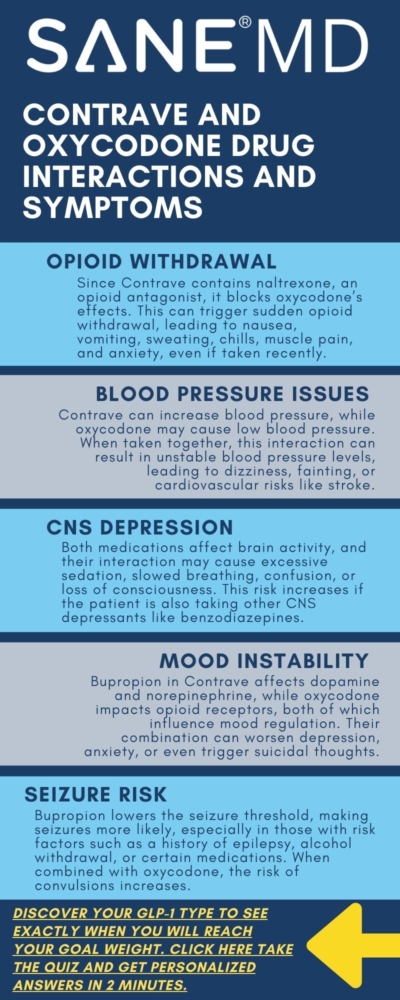
1. Risk of Opioid Withdrawal Symptoms
One of the most severe risks of combining Contrave and oxycodone is the potential for opioid withdrawal symptoms. This occurs because Contrave treatment contains naltrexone, which directly blocks opioid receptors in the brain.
For individuals dependent on opioid analgesics, such as oxycodone, this can cause sudden and severe withdrawal symptoms, even if they have only been using opioids for a short period.
Common opioid withdrawal symptoms include:
- Severe nausea and vomiting
- Intense muscle aches and cramping
- Increased heart rate and blood pressure fluctuations
- Anxiety, restlessness, and insomnia
- Sweating and chills
Withdrawal symptoms can be extremely distressing and, in some cases, require medical emergency intervention. Patients taking oxycodone for chronic pain should not abruptly stop opioid use before starting Contrave treatment, as it could trigger opioid withdrawal and lead to unnecessary discomfort and health risks.
If taking Contrave is necessary for chronic weight management, healthcare providers must carefully plan the transition, often requiring a gradual opioid taper before initiating Contrave.
2. Blood Pressure Concerns
Another serious issue with Contrave and oxycodone drug interactions is their conflicting effects on blood pressure. Contrave treatment has been associated with increased blood pressure, whereas oxycodone may lead to low blood pressure. This dual effect creates an unstable environment in the body, making it difficult to regulate blood circulation properly.
For patients with high blood pressure or severely high blood pressure, taking Contrave can increase the risk of cardiovascular complications, such as:
- Hypertensive reactions
- Increased heart rate (tachycardia)
- Risk of seizures due to excessive blood pressure spikes
- Increased likelihood of stroke or heart attack
On the other hand, oxycodone may cause low blood pressure, which can result in dizziness, fainting, and weakness. If a person taking Contrave experiences these blood pressure fluctuations, a dose adjustment may be necessary, or an alternative weight loss approach may need to be considered.
Healthcare providers should:
- Regularly monitor blood pressure in patients taking Contrave treatment
- Consider dosage adjustment or alternative weight loss therapies for those at risk of hypertensive reactions
- Assess for potential contraindications in individuals with cardiovascular health conditions
If a patient taking Contrave notices symptoms such as severe headaches, chest pain, or blurred vision, they should tell their doctor immediately to avoid a medical emergency.
3. Mental Health Risks and Suicidal Thoughts
Naltrexone bupropion in Contrave treatment and oxycodone both have significant effects on mental health, which can be particularly concerning for individuals with mental health conditions such as:
- Bipolar disorder
- Eating disorders
- History of suicidal thoughts or self-harm
The boxed warning alerts doctors to the increased risk of suicidal thoughts, mood swings, and mental health changes when using naltrexone bupropion. Adding oxycodone into the mix can further alter mental health, as opioids have been known to cause depression, mood instability, and even opioid-induced psychiatric disorders.
Potential mental health effects of combining Contrave and oxycodone:
- Increased risk of anxiety and agitation
- Emotional instability and unusual tiredness
- Increased sensitivity to pain and distress
- Suicidal thoughts or self-harming behaviors
For patients with pre-existing mental health conditions, taking Contrave alongside oxycodone can lead to dangerous psychiatric effects, requiring medical emergency intervention. Anyone experiencing mental health changes while using these medications should contact their healthcare provider immediately or call their local emergency number for support.
Potential Side Effects of Combining Contrave and Oxycodone
Patients who combine Contrave and oxycodone may experience:
- Dizziness, confusion, and unusual tiredness
- Gastrointestinal issues, including nausea and vomiting
- Severe headaches and skin rash
- Fluctuations in blood pressure (either too high or too low)
- CNS depression, especially when taken with other CNS depressants
If any of these symptoms occur, tell your doctor immediately or call your local emergency number for urgent medical care.
Potential Side Effects of Combining Contrave and Oxycodone
| Potential Side Effect | Description |
|---|---|
| Dizziness, Confusion, & Fatigue | CNS depression can cause extreme drowsiness and confusion. |
| Gastrointestinal Issues | Nausea, vomiting, and stomach discomfort may occur due to opioid withdrawal or drug interactions. |
| Severe Headaches & Skin Rash | Possible allergic reactions or neurological effects from medication interaction. |
| Blood Pressure Fluctuations | May cause dangerously high or low blood pressure, leading to cardiovascular risks. |
| CNS Depression | Combining these drugs with other CNS depressants increases the risk of sedation and respiratory depression. |
Warnings and Precautions
When considering the use of Contrave treatment, especially alongside oxycodone or other medications, it is crucial to understand the potential risks. The combination of these drugs can lead to serious warning signs, including an increased risk of severe side effects such as opioid withdrawal symptoms, blood pressure fluctuations, and mental health changes.
Before taking Contrave, patients must inform their healthcare provider about their health history, including medical conditions, other drugs they are using, and whether they have ever taken opioid analgesics for chronic pain. The presence of certain drug interactions and over-the-counter drugs can lead to adverse reactions, making it necessary to proceed with caution.
The following warnings highlight the most critical Contrave interactions and health conditions that require special consideration.
1. Certain Drug Interactions and Over-the-Counter Drugs
One of the most significant concerns with taking Contrave is how it interacts with certain medications and over-the-counter drugs. Some of these drug interactions can lead to severe pain management issues, increased blood pressure, or even an increased risk of seizures.
Common drug interactions include:
- CNS depressants like benzodiazepines: Medications such as Xanax (alprazolam), Valium (diazepam), and Ativan (lorazepam) are central nervous system depressants that can cause sedation, drowsiness, and impaired motor function. Since Contrave treatment contains bupropion, which has stimulant-like effects, combining it with CNS depressants may increase the risk of mental health changes and dangerous side effects such as respiratory depression or severe drowsiness.
- Other medications that affect dopamine levels: Bupropion in naltrexone bupropion influences dopamine activity in the brain. If combined with other drugs that regulate dopamine, such as antidepressants, stimulant medications for ADHD, or medicines used to treat depression, the risk of mental health changes and seizures increases significantly.
- Over-the-counter pain relievers that can impact opioid metabolism: Some over-the-counter drugs, particularly nonsteroidal anti-inflammatory drugs (NSAIDs) like ibuprofen (Advil) and naproxen (Aleve), can affect how the liver processes medications. These over-the-counter drugs may interfere with oxycodone metabolism, leading to either reduced pain relief or increased systemic exposure to opioids, which may worsen side effects.
- Blood Pressure Medications, Including Losartan: Contrave and Losartan drug interactions can lead to unpredictable blood pressure fluctuations, making it difficult to manage hypertension effectively.
To minimize Contrave side effects and risks, patients should always tell their doctor about any over-the-counter or prescription medications they take before starting Contrave treatment. Consulting a healthcare professional ensures that potential drug interactions are carefully managed, reducing the likelihood of adverse reactions.
2. Contrave Interacts with Medical Conditions
Certain health conditions can make taking Contrave particularly risky, especially when combined with oxycodone or other opioid analgesics.
Individuals with any of the following medical conditions should not take Contrave unless under strict medical supervision:
Seizure Disorder
Contrave treatment carries a serious warning for individuals with a seizure disorder, as bupropion lowers the seizure threshold, making seizures more likely. Taking Contrave in combination with oxycodone, which can also affect central nervous system activity, increases the risk of seizures even further.
Those with a history of seizures should avoid naltrexone bupropion, as it may lead to life-threatening convulsions. If patients have any symptoms of neurological instability, such as unusual tiredness, confusion, or muscle twitching, they should tell their doctor immediately.
Chronic Pain Requiring Opioid Analgesics
Patients who rely on opioid analgesics for chronic pain should not take Contrave without careful monitoring. Since naltrexone in Contrave treatment blocks opioid effects, it can trigger opioid withdrawal symptoms in individuals who have physical dependence on oxycodone or other opioid analgesics.
Common opioid withdrawal symptoms include:
- Severe nausea and vomiting
- Sweating and chills
- Increased heart rate and blood pressure fluctuations
- Restlessness and insomnia
If a patient requires opioid medications to treat pain, a healthcare provider may recommend alternative weight loss drugs that do not contain naltrexone. Tell your doctor if you are using opioids before starting Contrave treatment, as stopping oxycodone suddenly could result in a medical emergency.
Alcohol Use Disorder
Because naltrexone bupropion is used to treat alcohol dependence, taking Contrave may not be suitable for individuals with alcohol use disorder who are still actively drinking alcohol.
Patients with a history of alcohol dependence should avoid suddenly stopping drinking alcohol while on Contrave treatment, as it can lead to severe withdrawal symptoms, including:
- Seizures (particularly in those with a history of binge drinking)
- Severely high blood pressure spikes
- Increased risk of seizures due to alcohol withdrawal combined with bupropion
- Agitation, hallucinations, or mental health changes
Tell your doctor if you have a history of alcohol use disorder before starting Contrave treatment. If you experience dark urine, confusion, or difficulty breathing, call a local emergency number immediately.
When to Seek Immediate Medical Attention
Call a local emergency number if you experience:
- Severe allergic reaction (swelling, hives, difficulty breathing)
- Dark urine, which may indicate liver damage
- Uncontrollable high or low blood pressure
- Signs of a brain tumor, including extreme dizziness and vision changes
These symptoms require immediate care to prevent serious warning effects from Contrave interactions.
Alternatives to Contrave for Patients Taking Oxycodone
If Contrave is not a safe option due to drug interactions, alternative weight loss drugs include:
- GLP-1 receptor agonists (like Ozempic or Wegovy). There can be certain interactions between Contrave and GLP-1 medications. Please see our guide about potential drug interactions that may occur when taking Contrave and Ozempic together.
- Prescription appetite suppressants
- Reduced calorie diet combined with lifestyle changes
Discuss alternative options with a healthcare provider to determine the safest chronic weight management approach.
FAQ: Contrave and Oxycodone Drug Interactions
Navigating potential drug interactions is crucial for individuals taking Contrave, especially those who also use opioid medications like oxycodone. Understanding how Contrave interacts with opioids and other medications can help prevent serious health risks, including withdrawal symptoms, blood pressure fluctuations, and central nervous system complications.
Below are answers to common questions about taking Contrave with opioids and other medications to help guide safe and informed decisions.
1. Can you take Contrave with opioids?
You should not take Contrave with opioids unless under strict medical supervision. Contrave contains naltrexone, which blocks opioid receptors in the brain, making opioids like oxycodone, hydrocodone, and morphine ineffective for pain relief.
Also, if an individual is dependent on opioids, taking Contrave treatment can trigger sudden opioid withdrawal symptoms, which may be severe and require medical intervention.
Before starting Contrave treatment, it is important to inform your doctor about any current or recent opioid use. If pain management is necessary, a healthcare provider may recommend alternative non-opioid pain relief options to avoid dangerous Contrave interactions.
2. What pain medicine can I take with Contrave?
If you need pain relief while taking Contrave, it is generally safer to use non-opioid pain relievers such as acetaminophen (Tylenol) or nonsteroidal anti-inflammatory drugs (NSAIDs) like ibuprofen (Advil, Motrin) or naproxen (Aleve). These over-the-counter options do not interfere with naltrexone bupropion and can help manage mild to moderate pain without causing dangerous drug interactions.
However, some NSAIDs may increase blood pressure, so individuals with high blood pressure should consult their healthcare provider before using them regularly. In cases of severe pain, alternative prescription non-opioid pain medications may be considered under medical supervision.
Tell your doctor if you require pain management so they can recommend the safest option while taking Contrave treatment.
3. Can I take oxycodone and bupropion together?
Taking oxycodone and bupropion together is not recommended without medical oversight due to the increased risk of drug interactions and potential central nervous system (CNS) complications. Bupropion, one of the active ingredients in Contrave, lowers the seizure threshold, while oxycodone, an opioid analgesic, can cause sedation and respiratory depression. When combined, these effects may increase the risk of seizures, excessive drowsiness, or breathing difficulties.
Also, naltrexone bupropion in Contrave treatment blocks opioid receptors, making oxycodone ineffective for pain relief and potentially triggering opioid withdrawal symptoms.
If you have been prescribed both medications, it is essential to tell your doctor to discuss alternative treatment options that do not pose significant risks.
4. What medications should I avoid with Contrave?
Certain medications should be avoided while taking Contrave due to the increased risk of drug interactions and serious health complications.
These include:
- Opioid medications, such as oxycodone, hydrocodone, fentanyl, or morphine, because Contrave blocks opioid receptors, leading to opioid withdrawal symptoms.
- CNS depressants, including benzodiazepines (Xanax, Valium, Ativan) and muscle relaxants, which can increase sedation and respiratory depression when taken with bupropion.
- Seizure medications or drugs that lower the seizure threshold, such as tramadol, antipsychotics, and certain antidepressants, due to the risk of seizures.
- Monoamine oxidase inhibitors (MAOIs), a class of antidepressants, which can cause serious hypertensive reactions when combined with Contrave treatment.
Stimulant-based medications like Phentermine can also interact with Contrave. Learn more about the risks in our guide on Contrave and Phentermine together drug interactions.
Before starting Contrave treatment, always tell your doctor about any other medications you are taking, including over-the-counter drugs, herbal supplements, and vitamins, to avoid harmful Contrave interactions.
5. What happens if you take opioids with Contrave?
Taking opioids with Contrave can lead to serious and potentially dangerous consequences. Because Contrave contains naltrexone, it blocks opioid receptors, making opioids ineffective for pain relief.
This can cause opioid-dependent individuals to experience sudden and severe withdrawal symptoms, including:
- Nausea, vomiting, and diarrhea
- Severe anxiety and restlessness
- Sweating, chills, and rapid heartbeat
- Muscle pain, body aches, and fatigue
Also, if someone tries to override Contrave’s opioid-blocking effects by taking higher doses of opioids, they may experience life-threatening respiratory depression or overdose. Patients using opioid analgesics should stop taking them at least 7-10 days before starting Contrave treatment to avoid these complications.
Always consult a licensed healthcare provider before stopping or switching any opioid medications.
Final Thoughts
Understanding Contrave and oxycodone drug interactions is crucial for individuals managing chronic pain, weight loss, or other health conditions requiring medication. Since taking Contrave may increase the risk of opioid withdrawal, mental health issues, and high blood pressure, it is essential to consult a doctor before combining these medications.
If you experience mental health changes, suicidal thoughts, or severe allergic reactions, seek immediate medical assistance by calling your local emergency number. By staying informed and working with a healthcare provider, patients can make the best decisions for their overall health.

