

Dark Spot Under Chin: Causes, Treatments, and When to See a Doctor

Dr. Matthew Olesiak, MD, is the Chief Medical Director at SANESolution, a renowned wellness technology company dedicated to providing evidence-based solutions for optimal living. Dr. Olesiak earned his medical degree from the prestigious Jagiellonian University Medical College in Kraków, Poland, where he developed a strong foundation in medicine.
A dark spot under chin areas is a localized patch of hyperpigmentation where excess melanin has concentrated in a small region of skin. In most cases, these spots are completely harmless, the result of friction, sun exposure, hormonal shifts, or post-inflammatory hyperpigmentation from acne or ingrown hairs. But occasionally, a dark spot under the chin can signal something that warrants a closer look, including acanthosis nigricans or, in rare situations, skin cancer.
I’ve seen hundreds of patients concerned about skin discoloration on their chin and jawline. The overwhelming majority turn out to be straightforward cases that respond well to treatment. This guide covers every cause I encounter in practice, how to tell the difference between them, what treatment options actually work, and when you should see a dermatologist.
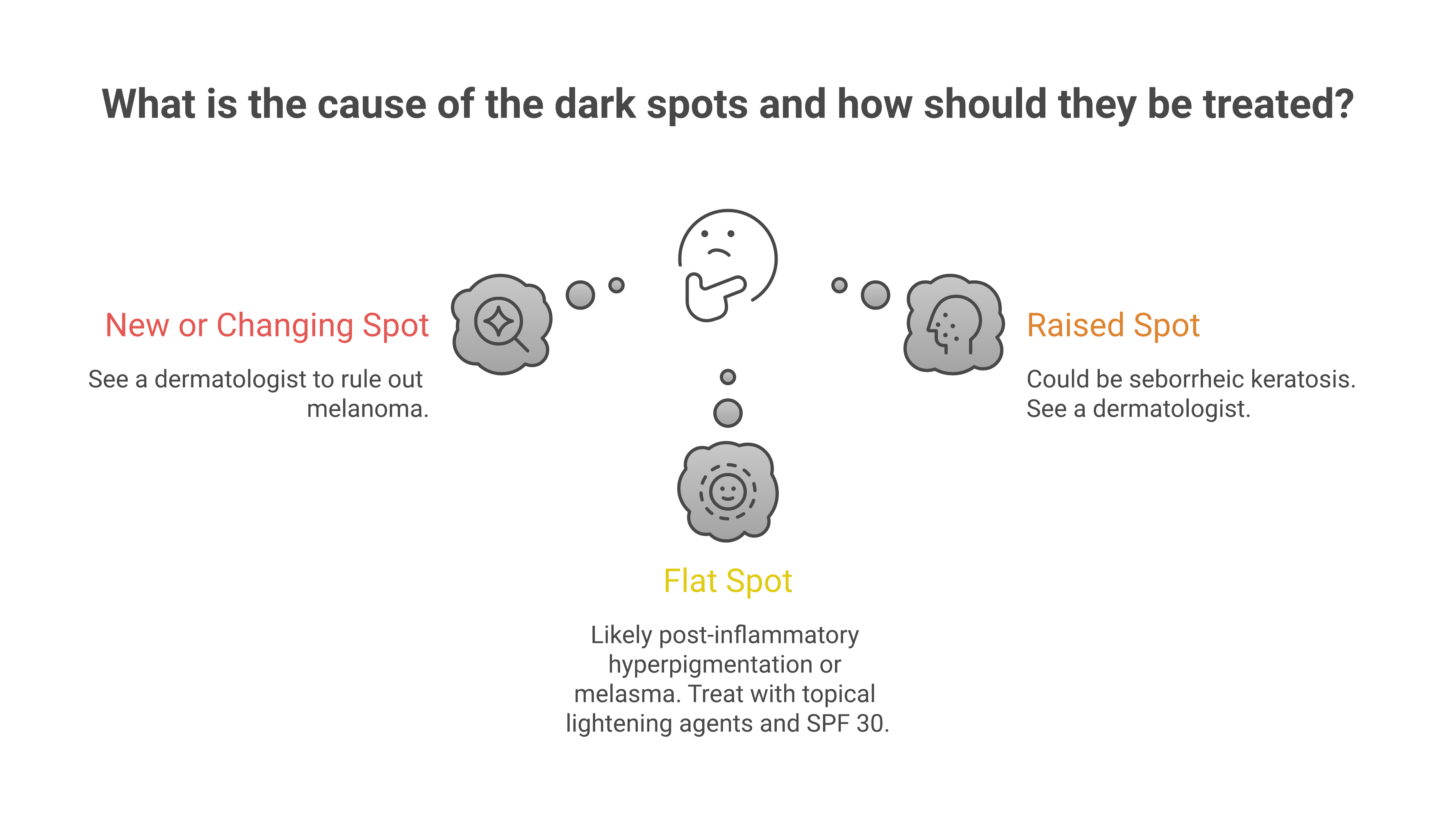
What Causes a Dark Spot Under the Chin?
Dark spots can develop under the chin for various reasons, ranging from everyday skin irritation to underlying health conditions. The chin and jawline area is uniquely vulnerable because it’s exposed to friction from clothing and hands, hormonal acne tends to cluster there, and shaving or waxing creates repeated micro-trauma. Here are the most common causes, broken down by how frequently I see them.
Post-Inflammatory Hyperpigmentation (PIH)
Post-inflammatory hyperpigmentation is the single most common cause of dark spots under the chin, especially in people with darker skin tones. When the skin experiences trauma (a pimple, an ingrown hair, a razor nick, or even aggressive exfoliation), it triggers an inflammatory response. As that inflammation resolves, melanocytes (the cells that produce melanin) go into overdrive, depositing excess pigment in the affected skin.
PIH typically appears as flat, brown or dark brown marks that follow the exact shape of the original wound or blemish. Unlike scars, postinflammatory hyperpigmentation doesn’t change the texture of your skin. The chin is particularly prone to PIH because hormonal acne and ingrown hairs both cluster along the jawline. People with darker skin are at higher risk because their melanocytes are more reactive to inflammation.
The good news: PIH almost always fades on its own, though it can take anywhere from 3 months to nearly 2 years without treatment. With proper care and targeted skin care products, you can accelerate that timeline significantly. The right ingredients help speed the process, and a consistent routine helps keep new spots from forming.
Melasma
Melasma causes symmetrical, blotchy patches of brown or grayish-brown discoloration, most commonly across the cheeks, forehead, upper lip, nose, and chin. Unlike a single dark spot, melasma tends to create larger, irregularly shaped dark patches that can spread across the lower face and jawline.
Hormonal changes are the primary trigger. The hormones estrogen and progesterone both influence melanocyte activity, which is why melasma appears so frequently during these hormonal shifts. Melasma affects an estimated 15 to 50 percent of pregnant women (earning its nickname “the mask of pregnancy”), and it is also common in women taking birth control pills or hormone replacement therapy. Sun exposure makes melasma dramatically worse, even brief, unprotected UV exposure can darken existing patches and trigger new ones. Visible light from screens and fluorescent lighting can also make melasma worse, which is why a tinted sunscreen with iron oxide offers better protection than a regular sunscreen alone.
Melasma is notoriously stubborn to treat. While it can sometimes fade after pregnancy or after stopping birth control pills, many people experience recurring episodes. Getting rid of melasma entirely is difficult, and most dermatologists focus on reducing the appearance of dark patches rather than promising a complete cure. Learning to treat melasma effectively takes patience and a willingness to adjust your approach based on how your skin responds. I tell patients to think of melasma management as an ongoing process rather than a one-time fix. The condition affects all skin types but is more visible in people with darker skin tones, those with Fitzpatrick skin types III through VI.
A family history of melasma increases your risk substantially. If your mother or sister dealt with it, you’re significantly more likely to develop the same dark patches on your chin and face.
One thing I tell every patient with melasma: visible light from screens and indoor lighting can also trigger this condition, not just ultraviolet rays. Wearing a tinted sunscreen with iron oxide helps block visible light and makes a noticeable difference for melasma-prone skin. Melasma typically lightens during winter months when UV exposure drops but comes back with increased sun time in spring and summer. For many people, melasma becomes a years-long management issue rather than a condition that fully resolves.
Sun Damage and Age Spots
Chronic sun exposure causes clusters of melanin to form in the skin, creating flat, well-defined brown spots known as solar lentigines (commonly called age spots, sun spots, or liver spots). This occurs when melanocytes cluster together after years of cumulative UV exposure. Unlike freckle like spots (ephelides), which are small, light, and fade in winter, liver spots and age spots are larger, darker, and permanent without treatment. These are different from freckles, they tend to be larger, darker, and don’t fade in winter.
The area under the chin might seem like it would be protected from the sun, but reflected UV light bouncing off water, sand, concrete, and even snow can hit the underside of the jaw with surprising intensity. People who spend time outdoors, use tanning beds, or have a history of sunburns are at higher risk of developing sun damage in this area. The sun’s rays don’t need to hit the skin directly to cause damage, reflected and ambient UV radiation is enough.
Sun spots are harmless but permanent without treatment. They don’t require treatment from a medical standpoint, but many people seek cosmetics and treatments to lighten dark spots for a more even complexion. Some people use concealer or makeup to cover age spots while waiting for topical products to take effect. Protecting this area with broad spectrum sunscreen is the single most important preventive step.
Acanthosis Nigricans
Acanthosis nigricans is a skin condition that produces dark, velvety skin patches in body creases and folds, most commonly the neck, armpits, and groin. But acanthosis nigricans can also appear under the chin, along the jawline, and in skin folds around the neck.
What makes acanthosis nigricans different from other causes of dark spots is the texture. The affected skin feels thick, velvety, and sometimes slightly rough. The dark patches tend to be larger than a typical spot, and the borders are less defined. Some patients also develop small skin tags in the same areas. If you are taking certain medications (corticosteroids, insulin-sensitizers), mention this to your doctor, as it may affect the treatment approach.
The most important thing to understand about acanthosis nigricans: it’s frequently a visible sign of an underlying condition. In most people, acanthosis nigricans indicates insulin resistance, the body is producing excess insulin, and those elevated insulin levels stimulate skin cell growth and melanin production. This puts individuals at higher risk for type 2 diabetes.
Acanthosis nigricans can also be triggered by:
- Polycystic ovary syndrome (PCOS)
- Thyroid disorders, particularly hypothyroidism
- Certain medications, including corticosteroids and some birth control pills
- Obesity (independent of diabetes risk)
- Hormonal changes during puberty
- In rare cases, internal malignancy (especially gastric cancer)
If you notice thick, velvety skin developing under your chin or around your neck without an obvious cause, see a healthcare professional. A blood test checking fasting glucose and insulin levels can determine whether insulin resistance is driving the skin changes. Treating the underlying condition (whether through weight loss, metformin, or managing diabetes) often lightens the dark patches or clears them completely over time. Several patients have seen these areas return to their normal complexion within months of getting their insulin under control.
Friction and Mechanical Irritation
Repeated rubbing or friction against the skin under the chin can trigger hyperpigmentation over time. Common culprits include:
- Chin straps from helmets, CPAP masks, or musical instruments (violin, viola)
- Habitual chin resting on hands
- Tight clothing or scarves rubbing against the jawline
- Mask-related irritation (“maskne” and mask hyperpigmentation)
This type of darkening develops gradually and is essentially a form of post inflammatory hyperpigmentation caused by chronic, low-grade irritation rather than a single event. People with darker skin tones are more susceptible because their melanocytes respond more aggressively to repetitive friction.
The fix is straightforward: identify and eliminate the source of friction. Once the irritation stops, the dark spots typically fade with time and standard brightening treatments.
Certain Medications
Several factors beyond direct skin trauma can cause hyperpigmentation under the chin, including certain medications. Drugs known to trigger skin pigmentation changes include:
- Non-steroidal anti-inflammatory drugs (NSAIDs)
- Tetracycline antibiotics (minocycline, doxycycline)
- Antimalarials (hydroxychloroquine)
- Amiodarone (heart rhythm medication)
- Chemotherapy agents
- Some antipsychotics and anticonvulsants
Medication-induced hyperpigmentation can appear anywhere on the body, including the chin and face. If you notice new dark patches or skin changes after starting a medication, bring up the issue with your doctor, but never stop a prescribed medication without medical guidance.
Skin Cancer (Rare but Important)
I include skin cancer not because it’s a likely cause of a dark spot under the chin, but because ruling it out matters. Melanoma (the most dangerous form of skin cancer) can appear as a new, dark, irregularly shaped spot anywhere on the body, including areas that don’t get much direct sun exposure.
The ABCDE rule recommended by the American Academy of Dermatology helps you evaluate any spot that concerns you:
- A. Asymmetry: One half of the spot doesn’t match the other
- B. Border: Irregular, ragged, or blurred edges
- C. Color: Multiple colors (brown, black, red, white, blue) within the same spot
- D. Diameter: Larger than 6mm (about the size of a pencil eraser)
- E. Evolving: The spot is changing in size, shape, or color over weeks or months
Basal cell carcinoma and squamous cell carcinoma can also appear on the chin and jawline, though these tend to look more like pink, pearly bumps or rough, scaly patches rather than flat dark spots. Any skin growth that bleeds, crusts, doesn’t heal, or is rapidly changing should be evaluated by a dermatologist or skin specialist promptly.
How to Identify Your Dark Spot: A Comparison Guide
Figuring out which type of dark spot you’re dealing with is the first step toward effective treatment. Here’s how the most common causes compare:
| Condition | Appearance | Texture | Pattern | Key Clue |
|---|---|---|---|---|
| PIH (acne/ingrown hair) | Flat, brown to dark brown | Smooth (same as surrounding skin) | Matches shape of original blemish | History of acne or shaving irritation at that spot |
| Melasma | Brown to grayish-brown patches | Smooth | Symmetrical, blotchy patches on both sides | Worsens with sun exposure or hormonal changes |
| Sun spots / age spots | Flat, tan to dark brown | Smooth | Well-defined borders, round or oval | Located on sun-exposed skin; doesn’t fade in winter |
| Acanthosis nigricans | Dark, brownish-black patches | Thick, velvety skin | Follows skin folds and creases | Velvety texture + often on neck, armpits too |
| Friction darkening | Gradual brown discoloration | May be slightly rough | Matches area of repeated rubbing | Correlates with helmet strap, mask, or habit |
When you review these causes side by side, it becomes easier to narrow down what you are dealing with. A person with darker skin and a history of chin acne will most likely be looking at post inflammatory hyperpigmentation. Someone who has noticed their complexion changing during pregnancy probably has melasma triggered by hormones like estrogen and progesterone. And a patient with thick, velvety patches under the chin and neck should get their blood sugar checked for insulin resistance, especially if the darkening has developed over months or years.
Several factors can overlap, making self-diagnosis tricky. You might have melasma that worsens each summer from sun exposure while also dealing with PIH from acne breakouts on the same area. A dermatologist can review your full medical history, examine the skin under a dermatoscope or Wood lamp (also called a black light examination), and give you a clear diagnosis. This review helps determine whether a topical cream, lifestyle change, or professional procedure is the right first step.
If your spot doesn’t clearly match any of these patterns, or if it’s changing in appearance, a dermatologist can perform a dermatology examination (sometimes using a dermatoscope or Wood lamp) to determine exactly what you’re dealing with.
When to See a Dermatologist About a Dark Spot Under Your Chin
Most dark spots under the chin are cosmetic concerns, not medical emergencies. But there are specific situations where you should see a doctor or skin specialist without delay:
- The spot appeared suddenly and you can’t connect it to acne, shaving, or sun exposure
- It’s changing in size, shape, color, or texture over a period of weeks
- It bleeds, itches, crusts, or doesn’t heal
- You notice thick, velvety skin under your chin or around your neck (possible acanthosis nigricans, get your insulin levels and blood sugar checked)
- Dark patches are spreading to your forehead, cheeks, and upper lip (possible melasma, a treatment plan will help prevent worsening)
- You have a family history of melanoma or skin cancer
- The spot has multiple colors or asymmetric borders
Don’t put off evaluation if any of these apply. Early identification of skin conditions (whether it’s insulin resistance signaled by acanthosis nigricans or a suspicious skin growth) leads to better outcomes. A dermatologist can review the spot during a thorough examination and your medical history, though a skin biopsy may occasionally be necessary.
How to Get Rid of Dark Spots Under the Chin: At-Home Treatments
For most people, dark spots under the chin can be treated effectively at home with the right combination of skin care products and consistency. Results typically take 4 to 12 weeks to become visible, so patience is non-negotiable. The good news is that most at-home treatments are affordable and widely available. Here are the most effective at-home treatment options, ranked by evidence strength. You may find that the right combination of products can lighten a dark spot significantly faster than using any single ingredient alone.
Sunscreen (The Foundation of Any Treatment Plan)
I cannot overstate this: no dark spot treatment will work if you’re not wearing sunscreen daily. Ultraviolet (UV) exposure triggers melanin production and will darken any existing spot faster than your treatment can lighten it. This is true even on cloudy days and even if you’re indoors near windows.
Use a broad spectrum sunscreen with SPF 30 or higher. Apply it every morning, and reapply every 2 hours if you’re outdoors. For the chin area specifically, don’t forget that reflected sun from below (water, pavement, snow) can hit the underside of your jaw. A wide brimmed hat provides excellent additional sun protection for the entire face and neck.
Vitamin C Serums
Vitamin C (L-ascorbic acid) is one of the best-studied ingredients for treating dark spots on the skin. It works by inhibiting tyrosinase, the enzyme responsible for melanin production. A 10-20% vitamin C serum applied daily can visibly lighten dark spots within 8 to 12 weeks.
Beyond its brightening effect, vitamin C also provides antioxidant protection against sun damage and helps with overall skin pigmentation improvement. Look for stabilized formulas in dark or opaque bottles, vitamin C degrades quickly when exposed to light and air.
Retinol and Retinoids
Retinol accelerates cell turnover, pushing pigmented cells to the surface faster and replacing them with newer, evenly pigmented skin. Over-the-counter retinol (0.25-1%) is effective for mild to moderate dark spots. Prescription-strength tretinoin (0.025-0.1%) works faster and is the best treatment for stubborn hyperpigmentation when over-the-counter options aren’t cutting it.
Start with a low concentration 2-3 times per week to minimize irritation. Retinoids can initially cause dryness, peeling, and redness, which can actually worsen dark spots in people with darker skin if not managed carefully. Always use retinoids at night and pair them with strong sun protection during the day.
Niacinamide
Niacinamide (vitamin B3) works differently from most brightening ingredients. Rather than blocking melanin production, it prevents the transfer of melanin from melanocytes to surrounding skin cells. A concentration of 5% niacinamide applied twice daily can produce noticeable lightening of dark spots within 8 weeks.
Niacinamide is particularly well-suited for people with sensitive skin or those who can’t tolerate retinoids. It also reduces inflammation, strengthens the skin barrier, and helps control oil production, making it excellent for acne-prone skin where PIH is a concern.
Azelaic Acid
Azelaic acid at 10% (over-the-counter) or 15-20% (prescription) targets hyperpigmentation by inhibiting abnormal melanocyte activity. It’s particularly effective for melasma and PIH, and it has the advantage of being safe during pregnancy, something most other brightening agents can’t claim.
Azelaic acid also has anti-inflammatory and antibacterial properties, so it can treat dark spots and prevent new acne-related PIH simultaneously. Apply the gel or cream once or twice daily after cleansing. Azelaic acid is available as a lotion, gel, or cream depending on the formulation. Your dermatologist may prescribe a stronger medicine if the over-the-counter version does not produce results.
Kojic Acid and Alpha Arbutin
Kojic acid (derived from fungi, used in skincare for years) and alpha arbutin (derived from bearberry plants) both inhibit tyrosinase to lighten dark spots. They are gentler alternatives to hydroquinone and work well for people who want a more even complexion and work well for people who need skin brightening without significant irritation.
These ingredients are found in many over-the-counter serums and creams. They work best when combined with vitamin C or niacinamide for a multi-pathway approach to treating skin discoloration.
Exfoliating Acids (AHAs and BHAs)
Chemical exfoliants like glycolic acid (an AHA) and salicylic acid (a BHA) help fade dark spots by accelerating the shedding of pigmented skin cells from the top layer of skin. Glycolic acid in particular has good evidence for improving overall skin pigmentation and creating a more even tone.
Use exfoliating acids 2-3 times per week. Don’t combine them with retinoids on the same night, this increases the risk of irritation and can actually trigger more post inflammatory hyperpigmentation, which defeats the purpose entirely.
Home Remedies: What Works and What Doesn’t
Home remedies for dark spots are popular online, but the evidence behind most of them is thin. Here’s an honest breakdown:
- Aloe vera: Has mild skin-soothing properties and contains aloin, which has modest depigmenting effects. Unlikely to harm, but unlikely to make a dramatic difference as a standalone treatment
- Apple cider vinegar: Contains acetic acid, which is a mild chemical exfoliant. However, undiluted apple cider vinegar can burn and irritate the skin, potentially causing more dark spots. If you use it, always dilute heavily (1 part vinegar to 3 parts water) and patch test first
- Lemon juice: Contains citric acid and vitamin C, but the concentration is low and the acidic pH can irritate and burn skin. Lemon juice also makes skin more sensitive to sunlight, which can worsen hyperpigmentation. I don’t recommend it, a proper vitamin C serum is safer and more effective
- Turmeric: Contains curcumin, which has demonstrated melanin-inhibiting properties in lab studies. Turmeric paste can temporarily stain lighter skin yellow, but it won’t cause harm. Results are modest at best compared to proven skin care products
- Green tea extract: Contains EGCG, a polyphenol that may inhibit melanin production. More promising in topical formulations than as DIY tea compresses
Bottom line on home remedies: they’re generally safe when used carefully, but they won’t deliver results comparable to evidence-based ingredients like vitamin C, retinol, niacinamide, or azelaic acid. If you’re serious about fading dark spots, invest in proper skin care rather than kitchen experiments.
Tips for Building an Effective Dark Spot Treatment Routine
Treating a dark spot under the chin is not a one-product solution. The most effective approach layers several factors together. Here are practical tips I give every patient:
- Start with sunscreen, then add one active at a time. Introducing too many products at once makes it impossible to tell what helps and what causes irritation. Wait 2 to 4 weeks before adding a new product to your routine
- Apply brightening products to the specific area, not your whole face. Concentrated application on the dark spot lightens it faster without unnecessarily drying surrounding skin
- Be consistent for 8 to 12 weeks before judging results. Skin cell turnover takes time. A product that lightens a dark spot does so gradually, and many people give up too soon
- Take photos every 2 weeks under the same lighting. Progress feels slow when you review your face daily. Side-by-side photos taken weeks apart help you see how much a dark spot has actually lightened
- If one product causes redness or irritation, stop it and let your skin recover before trying an alternative. Irritation triggers more melanin production, which is the opposite of what you want
- Check that your products are stored properly. Vitamin C serums and retinol creams lose effectiveness when exposed to air, heat, or direct light. Toss any serum that has turned dark brown or orange
For a person who has never treated dark spots before, I recommend starting with a 10% vitamin C serum in the morning and sunscreen (SPF 30+, broad spectrum), then adding a retinol cream 2 to 3 nights per week after the first month. This combination addresses melanin production from multiple angles and lightens dark patches on the chin area within 6 to 12 weeks for most people. Results vary based on skin tone, the cause of the spot, and how deep the pigment sits in the skin layers.
If over-the-counter products have not produced good results after 3 months of consistent use, that is when I recommend scheduling a review with a dermatologist. Professional procedures and prescription-strength creams can make a significant difference for stubborn spots that do not respond to drugstore products alone.
Professional Treatments for Stubborn Dark Spots
When at-home treatment options haven’t produced satisfactory results after 3 to 6 months of consistent use, professional treatments can accelerate progress. These should always be performed by a qualified dermatologist or skin specialist, as improper technique can worsen hyperpigmentation, particularly in people with darker skin tones.
Chemical Peels
Professional chemical peels use concentrated acids (glycolic, salicylic, trichloroacetic acid, or combinations) to remove the outermost layers of skin containing excess pigment. Superficial peels require minimal downtime and can be repeated every 2-4 weeks. Medium-depth peels penetrate deeper and require several days of recovery but produce more dramatic results.
For melasma and PIH under the chin, a series of 4-6 superficial chemical peels spaced 3-4 weeks apart typically yields significant improvement. Chemical peels carry a risk of post-peel hyperpigmentation, especially in darker skin tones, so your dermatologist should customize the acid type and concentration to your specific skin.
Laser Treatment and Light Therapy
Laser treatment for dark spots works by targeting melanin with focused light energy. Several types are used in dermatology:
- Intense Pulsed Light (IPL): Effective for sun spots and age spots; works best on lighter skin tones
- Fractional lasers (Fraxel): Create microscopic columns of treated skin, stimulating collagen and reducing pigment. Suitable for multiple skin types
- Q-switched lasers: Target pigment selectively without damaging surrounding skin. Good for focal dark spots
- PicoSure: Uses ultra-short laser pulses for stubborn pigmentation, including melasma
Laser therapy requires 1-4 sessions depending on the type and severity of pigmentation. There’s typically 5-7 days of redness and darkening (the treated pigment comes to the surface before flaking off). Results can be excellent, but laser treatment for melasma has a significant recurrence risk, the condition often returns even after successful laser treatment if sun protection isn’t maintained rigorously.
Microdermabrasion and Microneedling
Microdermabrasion is used on affected areas of the face and body. This procedure uses fine crystals or a diamond tip to physically exfoliate the top layer of skin, removing surface pigmentation. It’s gentler than chemical peels and suitable for mild hyperpigmentation.
Microneedling creates tiny punctures in the skin that stimulate healing and collagen production. When combined with brightening serums (a technique called “microneedling with infusion”), it can deliver active ingredients deeper into the skin for enhanced results. A series of 3-6 sessions spaced 4-6 weeks apart is typical.
Prescription Creams
A dermatologist can prescribe stronger topical medications than what’s available over the counter:
- Hydroquinone (4%): The gold-standard prescription depigmenting agent. Blocks melanin production. Use for 3-6 month courses with breaks to prevent ochronosis (paradoxical darkening with prolonged use)
- Tretinoin (0.05-0.1%): Prescription-strength retinoid for accelerated cell turnover
- Tri-Luma (fluocinolone/hydroquinone/tretinoin): Combination prescription creams that attack pigmentation through multiple mechanisms simultaneously. Often considered the best treatment for moderate to severe melasma
- Tranexamic acid (topical or oral): A newer treatment option for melasma that works by reducing inflammation-driven melanin production. Oral tranexamic acid (250mg twice daily) has shown impressive results in clinical trials
Your dermatologist will build a treatment plan based on your diagnosis, skin type, severity of the dark spots, and your medical history. Most people respond best to a combination approach, pairing prescription creams with sunscreen and occasionally adding professional procedures.
How to Prevent New Dark Spots From Forming Under Your Chin
Treating existing dark spots is only half the equation. Preventing new ones from forming is equally important, and honestly, it’s the part most people neglect. Here’s a practical prevention strategy specifically for the chin and jawline area.
Daily Sun Protection (Non-Negotiable)
Apply broad spectrum sunscreen with SPF 30 or higher every single morning, including on your chin, jawline, and neck. Reapply every 2 hours during extended outdoor time. Remember: UV light reflects off surfaces and reaches the underside of your chin even when you think you’re in shade. Wear a wide brimmed hat whenever possible for additional sun protection.
Avoid tanning beds entirely. The UV radiation from tanning beds is concentrated and can trigger or worsen melasma, age spots, and all forms of hyperpigmentation anywhere on the body. They also increase your risk of skin cancer significantly.
Manage Chin Acne Properly
The biggest preventable cause of this skin condition under the chin is post-inflammatory hyperpigmentation from acne. Keep hormonal acne under control with a consistent routine that includes gentle cleansing, salicylic acid or benzoyl peroxide, and non-comedogenic moisturizer. If over-the-counter products aren’t controlling breakouts, see a dermatologist before the cycle of inflammation and hyperpigmentation gets worse.
Never pick at pimples on your chin. I know that’s easier said than done, but squeezing or popping blemishes dramatically increases the inflammatory response and the likelihood of PIH that can last months. Hands off.
Smart Shaving Practices
For people who shave their chin and neck, preventing ingrown hairs is key to preventing dark spots. Use a sharp, clean razor and shave in the direction of hair growth. Apply a soothing, fragrance-free aftershave balm afterward. If ingrown hairs are a chronic problem, consider switching to an electric trimmer or exploring laser hair removal as a longer-term solution.
Reduce Friction
If you wear a helmet, CPAP mask, or any device that rubs against your chin, make sure it fits properly and consider adding padding or a soft barrier. Clean chin straps regularly to prevent bacterial buildup that can cause skin problems and secondary inflammation.
Monitor Your Health
Since acanthosis nigricans under the chin can be an early warning sign of insulin resistance and diabetes, maintaining a healthy weight and having regular checkups matters. If you develop dark, velvety skin under your chin, get your blood sugar and insulin levels tested. Treating the underlying condition early prevents skin changes from progressing and reduces your risk of developing type 2 diabetes.
Healthy people who maintain a balanced diet, exercise regularly, and manage their weight have a lower risk of developing acanthosis nigricans, even if they have a family history of the condition.
Dark Spot Under Chin in People With Darker Skin Tones
Hyperpigmentation affects people of all skin types, but it’s more visible, more common, and often more persistent in people with darker skin. Understanding these differences is essential for effective treatment.
People with darker skin tones have more active melanocytes, which means any irritation, inflammation, or skin trauma produces a stronger pigmentation response. This makes conditions like PIH, melasma, and acanthosis nigricans both more likely to develop and slower to fade.
Treatment considerations for darker skin include:
- Avoid aggressive treatments that can irritate the skin and trigger more hyperpigmentation (high-strength peels, harsh lasers, over-exfoliation)
- Start with gentler concentrations of retinol and chemical exfoliants, increasing gradually
- Some laser treatments that work well on lighter skin can cause burns or paradoxical darkening in darker skin, choose a dermatologist experienced in treating skin of color
- Hydroquinone above 4% concentration carries a higher risk of ochronosis in darker skin
- Sunscreen is just as important, darker skin reduces but does not eliminate the risk of sun damage and skin cancer
Many of my patients over the years with darker skin and dark spots get excellent results with a combination of niacinamide, azelaic acid, and diligent sun protection. These ingredients are effective without being excessively irritating, which makes them ideal for skin types that are prone to developing more pigmentation from treatment itself.
A Closer Review of Melasma Under the Chin and Jawline
Melasma deserves a closer review in any discussion of dark spots under the chin because it is one of the most persistent and frustrating skin conditions for patients to manage. While melasma more commonly appears on the cheeks and forehead, it frequently extends to the chin, upper lip, and jawline areas. This pattern, sometimes called the mandibular pattern of melasma, is more common in women over 30 and in people with darker skin tones.
What makes melasma different from other causes of darker patches is the way it responds to treatment. Post inflammatory hyperpigmentation lightens steadily with consistent care. Melasma, on the other hand, can lighten dramatically with one course of treatment and then return weeks later when the person spends a few days in the sun or starts taking a new birth control medication. This cycle of improvement and relapse causes real emotional frustration, and I spend a good amount of time helping patients set realistic expectations.
What Research Has Shown About Melasma Treatment
Decades of clinical research have shown that combination therapy produces the best results for melasma. Multiple reviews in dermatology journals have found that triple combination creams containing hydroquinone, tretinoin, and a mild corticosteroid lightens melasma more effectively than any single ingredient alone. For patients who cannot use hydroquinone, a review of alternatives found that tranexamic acid (taken orally or applied topically) and azelaic acid are the two most promising options.
Melasma is estimated to affect up to 50 percent of certain higher-risk groups, including women with darker skin, women taking hormonal medications, and pregnant women. The condition is far more common in women than men, with women accounting for approximately 90 percent of all melasma cases. These numbers help explain why melasma appears so frequently in dermatology practice: almost every dermatologist treating darker skin tones sees multiple melasma patients every week.
For the chin and jawline areas specifically, melasma can be particularly stubborn. The chin receives reflected UV light from below (off pavement, water, and even your phone screen), and it is an area most people forget to protect with sunscreen. Several factors contribute to treatment resistance in this area:
- Inconsistent sunscreen application to the chin and neck areas
- Friction from face masks, chin straps, and habitual touching
- Hormonal fluctuations from medications, pregnancy, or menopause
- Visible light exposure from screens and indoor lighting
Good Treatment Practices for Melasma on the Chin
The good news is that melasma on the chin responds to the same treatments used for melasma elsewhere on the face, as long as the person is consistent and protective. Here is what I recommend for my patients with this skin condition:
- Daily tinted sunscreen with iron oxide. A tinted formula blocks both ultraviolet and visible light. This is the single most important step for protecting melasma-prone areas. Apply it every morning, even on cloudy days, and reapply if you are outdoors for extended time
- Prescription-strength brightening cream. A triple combination cream (hydroquinone 4% + tretinoin 0.05% + fluocinolone 0.01%) lightens melasma patches faster than over-the-counter products. Use it at night for 8 to 12 weeks, then take a break to avoid side effects
- Tranexamic acid. Shown in multiple clinical reviews to help melasma that does not respond to topical treatments alone. The oral form (250 mg twice daily) has produced good results in patients with stubborn melasma. Discuss with your doctor before taking any oral medications
- Chemical peels with lactic or glycolic acid. These procedures help melasma by removing the top layer of darker pigmented skin. A series of 4 to 6 peels spaced 3 to 4 weeks apart can make a noticeable difference. Peels must be done carefully in people with darker skin to avoid triggering more darkening
- Maintenance plan. After melasma lightens, you still need a long-term plan to keep it from coming back. Most patients do well with niacinamide, vitamin C, and daily sunscreen as ongoing care. Review your medications periodically with your doctor, since certain medications (like hormonal birth control or hormone replacement therapy) can cause melasma to return
I always tell patients that melasma treatment is a marathon, not a sprint. Melasma lightens with the right combination of products and sun protection, but staying rid of it requires ongoing commitment. Many patients see great improvement within 3 to 6 months of starting treatment. The key is managing expectations: melasma may never disappear completely, but it can be controlled well enough that it no longer affects your confidence or how you feel about your complexion.
If you have tried over-the-counter products without good results, schedule a review with a dermatologist who has experience treating melasma in people with your skin tone. A trained professional can prescribe stronger medications, recommend the right professional procedures, and create a personalized treatment plan that accounts for your skin type, lifestyle, and the specific areas affected.
Frequently Asked Questions
What is the black stuff under my chin?
A dark or black patch under the chin is almost always hyperpigmentation, an excess of melanin concentrated in one area of skin. The most common causes are post inflammatory hyperpigmentation from acne or ingrown hairs, melasma triggered by hormonal changes, friction from straps or habitual touching, or acanthosis nigricans (a dark, velvety skin condition often linked to insulin resistance). In rare cases, it could be a new mole or skin growth that should be checked by a dermatologist if it appeared suddenly or is changing.
How long does it take for a dark spot under the chin to fade?
Without treatment, most dark spots from PIH fade on their own in 3 to 24 months, depending on the depth of pigmentation and your skin type. With consistent at-home treatment (vitamin C, retinol, sunscreen), most people see noticeable improvement in 4 to 12 weeks. A person with lighter skin may see faster results because the contrast between the spot and surrounding skin makes progress easier to notice. Professional treatments like chemical peels or laser therapy can produce faster results, sometimes within 2 to 4 weeks. Melasma is the exception. It may never completely clear and often requires ongoing management to maintain results.
Can a dark spot under the chin be skin cancer?
It’s unlikely but possible. Melanoma can appear anywhere on the body as a dark, irregularly shaped spot. Use the ABCDE rule (Asymmetry, Border irregularity, Color variation, Diameter over 6mm, Evolution/change) to assess any spot that concerns you. The chin isn’t a particularly common location for melanoma, but any new, changing, bleeding, or unusual skin growth should be evaluated by a dermatologist or doctor promptly. Most dark spots under the chin turn out to be completely benign hyperpigmentation.
Why is the skin under my chin getting darker?
Gradual darkening of the skin under the chin has several possible explanations. Chronic friction (from a chin strap, mask, or resting your chin on your hand) can cause the skin to develop protective pigmentation over time. Hormonal changes from pregnancy, birth control pills, or menopause can trigger melasma. Sun exposure from reflected UV light affects this area more than most people realize. And acanthosis nigricans, linked to insulin resistance and weight gain, specifically targets the chin, neck, and skin folds. If the darkening is accompanied by a velvety texture, get your insulin levels checked.
Does apple cider vinegar remove dark spots under the chin?
Apple cider vinegar contains acetic acid, which has mild exfoliating properties, but the evidence for it as a dark spot treatment is mostly anecdotal. Undiluted apple cider vinegar can cause chemical burns and worsen hyperpigmentation. If you want to try it, dilute it heavily (1:3 ratio with water) and patch test first. Honestly, you’ll get far better results from a proper vitamin C serum, niacinamide, or azelaic acid product. These are formulated for skin application and have clinical evidence behind them.
Can ingrown hairs cause a permanent dark spot?
Ingrown hairs cause inflammation, and that inflammation can leave behind a dark mark (post inflammatory hyperpigmentation). While these spots can feel like they’ll last forever, especially in people with darker skin tones, they rarely become truly permanent. Most fade within 3 to 12 months with proper care. Using sunscreen, vitamin C, and retinol on the affected area can speed fading. Preventing future ingrown hairs through proper shaving technique or laser hair removal stops the cycle of recurring dark spots.
What’s the fastest way to get rid of a dark spot under my chin?
The fastest approach combines professional treatment with at-home skin care. A dermatologist can perform a chemical peel or laser treatment to rapidly break up pigment, while you maintain results at home with prescription creams (hydroquinone or tretinoin), vitamin C, and daily sunscreen. Depending on the cause and depth of the spot, significant improvement can happen within 2 to 6 weeks with this combined approach. For most people, consistent at-home treatment alone takes 8 to 12 weeks to show meaningful results.
Disclaimer: This article is for informational purposes only and does not constitute medical advice. The information provided here should not be used to diagnose or treat any health condition. Always consult a qualified healthcare professional for personalized medical guidance regarding any skin condition or health concern. If you have a dark spot that is changing, bleeding, itching, or otherwise concerning, seek prompt medical evaluation.

