
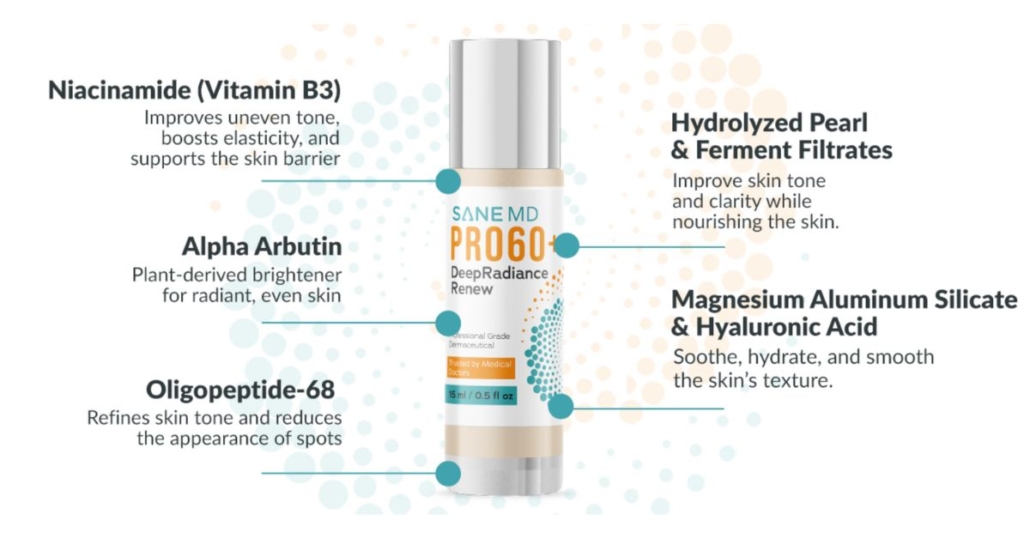
Oligopeptide-68 Skin Care: How This Peptide Fades Dark Spots and Evens Skin Tone

Dr. Matthew Olesiak, MD, is the Chief Medical Director at SANESolution, a renowned wellness technology company dedicated to providing evidence-based solutions for optimal living. Dr. Olesiak earned his medical degree from the prestigious Jagiellonian University Medical College in Kraków, Poland, where he developed a strong foundation in medicine.
Oligopeptide-68 is a synthetic peptide used in skin care to fade dark spots, reduce hyperpigmentation, and even out skin tone without the harsh side effects of older brightening agents like hydroquinone. If you’ve been searching for a gentler approach to stubborn pigmentation, this ingredient is worth your attention. I’ve spent considerable time reviewing the research on oligopeptide 68 skin care, and what stands out is its dual mechanism of action: it doesn’t just slow melanin production at one point, it targets the entire signaling cascade that tells your skin to make excess pigment in the first place.
In a 2016 randomized, double-blind clinical study published in the Journal of Cosmetic Dermatology, formulations containing oligopeptide-68 proved equal to or better than 4% hydroquinone for pigment reduction in 38 women with facial melasma, with 76.3% reporting moderate improvement and zero severe adverse reactions. That’s a meaningful finding for anyone who has been wary of hydroquinone’s risks.
What Is Oligopeptide-68?
Oligopeptide 68 is a synthetic, biomimetic peptide composed of 12 amino acids: arginine, aspartic acid, glycine, glutamine, isoleucine, leucine, serine, threonine, tryptophan, and tyrosine. You may also see it listed under its trade name, B-White (sometimes written as ß-White), which was originally developed by Lucas Meyer Cosmetics.
Unlike plant-based antioxidants or traditional brightening agents that work indirectly, oligopeptide-68 is a bioactive peptide engineered specifically to regulate melanin production at the cellular level. It functions as a signaling molecule (essentially a set of chemical instructions) that tells melanocytes (your pigment-producing cells) to slow down. Its purity as a lab-synthesized compound means consistent potency across formulations, which is something natural extracts from sources like lemon, orange, ginger, or sugarcane simply can’t guarantee.
What makes this ingredient particularly interesting for dark spots on skin is that it targets both constitutive pigmentation (your baseline skin color) and facultative pigmentation (darkening triggered by sun damage, hormonal changes, or inflammation). That dual-targeting ability is rare.
How Oligopeptide-68 Works: The Science Behind Skin Pigmentation Control
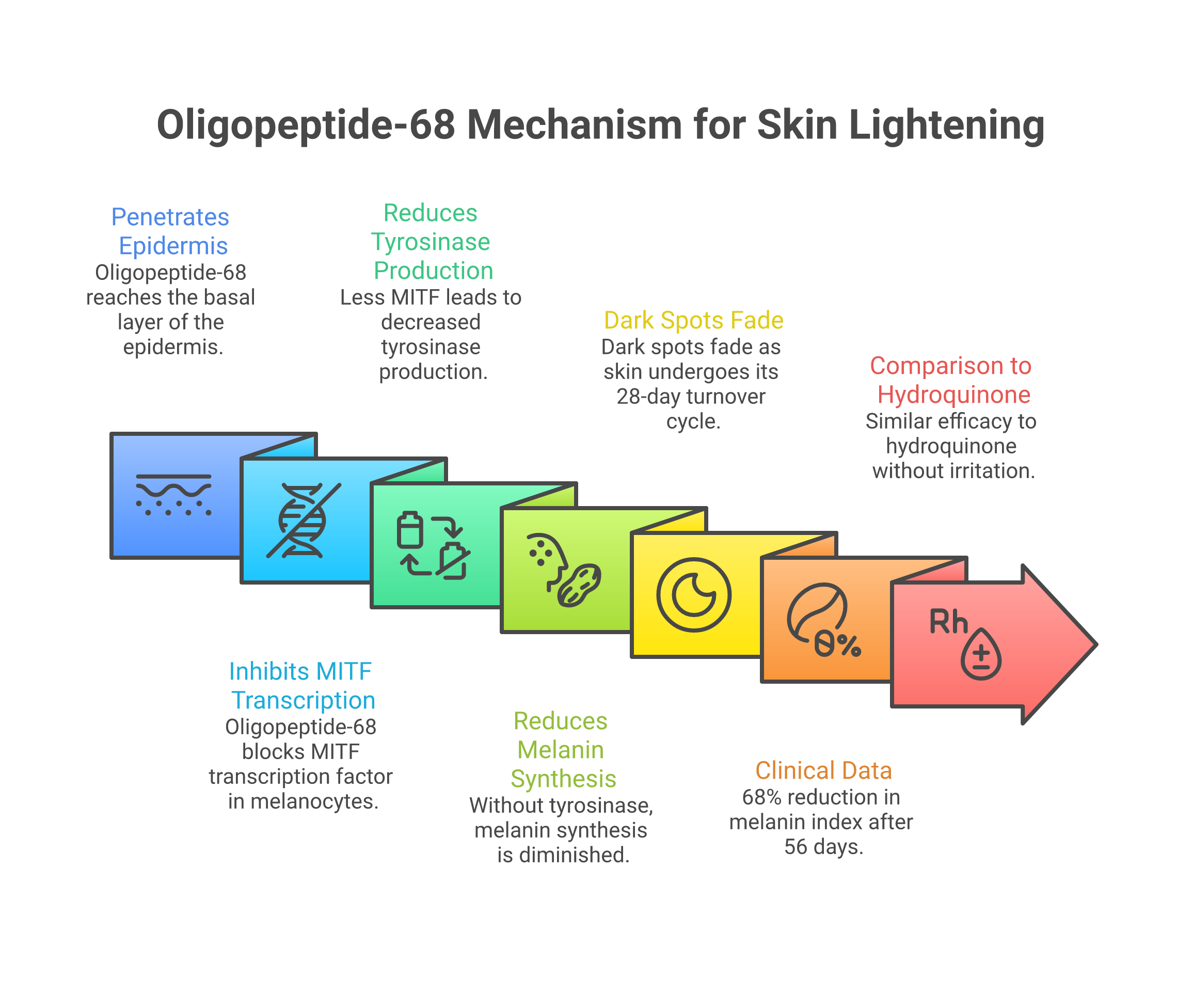
To understand why oligopeptide-68 is effective, you need to know how skin pigmentation actually works. The core pathway works like this: UV exposure, hormonal shifts, or inflammation trigger a cascade inside melanocytes. A master regulator called MITF (microphthalmia-associated transcription factor) activates, which then ramps up production of an enzyme called tyrosinase. Tyrosinase is the rate-limiting enzyme in melanogenesis, the actual chemical process that converts the amino acid tyrosine into melanin. More tyrosinase activity means more melanin, which means darker spots.
Most traditional brightening ingredients only block one step in this process. Vitamin C and kojic acid inhibit tyrosinase directly. Hydroquinone is toxic to melanocytes themselves. But oligopeptide-68 works on multiple pathways simultaneously:
- It suppresses MITF expression, the “master switch” that controls melanocyte activity. Think of this as telling the factory manager to cut production orders before they even reach the assembly line.
- It inhibits tyrosinase activity, blocking the enzyme that directly catalyzes melanin synthesis, reducing pigment output at the point of production.
This dual mechanism of action (hitting both the upstream regulator and the downstream enzyme) is why the 2016 Pratchyapurit clinical trial found oligopeptide-68 can match or exceed hydroquinone’s results. It goes beyond slowing one part of the process. It’s intercepting the pigmentation signal before it fully propagates.
Key Benefits: Why Oligopeptide-68 Is an Effective and Convenient Treatment
Fades Existing Dark Spots and Hyperpigmentation
The most obvious benefit. By reducing melanin production in overactive areas, oligopeptide 68 gradually lightens dark spots caused by sun exposure, post-inflammatory hyperpigmentation from acne or injuries, and hormonal pigmentation. In the manufacturer’s in-vivo testing with a 5% B-White formula applied twice daily for 56 days, 87% of participants reported a more uniform skin tone and 91% found their skin appeared brighter.
Treats Facial Melasma Without Hydroquinone
Melasma is notoriously stubborn. It’s driven by hormonal changes (pregnancy, oral contraceptives), sun exposure, and genetic predisposition. Hydroquinone has long been the go-to, but it comes with risks: ochronosis (paradoxical darkening), rebound hyperpigmentation, and irritation. The Pratchyapurit 2016 study found that combining diacetyl boldine with oligopeptide-68, sunscreen, and exfoliating agents produced effective and convenient treatment for facial melasma that was equal to or better than 4% hydroquinone on normal skin. The combined use of these two formulations showed both faster action and stronger pigment reduction than hydroquinone alone. The diacetyl boldine plus oligopeptide 68 pairing targets melanin through complementary mechanisms, which is likely why the two outperformed hydroquinone in side-by-side testing.
Promotes Even Skin Tone Over Time
Because oligopeptide 68 regulates melanin at the genetic level (MITF), it doesn’t just lighten existing spots. It also helps prevent new ones from forming. This creates a more even, luminous skin tone across the entire treated area. I find that patients who use oligopeptide 68 consistently for 8-12 weeks notice an overall improvement in skin clarity, not just spot-by-spot fading.
Gentle Enough for Sensitive Skin
Irritation is rarely reported with oligopeptide 68. Unlike hydroquinone, tretinoin, or even high-concentration vitamin C (which can cause stinging, peeling, or redness), this peptide works through signaling rather than cytotoxicity. That makes it suitable for people with sensitive skin, rosacea-prone skin, or those who’ve had bad reactions to other brightening serum ingredients. It won’t compromise your skin barrier, and it’s suitable for both normal skin and reactive skin types.
High Compatibility With Other Actives
Oligopeptide-68 plays well with most other ingredients in your routine. It pairs effectively with niacinamide (which inhibits melanosome transfer, a different step in the pigmentation process), vitamin C (additional tyrosinase inhibition plus antioxidant protection), hyaluronic acid (hydration without interference), glycerin, squalane, tocopherol (vitamin E), and even retinol. Formulations preserved with phenoxyethanol are also compatible. The combined approach of layering complementary mechanisms tends to produce better results than any single ingredient alone.
Oligopeptide-68 vs. Other Brightening Serum Ingredients
Choosing the right brightening ingredient depends on your skin type, tolerance for irritation, and the specific type of pigmentation you’re treating. Here’s how oligopeptide-68 compares to the most common alternatives:
| Ingredient | Mechanism | Best For | Potential Downsides | Speed of Results |
|---|---|---|---|---|
| Oligopeptide-68 | Suppresses MITF + inhibits tyrosinase | Melasma, general hyperpigmentation, sensitive skin | Slower initial results; fewer product options | 6-12 weeks |
| Hydroquinone (2-4%) | Toxic to melanocytes | Severe, stubborn hyperpigmentation | Ochronosis risk, rebound darkening, banned in some countries, irritation | 4-8 weeks |
| Vitamin C (L-Ascorbic Acid) | Tyrosinase inhibitor + antioxidant | Sun spots, general brightening, prevention | Unstable, can oxidize, may sting sensitive skin | 8-12 weeks |
| Niacinamide | Blocks melanosome transfer to keratinocytes | Mild pigmentation, oil control, redness | Less potent for deep pigmentation; needs 4-5% concentration minimum | 8-12 weeks |
| Tranexamic Acid | Blocks plasmin pathway, reduces inflammation-driven pigment | Melasma, inflammation-triggered spots | Oral form carries rare clotting risk; topical is safer | 8-12 weeks |
| Kojic Acid | Chelates copper in tyrosinase | Sun spots, age spots | Can cause contact dermatitis, sensitization, instability | 4-8 weeks |
| Alpha Arbutin | Competitive tyrosinase inhibitor | Moderate pigmentation, all skin types | Slower acting, lower potency than hydroquinone | 8-16 weeks |
| Azelaic Acid | Tyrosinase inhibitor + anti-inflammatory | Acne-related PIH, rosacea with pigmentation | Can cause mild tingling initially | 12-24 weeks |
| Diglucosyl Gallic Acid | Inhibits melanin synthesis + antioxidant | Overall brightening, prevention | Newer ingredient, less long-term data | 4-8 weeks |
What stands out about oligopeptide-68 is its safety profile combined with multi-target efficacy. You don’t have to choose between “effective but harsh” and “gentle but weak.” For patients who need consistent, long-term brightening without cycling off an ingredient (as recommended with hydroquinone), oligopeptide-68 in a good brightening serum is often the more practical choice.
How to Use Oligopeptide-68 in Your Skincare Routine
Oligopeptide-68 is most effective in leave-on products like serums, moisturizers, and targeted treatments. Wash-off products like cleansing formulas don’t keep the peptide in contact with skin long enough to work.
Morning Routine
- Cleansing: Gentle cleanser, nothing harsh that strips your barrier
- Toner/essence (optional)
- Oligopeptide-68 serum: Apply to clean, slightly damp skin. A few drops across face and neck
- Moisturizer: Layer over the serum to lock in moisture and hydration
- Sunscreen SPF 30+: Non-negotiable. Any brightening ingredient becomes pointless if you’re not protecting against UV-triggered melanin production. Sunscreen is what prevents new dark spots while the peptide fades existing ones
Night Routine
- Double cleanse if wearing sunscreen or makeup
- Active treatments: You can use retinol for dark spots alongside oligopeptide-68, though I’d recommend introducing them on alternate nights initially to assess tolerance
- Oligopeptide-68 serum or night cream
- Moisturizer or occlusive
Oligopeptide-68 is generally safe for twice-daily use, morning and night. You can pair it with niacinamide, hyaluronic acid, or vitamin C without conflict. The one combination I’d approach cautiously is with strong chemical exfoliants (high-concentration glycolic acid, other AHAs, or BHAs). Not because they’re incompatible, but because over-exfoliation can trigger the very inflammation that causes more pigmentation.
Results Timeline: How Long Does Oligopeptide-68 Take to Work?
Set realistic expectations. This is not an overnight ingredient.
- Weeks 1-3: No visible change. The peptide is working at the cellular level, suppressing MITF and tyrosinase. Melanin already deposited in upper skin layers hasn’t turned over yet.
- Weeks 4-6: Subtle improvements. Skin may appear slightly more luminous. Newer, lighter skin cells begin reaching the surface as older, pigmented cells shed.
- Weeks 6-8: Noticeable fading of lighter spots. Overall skin tone starts looking more uniform. This is typically when patients first say “I can see a difference.”
- Weeks 8-12: Significant improvement. The manufacturer data shows peak results around 56 days (8 weeks) with the B-White formula. Deeper pigmentation and melasma take the full 12 weeks, or longer.
- Weeks 12+: Continued gradual improvement. For stubborn spots or deeper pigmentation that takes longer to fade, maintaining consistent use is key.
The timeline for dark spots to fade depends on how deep the melanin sits. Epidermal pigmentation (sun spots, mild PIH) responds faster (typically 6-8 weeks). Dermal pigmentation (some melasma, deep post-acne marks) can take 3-6 months. Adding sunscreen religiously and avoiding known pigmentation triggers (unprotected sun exposure, picking at skin, hormonal fluctuation) helps accelerate results.
Safety and Side Effects of Oligopeptide-68
Oligopeptide-68 has a strong safety profile. In clinical research, it was well-tolerated with no severe adverse reactions reported. Most subjects in the Pratchyapurit study experienced only mild, temporary skin reactions, and even those were uncommon.
Compared to the risks associated with hydroquinone (potential ochronosis with prolonged use, cytotoxicity, rebound hyperpigmentation after discontinuation), oligopeptide-68 carries virtually none of these concerns. It works through signaling rather than killing melanocytes, so there’s no cell damage involved.
That said, a patch test is always recommended when introducing any new ingredient, especially if you have sensitive skin or a history of allergic reactions. Apply a small amount to the inner forearm, wait 24-48 hours, and look for redness, itching, or irritation before applying to your face.
Oligopeptide-68 is safe for use during all seasons, but (I’ll say it again) sunscreen is non-negotiable when using any brightening product. UV exposure without protection can undo weeks of progress and trigger rebound pigmentation that’s harder to treat than the original spots.
What Products Contain Oligopeptide-68?
Oligopeptide-68 appears in a growing number of products across different price points and formulations. When shopping online or in-store, look for “oligopeptide-68” or “B-White” on the ingredient list. Most store shelves carry these under their brand-name brightening lines. It’s most commonly found in brightening serums, though some moisturizers, eye creams, and treatment masks include it as well.
Brands like COSRX, SVR, NIOD (by Deciem), and AlumierMD have incorporated oligopeptide-68 into their brightening lines. The ingredient works particularly well in formulations that also include complementary actives. A serum combining oligopeptide-68 with niacinamide and hyaluronic acid, for instance, addresses pigmentation, barrier support, and hydration simultaneously.
When choosing products, prioritize leave-on formulations over rinse-off ones. Check that oligopeptide-68 appears reasonably high on the ingredient list (mid-list or higher) rather than as the last ingredient at trace concentrations. Products marketed specifically as brightening serums tend to contain effective concentrations. The clinical research used a 5% B-White concentration, though many consumer products don’t disclose their exact percentage. Look for brands whose product pages include references to clinical testing or publish their concentration data, and be cautious about products making bold claims without supporting evidence. Cross-check product information against ingredient databases like INCIDecoder before purchasing. If you’re also exploring the best dark spot treatments for sensitive skin, oligopeptide-68 formulations are a strong starting point.
Frequently Asked Questions
What does oligopeptide 68 do for skin?
Oligopeptide 68 reduces melanin production by suppressing MITF (the master regulator of melanocyte activity) and inhibiting the tyrosinase enzyme. The result is gradual fading of dark spots, reduced hyperpigmentation, and a more even skin tone. It’s effective for sun spots, post-inflammatory hyperpigmentation, and facial melasma.
How long does oligopeptide 68 take to show results?
Expect 6-8 weeks for initial visible improvement and 8-12 weeks for significant results. In clinical testing with a 5% B-White formula, 87% of participants reported more uniform skin tone after 56 days. Deeper pigmentation like melasma may take 12 weeks or longer. Consistent daily use combined with sunscreen produces the best outcomes.
Can you use oligopeptide 68 with vitamin C or retinol?
Yes to both. Oligopeptide 68 pairs well with vitamin C because they target pigmentation through different mechanisms, so the combined effect is often stronger than either alone. For retinol, the combination is also safe, but if you’re new to retinol, introduce them on alternate nights to ensure your skin tolerates both actives before using them together.
Is oligopeptide 68 better than hydroquinone?
For many people, yes. The 2016 clinical study in the Journal of Cosmetic Dermatology found oligopeptide-68 formulations equal to or better than 4% hydroquinone for pigment reduction, without the risks of ochronosis or rebound darkening. Hydroquinone remains the fastest-acting option for severe hyperpigmentation, but oligopeptide-68 is safer for long-term use without the cycling restrictions.
Is oligopeptide 68 safe for sensitive skin?
Yes. Oligopeptide 68 is well-tolerated across skin types, including sensitive skin. Because it works through cell signaling rather than cytotoxicity, it rarely causes irritation, redness, or peeling. It’s one of the gentler brightening ingredients available, and a recommended option if you’ve found hydroquinone, kojic acid, or high-percentage vitamin C too harsh.
What is B-White in skin care?
B-White (or ß-White) is the trade name for a cosmetic ingredient whose primary active is oligopeptide-68. Developed by Lucas Meyer Cosmetics, B-White is a concentrated brightening serum base used by formulators in products targeting hyperpigmentation, melasma, and uneven skin tone. If you see “B-White” on a product label or marketing, it means the product contains oligopeptide-68.
What is the best peptide for hyperpigmentation?
Oligopeptide 68 is currently the most researched peptide specifically targeting skin pigmentation. Other peptides like acetyl hexapeptide-1 (Melitane) and nonapeptide-1 also show promise, but oligopeptide-68 has the strongest clinical evidence, including a head-to-head comparison with hydroquinone showing equal or superior results. For addressing how to remove dark spots from face through a peptide-based approach, oligopeptide-68 is the most established choice.
This article is for informational purposes only and does not constitute medical advice. Consult a qualified healthcare provider before making changes to your treatment plan, especially if you are pregnant, nursing, or managing a medical condition.

