

Niacinamide for Age Spots: How It Works, What Percentage to Use, and Realistic Results

Dr. Matthew Olesiak, MD, is the Chief Medical Director at SANESolution, a renowned wellness technology company dedicated to providing evidence-based solutions for optimal living. Dr. Olesiak earned his medical degree from the prestigious Jagiellonian University Medical College in Kraków, Poland, where he developed a strong foundation in medicine.
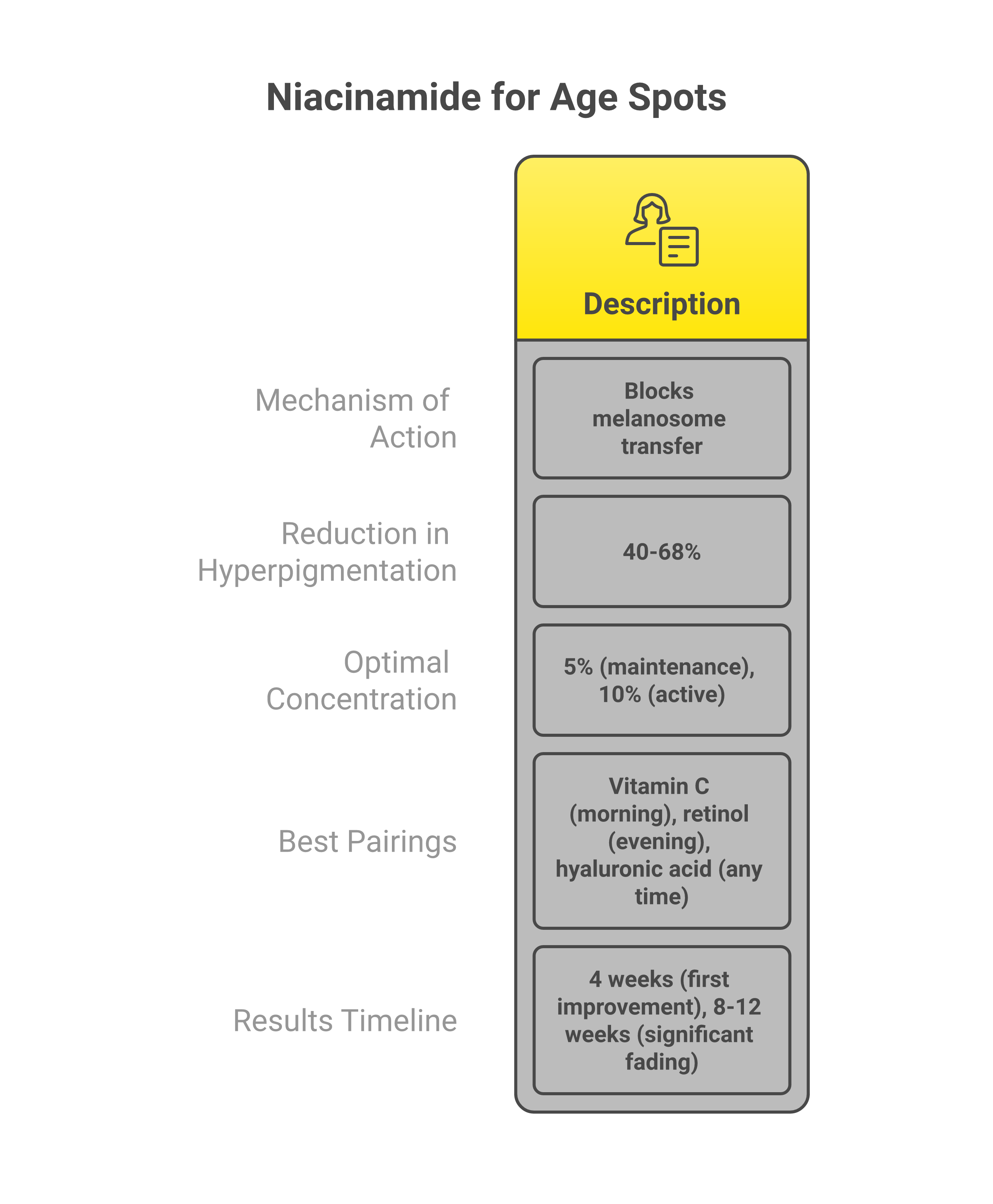
Yes, niacinamide works for age spots. This form of vitamin B3 (niacinamide) reduces hyperpigmentation by blocking melanosome transfer from melanocytes to keratinocytes, the process that deposits excess melanin into your skin cells and creates those stubborn dark spots. At concentrations of 4-5%, topical niacinamide has been shown in multiple studies to visibly fade age spots within 8-12 weeks of consistent use.
But here’s what most guides won’t tell you: niacinamide alone isn’t enough. Without daily sunscreen and a well-structured skincare routine, you’re basically mopping the floor with the faucet running. I’ve watched people spend months on expensive niacinamide serums only to wonder why nothing changed, and the answer was almost always sun exposure undoing the work.
This guide covers exactly how niacinamide fades age spots, what concentration you actually need, how to layer it with other ingredients, and a realistic timeline so you know what to expect.
What Are Age Spots and Why Do They Form?
Age spots, technically called solar lentigines, are flat, brown or tan patches that show up on sun-exposed areas like your face, hands, chest, and shoulders. Despite the name, they’re not really caused by skin aging itself. They’re caused by cumulative sun damage and years of UV exposure that your skin simply can’t repair fast enough.
Here’s what happens at the cellular level: UV exposure triggers your melanocytes (the pigment-producing cells in your skin) to ramp up melanin production as a protective response. When you’re young, that melanin distributes fairly evenly. But after years of repeated UV exposure, certain clusters of melanocytes become hyperactive, pumping out excess melanin that concentrates in specific areas. The result? Those dark spots on your face, hands, and forehead that seem to appear out of nowhere after age 40.
It’s worth distinguishing age spots from other types of skin discoloration:
- Age spots (solar lentigines): Caused by cumulative UV exposure. Flat, well-defined borders. Most common on aging facial skin and hands.
- Melasma: Hormone-driven (often triggered by pregnancy, birth control, or HRT). Larger, more diffuse patches, usually on cheeks and forehead.
- Post-inflammatory hyperpigmentation (PIH): Follows injury, acne breakouts, or irritation. Fades faster than true age spots.
The good news? Niacinamide helps reduce the appearance of dark spots across all three types because it addresses the underlying melanin transfer mechanism. But age spots specifically respond well because they’re rooted in an overactive melanin pathway, exactly what niacinamide targets. It’s also worth noting that longstanding sun damage increases skin cancer risk, so if any spot changes shape, grows rapidly, or has irregular borders, see a dermatologist to rule out something more serious before starting any cosmetic treatment.
The Science: How Niacinamide Fades Hyperpigmentation
Niacinamide (also called nicotinamide) is a water-soluble form of vitamin B3, specifically a form of vitamin B3, that your body uses to build NAD+ and NADP+, coenzymes involved in hundreds of cellular reactions. You can find niacinamide in foods like chicken, tuna, mushrooms, and green peas, but the amounts you’d get from diet alone aren’t enough to affect skin pigmentation directly. When applied topically through skin care products, niacinamide does something specific for dark spots that other active ingredients don’t do as elegantly.
The Melanosome Transfer Mechanism
Your skin produces melanin inside organelles called melanosomes, which are housed in melanocytes deep in the epidermis. Those melanosomes then get transferred to surrounding keratinocytes (the cells that make up about 90% of your outer skin layer). This transfer is what actually makes dark spots visible on the surface.
Topical niacinamide interrupts this melanosome transfer process, and the clinical evidence is strong. A landmark study by Hakozaki et al. Published in the British Journal of Dermatology (2002), a double-blind randomized clinical trial, demonstrated that niacinamide produced 35-68% inhibition of melanosome transfer in cell culture models and showed significant reducing of cutaneous pigmentation in clinical subjects, effectively reducing cutaneous pigmentation and producing a more even skin tone. That’s not killing melanocytes or bleaching anything, it’s simply slowing the delivery system that moves pigment to the skin surface.
This distinction matters. Ingredients like hydroquinone work by suppressing melanocyte activity directly, which is more aggressive and carries more risk. Niacinamide takes a gentler approach that works across virtually all skin types, including sensitive skin.
Secondary Benefits That Support Spot Fading
The melanosome mechanism is the headline, but niacinamide pulls additional weight to brighten skin and reduce discoloration through several supporting pathways:
- Skin barrier reinforcement: Niacinamide boosts ceramide production and strengthens the skin’s natural barrier (the epidermal permeability barrier). This includes boosting ceramides and other stratum corneum lipids. A stronger barrier means less moisture loss, reduced inflammation, and less reactivity to environmental damage that can worsen skin conditions like dark spots.
- Anti-inflammatory properties: Chronic low-grade inflammation contributes to uneven skin tone and can trigger melanocytes to overproduce. Niacinamide’s anti-inflammatory effects help reduce inflammation and calm this cycle, calming irritated skin in the process, which is why it also helps with treating acne, rosacea, and other inflammatory skin concerns.
- Antioxidant protection: By supporting cellular energy production, niacinamide helps neutralize free radical damage from UV exposure and oxidative stress, helping protect against one of the root causes of premature pigmentation and environmental damage.
- Improved skin texture and fewer fine lines: Niacinamide promotes cell turnover and supports collagen synthesis, which improves overall skin texture and helps pigmented skin cells shed more efficiently. Research published in the International Journal of Cosmetic Science by Bissett et al. (2004) found that 5% niacinamide also reduced fine lines, wrinkles, and skin discoloration in 50 women over 12 weeks, leading to a more even skin tone and improved skin clarity.
This multi-pathway approach is why niacinamide keeps showing up in clinical and aesthetic dermatology research as a versatile, well-tolerated active. It doesn’t just minimize the appearance of dark spots. It supports the overall environment that keeps healthy skin maintained and less prone to new spots forming. A 2021 review in Antioxidants (MDPI) described these combined benefits as the “mechanistic basis” for niacinamide’s cosmeceutical aptitudes in helping control skin aging and pigmentation.
What the Research Says: Studies on Niacinamide and Dark Spots
I’m always skeptical of skincare claims that aren’t backed by actual peer-reviewed clinical evidence. Here’s what the dermatology research on niacinamide for treating hyperpigmentation actually shows:
| Study | Participants | Concentration | Duration | Key Finding |
|---|---|---|---|---|
| Hakozaki et al. (2002) | 18 Japanese women | 5% niacinamide | 8 weeks | Significant reduction in hyperpigmentation vs. Vehicle control |
| Navarrete-Solis et al. (2011) | 27 melasma patients | 4% niacinamide | 8 weeks | Comparable efficacy to 4% hydroquinone with fewer side effects |
| Greatens, Hakozaki, Boissy et al. (2005) | In vitro + clinical | 3.5-5% | Various | Confirmed reversible melanosome transfer inhibition mechanism |
| Bissett et al. (2004) | 50 Caucasian women | 5% niacinamide | 12 weeks | Reduced hyperpigmentation, fine lines, improved skin tone |
The Navarrete-Solis study is particularly telling. It directly compared niacinamide to hydroquinone, the longtime gold standard for treating dark spots, and found niacinamide performed comparably as a melasma treatment while causing less irritation. That’s a big deal, because hydroquinone has restrictions in several countries due to safety concerns and can cause ochronosis (paradoxical darkening) with prolonged use.
For deeper research, the NIH PubMed study on niacinamide vs. Hydroquinone for melasma is worth reading in full if you want the clinical details.
What Percentage of Niacinamide Is Best for Dark Spots?
Walk through any skincare aisle and you’ll find niacinamide in skin care products ranging from 2% all the way to 20% concentration. Lotions, serums, moisturizers, eye creams, the options are endless. So what concentration of this vitamin B3 derivative actually works for fading age spots?
The Sweet Spot: 4-5%
Most of the clinical evidence supporting niacinamide for hyperpigmentation used 4% niacinamide or 5% niacinamide concentrations. This is the range where you get measurable results without pushing into skin irritation territory. The Navarrete-Solis randomized clinical trial used 4% niacinamide and found it comparable to hydroquinone. So you don’t need to go higher to see a noticeable difference. If you’ve never used niacinamide before, a 5% niacinamide serum is the smartest starting point.
Higher Concentrations: 10% and Above
Products with 10% niacinamide are popular and can deliver faster improvements for some people. However, the evidence that 10% outperforms 5% specifically for pigmentation is thin. Higher concentrations do show stronger effects on overall skin appearance, pore refinement, and oil control for oily skin. So if you’re addressing multiple skin concerns simultaneously, 10% makes sense. People with oily skin or acne-prone conditions often find higher concentrations help minimize pores and reduce excess sebum production alongside fading spots.
At 15-20% concentrations, the risk of skin irritation, redness, and flushing increases substantially, especially for those with sensitive skin or dry skin. I’d only recommend going above 10% if you’ve used niacinamide for several months without any issues and you’re targeting stubborn spots that haven’t responded to lower concentrations.
Concentration Guide by Skin Type
| Skin Type | Recommended Concentration | Notes |
|---|---|---|
| Sensitive skin | 2-4% | Start low, build tolerance over 2-3 weeks |
| Normal / combination | 5% | The research-backed standard for dark spots |
| Oily / acne-prone | 5-10% | Higher % also helps with treating acne and oil control |
| Mature / dry skin | 5% | Pair with hyaluronic acid to keep skin hydrated |
| Experienced actives user | 10-12% | Only if lower % hasn’t produced results after 12 weeks |
How to Use Niacinamide in Your Skincare Routine for Best Results
Having the right product matters, but how you use it matters just as much. Here’s the step-by-step approach that gets the best results for fading dark spots:
Morning Routine
- Cleanse with a gentle, pH-balanced cleanser to remove dirt and impurities without stripping your skin barrier. Thorough cleansing helps niacinamide absorb into clean skin more effectively.
- Apply niacinamide serum to clean, slightly damp skin. Use 3-4 drops and press gently into areas with dark spots. Cover your full face, niacinamide’s skin benefits extend to the surrounding skin too.
- Layer hyaluronic acid (optional but helpful). This keeps skin hydrated and plump, which supports the skin barrier and helps niacinamide absorb.
- Moisturize. Use a lightweight moisturizer that won’t clog pores.
- Broad-spectrum sunscreen (SPF 30+). This is non-negotiable. Without sunscreen, niacinamide can’t outpace ongoing UV-triggered melanin production. You need both offense (niacinamide) and defense (sunscreen).
Evening Routine
- Double cleanse if you wore sunscreen or makeup. Oil-based cleanser first, then water-based.
- Active treatments (retinol, AHAs, or vitamin C). Apply these before niacinamide if your routine includes them.
- Niacinamide serum. Second application of the day. Niacinamide is stable enough for twice-daily use across most skin types.
- Heavier moisturizer or night cream. Seal everything in.
Key Application Tips
- Consistency beats concentration. Using 5% niacinamide every single day outperforms sporadic use of 10%.
- Separate niacinamide from benzoyl peroxide. Applying niacinamide and benzoyl peroxide at the exact same time may cause flushing in some people, though a 2021 clinical trial published in The Journal of Clinical and Aesthetic Dermatology (PMC8594539) found the combination effective for acne with minimal side effects. To be safe, alternate them, niacinamide in the morning, benzoyl peroxide at night.
- Pat, don’t rub. Pressing the serum into your skin improves absorption compared to rubbing it across the surface.
- Wait 60 seconds between layers. Let each product absorb before adding the next step in your skin care routine.
For a complete breakdown of how to build an effective dark spot routine, check out our guide on how to fade dark spots on your face.
How Long Does It Take for Niacinamide to Fade Dark Spots?
This is probably the most common question I get, and the honest answer isn’t always what people want to hear.
Realistic Timeline
| Timeframe | What You’ll Notice |
|---|---|
| Weeks 1-2 | Niacinamide improves skin texture noticeably in this period, and skin feels smoother and more hydrated. No visible change in dark spots yet. |
| Weeks 3-4 | Skin tone starts looking more even overall as niacinamide improves skin texture and tone simultaneously. Newer, lighter spots may begin to fade. |
| Weeks 6-8 | Visible improvement in most dark spots. Spots appear lighter and edges less defined. |
| Weeks 8-12 | Significant fading of age spots and noticeably brighter skin. This is when the clinical studies measured peak results. |
| 3-6 months | Maximum visible improvement. Deep, old spots continue to lighten gradually. |
Factors that affect your personal timeline include the depth and darkness of your spots, your overall skin type, how consistently you apply your products, and, I can’t say this enough, how diligent you are with sunscreen. Someone using niacinamide daily with religious SPF application will see results two to three times faster than someone who skips sun protection on weekends.
Quick reality check: niacinamide won’t completely erase deep, decades-old age spots. It fades them significantly, but if you’re expecting total removal, you may need to combine topical niacinamide with professional treatments like laser therapy or chemical peels.
Niacinamide vs. Other Treatments for Age Spots
Niacinamide isn’t the only ingredient that works on dark spots. So how does it stack up against the alternatives? Here’s an honest comparison based on the research:
| Ingredient | Effectiveness for Age Spots | Speed of Results | Irritation Risk | Best For |
|---|---|---|---|---|
| Niacinamide (4-5%) | Moderate-High | 8-12 weeks | Very Low | All skin types; sensitive skin; multiple concerns |
| Vitamin C (15-20%) | High | 4-8 weeks | Low-Moderate | Prevention + treatment; antioxidant protection |
| Retinol (0.3-1%) | High | 8-16 weeks | Moderate-High | Age spots + anti-aging (wrinkles, texture) |
| Hydroquinone (2-4%) | Very High | 4-8 weeks | Moderate | Stubborn, deep spots; short-term use only |
| Alpha arbutin (1-2%) | Moderate | 8-12 weeks | Very Low | Sensitive skin; gentle brightening |
| Azelaic acid (15-20%) | Moderate-High | 8-12 weeks | Low-Moderate | Acne-related dark spots + rosacea-prone skin |
| Kojic acid (1-4%) | Moderate | 4-8 weeks | Moderate | Surface-level spots; budget-friendly option |
What stands out about niacinamide isn’t that it’s the strongest, it’s that it has the best safety-to-efficacy ratio. You can use it every day, twice a day, on virtually any skin type without worrying about the irritation that comes with retinoids or the usage restrictions that come with hydroquinone.
For a deeper dive into all your treatment options, our article on dark spots on face treatments covers the full spectrum from topicals to professional procedures.
Combining Niacinamide with Other Ingredients for Better Results
Using niacinamide alongside complementary ingredients can accelerate your results. Here are the combinations that make the biggest difference:
Niacinamide + Vitamin C
There’s an old internet myth that niacinamide and vitamin C “cancel each other out.” This came from a single 1960s study using conditions that don’t occur on human skin at normal temperatures. Modern research has thoroughly debunked this. In reality, they complement each other: vitamin C is a potent antioxidant that directly inhibits the tyrosinase enzyme (which triggers melanin production), while niacinamide blocks the downstream transfer of that melanin to skin cells. Together, they attack the pigmentation pathway at two different points.
Apply vitamin C in the morning (it boosts your sunscreen’s UV defense) and niacinamide right after, or use them in the same serum if the formulation combines both.
Niacinamide + Retinol
This is one of the most powerful combinations for treating dark spots on aging skin. Retinol accelerates cell turnover, pushing pigmented skin cells to the surface faster where they shed off. Niacinamide, meanwhile, prevents new pigment from being deposited. The bonus? Niacinamide helps strengthen the skin barrier and reduce the irritation, flaking, and dryness that retinol commonly causes.
Apply retinol at night, followed by niacinamide. Or use niacinamide in the morning and retinol at night if your skin is particularly sensitive.
Niacinamide + AHAs/BHAs
Alpha hydroxy acids (like glycolic acid and lactic acid) and beta hydroxy acids (salicylic acid) exfoliate the outer layer of dead skin cells, including the pigmented ones sitting on the surface. This exfoliation clears the path for niacinamide to work on the deeper melanin transfer process more effectively. Use your exfoliant 2-3 times per week, and niacinamide daily.
Niacinamide + Hyaluronic Acid
Not a direct spot-fighting combo, but hyaluronic acid keeps skin hydrated and supports a strong skin barrier, which creates the optimal environment for niacinamide to work. Dehydrated skin is more prone to inflammation and uneven skin tone, so keeping moisture levels up is a simple way to support your anti-dark-spot efforts. For anyone with dry skin, this pairing is essential.
Niacinamide + Sunscreen (The Non-Negotiable Pairing)
Every ingredient pairing above is optional. This one isn’t. Broad-spectrum SPF 30 or higher, every single day, rain or shine. A single sunburn can undo months of progress. Niacinamide works on the dark spots you already have; sunscreen prevents new ones from forming. Use both or don’t bother with either.
Choosing the Right Niacinamide Product: Serums vs. Creams
Not all niacinamide products are equal. The delivery system matters for how well the active ingredient actually reaches the skin cells where it needs to work.
Niacinamide Serums
A niacinamide serum is the most effective format for targeting dark spots specifically. Serums have smaller molecular structures and higher concentrations of active ingredients compared to creams, meaning more niacinamide actually penetrates into your epidermis. If your primary goal is to treat hyperpigmentation, a serum should be your first choice.
Look for serums that combine niacinamide with supporting ingredients like zinc PCA (helps regulate sebum), hyaluronic acid (hydration), or peptides (support skin renewal).
Niacinamide Moisturizers and Creams
Moisturizers with niacinamide are a good maintenance option after you’ve achieved your desired results with a serum. They deliver a lower concentration in a more emollient base that’s better for keeping skin hydrated long-term. They’re also a smart choice if you have dry skin and can’t tolerate a serum without a heavy moisturizer on top anyway.
What to Avoid in Niacinamide Products
- Fragrance: Unnecessary irritant, especially on compromised or dark-spot-prone skin.
- Alcohol (denatured): Dries and disrupts the skin barrier, the opposite of what you want.
- Unstable packaging: While niacinamide is more stable than vitamin C, clear bottles that let in light can still degrade actives over time. Opaque or tinted bottles are better.
For a full comparison of dark spot products including serums, creams, and correctors, see our guide to the best dark spot removers for face.
Potential Side Effects and How to Avoid Them
Niacinamide is one of the gentlest active ingredients in skincare, but “gentle” doesn’t mean “zero risk.” Here’s what you should know:
Common Side Effects
- Mild redness or flushing: More common at higher concentrations (above 10%). Usually subsides within 20-30 minutes.
- Slight tingling on first use: Normal for sensitive skin types. Should diminish within 3-5 days of consistent use.
- Breakouts (purging): Rare, but some people experience temporary breakouts as cell turnover increases. This typically resolves within 2-3 weeks.
Who Should Be Cautious
- People with very sensitive skin or active eczema: Start with 2% niacinamide and patch test for 48 hours before full-face application.
- Those using benzoyl peroxide: Apply at different times of day to avoid flushing and reduced efficacy.
- Anyone with a known niacin sensitivity: If oral niacin causes significant flushing for you, proceed cautiously with topical niacinamide, though the topical form rarely triggers the same reaction.
If irritation persists beyond a week, reduce your application to once every other day or drop down to a lower concentration. Niacinamide is generally safe for all skin types, but everyone’s skin barrier is different. For more guidance on ingredients that work for reactive skin, see our article on the best dark spot removers for sensitive skin.
Oral Niacinamide Supplements vs. Topical Products for Dark Spots
You’ll notice niacinamide supplements (vitamin B3 pills) marketed for skin health alongside topical products. Are they interchangeable? Not for dark spots, no.
Oral niacinamide supplements have shown benefits for reducing the risk of certain skin conditions, a 2015 study in the New England Journal of Medicine found that 500mg twice daily reduced the rate of new nonmelanoma skin cancers by 23% in high-risk patients. But oral niacinamide doesn’t concentrate in the skin at levels high enough to meaningfully inhibit melanosome transfer the way a topical 4-5% product does.
For fading age spots specifically, topical niacinamide applied directly to the affected area is what the clinical evidence supports. Supplements are suitable for general skin health and may help reduce inflammation and support barrier function from the inside, but they won’t replace the targeted action of a serum or lotion applied to your face. If you want the benefits of both, there’s no issue with combining oral supplements and topical skin care products. They work through different pathways.
Frequently Asked Questions About Niacinamide for Age Spots
Is niacinamide or vitamin C better for age spots?
They work differently and are best used together rather than choosing one over the other. Vitamin C inhibits melanin production at the enzymatic level, while niacinamide blocks melanin transfer to skin cells. Vitamin C tends to show faster brightening results (4-8 weeks) but is more likely to cause irritation and is less stable in formulations. Niacinamide is gentler, works on more skin concerns simultaneously (barrier repair, inflammation, oil control), and pairs well with nearly every other active. For age spots specifically, using both in your skincare routine gives you the strongest one-two punch. Learn more about niacinamide’s full range of effects in our guide to niacinamide benefits for skin.
Can niacinamide make dark spots worse?
No. There’s no mechanism by which topical niacinamide increases melanin production or melanin transfer. If your dark spots seem to be getting worse while using niacinamide, the more likely culprits are inadequate sun protection, hormonal changes, or a reaction to another product in your routine. Not the niacinamide itself. Occasionally, initial breakouts from niacinamide can leave post-inflammatory marks on darker skin tones, but this is uncommon and temporary.
Can I use niacinamide every day for dark spots?
Absolutely. Daily use is actually recommended, and supported by the clinical evidence. The studies showing efficacy for hyperpigmentation all involved daily application over 8-12 weeks. Most people tolerate niacinamide twice daily (morning and evening) without any issues. Consistency is more important than concentration for how long it takes to see results.
Should I use niacinamide in the morning or at night for dark spots?
Both. Niacinamide is stable in sunlight and doesn’t increase photosensitivity, so it works well in AM and PM routines. In the morning, it pairs perfectly with sunscreen to provide a multi-pronged defense against UV-triggered pigmentation. At night, it supports skin barrier repair and works alongside retinol or exfoliants. If you only want to use it once, mornings with sunscreen offer the most complete protection against new dark spots forming.
Does niacinamide get rid of age spots completely?
Niacinamide significantly fades age spots, but “completely removes” is too strong a claim for most topical treatments. Shallow, newer spots often fade to the point of being nearly invisible. Deep, well-established spots that have been present for years will improve noticeably but may still have some residual pigmentation. For complete removal of stubborn spots, combining topical niacinamide with professional options like laser treatment, cryotherapy, or prescription-strength retinoids tends to produce the best outcomes.
Can I use niacinamide on my hands for age spots?
Yes, and you should. The hands are one of the most common locations for age spots due to constant UV exposure, yet people often neglect them in their skin care routine. Apply your niacinamide serum to the backs of your hands after your face, followed by a moisturizer and sunscreen. The skin on your hands is thinner than facial skin, so you may see results slightly faster. Just be prepared to reapply sunscreen to your hands throughout the day. They get far more incidental sun exposure than most people realize.
What should you not mix with niacinamide?
The only ingredient that genuinely conflicts with niacinamide is benzoyl peroxide when used simultaneously. Mixing them directly can cause a reaction that produces nicotinic acid, leading to redness and flushing. Separate them by using niacinamide in the morning and benzoyl peroxide at night. Despite what you may have read, niacinamide works fine with vitamin C, retinol, AHAs, BHAs, hyaluronic acid, and azelaic acid, there’s no need to complicate your routine by avoiding these pairings.
The Bottom Line on Niacinamide for Age Spots
Niacinamide won’t replace a dermatologist’s laser or prescription hydroquinone for the most severe skin conditions. But for the majority of people dealing with age spots, especially those who want a safe, well-researched, universally tolerated ingredient they can incorporate into their daily routine. It offers one of the best combinations of efficacy and tolerability available in any skin care product.
The research supports it. The mechanism is well-understood. Niacinamide works alongside almost every other active ingredient to help reduce discoloration, minimize pores, strengthen your skin barrier, and protect against further sun damage. And the side effect profile is about as mild as skincare gets, suitable for sensitive skin, oily skin, dry skin, and everything in between.
Start with a 5% niacinamide serum, apply it twice daily to your entire face and neck, wear your sunscreen religiously, and give it 8 weeks before judging results. That’s the formula. No shortcuts, no miracle overnight cures, just consistent, evidence-based skincare that niacinamide helps deliver.
For a complete overview of what causes dark spots and every treatment approach available, explore our complete guide to dark spots on face: causes and solutions.

