
Dark Spots on Face Dermatologist: When to See One and What Treatments Work

Dr. Matthew Olesiak, MD, is the Chief Medical Director at SANESolution, a renowned wellness technology company dedicated to providing evidence-based solutions for optimal living. Dr. Olesiak earned his medical degree from the prestigious Jagiellonian University Medical College in Kraków, Poland, where he developed a strong foundation in medicine.
Seeing a dark spots on face dermatologist means getting a professional diagnosis of the specific type of hyperpigmentation you have and accessing prescription-strength treatments that outperform anything available over the counter. Whether your brown spots come from sun damage, aging, acne scars, or hormonal changes, a dermatologist with expertise in skin imperfections can identify the exact cause and build a treatment plan to lighten and treat hyperpigmentation at its source. Professional options like prescription hydroquinone, laser resurfacing, microdermabrasion, and chemical peels target excess pigment at depths that drugstore products can’t reach.
I’ve watched people spend hundreds of dollars cycling through serums and correctors that barely touched their brown spots. The ones who finally booked a dermatology appointment almost always wished they’d done it sooner. If dark spots on your face have resisted every topical cream, home remedy, and over the counter treatment you’ve tried for a few months or longer, this guide covers exactly what happens at a dermatology consultation today, the full menu of professional treatments with realistic costs and timelines, special considerations for darker skin tones, and how to prevent new brown spots from forming after treatment. I’ll also cover when you should schedule a visit, what reasons justify going sooner rather than later, and which active ingredients actually move the needle.
What Are Dark Spots and Why Do They Form on the Face?
Dark spots are flat areas of skin that appear darker than the surrounding skin. They develop when melanin producing cells called melanocytes deposit extra melanin into concentrated areas. Melanin is the pigment responsible for your natural skin color, and when your body produces too much of it in one spot, you get a visible brown spot, dark patch, or discoloration. Doctors refer to this broadly as hyperpigmentation, and it covers several distinct skin pigmentation issues — from freckles to postinflammatory hyperpigmentation to melasma patches — that each require different treatment approaches.
The face is especially prone to dark spots and brown spots because it receives more sunlight exposure than almost any other body part. Other commonly exposed areas include the hands, chest, and shoulders. Years of cumulative UV damage triggers melanocytes to produce melanin unevenly, and the substance clumps together in concentrated areas, leading to the age spots and sun spots that become more noticeable with aging over time.
But sun exposure isn’t the only reason for dark patches on the face. Certain medications you may be taking, hormonal changes, acne pimples, and skin injuries can all trigger hyperpigmentation. Tanning beds accelerate the process significantly. Even severe sunburns from a single event can leave lasting brown spots months later. A dermatologist needs to identify the specific type before recommending treatment because using the wrong approach on the wrong type of brown spot or gray-toned discoloration can make things worse and slow the healing process.
Sun Spots and Age Spots (Solar Lentigines)
Solar lentigines are flat brown spots that appear on areas with long term sun exposure, including the face, hands, chest, and shoulders. Most people call them sun spots, sunspots, age spots, or liver spots, and they can sometimes appear gray-brown depending on your complexion. They’re most common in adults over 50, though people with lighter skin tones who spend time outdoors without sun protection can develop them earlier. These brown spots are typically harmless, but they don’t fade on their own because the UV radiation that caused them has already permanently altered the skin cells. A dermatologist can diagnose age spots and distinguish solar lentigines from other spots on your skin using a dermatoscope, which magnifies the pigment pattern beneath the skin’s surface. If you’ve noticed flat brown spots on your cheeks, temples, or forehead that have been there for months, those are almost certainly solar lentigines.
Post Inflammatory Hyperpigmentation (PIH)
Post inflammatory hyperpigmentation develops after skin inflammation or injury. Acne breakouts, pimples, eczema flares, bug bites, burning from harsh products, or even aggressive skin care ingredients applied too frequently can trigger it. When the skin heals, it sometimes overproduces melanin in the damaged area, leaving behind a dark mark that can persist for months or years. PIH is especially common and persistent in people with darker skin tones (Fitzpatrick skin types IV through VI) because their melanocytes react more strongly to inflammation. Acne scars and post-acne brown spots are among the most common reasons people with darker skin visit a dermatologist for treatment of skin pigmentation issues.
Melasma
Melasma produces larger, symmetric patches of darkened skin, usually across the cheeks, forehead, upper lip, or chin. Unlike simple sun spots or age spots, melasma is driven by a combination of hormonal changes and sun exposure. Pregnancy, birth control pills, hormone replacement therapy, and certain medications can all trigger melasma. These hormonal changes are why melasma is sometimes called “the mask of pregnancy.” It disproportionately affects women and people with medium to darker skin tones. Melasma is notoriously difficult to treat because it involves deeper layers of skin and tends to recur with sun exposure or hormonal shifts. A dermatologist may use a Wood’s lamp during examination to determine whether the excess pigment sits in the epidermis (the top layer of skin) or the deeper dermis, since this dictates which treatments will work.
When Should You See a Dermatologist for Dark Spots?
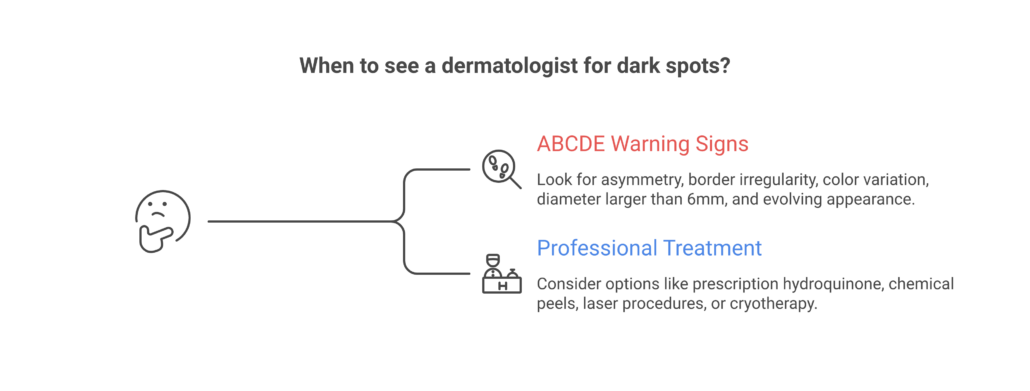
Not every brown spot requires a doctor’s office visit. Topical treatments containing niacinamide, alpha arbutin, vitamin C, or kojic acid can fade mild dark spots over 8 to 12 weeks. But certain situations call for professional evaluation from a skin doctor who can access stronger treatments and rule out skin conditions that need medical attention.
You should see a dermatologist if:
- Topical creams and OTC treatments haven’t worked after 3 months – If you’ve consistently used products with active ingredients like vitamin C, glycolic acid, or azelaic acid and your brown spots look the same or darker, you likely need prescription-strength treatment or an in-office procedure.
- Brown spots are changing in size, shape, or color – Dark spots that grow, develop irregular borders, or show multiple colors could indicate something other than benign hyperpigmentation. A dermatologist needs to evaluate these to rule out skin cancer, particularly melanoma.
- New spots appear suddenly without an obvious cause – Rapid development of multiple new brown spots or black spots can signal underlying skin conditions or medication side effects that require medical evaluation.
- You have a family history of skin cancer – If melanoma or other skin cancers run in your family, any new or changing spots on your skin warrant professional examination.
- Dark spots are accompanied by other symptoms – Itching, bleeding, crusting, or raised texture in a dark spot is a red flag that should prompt an immediate visit.
- You suspect melasma – The symmetric, hormone-driven patches of melasma almost always require professional management because topical creams alone rarely resolve it.
- Brown spots are affecting your confidence – There’s no minimum severity threshold. If brown spots on your face are bothering you and home remedies aren’t helping, a dermatologist can offer options you can’t access on your own.
What Happens During a Dermatology Consultation for Dark Spots
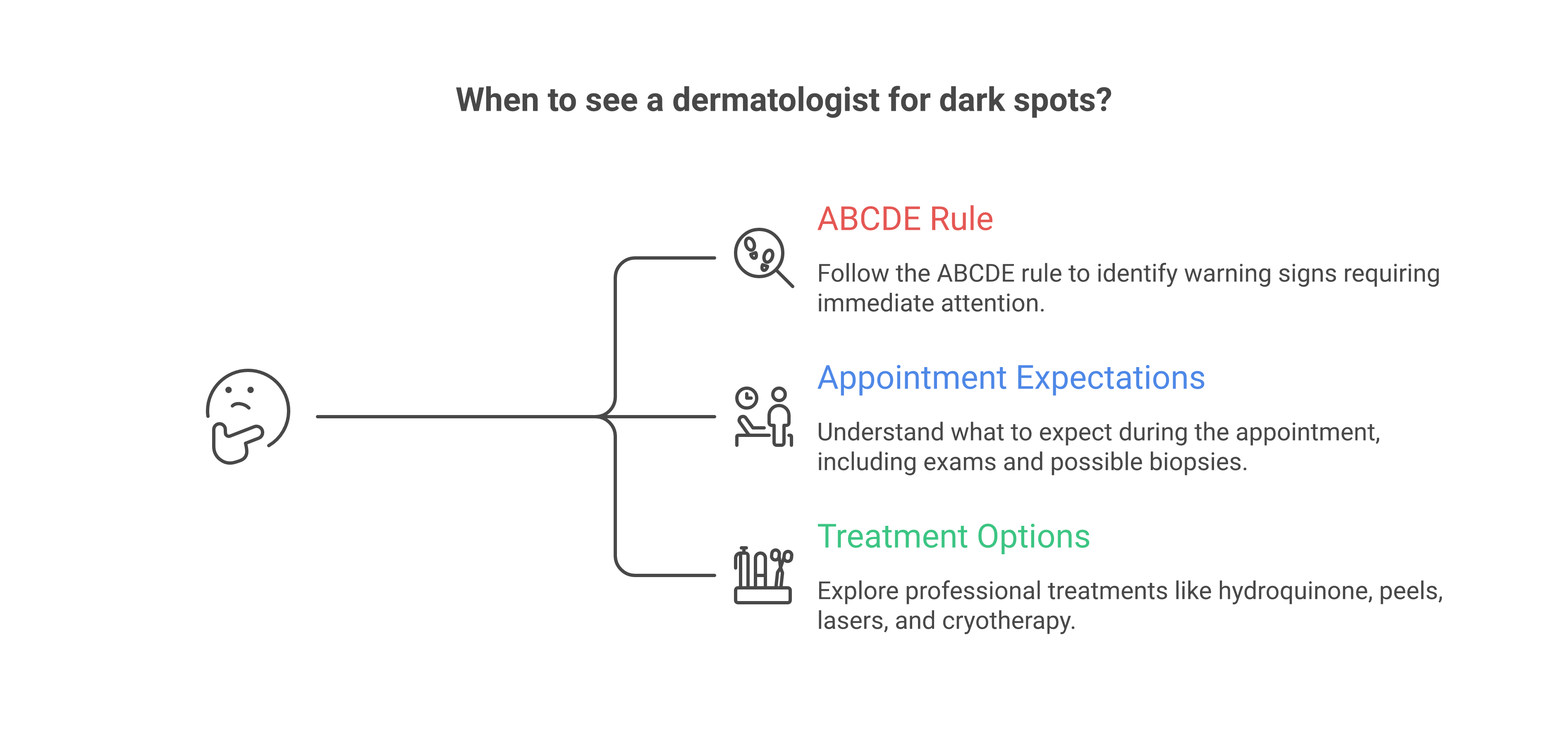
Knowing what to expect at your first appointment removes some of the uncertainty. Here’s how a typical consultation for dark spots on the face unfolds at a dermatologist’s office.
Medical history review: Your dermatologist will ask about your skin care regimen, sun exposure habits, any medications you’re taking (birth control, hormone therapy, antibiotics that increase sun sensitivity), pregnancy history, genetics and family history of skin conditions, and whether you use tanning beds. They’ll also ask about certain medications that can cause dark spots, since drugs like minocycline, amiodarone, and some chemotherapy agents trigger hyperpigmentation as a side effect. All of this shapes the diagnosis.
Visual skin examination: The doctor examines your face under bright light, checking each brown spot for size, shape, color uniformity, and texture. They may use a dermatoscope (a handheld magnifying device with polarized light) to see pigment patterns invisible to the naked eye. For suspected melasma, a Wood’s lamp (ultraviolet light) reveals whether excess pigment sits in the epidermis or dermis.
Diagnosis: Based on the examination, your dermatologist classifies your dark spots. Are they solar lentigines from long term sun exposure? Post inflammatory hyperpigmentation from acne scars? Melasma? Something else? The diagnosis determines the entire treatment plan.
Biopsy (if needed): If a spot looks atypical — with irregular borders, uneven color, or rapid growth — a dermatologist tests it by performing a small skin biopsy to ensure nothing more serious is going on and to rule out skin cancer. A tiny sample of skin cells is removed and examined under a microscope. This step is uncommon for straightforward brown spots but critical when warning signs are present.
Treatment plan discussion: Once the diagnosis is confirmed, your dermatologist outlines treatments tailored to your specific skin condition, skin type, budget, and lifestyle. Most patients with dark spots receive a combination approach: prescription topical treatments for daily use plus one or more in-office procedures for faster results.
Professional Dermatologist Treatments for Dark Spots on the Face
A dermatologist has access to treatments that are significantly more potent than anything available over the counter. Here’s a breakdown of every major professional approach to treat dark spots and remove brown spots on the face, including how each one works, what it costs, and who benefits most.
Prescription Topical Medications
Prescription topical creams and medications are usually the first line of treatment. They work by interrupting melanin production at the cellular level, accelerating cell turnover to shed pigmented skin cells, or both. These topical treatments are more concentrated than anything you’ll find at a drugstore.
- Hydroquinone (2-4%): Long considered the gold standard for treating dark spots, hydroquinone works by inhibiting tyrosinase, the enzyme that drives melanin production. Prescription-strength formulas (4%) are roughly twice as potent as OTC versions. A 2023 narrative review published in Cureus (PMID: 38106810) found that hydroquinone results typically appear within 5 to 7 weeks, with regimens continuing 3 to 12 months. Combining 3% hydroquinone with daily sunscreen produced 96% improvement in melasma appearance, compared to 81% with hydroquinone alone. However, long-term continuous use beyond 4 to 5 months can cause ochronosis (a paradoxical darkening), so dermatologists prescribe it in cycles. Cost: $40 to $200 per prescription.
- Tretinoin (retinoic acid): A prescription-strength retinoid that increases cell turnover, pushing pigmented dead skin cells to the surface faster. Tretinoin is often combined with hydroquinone and a mild corticosteroid (a formula sometimes called Tri-Luma or a modified Kligman formula) for enhanced results. It takes 12 to 24 weeks to see meaningful fading of brown spots.
- Azelaic acid (15-20%): A prescription option that inhibits tyrosinase and has anti-inflammatory properties, making it particularly effective for post inflammatory hyperpigmentation from acne. It’s considered safe during pregnancy, which makes it a first-choice treatment for melasma in pregnant women.
- Cysteamine cream (5%): A newer prescription alternative that works through a different pathway than hydroquinone. A 2024 systematic review and meta-analysis (PMID: 39673630) analyzed multiple randomized controlled trials and found that cysteamine 5% cream has comparable efficacy to hydroquinone 4% for melasma, without the ochronosis risk from long-term use.
- Tranexamic acid (topical): Originally an oral medication used to reduce bleeding, topical tranexamic acid has shown promising results for melasma and other brown spots. It works by blocking the interaction between keratinocytes and melanocytes, reducing pigment transfer. Some dermatologists also prescribe oral tranexamic acid for severe melasma.
Chemical Peels
Chemical peels apply a chemical solution of concentrated acid to the top layer of skin, triggering controlled peeling and exfoliation. As pigmented dead skin cells shed, fresh skin with a more even complexion emerges. The depth of the peel determines both the intensity of results and the required downtime. Chemical peels are one of the most commonly performed procedures for removing dark spots and brown spots in a dermatologist’s office.
- Superficial peels (glycolic acid, lactic acid, salicylic acid): These alpha hydroxy acid and beta hydroxy acid solutions penetrate the outer layer of skin and gently exfoliates dead cells. They’re the mildest option, requiring 4 to 6 sessions spaced 2 to 4 weeks apart. Downtime means slight redness for 1 to 3 days. Good for mild sun damage, surface-level brown spots, and maintenance after deeper treatments. Research on glycolic acid peels for post inflammatory hyperpigmentation (PMID: 9145958) found patients showed faster and greater improvement compared to untreated controls. Cost: $150 to $400 per session.
- Medium-depth peels (TCA 15-35%): Trichloroacetic acid peels penetrate into the upper dermis, making them an effective treatment for moderate sun spots, stubborn post inflammatory hyperpigmentation, and melasma. Results are visible after one to three sessions. Expect 5 to 7 days of slight redness and peeling. A comparative study on a small sample of melasma patients (PMC3481880) found both 15% TCA peels and 35% glycolic acid peels produced similar improvement in melasma, with 70% of glycolic acid patients and 64% of TCA patients achieving good or very good results. Glycolic acid caused fewer side effects overall.
- Deep peels (TCA >35%, phenol): Reserved for severe sunburns-level sun damage and deep pigmentation. A single treatment can produce dramatic results, but downtime extends to 2+ weeks with significant peeling and a risk of scarring. Deep peels carry higher risks for darker skin tones and are rarely the first choice for removing brown spots alone. Cost: $1,000 to $6,000.
Laser Treatments and Light Therapy
Laser treatments and laser therapy use focused light energy pulses to target and break apart melanin deposits in the skin. The fragmented excess pigment is then absorbed and cleared by the body’s natural processes. Different laser wavelengths target different depths of pigment, which is why a correct diagnosis matters. Using the wrong laser on the wrong type of hyperpigmentation can actually make dark spots worse. Laser resurfacing is one of the most effective treatments for stubborn brown spots that don’t respond to topical treatments alone.
- Intense Pulsed Light (IPL): Not technically a laser but a broad-spectrum light device, intense pulsed light delivers multiple wavelengths of light energy pulses that target melanin in the upper layers of skin. It’s particularly effective for sun spots and age spots on lighter skin tones. Most patients need 3 to 5 sessions. Treated brown spots initially darken before flaking off within 7 to 14 days. IPL is generally not recommended for darker skin tones because the light energy can’t distinguish between unwanted pigment and natural melanin, potentially causing burns or worsening hyperpigmentation. Cost: $300 to $600 per session.
- Q-switched Nd:YAG laser: This laser delivers very short, high-energy light energy pulses that shatter melanin particles. Operating at 1064nm, it’s safer for dark skin and darker skin tones, making it one of the preferred options for patients with Fitzpatrick skin types IV through VI. Two to three sessions to six sessions, spaced 4 to 6 weeks apart. Cost: $400 to $800 per session.
- Fractional lasers (Fraxel, Clear + Brilliant): These laser resurfacing devices treat a fraction of the skin surface at a time, creating microscopic columns of treated tissue surrounded by healthy skin. This approach promotes faster healing while stimulating collagen production and cell turnover. Fraxel is effective for moderate to severe sun damage and age spots. Research published in the Journal of Clinical and Aesthetic Dermatology found that fractional lasers in darker skin types (Fitzpatrick III-V) carry a notable risk of post inflammatory hyperpigmentation, which can be reduced by pre-treating with hydroquinone 4% cream. Cost: $800 to $1,500 per session.
- Picosecond lasers (PicoSure, PicoWay): The newest generation of pigment lasers, these deliver ultra-short light energy pulses (trillionths of a second) that shatter melanin into finer particles than older nanosecond lasers. A 2020 systematic review (PMID: 32282094) published in Lasers in Surgery and Medicine found level I-IV evidence supporting picosecond lasers as safe and effective for pigmented lesions across multiple skin types, with lower risk of post-treatment hyperpigmentation compared to older laser technology. Cost: $500 to $1,200 per session.
Microdermabrasion
Microdermabrasion is a non-invasive procedure where a dermatologist uses a handheld device with a diamond tip or fine crystals to remove the outermost layer of dead skin cells. It’s a relatively slow, gentle process compared to chemical peels or lasers, making it a good entry point for patients who want to lighten mild sun spots or other imperfections without significant downtime. For example, someone with scattered light brown spots from sunlight exposure might schedule a series of microdermabrasion sessions before considering more aggressive options. Most patients need 4 to 6 treatments spaced 2 to 4 weeks apart. Microdermabrasion works best for surface-level brown spots and is often combined with topical treatments applied immediately after the procedure, when the freshly exposed skin absorbs ingredients more effectively. Cost: $100 to $250 per session.
Microneedling
Microneedling uses a device with fine needles to create controlled micro-injuries in the skin. This triggers the body’s wound healing response, boosting collagen production and cell turnover while allowing topical treatments to penetrate deeper. For brown spots and dark spots, microneedling is often combined with vitamin C serums, tranexamic acid, or platelet-rich plasma (PRP) to enhance pigment-fading results.
A typical course involves three to six sessions spaced 4 to 6 weeks apart. Downtime is 2 to 3 days of slight redness. Microneedling is generally considered safer than laser therapy for darker skin tones because it doesn’t target melanin with light energy, though proper technique and needle depth are critical to avoid triggering new skin pigmentation issues. Cost: $250 to $700 per session.
Cryotherapy
Cryotherapy uses liquid nitrogen to freeze individual dark spots and brown spots, destroying the pigmented skin cells in the process. The treated area forms a small blister that peels off within 1 to 2 weeks, revealing lighter skin beneath. Cryotherapy with liquid nitrogen works best for isolated, well-defined sun spots and age spots rather than diffuse hyperpigmentation. It’s a quick procedure in the doctor’s office (no anesthesia needed), but it carries a risk of hypopigmentation (leaving a lighter patch than the surrounding skin) and isn’t ideal for people with darker skin tones. Cost: $100 to $300 per brown spot.
Comparing Professional Treatments: Cost, Efficacy, and Downtime
One of the most common questions people ask before seeing a dermatologist for brown spots is about cost. Here’s a realistic comparison of what each treatment involves, based on data from CostHelper Health and dermatology practice surveys:
| Treatment | Avg. Cost Per Session | Sessions Needed | Downtime | Best For | Safe for Dark Skin? |
|---|---|---|---|---|---|
| Prescription topical creams (hydroquinone, tretinoin) | $40-$200/month | Ongoing (3-6 months) | None | All types of brown spots | Yes (with guidance) |
| Superficial chemical peels | $150-$400 | 4-6 | 1-3 days | Mild sun damage, maintenance | Yes |
| Medium-depth chemical peels (TCA) | $300-$700 | 1-3 | 5-7 days | Moderate brown spots, PIH, melasma | Caution needed |
| IPL photofacial | $300-$600 | 3-5 | 3-5 days | Sun spots, age spots (light skin) | No |
| Q-switched Nd:YAG laser | $400-$800 | 3-6 | 3-7 days | Deep excess pigment, all skin types | Yes |
| Fractional laser resurfacing (Fraxel) | $800-$1,500 | 2-4 | 5-10 days | Severe sun damage, mixed concerns | Higher risk |
| Picosecond laser | $500-$1,200 | 2-4 | 1-3 days | Brown spots, all skin types | Yes (preferred) |
| Microdermabrasion | $100-$250 | 4-6 | None to 1 day | Mild sun spots, surface imperfections | Yes |
| Microneedling | $250-$700 | 3-6 | 2-3 days | PIH, acne scars, mild melasma | Yes |
| Cryotherapy (liquid nitrogen) | $100-$300/spot | 1-2 | 7-14 days | Isolated sun spots, liver spots | No |
Note: Costs vary significantly by geographic location, provider experience, and treatment area size. Many dermatology practices offer package pricing for multiple sessions. According to CostHelper Health, a dermatologist visit with insurance typically runs $5 to $30 in copay, while an uninsured visit costs $50 to $200. Most brown spot treatments are considered cosmetic and are not covered by insurance, with the exception of evaluation visits to rule out skin cancer.
Special Considerations for Darker Skin Tones
Treating dark spots and brown spots in people with darker skin tones (Fitzpatrick types IV, V, and VI) requires extra care from an experienced team. The same melanocytes that create unwanted brown spots can also react to treatment itself, producing new areas of post inflammatory hyperpigmentation. This means some treatments that work well on lighter skin can actually worsen skin pigmentation issues in dark skin.
A dermatologist experienced with skin of color will typically:
- Start with prescription topical treatments before jumping to procedures – Hydroquinone, tretinoin, and azelaic acid are generally safe across all skin types when used correctly and offer a lower-risk starting point for removing dark spots.
- Choose specific laser wavelengths carefully – The Q-switched Nd:YAG (1064nm) and picosecond lasers are safer options because they can target deep excess pigment without overheating the epidermis. IPL and some fractional laser resurfacing devices are typically avoided for darker skin.
- Use conservative chemical peel concentrations – Superficial peels with glycolic acid or salicylic acid at lower concentrations, with careful monitoring between sessions. The experienced team at a dermatology practice will adjust peel strength based on how your skin responds.
- Recommend microneedling over laser when appropriate – Since microneedling doesn’t use light energy, it avoids the melanin-targeting risk entirely and is a safer way to address brown spots on darker skin.
- Pre-treat with topical creams – Many dermatologists prescribe hydroquinone or tretinoin for 2 to 4 weeks before any procedure to suppress melanocyte activity and reduce the risk of rebound pigmentation from the treatment itself.
If you have darker skin, finding a dermatologist who has specific experience treating skin pigmentation issues in skin of color is one of the most important things you can do. The wrong treatment approach can set you back months and create new brown spots in the process.
How a Dermatologist Creates Your Personalized Treatment Plan
There’s no single “best” treatment for dark spots on the face because the most effective treatment depends entirely on your specific situation. When building a plan to treat dark spots and remove brown spots, your dermatologist considers several variables:
- Type of hyperpigmentation: Melasma, post inflammatory hyperpigmentation, and sun spots each respond differently to various treatments. Melasma often recurs with aggressive laser therapy but responds well to combination topical treatments.
- Depth of excess pigment: Epidermal pigmentation (top layer of skin) responds faster to topical creams and superficial peels. Dermal pigmentation (deeper layer) may require laser resurfacing or medium-depth peels to reach the brown spots effectively.
- Your skin type: The Fitzpatrick scale (I through VI) guides which procedures are safe. Lighter skin types have more treatment options with lower risk, while darker skin types require more cautious approaches to avoid new skin pigmentation issues.
- Budget and insurance: Since most brown spot treatments are cosmetic, dermatologists factor in what you can realistically afford. A combination of prescription topical creams plus periodic superficial peels might deliver 80% of the results at a fraction of the cost of full laser resurfacing.
- Downtime tolerance: Some patients can’t take a week off work for peeling and slight redness. Others want maximum results regardless of recovery time. Your lifestyle shapes the plan.
Most dermatologists recommend combination therapy, using prescription topical treatments as a daily foundation while adding in-office procedures for faster results. This is usually the most cost-effective approach among the available treatment options, since topicals handle daily maintenance while periodic procedures address stubborn or deep brown spots. A common treatment plan for moderate sun damage and age spots includes daily tretinoin and hydroquinone at home plus a series of laser treatments or chemical peels every 4 to 6 weeks.
How Dermatologists Recommend Preventing Future Brown Spots and Dark Spots
Treating existing brown spots is only half the equation. Without proper prevention, new dark spots will keep appearing and treated areas can re-darken. Sun protection is the foundation of any prevention strategy, and I mean that literally. Skip it, and every other treatment you’ve paid for loses effectiveness.
Daily Sunscreen Is Non-Negotiable
Every dermatologist will tell you that the best dark spot treatment in the world fails without daily sun protection. Apply a broad spectrum sunscreen with at least SPF 30 every morning — wear it even on cloudy days, even if you’re mostly indoors. UV radiation penetrates windows and clouds. Reapply every 2 hours during direct sun exposure. For hyperpigmentation-prone skin, SPF 50 mineral sunscreens containing zinc oxide or titanium dioxide are often recommended because they physically block UV rays rather than absorbing them. The American Academy of Dermatology recommends daily broad spectrum sunscreen as a core part of any dark spot prevention and treatment plan. Consistent sun protection not only prevents new brown spots but also helps existing treatments work better.
Sun Avoidance and Protective Clothing
Broad spectrum sunscreen alone isn’t enough, especially if you’re actively taking medications or treating brown spots or have melasma patches. Practice sun avoidance during peak UV hours (10 AM to 4 PM) when possible. Wear protective clothing and a wide brimmed hat when outdoors, especially over exposed skin on your face, chest, hands, and shoulders. Avoid tanning beds entirely. Protective clothing is particularly important during the weeks following in-office procedures when your skin is more vulnerable to sun damage and more likely to develop new brown spots from even minimal sun exposure.
Maintenance Skin Care Regimen
After your dark spots and brown spots have faded, a maintenance regimen helps keep them from returning. This is what separates people who stay clear from people who end up back at the dermatologist six months later:
- Vitamin C serum (10-20% L-ascorbic acid): Applied every morning before sunscreen, vitamin C neutralizes free radicals from UV exposure and inhibits tyrosinase to reduce new pigmentation. It also brightens overall appearance and supports healthier skin over time.
- Niacinamide (vitamin B3): This ingredient blocks melanin transfer from melanocytes to surrounding skin cells, gradually evening out skin color. A 2011 double-blind randomized clinical trial published in Dermatology Research and Practice (PMID: 21822427) found 4% niacinamide showed comparable results to 4% hydroquinone for reducing melasma, with no statistically significant difference in colorimetric improvement between the two sides. It’s gentle enough for sensitive skin and pairs well with almost any other active ingredient.
- Retinol or tretinoin (nightly): Retinoids are essential for long-term maintenance. Continued use keeps cell turnover elevated, preventing excess pigment from accumulating and old brown spots from returning. Many dermatologists recommend maintaining a retinoid even after active treatment ends.
- Chemical exfoliants (weekly): Gentle exfoliation with glycolic acid or lactic acid 1 to 2 times per week keeps dead skin cells from building up and maintains the results achieved through professional treatment for healthier skin.
What About Over the Counter vs. Prescription for Removing Brown Spots?
People often wonder whether they really need a dermatologist or if over the counter products from the drugstore will handle their brown spots. The honest answer depends on severity.
Over the counter treatments – products containing ingredients like niacinamide, vitamin C, alpha arbutin, kojic acid, glycolic acid, or azelaic acid at lower concentrations — can lighten mild, superficial brown spots over time. If you have a few light brown spots from recent sun exposure or mild PIH from a breakout, these topical creams are a reasonable first step.
But for moderate to severe dark spots, melasma, deep post inflammatory hyperpigmentation, or extensive sun damage, over the counter products simply don’t deliver enough active ingredient to the right depth. Prescription-strength hydroquinone is 2 to 4 times more concentrated than OTC versions. Tretinoin drives cell turnover faster than any retinol serum. And in-office procedures like laser treatments, laser resurfacing, and chemical peels reach layers of skin that no topical cream can touch.
As a general guideline: if your brown spots haven’t responded to home remedies or natural treatments after a few months of consistent use, it’s time to schedule an appointment with a dermatologist. The same goes for anyone dealing with dark spots after acne that won’t fade with standard topical treatments. A dermatologist visit opens up treatment options that can resolve skin issues no OTC product can touch. Talk to your doctor sooner if the spots are changing or you just want to learn what’s actually going on with your skin.
How Long Does It Take a Dermatologist to Remove Brown Spots and Dark Spots?
One of the biggest misconceptions about professional treatment is expecting overnight results. Even the most aggressive laser resurfacing requires healing time and multiple sessions. Here’s a realistic fading timeline based on treatment type:
- Prescription topical treatments alone: 5 to 12 weeks for initial improvement; 3 to 6 months for significant fading of brown spots
- Superficial chemical peels: Gradual improvement over 3 to 6 months (across 4-6 sessions)
- IPL or laser therapy: Visible improvement after 1 to 2 sessions; full results over 2 to 4 months
- Microneedling: Gradual improvement over 3 to 6 months (across two to three sessions to six sessions)
- Combination therapy: Often produces the fastest overall results, noticeable fading within 4 to 8 weeks with progressive improvement over 3 to 6 months
Melasma takes longer to treat than sun spots or PIH, and it has a higher recurrence rate due to hormonal changes and ongoing sunlight exposure. It can occur again even after successful treatment. Most brown spots are not permanently “cured” — without ongoing sun protection and a maintenance skin care regimen, new dark spots will form and treated areas may re-darken. The peeling and slow fading process requires patience. That’s why every dermatologist emphasizes that treatment is an ongoing process, not a one-time fix. Don’t skip your sunscreen just because the spots have faded. You can cover remaining imperfections with makeup if needed during the treatment period, but staying consistent with the protocol is what matters.
Frequently Asked Questions
What will a dermatologist prescribe for dark spots on the face?
The most common prescriptions are hydroquinone (2-4%), tretinoin (retinoic acid), azelaic acid (15-20%), and combination formulas that include all three. For melasma specifically, oral tranexamic acid may also be recommended. Cysteamine cream is a newer alternative with comparable results to hydroquinone for some patients. The specific prescription depends on the type of dark spots, your skin type, and whether you’re pregnant or nursing.
Is it worth seeing a dermatologist for dark spots?
Yes, particularly if topical creams and OTC products haven’t worked after 3 months, if your brown spots are getting darker, or if you have concerns about what’s causing them. A dermatologist can diagnose the exact type of hyperpigmentation and access prescription topical treatments and procedures significantly more effective than over the counter options. For suspicious spots that could indicate skin cancer, seeing a skin doctor isn’t optional.
Can a dermatologist permanently remove dark spots?
Professional treatments can fade most brown spots dramatically, in many cases to the point where they’re invisible. However, “permanent” removal depends on the cause. Sun spots treated with laser therapy can be completely cleared, but new brown spots will form with continued sun exposure. Melasma is chronic and tends to recur with hormonal changes or UV exposure. The best strategy combines active treatment with aggressive sun protection and a maintenance skin care regimen to keep brown spots from returning.
How much does it cost to see a dermatologist for dark spots?
An initial consultation typically costs $150 to $300, though this varies by location. The consultation (where the dermatologist examines your skin and creates a plan) is a medical visit and may be partially covered by health insurance if the doctor is evaluating spots for potential skin cancer. Treatment costs range from $40 per month for prescription topical creams to $800-$1,500 per session for advanced laser resurfacing. Ask about package pricing if multiple sessions are recommended.
Does insurance cover dermatologist treatment for dark spots?
Insurance typically covers the diagnostic evaluation, meaning your visit to have brown spots examined and rule out skin conditions like melanoma. However, most treatments aimed at improving the appearance of dark spots are classified as cosmetic and are not covered. According to GoodRx, cosmetic procedures including laser treatments and chemical peels for brown spots generally fall outside insurance coverage. Exceptions may exist if dark spots are a symptom of a medical condition. Check with your insurer before starting treatment.
What is the best treatment for dark spots on darker skin tones?
For people with darker skin, the safest effective treatments include prescription topical creams (hydroquinone, tretinoin, azelaic acid), microneedling, Q-switched Nd:YAG laser, and superficial chemical peels at conservative concentrations. Look for a dermatologist who has specific experience with skin of color and understands the risks of post inflammatory hyperpigmentation from treatment. Avoid IPL and aggressive ablative laser resurfacing on darker skin types.
How do dermatologists get rid of dark spots fast?
The fastest professional approach is combination therapy that pairs prescription topical treatments with an in-office procedure. Starting hydroquinone and tretinoin immediately while scheduling a series of laser treatments or chemical peels can produce visible fading of brown spots within 4 to 6 weeks. That said, “fast” in dermatology still means weeks, not days. Any provider promising overnight results for removing dark spots isn’t being straightforward.

