

Dark Spots on Cheeks

Dr. Matthew Olesiak, MD, is the Chief Medical Director at SANESolution, a renowned wellness technology company dedicated to providing evidence-based solutions for optimal living. Dr. Olesiak earned his medical degree from the prestigious Jagiellonian University Medical College in Kraków, Poland, where he developed a strong foundation in medicine.
Dark spots on cheeks are flat, pigmented patches of skin that range from light brown to dark brown, gray-brown, or blue-gray. They form when melanocytes produce extra melanin that deposits unevenly across the malar (cheek) region. The three most common causes are UV-induced sun damage (solar lentigines), hormonal melasma triggered by estrogen fluctuations, and post-inflammatory hyperpigmentation from acne or other skin injury. According to the Journal of the American Academy of Dermatology, a 2022-2023 international survey of 48,000 people found that roughly half of adults over 30 reported at least one pigmentary disorder, with cheek hyperpigmentation among the most common areas affected, particularly in skin tones Fitzpatrick III–VI.
If you feel self conscious about dark patches on your cheeks, you are far from alone. Millions of patients visit a dermatologist or healthcare provider each year looking for answers about these stubborn spots on your skin. The cheeks are particularly vulnerable to skin discoloration because they receive some of the most direct and prolonged sun exposure on the body. Add in hormonal changes, acne scarring, medications, or even too much sun exposure from something as routine as driving with the window down, and you have a recipe for dark marks that can persist for months or even years without the right approach.
In this guide, I walk through the three main types of dark spots that appear on cheeks, exactly what causes each one, and the most effective treatment options available today — from at-home skincare to professional procedures. You will also learn how to prevent dark spots from returning once you have faded them, and when it makes sense to see a dermatologist or skin doctor for an appointment.
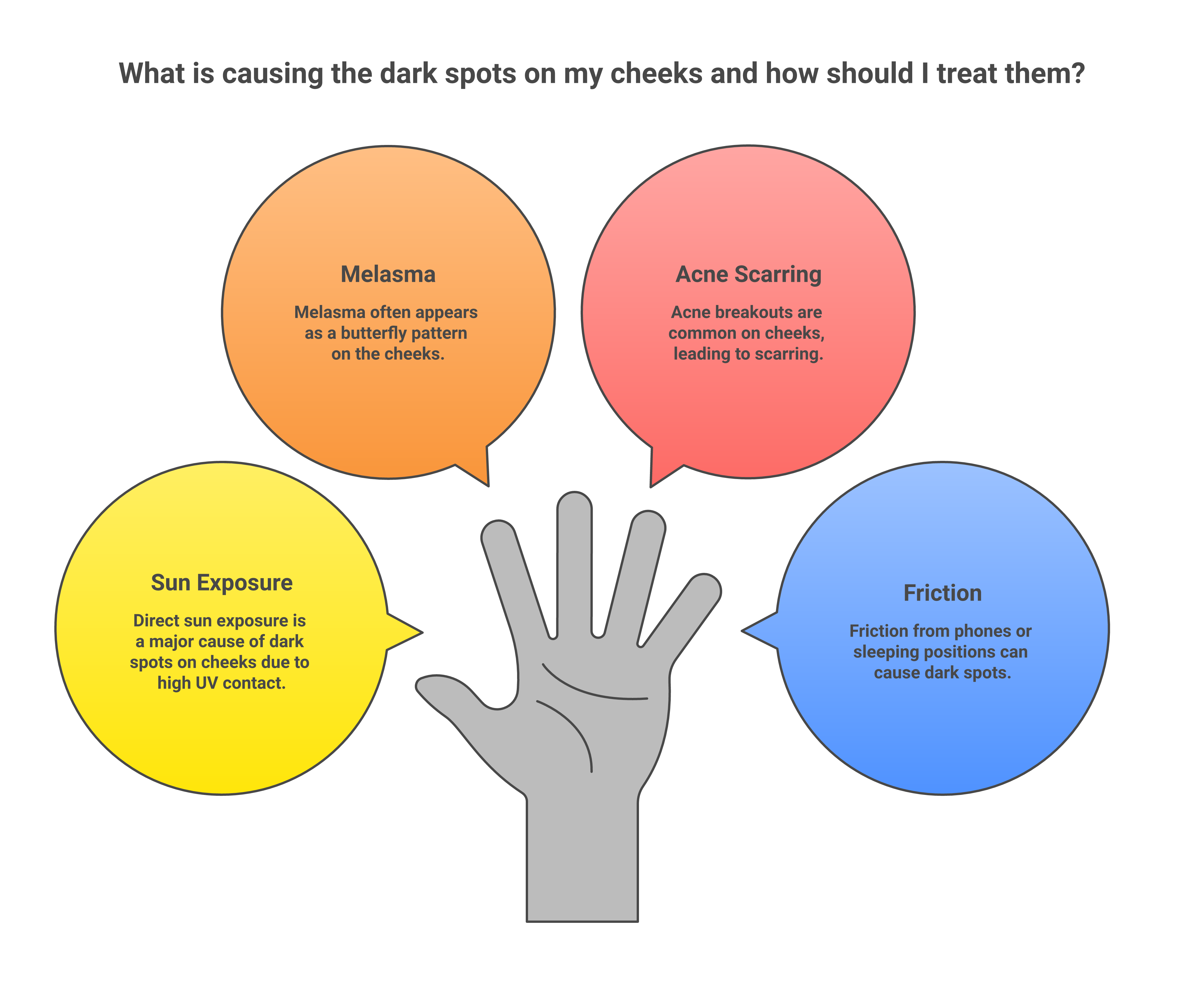
What Causes Dark Spots on Cheeks? The 3 Main Culprits
Dark spots on your cheeks form when melanocytes, the cells that produce melanin (your skin’s pigment), go into overdrive. Several factors can trigger this excess melanin production, but nearly all cheek-specific hyperpigmentation traces back to one of three causes. Understanding which type you are dealing with helps you choose the best ways to treat and get rid of them.
Sun Exposure and UV Damage (Age Spots, Liver Spots, and Sunspots)
Prolonged sun exposure is the single most common cause of dark spots on cheeks. Every time ultraviolet UV rays and visible light hit unprotected skin, your body produces extra melanin as a defense mechanism. Over years of cumulative sun damage, this melanin deposits unevenly in the skin cells, creating flat, brown or black spots that dermatologists call solar lentigines. Most people know these as age spots, liver spots, or sun spots.
These spots tend to be small (typically 1–3mm), round, and well-defined. They show up more frequently after age 40, though I have seen them in patients in their late 20s who spent years using a tanning bed or getting too much sun exposure without sunscreen. People with lighter skin are especially susceptible because they have less baseline melanin protection against harmful UV rays and UVB rays. If you notice brown or black spots on your cheeks or cheekbones, sun damage is the most likely cause.
What makes the cheeks such a hotspot? They are one of the most sun-exposed areas of your face, sitting high and forward on the body. Even incidental sun exposure — driving with the window down, walking to your car — adds up over decades. This is why wearing protective clothing and applying sunscreen every day matters so much, even on cloudy days. The appearance of these spots can make many people feel self conscious, which explains why treating dark spots from sun damage is one of the most common reasons patients visit a dermatology practice.
Hormonal Changes and Melasma
Melasma is the skin condition most commonly confused with ordinary dark spots, but it looks and behaves quite differently. Instead of small, defined spots, melasma on cheeks appears as larger, symmetrical dark patches with blurred edges. These patches often spread across both sides of the face in a butterfly-like pattern, and can extend to the forehead, nose, upper lip, and neck.
Hormonal changes are the primary trigger for melasma. Pregnancy hormones can trigger melasma so frequently that the condition earned the name “mask of pregnancy.” Birth control pills and hormone replacement therapy (HRT) are other well-documented triggers. But hormones alone do not cause melasma. Sun exposure, heat, and even visible light act as accelerants, which explains why melasma almost always gets worse in summer months.
Melasma affects an estimated 5 million Americans, according to the American Academy of Dermatology. Women account for roughly 90% of cases, though men develop it too, especially those with darker skin tones. A clinical review in Brieflands Journal of Skin and Stem Cell (2023) found that people with Fitzpatrick skin types III–VI (medium to dark complexions) face the highest risk, with prevalence rates reaching 33–50% among certain populations with a family history of the condition. If you are taking hormonal medications and notice dark patches forming on both cheeks, talk to your healthcare provider or doctor about whether switching formulations might help prevent further darkening.
Post-Inflammatory Hyperpigmentation (PIH)
Post-inflammatory hyperpigmentation, or PIH, is the darkening that remains after your skin heals from inflammation or injury. Acne is the most common trigger on the cheeks, but eczema, psoriasis, burns, cuts, rashes, and even aggressive skin care products can cause it. Many patients find these imperfections frustrating because the original problem is gone but the dark mark lingers.
Here is what happens: when skin is injured, the inflammatory response triggers melanocytes to dump extra melanin into the surrounding skin. The resulting dark marks can range from pink and red (in lighter skin) to deep brown or nearly black (in darker skin tones). Unlike melasma, PIH follows the exact shape and location of the original wound or pimples.
PIH is especially common in people with darker skin. A review published in the Journal of Clinical and Aesthetic Dermatology found that acne-related postinflammatory hyperpigmentation occurs in up to 65% of African Americans and can persist for 3–24 months without treatment. Even something as minor as picking at pimples or using a product that causes skin irritation can lead to stubborn discolored skin that takes months to fade. This is one reason many dermatology professionals tell patients to avoid squeezing or touching inflamed acne — the risk of causing dark spots from PIH is high, especially in darker skin.
Melasma vs. Sun Spots vs. PIH: How to Identify Your Dark Spots
Knowing which type of hyperpigmentation you are dealing with matters because the treatment approach differs for each one. The different types of dark patches on cheeks each have distinct characteristics that help you determine the cause. Here is a quick comparison:
| Feature | Sunspots / Liver Spots (Solar Lentigines) | Melasma | PIH |
|---|---|---|---|
| Appearance | Small, round, well-defined brown spots | Large, diffuse dark patches with blurred edges | Flat marks matching shape of prior injury |
| Color | Light to dark brown | Brown, gray-brown, or blue-gray | Pink, red, brown, or black depending on skin tone |
| Pattern | Random, scattered | Symmetrical (both cheeks, both sides) | Follows the site of the original injury or acne |
| Primary Cause | Cumulative sun damage | Hormones + sun/heat/visible light | Inflammation (acne, eczema, injury) |
| Who Gets It | More common after 40, lighter skin | Women 20–50, medium to darker skin tones | All ages, more persistent in darker skin |
| Does It Fade Alone? | Rarely without treatment | Can recur; often a chronic condition | Often fades in 3–24 months; faster with treatment |
If you notice dark spots that are asymmetrical, rapidly changing in size or shape, have irregular borders, or appear very dark or multicolored, schedule an appointment to see a dermatologist promptly. While most dark patches on cheeks are benign hyperpigmentation that is not dangerous, these features can sometimes indicate melanoma or other symptoms that need a healthcare professional’s evaluation. Identifying the type early helps you find the right treatment and avoid making the condition worse.
At-Home Treatments: Key Ingredients That Fade Dark Spots on Cheeks
Your first line of defense against cheek hyperpigmentation is a targeted skincare routine built around active ingredients that are proven to reduce dark spots and treat hyperpigmentation. Many of these are available over the counter in skin care products, though prescription-strength formulations tend to deliver faster results. Look for products containing the following ingredients:
Vitamin C (L-Ascorbic Acid)
Vitamin C serums are one of the most effective and safest ways to lessen dark spots and lighten skin discoloration. Vitamin C works as an antioxidant that inhibits tyrosinase, the enzyme responsible for melanin production. Applied in the morning, a 10–20% L-ascorbic acid serum can visibly brighten discolored skin within 8–12 weeks, according to multiple clinical reviews. It also helps protect your skin from oxidative stress caused by UV exposure and pollution, making it essential for maintaining healthy skin and preventing new spots from forming.
Best for: All most common types of hyperpigmentation and every skin tone, including sensitive skin. Many products pair vitamin C with other lightening ingredients for enhanced results.
Retinol and Retinoids (Tretinoin, Adapalene)
Retinol accelerates cell turnover, which means it helps your body remove dead skin cells containing excess pigment and replace them with new, evenly pigmented skin cells. Over-the-counter retinol (0.25–1.0%) is a good starting point, but prescription tretinoin (0.025–0.1%) delivers faster results for patients dealing with stubborn dark patches. Adapalene gel, available without a prescription, is another retinoid option that is gentler and less likely to irritate sensitive skin.
Best for: Dark spots after acne (PIH) and age spots. Use at night. Start slowly (2–3 times per week) to avoid irritation that could lead to more darkening.
Niacinamide (Vitamin B3)
Niacinamide works differently from most lightening ingredients. Instead of blocking melanin production, it blocks the transfer of melanin from melanocytes to the surrounding skin cells. A 5% concentration can reduce hyperpigmentation and improve uneven skin tone without irritation, making it safe for all skin types and easy to layer with other products in your skincare routine. It is well-tolerated by patients who find stronger ingredients too harsh.
Best for: Melasma (especially during pregnancy when stronger medications and drugs are off-limits), sensitive skin, and mild to medium dark patches.
Azelaic Acid
Azelaic acid targets hyperpigmentation by inhibiting tyrosinase and reducing inflammation simultaneously. It is particularly effective for people with darker skin tones because unlike some other treatments, azelaic acid only affects overactive melanocytes, leaving normal skin color and the surrounding skin untouched. Available in 10% over-the-counter formulations and 15–20% prescription creams. Azelaic acid is classified as FDA Pregnancy Category B, meaning no demonstrated risk to the fetus in animal studies, according to Drugs.com.
Best for: Treat melasma and PIH, especially in darker skin tones. Many dermatology providers choose this ingredient for patients who are pregnant or nursing.
Kojic Acid
Derived from fungi, kojic acid is a natural melanin inhibitor often found in many products marketed as brightening serums and creams. It works by chelating copper, a mineral substance required for tyrosinase activity. Kojic acid is effective but can irritate sensitive skin at concentrations above 2%, so I recommend patch testing and starting with lower concentrations. Many products combine kojic acid with vitamin C or niacinamide for enhanced lightening results.
Best for: Sun spots, liver spots, and general skin discoloration. Use with caution on sensitive skin and perform testing on a small area first.
Hydroquinone
Hydroquinone remains one of the most potent topical treatments for hyperpigmentation and is frequently prescribed by dermatologists. It works by directly inhibiting melanin production in the skin. Over-the-counter products contain up to 2% hydroquinone, while prescription formulations go up to 4%. However, hydroquinone should be used carefully, in cycles of 3–6 months maximum, because prolonged use beyond one year can paradoxically cause a blue-black darkening called ochronosis, per the StatPearls clinical resource. Your doctor or healthcare provider will likely recommend taking regular breaks from this medicine.
Best for: Stubborn melasma and deep hyperpigmentation that has not responded to gentler treatments. Always discuss with your healthcare provider before starting.
Alpha Arbutin
Alpha arbutin is a gentler alternative to hydroquinone. It slowly releases hydroquinone in the skin to lighten dark spots without the risk of irritation or the other symptoms associated with full-strength hydroquinone. It is well-tolerated by most skin types and works well in combination with vitamin C and niacinamide. If you are interested in a lightening ingredient that is effective but painless to use, alpha arbutin is a good option to choose.
Glycolic Acid and Other Exfoliating Acids
Glycolic acid, an alpha-hydroxy acid (AHA), penetrates the outer layer of skin to speed up cell turnover and remove dead skin cells containing excess pigment. Regular use at 5–10% concentrations can visibly lessen dark spots over 8–12 weeks. Lactic acid and salicylic acid perform similar exfoliating functions but with different depth and tolerability profiles. These acids help make skin care products containing lightening ingredients like vitamin C and niacinamide more effective by allowing them to penetrate deeper into the affected areas.
Best for: All common types of dark spots. Start with lower concentrations to avoid irritation, especially if you have sensitive skin or are prone to pores clogging.
| Ingredient | How It Works | Results Timeline | Skin Irritation Risk | Prescription Needed? |
|---|---|---|---|---|
| Vitamin C | Blocks tyrosinase, antioxidant | 8–12 weeks | Low | No |
| Retinol / Tretinoin | Accelerates cell turnover | 8–24 weeks | Moderate–High | Tretinoin: Yes |
| Niacinamide | Blocks melanin transfer | 8–12 weeks | Very Low | No |
| Azelaic Acid | Inhibits tyrosinase + anti-inflammatory | 12–24 weeks | Low | 15%+: Yes |
| Kojic Acid | Chelates copper to block tyrosinase | 8–12 weeks | Moderate | No |
| Hydroquinone | Directly inhibits melanin production | 4–12 weeks | Moderate | 4%+: Yes |
| Alpha Arbutin | Slow-release hydroquinone alternative | 8–16 weeks | Very Low | No |
| Glycolic Acid | Exfoliates pigmented dead cells | 8–12 weeks | Low–Moderate | No |
Professional Treatments for Stubborn Dark Spots
When at-home topical treatments have not produced the results you want after 3–6 months, or when dark patches are deep and widespread, professional procedures can deliver faster, more noticeable improvements. Here is what a dermatologist at a dermatology practice might recommend. These treatment options can help patients who feel self conscious about persistent dark patches finally see the results they are looking for.
Chemical Peels
Chemical peels involve applying a controlled chemical solution — typically glycolic acid, salicylic acid, lactic acid, or a combination — to exfoliate and remove the outer layer of the skin. The procedure involves removing dead skin cells and damaged, pigmented tissue from the affected areas, revealing fresher skin underneath. Superficial peels (20–35% glycolic acid) require minimal downtime and can lighten dark spots within 3–6 sessions. Medium-depth peels (50–70% glycolic acid or TCA) penetrate deeper and produce more dramatic results but come with 5–7 days of peeling and redness.
Chemical peels work well for sun spots, liver spots, and PIH. For melasma, lighter peels are preferred because aggressive treatments can actually trigger more melanin production, making dark patches worse, especially in darker skin tones. Your dermatologist will perform an evaluation of your skin condition to determine which depth and chemical solution is right for your specific situation.
Average cost: $150–$400 per session. Most patients need 4–6 sessions to achieve completely clear results.
Laser Treatment and IPL Therapy
Laser treatment uses concentrated light energy to target and break up pigment deposits in the skin. Fractional lasers (like Fraxel) create microscopic channels in the skin and stimulate collagen production while dispersing melanin. Intense Pulsed Light (IPL) laser therapy uses broad-spectrum visible light to target pigmented cells without damaging the surrounding skin.
Laser therapy is highly effective for sun spots and generally works well for PIH. However, laser treatment for melasma requires extreme caution. The heat and energy from lasers can paradoxically cause melasma to return or get worse. Many dermatologists now prefer low-fluence Q-switched lasers or picosecond lasers for melasma, using multiple gentle sessions rather than one aggressive treatment.
People with darker skin should find a dermatologist experienced with treating deeper skin tones, as certain lasers carry a higher risk of causing additional hyperpigmentation or scarring in darker skin. Always schedule a consultation appointment to discuss the risks with your skin doctor before committing to any laser procedure.
Average cost: $200–$600 per session. Typically 3–6 sessions needed.
Microneedling
Microneedling involves creating tiny punctures in the skin’s surface using fine needles. This controlled injury stimulates your body’s natural healing response, boosting collagen production and cell turnover. When combined with topical treatments like vitamin C or tranexamic acid (applied immediately after the procedure), microneedling can significantly reduce hyperpigmentation. The tiny channels created during the procedure allow active ingredients in these products to penetrate much deeper than they would on intact skin.
Average cost: $200–$700 per session. Usually 3–6 sessions spaced 4–6 weeks apart.
Microdermabrasion and Dermabrasion
Microdermabrasion is a gentler, less invasive procedure that involves physically exfoliating the outermost layer of skin using fine crystals or a diamond-tipped device. It is best suited for mild hyperpigmentation and works by gradually removing pigmented dead skin cells over multiple sessions. Think of it as a professional-grade exfoliating treatment that goes beyond what you can achieve at home with over-the-counter products. Full dermabrasion is a more aggressive option, but it carries greater risk of side effects and is typically reserved for deeper imperfections.
Average cost: $100–$250 per session. Results typically noticeable after 5–8 sessions.
Prescription Oral Medications for Melasma
For severe or treatment-resistant melasma, some dermatologists prescribe oral medications like tranexamic acid. Originally used to control heavy bleeding, tranexamic acid has shown impressive results for melasma when taken at low doses (typically 250mg twice daily). A 2024 meta-analysis published in the Indian Dermatology Online Journal, pooling data from 28 randomized controlled trials, found that oral tranexamic acid produced a statistically significant reduction in melasma severity scores (MASI) at 12 weeks compared to controls (SMD 2.39, P < 0.00001). These oral drugs need to be prescribed and monitored by your doctor because of potential side effects.
Many dermatology providers also use a combination approach, prescribing a “Kligman formula” that combines hydroquinone, tretinoin, and a mild topical steroid. The Cleveland Clinic identifies this combination as having “the best effect” for treat melasma among topical prescription options.
| Treatment | Average Cost/Session | Sessions Needed | Downtime | Best For |
|---|---|---|---|---|
| Chemical Peels | $150–$400 | 4–6 | 1–7 days (depth dependent) | Sun spots, mild–moderate PIH |
| Laser / IPL | $200–$600 | 3–6 | 2–5 days | Sun spots, deep pigment |
| Microneedling | $200–$700 | 3–6 | 1–3 days | All types, enhances topical absorption |
| Microdermabrasion | $100–$250 | 5–8 | None to minimal | Mild hyperpigmentation |
| Oral Tranexamic Acid | $30–$80/month | Ongoing | None | Stubborn melasma |
How to Get Rid of Dark Spots on Cheeks and Prevent Them from Returning
No matter how effective your treatment is, dark spots will come back if you do not protect your skin from the triggers that caused them in the first place. Prevention is genuinely easier, cheaper, and more effective than any treatment. Here are the best ways to keep dark patches from forming.
Sunscreen Is Non-Negotiable for Sun Protection
Apply sunscreen with broad spectrum SPF 30 or higher every single day, even on cloudy days and even if you are staying indoors near windows. Ultraviolet UV rays penetrate clouds, glass, and reflect off surfaces. For melasma specifically, a tinted sunscreen containing iron oxide and titanium dioxide is strongly recommended because iron oxide blocks visible light, a known trigger for melasma that standard sunscreens miss. The Skin Cancer Foundation recommends reapplying sunscreen every 2 hours when outdoors, and immediately after swimming or sweating.
The “two-finger rule” helps you apply enough: squeeze a line of sunscreen along your index and middle fingers, and use that amount just for your face. Most people dramatically underapply, reducing their actual sun protection factor by 50–80%. Choosing a sunscreen with a high ultraviolet protection factor (UPF) and wearing it daily is one of the most essential steps you can take to prevent new spots and protect healthy skin.
Physical Protection from the Sun’s Rays
Sunscreen alone is not enough to fully protect your skin. Add these layers of sun protection for complete coverage:
- Wide-brimmed hat (3+ inch brim): Blocks direct sunlight from hitting your cheeks, forehead, and cheekbones
- UV-protective sunglasses: Reduces ultraviolet rays exposure to the delicate skin around the eyes and upper cheeks
- Protective clothing with UPF rating: Wear long sleeves, pants, and clothes with built-in UV protection when spending extended time outdoors. Look for clothing labeled with an ultraviolet protection factor of 50+
- Seek shade between 10am and 4pm when UV light intensity peaks and the sun’s rays are strongest
- Hats with neck coverage: Floppy hats and legionnaire-style caps cover the neck and ears, areas that also develop dark patches from too much sun exposure
Avoid Known Triggers
If you are prone to melasma or other recurring skin discoloration, take extra steps to avoid known triggers:
- Avoid tanning beds entirely, as they concentrate harmful ultraviolet rays and heat on the skin and are a leading cause of dark spots on cheeks
- Manage heat exposure (saunas, hot yoga, cooking over stoves) since heat alone can trigger melasma flares that make the condition worse
- Talk to your doctor about hormonal medications, as switching birth control pills or other hormonal drugs may help prevent hormonal dark spots
- Do not pick at acne, pimples, or other skin irritation — this worsens inflammation and leads to PIH and new dark marks
- Patch test new skin care products before applying them to your full face to reduce the risk of irritation that can cause discoloration
- Cover affected areas with makeup that contains SPF if you are interested in both concealing and protecting dark patches throughout the day
When to See a Dermatologist About Dark Spots
Most dark spots on cheeks are harmless hyperpigmentation. But certain signs warrant prompt evaluation by a healthcare professional or dermatologist. Schedule a visit to a skin doctor if you observe any of the following:
- Asymmetry: A spot where one half does not match the other
- Border irregularity: Ragged, notched, or blurred edges that look irregular
- Color variation: Multiple colors (brown, black, red, white, pink, or blue) in a single spot
- Diameter: Spots larger than a pencil eraser (6mm) or rapidly growing in size
- Evolving: Any spot that changes in size, shape, color, or develops other symptoms like itching, bleeding, or scaling
These are the ABCDEs of skin cancer and melanoma detection, and they are worth learning. While most dark spots on the face are benign, melanoma can occasionally masquerade as a harmless brown spot. A number of people delay scheduling medical care for spots that could be cancerous, so early detection through regular skin checks is essential.
You should also see a dermatologist if your existing dark spots have not improved after 3–6 months of consistent at-home treatment, if dark patches are spreading rapidly, or if you suspect melasma (symmetrical patches that get worse in summer). A dermatologist or healthcare provider can accurately determine what type of hyperpigmentation you have through a diagnosis and examination, rule out dangerous conditions, and help you find the right treatment plan. Many patients feel relieved and much more happy about their appearance after receiving a proper diagnosis and discussing their treatment options with an experienced provider.
Frequently Asked Questions
Why Am I Getting Dark Spots on My Cheeks?
The most common cause of dark spots on cheeks is prolonged sun exposure, which triggers your skin to produce extra melanin. Hormonal changes from pregnancy or birth control pills can trigger melasma, a specific form of cheek hyperpigmentation that is a common condition in women of reproductive age. Acne and other skin inflammation can lead to postinflammatory hyperpigmentation. Genetics, certain medications and drugs, freckles, and even heat exposure play supporting roles. If you are noticing new dark patches, talk to your dermatologist and start tracking whether they correlate with sun exposure, hormonal shifts, or recent skin inflammation. A family history of melasma or hyperpigmentation can increase your risk.
How Can I Get Rid of Dark Spots on My Cheeks at Home?
The most effective at-home approaches involve over-the-counter skin care products with well-researched active ingredients. Vitamin C serum (10–20%) applied daily can lighten dark spots within 8–12 weeks. Niacinamide at 5% is gentle enough for sensitive skin and blocks melanin transfer. Alpha arbutin is a natural alternative to hydroquinone. Combining any of these with daily broad spectrum sunscreen is essential, as unprotected sun exposure will undo your progress. While some natural remedies like aloe vera and licorice root extract show promise, they generally work more slowly than formulated products. Exfoliating with glycolic acid 1–2 times per week can also help speed up the process of treating dark spots.
What Deficiency Causes Dark Spots on the Face?
Vitamin B12 deficiency is the nutritional deficiency most commonly associated with skin darkening and hyperpigmentation, per StatPearls. B12 plays a role in melanin regulation, and low levels can lead to increased melanin production. Vitamin D deficiency, iron deficiency, and folate deficiency have also been linked to changes in skin color and skin pigmentation issues. However, nutritional deficiencies are a less common condition causing dark spots on cheeks compared to sun damage, hormones, and inflammation. If you suspect a deficiency, a simple blood test ordered by your doctor can confirm it. Talk to your healthcare provider if you notice unexplained darkening along with other symptoms like fatigue, painful tingling in the feet or hands, or mood changes.
Can Dark Spots on Cheeks Go Away Completely?
It depends on the type and depth of the pigment. Sun spots, liver spots, and PIH can fade significantly or disappear completely with consistent treatment and sun protection. I have seen PIH resolve in as few as 3 months with the right topical combination and sun protection. Melasma is trickier because it is a chronic skin condition. You can treat melasma effectively and achieve clear skin, but it often returns when triggered by sun, heat, or hormonal changes. Managing melasma long term means an ongoing commitment to sun protection, tinted sunscreen, and maintenance treatment rather than a one-time fix.
What Is the Fastest Way to Get Rid of Dark Spots on Cheeks?
For the fastest visible results, professional treatment options outperform at-home approaches. Chemical peels and IPL laser therapy can produce noticeable improvement in 1–3 sessions (2–6 weeks). Among topical treatments, prescription hydroquinone (4%) combined with tretinoin and a mild steroid (the “Kligman formula”) can fade dark spots within 4–8 weeks. The fastest path for any type of dark spot is combining a professional procedure with a targeted at-home regimen of proven active ingredients and rigorous daily sunscreen use. Visit a dermatology practice to discuss which option is right for your specific skin condition.
Is Vitamin C or Niacinamide Better for Dark Spots?
Both are effective, and they work through different mechanisms, so using both is often the best strategy. Niacinamide blocks melanin transfer between cells and is extremely well tolerated, making it a good choice for sensitive skin or as a gentle starting point. Vitamin C directly inhibits melanin production and offers additional antioxidant protection against future sun damage. For maximum results, apply vitamin C in the morning (it boosts your sunscreen’s protection) and niacinamide in the evening. Contrary to an old skincare myth, these two ingredients are perfectly safe to use together and many products now combine them.
What Do Hormonal Dark Spots Look Like?
Hormonal dark spots, specifically melasma, have a distinctive appearance that sets them apart from other types of hyperpigmentation. They typically appear as large, irregularly shaped dark patches (not small dots) with soft, blurred edges. The patches are usually brown to gray-brown and almost always symmetrical, present on both cheeks in a mirror-image pattern on both sides of the face. Melasma patches may also extend across the bridge of the nose, the forehead, and the upper lip. The discoloration tends to look darker in summer and lighter in winter, fluctuating with sun exposure and heat. If your dark patches match this description, especially if they appeared during pregnancy or after starting hormonal birth control, melasma is the most likely diagnosis.
Are Dark Spots on Cheeks Painful or Dangerous?
Dark spots from sun damage, melasma, and PIH are painless and not dangerous on their own. They are cosmetic imperfections caused by excess melanin in the skin, not a medical care emergency. However, any spot that is painful, itching, bleeding, raised, or rapidly changing should be evaluated by a dermatologist to rule out skin cancer or melanoma. People with a family history of skin cancer or many spots on the body should schedule regular skin checks. The vast majority of dark patches on cheeks affect people cosmetically but pose no health risk.
Taking the Next Step
Dark spots on your cheeks do not have to be permanent. Whether you are dealing with sun damage accumulated over decades, hormonal melasma that appeared during pregnancy, or stubborn PIH left behind by acne, effective treatments exist at every price point. The key is identifying your specific type of hyperpigmentation, selecting the right treatment approach from the many options available, and committing to consistent sun protection to prevent dark spots from returning.
Start with what you can control today: a broad spectrum sunscreen with SPF 30+, a vitamin C serum or niacinamide product, and the discipline to apply both daily. These three simple steps can help you visibly reduce dark spots within 2–3 months. If those existing spots prove stubborn, professional procedures and prescription medications offer proven ways to get rid of even deep discoloration. And if you feel self conscious about your appearance in the meantime, know that you can use tinted sunscreen or makeup to cover dark patches while your treatment works. If you have questions about your condition or are not sure where to start, schedule an appointment with a dermatologist — that visit could be the single most important step.
For more tips on treating dark spots and maintaining healthy skin, explore our complete guide to dark spots on skin, learn about oxidative stress and skin health, or read about OTC vs prescription dark spot treatments to help you choose the right products.

