
Niacinamide Benefits for Skin: 10 Proven Results and How to Use It

Dr. Matthew Olesiak, MD, is the Chief Medical Director at SANESolution, a renowned wellness technology company dedicated to providing evidence-based solutions for optimal living. Dr. Olesiak earned his medical degree from the prestigious Jagiellonian University Medical College in Kraków, Poland, where he developed a strong foundation in medicine.
Niacinamide (a form of vitamin B3 also called nicotinamide) ranks among the most researched and versatile skincare ingredients available today. It strengthens your skin barrier, fades dark spots, controls excess oil, helps calm redness, and smooths fine lines, all without the skin irritation that comes with harsher active ingredients. Whether you have sensitive skin, oily skin, dry skin, or acne prone skin, niacinamide delivers measurable results backed by decades of clinical evidence. Below, I break down the major niacinamide benefits for skin, explain how to use it, and answer the questions I hear most often.
What Is Niacinamide?
Niacinamide is one of two primary forms of vitamin B3 (the other being niacin, also called nicotinic acid). Both are classified under the same umbrella, but they behave quite differently on the skin. Your body can produce niacinamide from the amino acid called tryptophan, but it cannot store large amounts of this B3 form, which is why both dietary and topical sources matter for skin health. As an essential nutrient, maintaining adequate B3 levels is fundamental to long-term skin wellness.
Once applied to the skin, niacinamide converts into nicotinamide adenine dinucleotide (NAD+), a coenzyme involved in over 400 enzymatic reactions that govern cellular energy, DNA repair, and protein synthesis. That metabolic versatility drives skin renewal, which is why this single active ingredient addresses so many different skin concerns simultaneously, from skin aging and hyperpigmentation to inflammatory skin conditions and dehydrated skin.
Unlike retinoids or acids, niacinamide applied to the skin is remarkably well-tolerated across all skin types. A safety review published in Antioxidants, citing the Cosmetic Ingredient Review Expert Panel report, found no stinging response at concentrations up to 10% and no measurable irritation at 5%, making niacinamide one of the safest skincare ingredients for daily use, well suited for anyone working to maintain a healthy skin barrier.
You can also obtain vitamin B3 from foods like poultry, fish, legumes, and whole grains, or through niacinamide supplements. However, dietary intake alone is unlikely to deliver the concentrated skin benefits that topical application provides.
10 Evidence-Based Niacinamide Benefits for Skin
The benefits of niacinamide span nearly every common skin concern. Here is what the research actually shows about each of these benefits, and what you can realistically expect when you start incorporating niacinamide into your routine.
1. Strengthens and Repairs the Skin Barrier
A strong skin barrier keeps moisture in and irritants out. When your skin barrier is compromised (from harsh products, UV exposure, pollution, or other external factors), you end up with a weakened barrier that leads to dryness, redness, and increased sensitivity.
Niacinamide stimulates ceramide synthesis in the upper layers of the skin. Ceramides are lipid molecules that act as the “mortar” between skin cells, and a 2000 study published in the British Journal of Dermatology found that niacinamide significantly increases ceramide and free fatty acid levels in the stratum corneum, improving the skin’s permeability barrier. That translates to better moisture retention, reduced transepidermal water loss, and skin that feels noticeably more resilient.
I consider skin barrier repair the foundational niacinamide benefit because once your barrier is functioning properly, everything else (hydration, brightness, dark spots on skin resolution) improves more quickly.
2. Fades Dark Spots and Hyperpigmentation
Niacinamide is one of the most effective brightening ingredients for addressing uneven complexion and dark spots on your face. It works by inhibiting the transfer of melanosomes (the pigment-containing packets) from melanocytes to keratinocytes. This does not destroy melanin outright; it simply slows the delivery process.
A well-known 2002 study in the British Journal of Dermatology demonstrated that 5% topical niacinamide reduced hyperpigmentation and increased skin lightness in participants with melasma-like discoloration after 4 weeks. More recently, a 4% niacinamide formulation successfully decreased axillary hyperpigmentation with significant colorimetric improvement, confirmed through objective measurements.
For anyone dealing with age spots, post-inflammatory hyperpigmentation, or sun-related discoloration, niacinamide offers brightening benefits without the photosensitivity risk associated with hydroquinone or retinol for dark spots.
3. Regulates Sebum and Oil Production
Excess oil from excess sebum production is one of the most frustrating skin issues to manage, and it contributes directly to clogged pores and breakouts. For oily skin, niacinamide addresses this at the source. Research confirms that 2% to 5% niacinamide can effectively reduce sebum production across both Asian and Caucasian populations, with visible results appearing within 2 to 4 weeks.
A 2006 study published in the Journal of Cosmetic and Laser Therapy found that participants using a 2% niacinamide moisturizer experienced a significant reduction in casual sebum excretion rate after 4 weeks. Unlike harsh astringents that strip your skin and trigger rebound oil production, niacinamide normalizes oil production gradually, leading to a more balanced complexion that lasts.
This makes niacinamide especially valuable for oily skin and combination skin types. It controls excess oil and shine without drying out the areas of your face that need moisture. Of all the niacinamide benefits for oil-prone complexions, this sebum-balancing effect delivers the most noticeable day-to-day improvement.
4. Reduces Redness and Inflammation
The anti inflammatory properties of niacinamide are well-documented, making it one of the most effective anti-inflammatory skincare ingredients available without a prescription. It works by suppressing pro-inflammatory cytokines (specifically TNF-alpha, IL-1, IL-6, and IL-8) while boosting anti-inflammatory mediators through NFkappaB pathway modulation. In plain language: niacinamide works to calm redness and the inflammatory cascade that causes swelling and discomfort.
This anti-inflammatory action makes niacinamide useful for managing rosacea, eczema flares, contact dermatitis, and general redness caused by environmental factors or sensitizing skin care products. A 1995 study in the International Journal of Dermatology (Shalita et al.) found that 4% niacinamide gel was comparable to 1% clindamycin gel for reducing inflammatory acne lesions, with fewer side effects and no risk of antibiotic resistance.
If your skin reacts to everything and you are cautious about introducing new actives, niacinamide is one of the gentlest actives to try first.
5. Minimizes the Appearance of Pores
Enlarged pores are partly genetic, but they worsen when excess sebum and dead skin cells stretch the pore opening over time. By regulating oil production and supporting the surrounding skin structure, niacinamide visibly reduces pore size within a few weeks of consistent use.
A 12-week clinical trial with topical niacinamide showed statistically significant improvement in pore appearance, skin texture, and overall complexion evenness. The effect is not permanent. If you stop using niacinamide, pore size gradually returns to baseline, but as long as you maintain your skincare routine, the results hold.
For pores niacinamide is a staple. Anyone dealing with oily or acne prone skin and visible openings, especially in the T-zone.
6. Smooths Fine Lines and Wrinkles
Niacinamide supports collagen production and elastin production, the two structural proteins that keep skin firm and bouncy. Among the many benefits of niacinamide, this anti-aging support is arguably the most impactful for mature skin. As we age, NAD+ levels drop, cellular energy declines, and collagen synthesis slows. By replenishing NAD+ through regular niacinamide application, you give your skin cells the fuel they need to maintain structural protein output.
A landmark clinical study demonstrated that 5% niacinamide significantly improved fine lines, wrinkles, rough texture, and skin yellowing in aging facial skin after 12 weeks. Participants also showed improvements in skin elasticity and firmness, measurable benefits that go beyond surface-level smoothing texture.
While niacinamide will not replace the dramatic wrinkle reduction you get from prescription retinoids, it delivers meaningful anti-aging results with essentially zero irritation. That trade-off is worth it for most people, especially those over 50 dealing with sensitive skin that cannot tolerate retinol.
7. Boosts Hydration and Moisture Retention
Niacinamide helps your skin retain moisture by strengthening your skin’s lipid barrier and increasing natural moisturizing factor (NMF) production. In a 2000 study, a niacinamide application reduced transepidermal water loss by more than 20% in participants with dry and dehydrated skin after 4 weeks.
This means niacinamide does not just add moisture temporarily like a basic humectant. It actually improves your skin’s ability to hold onto water long-term. Your skin stays hydrated throughout the day instead of feeling tight and parched by afternoon.
When layered with hyaluronic acid (which pulls water into the skin), niacinamide locks that moisture in. That pairing (hyaluronic acid plus niacinamide) is one of the most effective hydration strategies in modern skin care.
8. Fights Acne and Prevents Breakouts
Niacinamide addresses acne through multiple pathways: reducing oil production, calming inflammation, and strengthening the skin barrier so it resists bacterial colonization. This multi-pronged approach makes niacinamide an effective acne treatment for mild to moderate inflammatory acne.
The previously mentioned 2005 study comparing 5% niacinamide gel to 1% clindamycin found comparable efficacy in reducing inflammatory acne lesion counts after 8 weeks. A 2013 randomized trial published in the International Journal of Dermatology found that niacinamide reduces papulopustular acne severity while also minimizing the risk of dark spots after acne, the post-inflammatory pigmentation that often lingers for months after breakouts clear.
For people with acne prone skin who cannot tolerate benzoyl peroxide, salicylic acid, or prescription-strength actives, niacinamide offers a viable alternative that does not strip or irritate the skin.
9. Protects Against UV Damage and Oxidative Stress
UV exposure generates reactive oxygen species (ROS) that degrade collagen, trigger skin aging, and contribute to skin discoloration. Niacinamide functions as an antioxidant that neutralizes these free radicals before they cause structural damage.
Research has shown that niacinamide functions as an antioxidant that can reduce reactive oxygen species (ROS) accumulation in keratinocyte cultures exposed to UV radiation, while also supporting the activity of superoxide dismutase, one of the body’s primary internal antioxidant enzymes. Separate clinical research demonstrates that topical niacinamide reduces yellowing and sallowness associated with sun-damaged skin, evidence that it combats the visible effects of oxidative stress on skin.
Note: niacinamide is not a sunscreen replacement. It supports your skin’s defense against UV-related damage but does not block UV rays. Always use broad-spectrum SPF alongside any niacinamide product.
10. Brightens Overall Skin Tone for Glowing Skin
Beyond targeting individual dark spots, niacinamide delivers whole-face brightening benefits that create more luminous skin with an even-toned complexion. This happens through the combined effects of reduced melanin transfer, improved cell turnover via enhanced NAD+ metabolism, and better hydration that makes skin reflect light more evenly.
After 8 to 12 weeks of consistent use, most people notice that their skin looks clearer, brighter, and more radiant. Many describe the effect as “glowing skin.” This complete effect on skin tone is one of the most valued effects of this ingredient, making it one of the most popular skincare ingredients for achieving beautiful skin without complicated multi-step routines.
How to Add Niacinamide to Your Skincare Routine
Incorporating niacinamide into your skin care routine is straightforward. Here is a practical guide based on what works for most skin types.
Choose Your Product Format
Niacinamide appears in serums, moisturizers, toners, cleansers, and even sunscreens. A niacinamide serum at 5% concentration delivers the most direct, concentrated results. If you prefer a simpler routine, a moisturizer with 2-5% niacinamide works well too, though you sacrifice some potency for convenience.
Application Order
Apply your niacinamide product after cleansing and toning but before heavier creams, oils, and sunscreen. The general rule: thinnest to thickest consistency. Niacinamide is a water soluble vitamin, so it layers easily under most skincare products without pilling or interference.
Morning, Night, or Both?
You can use niacinamide in both your morning and nighttime routine. Many skincare formulas now include niacinamide alongside other active ingredients like hyaluronic acid or peptides, making it easy to incorporate without adding extra steps. Morning use pairs well with antioxidant protection and SPF. Evening use complements retinol or glycolic acid routines.
Start Gradually
While niacinamide rarely causes skin reactions, start with once-daily application for the first week. If your skin tolerates it well (no redness, stinging, or unusual sensitivity), you can increase to twice daily. This approach is especially important for reactive or easily irritated skin, or anyone recovering from barrier damage.
What Percentage of Niacinamide Should You Use?
Now that you understand the benefits of niacinamide, concentration matters more than most skincare brands acknowledge. Here is what the research supports:
- 2% niacinamide : Effective for barrier repair, basic hydration, and mild oil control. Ideal starting concentration if you tend to react easily.
- 4-5% niacinamide – The sweet spot for most people. Addresses hyperpigmentation, fine lines, sebum production, and inflammation with minimal risk of irritation. Most clinical trials with significant results used this range.
- 10% niacinamide – Targets stubborn skin concerns like persistent dark spots or severe oiliness. Well-tolerated in studies, but some users with sensitive or dry skin report mild tingling.
- Above 10% – Diminishing returns. Higher does not always mean better with niacinamide. There is no strong clinical evidence that 15% or 20% outperforms 10% for any skin concern, and the irritation risk increases.
My general recommendation: start at 5%, use it consistently for 8 weeks, and only increase if your specific skin issues have not responded adequately.
What to Mix With Niacinamide (And the Vitamin C Myth)
Niacinamide is one of the most compatible active ingredients available. It pairs well with almost everything in your routine.
Effective Pairings
- Hyaluronic acid – Niacinamide locks in the moisture that hyaluronic acid draws into the skin. This combination is exceptional for dehydrated skin and anyone wanting to keep their skin hydrated all day.
- Retinol – Niacinamide reduces the irritation and dryness that retinol can cause, making it a perfect buffer. Use niacinamide first, then apply retinol. This pairing is especially useful for dark spots on face over 50 where you need both anti-aging power and pigment correction.
- Glycolic acid and salicylic acid – Niacinamide provides anti-inflammatory support that calms the mild inflammation these exfoliating acids can trigger. Apply your acid first, wait a few minutes, then follow with niacinamide.
- Peptides – Both support collagen production through different mechanisms. No conflicts.
The Vitamin C + Niacinamide Myth (Debunked)
For years, beauty forums and even some brands warned against combining ascorbic acid (vitamin C) and niacinamide, claiming they “cancel each other out” or form niacin (which causes flushing). This advice is outdated and based on a 1963 study that used extreme conditions: high temperatures and pH levels that do not exist in modern skincare formulas.
Current research, including analysis from Healthline’s dermatology team, confirms that stable vitamin C derivatives and niacinamide coexist without issues at the pH levels found in typical skincare products. You can safely layer them in the same routine. If you have extremely reactive skin, you might apply one in the morning and one at night, but that is a preference, not a requirement.
Niacinamide vs Other Brightening Ingredients
How does niacinamide stack up against other popular ingredients for fading dark spots and improving skin tone? This comparison breaks down the key differences in mechanism, ideal use case, effective concentration, and irritation potential.
| Ingredient | Mechanism | Best For | Effective Concentration | Irritation Risk |
|---|---|---|---|---|
| Niacinamide (Vitamin B3) | Inhibits melanosome transfer to keratinocytes | All skin types, especially sensitive and acne-prone skin | 2–5% | Very low |
| Vitamin C (L-Ascorbic Acid) | Tyrosinase inhibition + free radical neutralization | Sun damage, dull skin, collagen support | 10–20% | Moderate (stinging at high concentrations) |
| Alpha Arbutin | Slowly releases hydroquinone to inhibit tyrosinase | Dark spots, melasma, post-inflammatory hyperpigmentation | 1–2% | Low |
| Kojic Acid | Chelates copper ions required by tyrosinase | Stubborn hyperpigmentation, age spots | 1–4% | Moderate to high (can cause contact dermatitis) |
| Tranexamic Acid | Blocks plasmin pathway that activates melanocytes | Melasma, hormonal pigmentation | 2–5% topical | Low |
| Azelaic Acid | Inhibits tyrosinase + anti-inflammatory | Rosacea-related discoloration, acne marks | 10–20% | Low to moderate (mild tingling) |
Key takeaway: Niacinamide is the safest entry point for hyperpigmentation — it works for every skin type with virtually no irritation risk. For stubborn spots, combining niacinamide with ascorbic acid or tranexamic acid often delivers better results than any single ingredient alone.
When Will You See Results?
Niacinamide is not an overnight fix. Your results timeline depends on the specific skin concern you are targeting:
- Oil control and hydration – 2 to 4 weeks for noticeable improvement in sebum production and moisture retention
- Redness and inflammation – 4 to 6 weeks for consistent calming of skin conditions like rosacea or eczema
- Pore size and skin texture – 4 to 8 weeks for visible reduction in pore size and smoothing texture
- Hyperpigmentation and dark spots – 8 to 12 weeks minimum. Melanin transfer is a slow process, and fading dark spots takes time regardless of which active ingredient you use
- Fine lines and wrinkles – 12 weeks or more for measurable improvement in collagen production and skin firmness
Consistency is everything. I have seen patients abandon niacinamide after 3 weeks because they “did not see results,” when the research clearly shows that the biggest benefits emerge at 8 to 12 weeks. Stick with it.
Potential Side Effects of Niacinamide
Niacinamide is one of the best-tolerated skincare ingredients studied, but no active ingredient is entirely risk-free. Here is what to watch for:
- Mild redness or warmth – Uncommon. Usually occurs at higher concentrations (10%+) and resolves within minutes.
- Slight itching or tingling – More likely with easily irritated skin or compromised barriers. Reduce concentration or frequency, and use niacinamide only once per day until symptoms resolve.
- Breakouts during initial use – Rare, but some users report purging-like skin reactions during the first 1-2 weeks. This typically resolves on its own.
The relationship between niacin and niacinamide causes some confusion. Taking too much niacin orally can cause “niacin flush” (redness, warmth, and itching). Niacinamide does not cause this reaction, whether applied topically or taken as niacinamide supplements, as noted by the Cleveland Clinic. They are chemically distinct despite both falling under the same B-vitamin category. Topical niacinamide is the preferred choice for skin care because it delivers the proven benefits without flushing.
Do a Patch Test First
Before incorporating niacinamide into your full skincare routine, especially if you have a history of skin reactions or allergies, do a simple patch test. Apply a small amount to the inside of your forearm and wait 24 to 48 hours. If no redness, swelling, or irritation develops, proceed with facial application. You can safely use niacinamide on your face, neck, and chest.
Who Should Be Cautious
People with known niacinamide allergy (rare) should obviously avoid it. Those with severely inflamed or broken skin should wait until their barrier heals before introducing any new active ingredient. If you are using multiple potent actives (retinoids, AHAs, BHAs) simultaneously and your skin already feels raw, adding niacinamide might overwhelm already-stressed skin, even though niacinamide itself is gentle.
Frequently Asked Questions About Niacinamide
What does niacinamide do for your face?
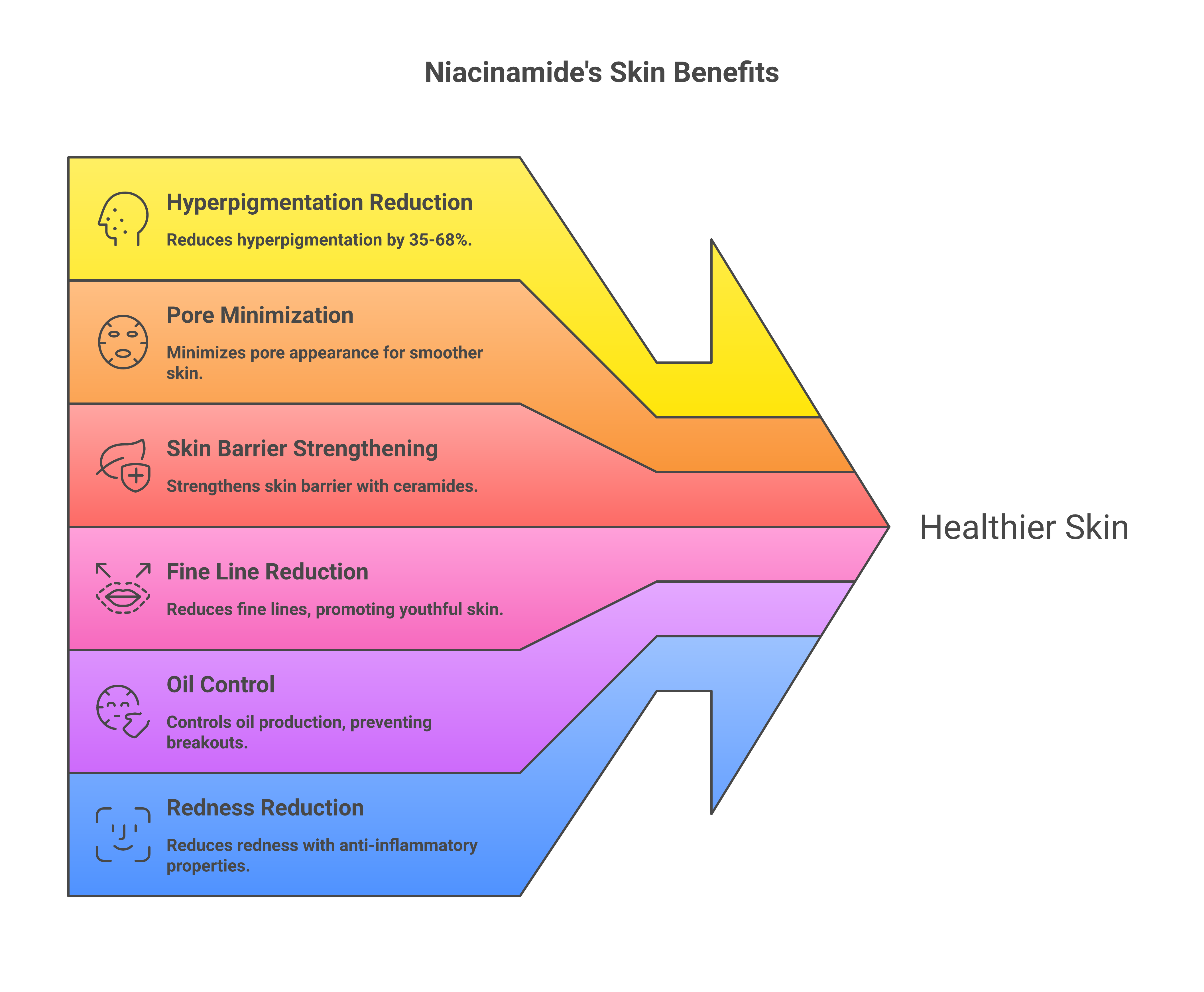
Niacinamide offers numerous benefits for facial skin: it strengthens the skin barrier, reduces hyperpigmentation, controls oil production, minimizes the appearance of pores, helps calm redness and inflammation, boosts hydration, and smooths fine lines. It is a versatile vitamin (vitamin B3 in its most skin-friendly form) that addresses multiple skin concerns simultaneously and supports overall skin health. These wide-ranging advantages explain why it appears in so many skincare products today.
Can I use niacinamide every day?
Yes. Niacinamide is safe for daily use in both morning and evening routines. Most clinical studies that demonstrated significant skin benefits used daily application over 8 to 12 weeks. Start with once daily if your skin is easily irritated, then increase to twice daily as tolerated.
Does niacinamide brighten skin?
Absolutely. Niacinamide is one of the most effective ingredients to brighten skin tone. It works by inhibiting melanosome transfer, the process by which pigment is delivered from melanocytes to the surface of your skin. This mechanism fades existing dark spots while preventing new ones from forming, resulting in more even, radiant coloring over 8 to 12 weeks.
How long does it take for niacinamide to work?
Most people notice initial improvements in hydration and oil control within 2 to 4 weeks. Significant changes in skin texture, pore size, and redness require 4 to 8 weeks. Hyperpigmentation and fine lines take 8 to 12 weeks of consistent use. The timeline depends on your specific skin concern, the concentration used, and how consistently you apply it.
Does niacinamide actually reduce pores?
Yes, but with a caveat. Niacinamide cannot physically shrink your pore structure; pore size is largely genetic. What it does is reduce the sebum and debris that stretch pores open, making them appear visibly smaller. Clinical trials confirm this effect at 5% concentration after 8 to 12 weeks. The results are real but require continued use to maintain.
What should you not mix niacinamide with?
Niacinamide is compatible with most skincare ingredients. The old warning about avoiding vitamin C has been debunked by modern research. The one genuine caution: avoid layering niacinamide directly with very low-pH products (like pure L-ascorbic acid at pH 2-3), as the pH difference can temporarily reduce efficacy. Apply them at different times of day if this concerns you.
Who should not use niacinamide?
Very few people need to avoid niacinamide. Those with a diagnosed allergy to niacinamide should not use it. People with severely compromised or broken skin should wait until healing is underway before introducing any new active ingredient. Everyone else, including those with breakout-prone and oil-prone complexions, can generally use niacinamide without issues.
Is Niacinamide Good for Aging Skin? Anti-Aging Niacinamide Results
Niacinamide is excellent for skin aging and overall skin health. It supports collagen production and elastin production, reduces fine lines and wrinkles, combats oxidative stress from UV exposure, and improves overall skin texture and tone. A 12-week study confirmed that 5% niacinamide significantly improved multiple signs of aging in mature facial skin, including wrinkles, yellowing, rough texture, and blotchiness. For premature aging concerns, it is one of the safest and most effective active ingredients available.
This article is for informational purposes only and does not constitute medical advice. Talk to your healthcare provider before starting any new skincare treatment, especially if you have pre-existing skin conditions, chronic skin conditions, or are pregnant or nursing.

