
Dark Spots on Face Natural Treatment: 12 Remedies That Actually Fade Hyperpigmentation

Dr. Matthew Olesiak, MD, is the Chief Medical Director at SANESolution, a renowned wellness technology company dedicated to providing evidence-based solutions for optimal living. Dr. Olesiak earned his medical degree from the prestigious Jagiellonian University Medical College in Kraków, Poland, where he developed a strong foundation in medicine.
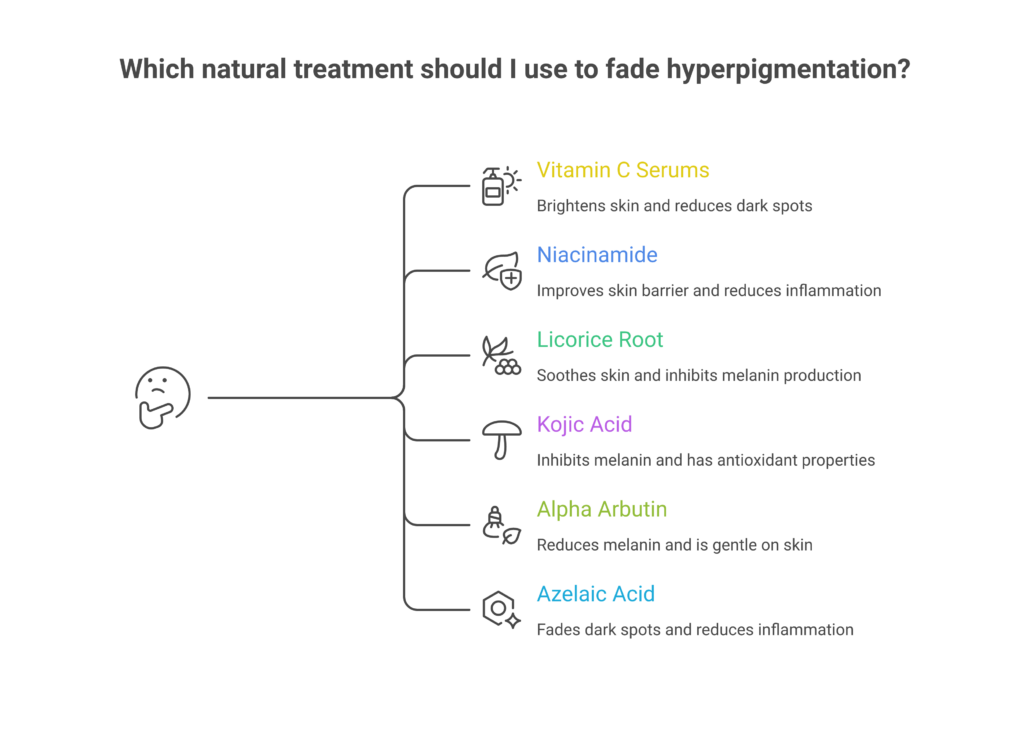
The most effective natural treatments for dark spots on the face include vitamin C, licorice root extract, aloe vera, green tea extract, turmeric, and niacinamide. These natural ingredients work by interrupting melanin production at different stages of the pigmentation process, and each one has peer-reviewed research supporting its use. A 2018 systematic review in the Journal of Clinical and Aesthetic Dermatology (PMID 29552273) evaluated 13 plant-derived and natural compounds and found that several — including azelaic acid, licorice extracts, niacinamide, arbutin, and ascorbic acid — showed real efficacy as depigmenting agents with fewer side effects than hydroquinone. That makes natural methods a legitimate first-line approach for many people dealing with hyperpigmentation, melasma, age spots, sunspots, and post-inflammatory dark marks.
But here’s what most “natural remedy” articles won’t tell you: not all home remedies are created equal. Some have strong clinical evidence. Others have almost none. And a few popular ones — like undiluted lemon juice — can actually make dark spots worse. I’ve spent years sorting through the research and testing many natural remedies on my own stubborn melasma and sun damage. This guide covers what genuinely works, what’s overhyped, and what to avoid entirely. If you want to remove dark spots without harsh chemicals, these are the most effective natural remedies available right now.
What Are Dark Spots and Why Do They Form?
Dark spots — also called hyperpigmentation, sun spots, age spots, liver spots, or solar lentigines — are flat, discolored patches where your skin produces excess melanin. Melanin is the pigment responsible for your skin tone, and it’s produced by specialized cells called melanocytes. When something triggers these cells to go into overdrive, they deposit concentrated pigment into the surrounding skin cells, creating dark patches that can persist for months or even years without treatment.
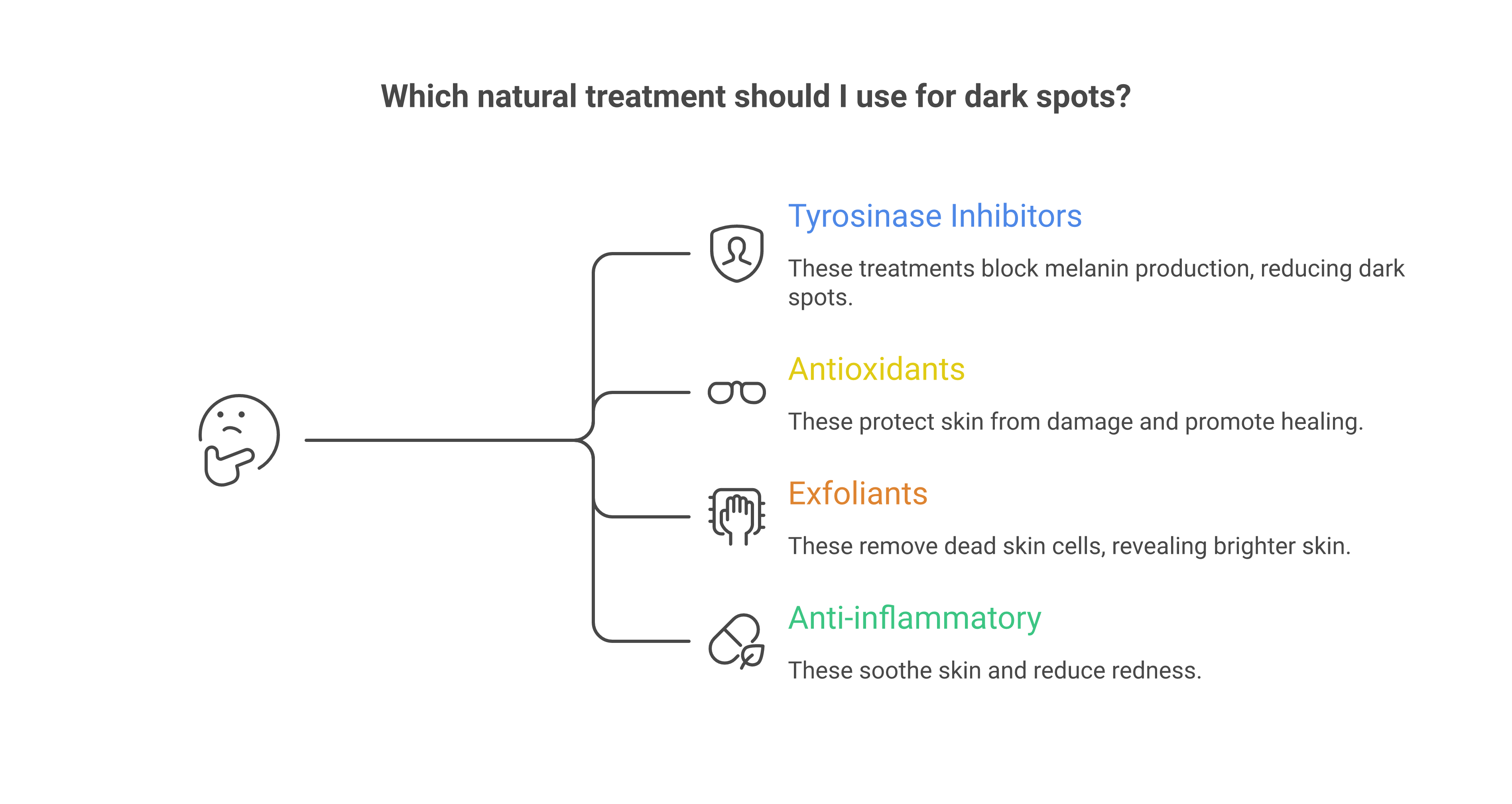
This overproduction of melanin happens through an enzyme called tyrosinase. Tyrosinase is the key enzyme in the melanin production pathway, and understanding this matters because most effective natural remedies for dark spots work by inhibiting tyrosinase activity. Block the enzyme, slow the pigment production, and dark spots gradually fade as your skin’s natural cell turnover replaces the pigmented cells with fresh ones. New cell growth typically takes about 28 days per cycle, which is why patience is a crucial step in any dark spot treatment routine.
Several factors influence why dark spots develop on the face specifically:
- Sun exposure and UV damage — The single biggest cause. UV rays and UV light trigger melanocytes as a protective response, causing dark spots to form on areas like the forehead, cheeks, nose, and neck. Even brief, unprotected time outdoors can darken existing spots and create new damage. This is why sunspots are the most common type of facial pigmentation
- Post-inflammatory hyperpigmentation (PIH) — After acne, pimples, eczema, rashes, or any skin injury heals, the inflammation can leave behind dark marks and post acne marks. PIH is especially common in darker skin tones
- Hormonal changes — Pregnancy, birth control pills, and menopause can all trigger melasma — a specific pattern of dark patches typically appearing on the forehead, cheeks, and upper lip. Hormonal fluctuations stimulate melanocytes independently of sun exposure, and women are affected far more often than men
- Aging — As skin ages, melanocyte distribution becomes less even. After 60, cumulative UV damage from decades of exposure shows up as age spots and liver spots, particularly on the face, hands, arms, and shoulders
- Certain medications — Some drugs, including certain antibiotics, anti-seizure medications, and chemotherapy agents, can increase skin pigmentation as a side effect. If you notice new dark areas after starting a medication, consult your doctor
Dark spots are generally harmless — a cosmetic concern rather than a medical condition in most cases. They vary in size, shape, and color from light brown to nearly gray. But because the face gets more sun exposure than nearly any other part of your body, facial pigmentation tends to be the most visible and the most frustrating to treat. Understanding what’s causing dark spots on your face is the first step toward choosing the right natural treatment.
12 Evidence-Based Natural Treatments for Dark Spots on the Face
The natural ingredients below are organized by strength of evidence. Each one targets hyperpigmentation through a specific mechanism — most commonly by inhibiting melanin production, providing antioxidant protection against further damage, or promoting gentle exfoliation to remove dead skin cells carrying excess pigment. Many home remedies work best in combination, and consistent use over 4 to 12 weeks is typically needed before visible improvement appears. For best results, pair any of these natural remedies with daily sunscreen and a gentle cleanser.
1. Vitamin C (L-Ascorbic Acid)
Vitamin C is arguably the most researched natural skin brightening ingredient available. It works through multiple pathways: it inhibits tyrosinase to slow melanin production, neutralizes free radicals that trigger pigmentation, and boosts collagen production for healthier overall skin health. The 2018 JCAD systematic review confirmed that topical L-ascorbic acid (also written as topical l ascorbic acid in clinical literature) at concentrations between 10% and 20% significantly reduced hyperpigmentation in participants across multiple skin types, and iontophoresis delivery showed particularly strong results.
How to use it: Look for a serum containing L-ascorbic acid at 10-20% concentration. Apply a thin layer to clean skin every morning before moisturizer and sunscreen. For a DIY approach, mash fresh papaya (which contains natural vitamin C and papaya enzymes called papain) into a smooth paste in a small bowl and apply as a mask for 15 to 20 minutes, then rinse with lukewarm water and pat dry. Papaya provides gentle exfoliation alongside the vitamin C. You can also combine a teaspoon of fresh lemon juice (heavily diluted) with the papaya for added citric acid, but always patch test first.
What to know: Vitamin C is a potent natural antioxidant that oxidizes quickly when exposed to light and air. Store serums in dark glass bottles and discard if the liquid turns brown. Some people with sensitive skin may experience mild tingling — start with lower concentrations and gradually increase as your skin tolerates the product. Vitamin C works well alongside niacinamide and can be used in the same skincare routine.
2. Licorice Root Extract (Glabridin)
Licorice root extract contains glabridin, one of the most potent natural tyrosinase inhibitors identified in research. A 1998 study by Yokota et al. published in Pigment Cell Research (PMID 9870547) found that glabridin inhibits tyrosinase activity at concentrations as low as 0.1-1.0 micrograms per milliliter, and topical application reduced UVB-induced pigmentation in an animal model. This makes licorice extract particularly appealing for people concerned about the harmful effects of harsher bleaching agents or over the counter creams containing hydroquinone.
How to use it: Licorice extract is most effective in commercial formulations (look for “glabridin” or “licorice root extract” on ingredient labels). For a DIY option, mix licorice extract powder with pure natural aloe vera gel in a bowl to create a smooth paste and apply to dark areas for 20 minutes, 3 to 4 times per week. Rinse with cool water and finish with a good moisturizer.
What to know: Licorice extract is gentle enough for darker skin tones and sensitive skin — it rarely causes irritation. Research suggests it also has anti-inflammatory properties, commonly found in many Korean skincare products. This makes it a strong choice for post-inflammatory hyperpigmentation from acne scars and post acne marks. Licorice extract is generally well tolerated even on oily skin.
3. Aloe Vera (Aloesin)
Pure aloe vera gel contains aloesin, a compound that directly inhibits tyrosinase and can help fade dark spots over time. A 2002 clinical trial by Choi et al. published in Clinical and Experimental Dermatology (PMID 12372097) demonstrated that aloesin suppressed UV-induced pigmentation by 34% compared to control, with effects that were dose-dependent. When combined with arbutin, suppression reached 63.3%. Aloe vera also hydrates and soothes skin, making it one of the safest home remedies for all skin types.
How to use it: Apply pure aloe vera gel directly to dark spots and affected areas before bed. You can use natural aloe vera gel from the bottle or, better yet, fresh aloe vera juice squeezed from a cut leaf. Leave it on overnight and wash off in the morning with a mild gentle cleanser and lukewarm water. For enhanced results, combine aloe vera gel with a few drops of diluted lemon juice or a vitamin C serum. Use consistently for 4 to 8 weeks — apply twice a day, morning and evening, for the strongest effect.
What to know: Use 100% pure aloe vera gel, not the bright green cosmetic versions loaded with additives. If you have an aloe plant at home, the fresh gel scooped from a leaf is the most effective approach. Aloe is gentle enough for daily use on all skin types and is a natural antioxidant that helps nourish and hydrate irritated skin. It’s also soothing on sunburned areas where new sunspots may be forming.
4. Green Tea Extract (EGCG)
Green tea extract is rich in epigallocatechin gallate (EGCG), a powerful antioxidant that protects skin from UV-induced sun damage and reduces melanin synthesis. Research published in Fitoterapia (2020, PMID 32454171) showed that EGCG reduces melanin production by downregulating the cAMP/CREB/MITF signaling pathway in melanoma cells, with the catechins from tea significantly suppressing tyrosinase activity. Green tea extract also helps reduce inflammation, which addresses one of the root causes of post-inflammatory dark spots and blemishes.
How to use it: Steep 2 green tea bags in hot water for 5 minutes, then let them cool completely. Place the cooled tea bags directly on dark patches for 15 to 20 minutes per session, or use the cooled green tea as a toner by applying it with a cotton ball or cotton pad across your face. You can also combine cooled green tea with a teaspoon of honey in a bowl to create a gentle, moisturizing face mask — apply evenly, leave for 20 minutes, then rinse with lukewarm water and dry completely. Repeat daily or at least 3 times per week.
What to know: Green tea is rich in potent antioxidants and minerals. Black tea contains similar compounds — fresh black tea applied to dark areas can also provide a lightening effect, though research on green tea is more extensive. Green tea bags double as a soothing compress for puffy eyes, and the polyphenols also help protect your skin from pollution and environmental damage.
5. Turmeric (Curcumin)
Turmeric’s active ingredient, curcumin, inhibits melanin synthesis and has strong anti-inflammatory properties. A 2011 study published in Phytotherapy Research (PMID 21584871) confirmed that curcumin significantly inhibited melanin content and tyrosinase activity in human melanocytes in a dose-dependent manner. Turmeric has been used in Ayurvedic skin care for centuries and remains one of the most popular natural ingredients for treating dark spots and uneven complexion.
How to use it: Mix 1/2 teaspoon of turmeric powder with 1 tablespoon of honey and 1 tablespoon of plain yogurt in a small bowl to create a smooth paste. Apply this mixture evenly to dark patches on clean skin, leave for 15 to 20 minutes, then rinse with lukewarm water. You can also add a teaspoon of milk to soften the paste if you prefer a thinner consistency. Use this mask 2 to 3 times per week for at least 6 weeks to see noticeable results. Apply in the evening so the mixture has time to sit without interference from sun exposure.
What to know: Turmeric can temporarily stain lighter skin yellow. Combining it with yogurt or honey minimizes staining. Always do a patch test first — apply a small amount to your inner arm, wait 24 hours, and check for any adverse reaction before applying it to your face. The curcumin in turmeric is also a natural antioxidant that may help brighten overall complexion when used consistently.
6. Niacinamide (Vitamin B3)
Niacinamide works differently from most natural treatments: rather than inhibiting melanin production, it blocks the transfer of melanin from melanocytes to surrounding skin cells. A landmark 2002 study by Hakozaki et al. in the British Journal of Dermatology (PMID 12100180) showed that 5% niacinamide significantly decreased hyperpigmentation and improved skin lightness compared to vehicle after 4 weeks of use, with 35-68% inhibition of melanosome transfer. This mechanism makes niacinamide effective for multiple types of dark spots, including melasma, sun spots, age spots, and acne scars.
How to use it: Niacinamide serums at 4-5% concentration are widely available and well-tolerated. Apply twice a day — once in the morning and once at night — to clean skin. It layers well under moisturizer and sunscreen as part of your daily skincare routine.
What to know: Niacinamide is one of the best-tolerated active ingredients for all skin types, including darker skin tones, sensitive skin, and oily skin. It also helps strengthen the skin barrier, reduce inflammation, minimize pores, and support overall skin health. Few natural ingredients have this many simultaneous benefits with virtually no risk of irritation or discomfort. Niacinamide is commonly found in products designed to fade sunspots and treat hyperpigmentation.
7. Yogurt and Milk (Lactic Acid)
Yogurt and milk contain lactic acid, a natural alpha hydroxy acid (AHA) that provides gentle exfoliation to remove dead skin cells carrying excess pigment. Lactic acid also stimulates cell turnover, helping fresh, evenly-pigmented skin surface more quickly. Research in the International Journal of Cosmetic Science confirmed that lactic acid at low concentrations can effectively lighten skin discoloration without the irritation associated with stronger chemical peels or glycolic acid treatments.
How to use it: Apply plain yogurt directly to dark patches as a face mask. Leave it on for 20 to 30 minutes, then rinse with lukewarm water and dry completely. Alternatively, soak a cotton ball in cold whole milk and dab it onto pigmented areas. Repeat daily. Buttermilk is another option — its higher lactic acid content makes it slightly more effective but also slightly more likely to cause sensitivity. You can also combine yogurt with a teaspoon of honey for added moisturizing and soothing benefits.
What to know: Lactic acid increases sun sensitivity, so always follow yogurt or milk treatments with a broad spectrum sunscreen with SPF 30 or higher the next morning. Apply sunscreen every day without fail. This is a gentler alternative to glycolic acid peels and professional chemical peels, and it’s safe for most skin types. If your skin tolerates yogurt well, you can gradually increase application time and frequency.
8. Apple Cider Vinegar (Acetic Acid)
Apple cider vinegar (sometimes written as ACV) contains acetic acid and trace amounts of citric acid, which together may help lighten dark spots by mildly exfoliating the outer layer of dead skin. Some preliminary research suggests that apple cider vinegar’s polyphenol content provides additional antioxidant benefits. However, the evidence for apple cider vinegar specifically treating hyperpigmentation is limited compared to other natural remedies on this list.
How to use it: Always dilute apple cider vinegar with equal parts water — never apply it undiluted. Mix a 1:1 ratio of apple cider vinegar and water in a small bowl, dip a cotton ball into the mixture, and apply to dark areas. Leave on for 2 to 3 minutes only. Rinse thoroughly with cool water and dry completely. Finish with a good moisturizer to prevent the acids from drying your skin. Start with every other day and gradually increase frequency only if your skin tolerates it without redness or irritation.
What to know: Apple cider vinegar is one of the most overhyped home remedies for dark spots. Undiluted application can cause chemical burns, significant irritation, and actually worsen skin pigmentation by causing dark spots to darken. If you have sensitive skin or darker skin tones (which are more prone to post-inflammatory hyperpigmentation), consider skipping apple cider vinegar entirely and choosing milder options like aloe vera or niacinamide instead. The risk simply isn’t worth it compared to better-studied natural ingredients.
9. Red Onion Extract (Allium Cepa)
Red onions contain quercetin and allium cepa extract — compounds with demonstrated skin-lightening properties. A 2010 study in the Journal of Cosmetic Dermatology found that topical red onion extract improved the appearance of scars and associated hyperpigmentation in a majority of participants. The combination works as both a natural astringent and an anti-inflammatory agent, reducing melanin production and calming inflamed skin simultaneously.
How to use it: Extract juice from a fresh red onion, combine it with a teaspoon of aloe vera gel in a bowl, and apply to dark spots with a cotton ball. Leave on for 10 minutes, then rinse with lukewarm water. Alternatively, look for scar-fading topical creams that list allium cepa or red onion extract as an active ingredient. Use consistently for at least 6 to 8 weeks.
What to know: The smell is the biggest drawback. If you find the raw application unpleasant, commercial formulations are more practical. Red onions are particularly effective for post acne marks, dark marks left by minor injuries, and blemishes. The quercetin content also acts as a natural antioxidant.
10. Rice Water (Ferulic Acid)
Rice water has been used in East Asian skin care for centuries to brighten complexion and promote skin’s natural radiance. Research shows it contains ferulic acid, allantoin, and various antioxidants that help protect against sun damage and lighten skin pigmentation. A study in the Journal of Cosmetic Science found that rice bran extract significantly reduced melanin production in treated skin samples. Rice water is extremely gentle and rarely causes irritation or discomfort.
How to use it: Soak half a cup of uncooked rice in 2 cups of water for 30 minutes in a bowl, then strain the cloudy liquid. Apply rice water to dark spots with a cotton ball or use it as a rinse after cleansing. Let it sit and dry on your skin for 20 minutes, then wash off with lukewarm water. Store excess rice water in the refrigerator for up to 3 days. Apply once or twice a day, morning and evening.
What to know: Rice water is one of the mildest natural treatments available, making it good for daily use on all skin types, including sensitive skin. Results take longer — expect 6 to 12 weeks of consistent use before seeing meaningful changes in dark patches and overall skin luminosity. Women in Japan and Korea have used rice water for generations as part of their daily cleansing routine, and it’s also beneficial for hydrating dry skin.
11. Castor Oil and Orange Peel
Castor oil is rich in ricinoleic acid, a fatty acid with anti-inflammatory properties that can help reduce the appearance of dark patches and promote healing. Orange peel contains hesperidin and vitamin C, which provide natural brightening effects and help exfoliate dead skin. Together, castor oil and orange peel create a nourishing combination that softens skin while addressing pigmentation. Orange peel also acts as a mild natural astringent.
How to use it: Dry orange peels in the sun for 2 to 3 days, then grind them in a blender into a fine powder. Mix a teaspoon of orange peel powder with a teaspoon of castor oil to create a smooth paste. Apply to dark spots and massage gently for 1 to 2 minutes. Leave the mixture on for 15 to 20 minutes, then rinse with lukewarm water. Repeat 3 times per week. You can also add a teaspoon of honey for extra moisturizing benefits.
What to know: Castor oil is thick and may feel heavy on oily skin — use sparingly if your skin tends toward breakouts. Orange peel can cause sensitivity in some people, so do a patch test first. Both ingredients are commonly found in natural skincare products and are generally safe for most skin types. Cucumber juice combined with castor oil creates an even more soothing treatment for sensitive skin.
12. Lemon Juice — A Strong Caution
Fresh lemon juice is probably the most commonly recommended home remedy for dark spots, and it’s also the one most likely to do more harm than good. Yes, lemon contains citric acid and some vitamin C, which theoretically function as a natural bleaching agent. But the pH of lemon juice (around 2.0) is far too acidic for safe direct skin application.
Why I don’t recommend it: Direct application of fresh lemon juice or citrus-based treatments to your face creates a serious risk of phytophotodermatitis — a chemical burn reaction triggered when certain plant compounds (furanocoumarins in citrus) interact with UV light. The result? Worse dark spots, blistering, and potential scarring. A 2020 case series in Contact Dermatitis documented multiple cases of severe phytophotodermatitis from lemon juice applied to skin before sun exposure.
If you insist on using lemon: Dilute fresh lemon juice with at least twice as much water, apply for no more than 5 minutes, rinse thoroughly, and do not go outdoors without strict sun protection for at least 24 hours afterward. But honestly? Vitamin C serums deliver the same brightening benefit without the risks. Choose safer sources of vitamin C like papaya or formulated serums instead of applying lemon directly to your face.
Natural Treatments Comparison: Evidence, Timeline, and Safety
| Natural Treatment | Active Compound | How It Works | Timeline to Results | Best For | Safety Level |
|---|---|---|---|---|---|
| Vitamin C | L-ascorbic acid | Inhibits tyrosinase, antioxidant | 4-8 weeks | All dark spot types | High (mild tingling possible) |
| Licorice extract | Glabridin | Tyrosinase inhibition | 4-8 weeks | PIH, melasma | Very high |
| Aloe vera | Aloesin | Inhibits melanin production (34% suppression in clinical trial) | 4-8 weeks | All types, sensitive skin | Very high |
| Green tea extract | EGCG | Reduces tyrosinase, antioxidant | 6-12 weeks | Sun damage, prevention | Very high |
| Turmeric | Curcumin | Tyrosinase inhibition, anti-inflammatory | 6-8 weeks | Uneven skin tone, PIH | High (may stain) |
| Niacinamide | Vitamin B3 | Blocks melanin transfer (35-68% inhibition) | 4-8 weeks | All types, darker skin tones | Very high |
| Yogurt/Milk | Lactic acid | Gentle exfoliation (AHA) | 4-8 weeks | Surface-level spots, age spots | High (increases sun sensitivity) |
| Apple cider vinegar | Acetic acid | Mild exfoliation | 8-12+ weeks | Mild discoloration only | Low (irritation risk) |
| Red onion extract | Quercetin, allium cepa | Melanin inhibition + anti-inflammatory | 6-8 weeks | Scars, PIH | High |
| Rice water | Ferulic acid | Antioxidant, melanin reduction | 6-12 weeks | Mild spots, all skin types | Very high |
| Castor oil + Orange peel | Ricinoleic acid, hesperidin | Anti-inflammatory, gentle exfoliation | 6-10 weeks | Dark patches, dry skin | High |
| Lemon juice | Citric acid | Exfoliation (very acidic) | Variable | Not recommended | Low (phytophotodermatitis risk) |
DIY Recipes for Dark Spot Face Masks
If you prefer making your own treatments at home, these simple recipes use ingredients you probably already have. Each one takes under 5 minutes to prepare and costs next to nothing.
Brightening Potato and Cucumber Mask: Grate one small potato and half a cucumber, squeeze out the juice through a clean cloth into a bowl, and apply the liquid to dark patches with a cotton ball. Potatoes contain natural enzymes and mild acids that help exfoliate dead skin cells, while cucumber soothes and hydrates. Leave for 20 minutes, then rinse with cool water. Potatoes also provide a mild brightening effect that can help reduce the appearance of age spots and sunspots over time.
Tomato and Honey Glow Mask: Blend one ripe tomato in a blender until smooth, strain the seeds, and mix with a teaspoon of honey. Tomatoes are rich in lycopene, a natural antioxidant that helps protect your skin from UV damage and may promote cell turnover. Apply to clean skin, leave for 15 to 20 minutes, rinse with lukewarm water, and finish with moisturizer. Use 2-3 times per week.
Papaya and Yogurt Exfoliating Mask: Mash half a ripe papaya with 2 tablespoons of yogurt and a teaspoon of honey in a bowl until smooth. Papaya enzymes (papain) gently dissolve dead skin and impurities, while yogurt provides lactic acid for gentle exfoliation. Apply a thick layer, leave for 20 minutes, rinse, and follow with moisturizer. This recipe is good for all skin types.
Essential Safety Precautions for Natural Treatments
Natural does not mean risk-free. Before applying any natural treatment for dark spots on your face naturally, follow these precautions to protect your skin and avoid making the condition worse:
Always Do a Patch Test First
Apply a small amount of any new ingredient to the inside of your forearm. Wait 24 to 48 hours. If there’s no redness, swelling, or itching, it’s generally safe to use on your face. This step is non-negotiable — even gentle natural ingredients like aloe vera can trigger reactions in some individuals. Skip this and you risk making your dark spots worse through post-inflammatory hyperpigmentation.
Never Skip Sunscreen
Sunscreen is the most important step in any dark spot treatment routine — full stop. Without strict sun protection, every natural remedy on this list is fighting a losing battle. UV rays will darken existing dark spots and trigger more melanin production faster than any treatment can clear it. Apply sunscreen with broad spectrum SPF 30 or higher every single day, even on cloudy days. Reapply every two hours if you’re outdoors, and after swimming or heavy sweating. Wear a hat and seek shade during peak UV hours between 10 AM and 4 PM. Many natural acids (lactic acid, citric acid, alpha hydroxy acids, glycolic acid) increase sun sensitivity, making this crucial step even more critical.
Avoid Irritation and Over-Treatment
One of the biggest mistakes people make with home remedies is using too many active ingredients at once. Layering apple cider vinegar, lemon juice, turmeric, and yogurt in the same week is a recipe for irritated, angry skin — and irritated skin produces even more melanin. Choose 1 to 2 treatments, stick with them for at least 4 to 6 weeks, and resist the urge to add more. If redness, irritation, or stinging occurs, stop immediately and let your skin recover before trying a different remedy. Start slow, be patient, and remember that gentle consistency beats harsh intensity every time.
Special Considerations for Darker Skin Tones
People with darker skin tones are more prone to post-inflammatory hyperpigmentation from any irritation, including from natural treatments that are too strong. Avoid undiluted citrus, harsh chemical peels, and anything that causes visible redness. Stick with the gentlest options: niacinamide, aloe vera, licorice extract, and rice water are the safest choices for treating dark spots without risk of further discoloration. If in doubt, consult a dermatologist who specializes in skin of color.
How to Prevent New Dark Spots From Forming
Treatment only works long-term if you also prevent new damage. The most effective approach combines daily protection with a consistent skincare routine:
- Wear sunscreen daily — A broad spectrum sunscreen with at least SPF 30 protects against both UVA (aging) and UVB (burning) rays. Reapply every two hours when outdoors, and after swimming or sweating. Seek shade during peak hours
- Don’t pick at pimples or acne — Squeezing or popping blemishes damages skin and almost always leaves dark marks behind. Let breakouts heal on their own or use targeted acne treatments
- Wear hats and protective clothing — Physical barriers block UV more reliably than sunscreen alone. A wide-brimmed hat can reduce facial UV exposure by up to 50%
- Eat antioxidant-rich foods — Berries, leafy greens, tomatoes (rich in lycopene), and green tea provide internal antioxidant protection. A diet high in vitamins, minerals, and natural antioxidants supports your skin from the inside out
- Keep a consistent skincare routine — Use a gentle cleanser morning and night. Apply moisturizer to hydrate and maintain your skin’s natural barrier. Incorporate one proven brightening ingredient (vitamin C serum, niacinamide, or alpha arbutin) into your daily routine
- Manage hormonal triggers — If melasma runs in your family or you’ve experienced it during pregnancy, talk to your healthcare provider about managing hormonal changes that lead to dark patches
- Avoid harsh products — Soap with strong fragrances, harsh exfoliants, and products with alcohol can irritate skin, causing inflammation that leads to new dark spots. Opt for mild, fragrance-free products designed for your skin type
Natural Treatments vs. Professional Procedures
Natural ingredients and home remedies work best for mild to moderate dark spots. If you’ve been using natural treatments consistently for 3+ months without seeing the desired results, it may be time to consider professional options. Understanding where natural methods fit on the treatment spectrum helps set realistic expectations.
| Treatment Type | Best For | Typical Timeline | Cost | Downtime |
|---|---|---|---|---|
| Natural remedies (this article) | Mild to moderate spots | 4-12 weeks | /bin/zsh- | None |
| OTC topical treatments | Moderate spots | 4-8 weeks | – | None |
| Retinol/retinoids | Moderate to stubborn spots | 8-16 weeks | -+ | Mild peeling |
| Chemical peels (professional) | Stubborn dark spots, melasma | 2-6 sessions | -+ | 3-7 days |
| Laser treatment / laser therapy | Deep, resistant spots | 1-4 sessions | -,500+ | 3-14 days |
| Microdermabrasion | Surface discoloration, mild spots | 4-6 sessions | – | None to minimal |
| Prescription hydroquinone | Severe hyperpigmentation | 4-12 weeks | – | None (monitoring needed) |
Many people see the best results from a combination approach — using natural ingredients daily while scheduling periodic professional treatments for more stubborn dark spots. A dermatologist can help you build a personalized medical treatment plan that combines both approaches based on your skin type, budget, and the severity of your hyperpigmentation. Professional procedures like chemical peels and laser therapy can address deeper pigmentation that natural ingredients simply cannot reach.
When to See a Dermatologist
Natural treatments have real limitations. You should consult a dermatologist if:
- Dark spots have not improved after 3 months of consistent natural treatment
- Spots are changing in size, shape, or color — this could indicate a more serious skin condition or even skin cancer
- You have irregular borders on any spot, or a single dark patch that looks different from others
- Your skin is reacting badly to natural remedies with persistent redness, swelling, or burning
- You’re dealing with melasma during pregnancy and aren’t sure which treatments are safe
- Over-the-counter topical treatments, topical creams, and natural methods have all failed to produce results
- You need a professional consultation to rule out any underlying medical condition
A dermatologist can offer prescription-strength options like tretinoin, hydroquinone (at higher concentrations than OTC products), chemical peels, or laser therapy that target deeper pigmentation. Getting a professional assessment also rules out skin cancer or other conditions that can sometimes mimic benign dark spots. Don’t delay a doctor visit if any spot looks or feels unusual.
Frequently Asked Questions About Natural Dark Spot Treatments
What is the fastest natural way to get rid of dark spots?
Vitamin C serum (10-20% L-ascorbic acid) combined with consistent sunscreen use is the fastest natural approach. Most people see noticeable lightening within 4 to 6 weeks. Adding gentle exfoliation with lactic acid (from yogurt or buttermilk) or alpha hydroxy acids can speed up results by promoting cell turnover to remove dead skin cells carrying excess pigment. There is no overnight solution — anyone claiming dark spots will disappear in days is not being honest.
Can I remove dark spots on my face naturally in 7 days?
Realistically, no. Natural remedies lighten spots gradually over weeks to months. The typical timeline is 4 to 12 weeks for visible improvement. Melanin-rich skin cells need to complete their natural turnover cycle (roughly 28 days) before you can see meaningful change. Be wary of any product or remedy claiming to eliminate dark spots in a week.
Does aloe vera really remove dark spots?
Aloe vera can help fade dark spots, though it won’t completely “remove” them on its own. The aloesin compound in pure aloe vera gel has been shown in a 2002 clinical trial (PMID 12372097) to suppress UV-induced pigmentation by 34% over the study period. Aloe vera works best when combined with other natural treatments (like vitamin C) and strict sun protection. Apply natural aloe vera gel or fresh aloe vera juice consistently for 4 to 8 weeks for the strongest effect.
Is lemon juice safe for treating dark spots?
Lemon juice carries significant risks that outweigh its potential benefits. The low pH (around 2.0) can cause chemical burns and irritation, and the furanocoumarins in fresh lemon juice cause phytophotodermatitis — a severe burn reaction when exposed to sunlight. Many dermatology professionals advise against using lemon juice on the face. A properly formulated vitamin C serum or papaya mask delivers the same brightening benefit far more safely.
What is the main cause of dark spots on the face?
Sun exposure is the primary cause of dark spots on the face. UV radiation triggers melanocytes to produce more melanin as a protective response, resulting in concentrated dark patches over time. Other common causes include post-inflammatory hyperpigmentation (from acne, pimples, or injury), hormonal changes (pregnancy, birth control, menopause), aging, and certain medications. Protecting your skin from UV light is the single most important step you can take to prevent new spots from appearing.
Are natural treatments for dark spots permanent?
No natural treatment provides permanent results on its own. Dark spots can return if the underlying triggers — especially unprotected sun exposure — continue. Natural remedies reduce existing pigmentation, but ongoing sun protection and a consistent skincare routine are essential to prevent recurrence. Think of treatment as an ongoing process. Apply sunscreen every day, use a proven natural brightening ingredient, and protect your skin from UV light to keep dark spots from returning.
Which natural remedy works best for melasma specifically?
Among natural options, licorice extract (glabridin), niacinamide, and vitamin C have the strongest research support for melasma. However, melasma is driven by hormonal factors that go beyond surface-level pigmentation, so home remedies alone often aren’t sufficient for moderate to severe cases. Strict sun protection is especially critical with melasma — even indoor light can trigger flare-ups. Combining natural treatments with professional guidance from a dermatologist produces the best outcomes for this particular skin condition.
This article is for informational purposes only and does not constitute medical advice. Dark spots are usually a cosmetic concern and are generally harmless, but if you notice any spot that changes in size, shape, or color, or has irregular borders, please see a dermatologist promptly to rule out more serious conditions including skin cancer.

