
Age Spots on Hands: What Causes Them and How to Get Rid of Them for Good

Dr. Matthew Olesiak, MD, is the Chief Medical Director at SANESolution, a renowned wellness technology company dedicated to providing evidence-based solutions for optimal living. Dr. Olesiak earned his medical degree from the prestigious Jagiellonian University Medical College in Kraków, Poland, where he developed a strong foundation in medicine.
You’ve noticed them. Maybe it happened gradually, a faint tan mark here, a slightly darker patch there. Then one morning you looked down at your hands and thought, “When did those show up?” Age spots on hands are one of those frustrating skin changes that seem to appear overnight, even though they’ve been building for years. Decades, actually.
I get asked about these spots constantly, and here’s what surprises most people: dark spots on skin aren’t really about aging at all. They’re about sun exposure. Every unprotected minute your hands spend in the sun’s rays adds to the cumulative damage happening beneath the surface. The good news? You’ve got real options, from simple over-the-counter creams to professional procedures that can make a visible difference in as little as one session.
This guide covers everything: what age spots actually are, why your hands are a prime target, the treatments that genuinely work (and the ones that waste your money), plus a clear breakdown of when a spot might be something more serious. Let’s sort through it.
What Are Age Spots on Hands, Exactly?
Age spots, also called liver spots, sun spots, sunspots, or by their medical name, solar lentigines – are flat, oval areas of increased pigmentation. Their appearance ranges from light tan to dark brown or even black, and they typically measure between 0.2 and 2 centimeters across. People sometimes confuse them with freckles, but freckles tend to be smaller and can fade in winter, while liver spots are permanent unless treated. Despite the name “liver spots,” they have absolutely nothing to do with your liver. That old misconception has stuck around for generations, but the liver plays zero role here.
What’s actually happening is a form of hyperpigmentation – your skin producing excess melanin in concentrated clusters. Melanin is the pigment that gives your skin its color, and when overactive melanin producing cells dump too much of it into one area, you get a visible spot. Think of it like a permanent tan that never fades, because the melanin has been clumped and deposited deep enough in the epidermis to stick around. The symptoms are purely visual, liver spots don’t hurt, itch, or cause any physical discomfort, but their appearance can be a cosmetic concern for many people.
Age spots are extremely common. According to the American Academy of Dermatology, they affect more than 90% of light-skinned adults over age 60. But they’re not exclusive to older folks, I’ve seen them on people in their 30s who spent a lot of time outdoors without sun protection.
The hands, face, shoulders, arms, and forearms are the most common locations because these are sun exposed areas that rarely get covered up. Liver spots on the face and hands are especially common because these areas get year-round UV exposure. Your hands, in particular, take an absolute beating. Think about it: when was the last time you applied sunscreen to the backs of your hands? Most people never do.
What Causes Age Spots to Develop on Your Hands?
The short answer? Age spots are primarily caused by cumulative sun exposure over years and decades. But let’s break down exactly what’s happening under the skin, because understanding the mechanism helps you choose the right treatment options available.
UV Radiation and Melanin Production
When UV radiation hits your skin, your body responds by ramping up melanin production. That’s your tan. It’s actually a damage response, not a sign of health. UVA rays penetrate deep into the dermis, while UVB rays damage the outer epidermis. Both contribute to age spots, but UVA is the bigger culprit for long-term pigmentation changes because it reaches deeper structures where melanocytes (your pigment-producing cells) live.
Over time, repeated and prolonged exposure to UV radiation causes those melanocytes to multiply and cluster together. Instead of distributing melanin evenly across your skin, they start dumping it in concentrated patches. That’s your age spot forming, darkened patches of excess melanin that lead to the brown spots you see on the surface. The process can take 10, 20, or even 30 years of accumulation before a visible spot surfaces, which is why people tend to develop age spots in their 40s, 50s, and 60s even though the sun damage started much earlier.
Why Hands Are Especially Vulnerable to Sun Damage
Your hands are uniquely vulnerable for several reasons. The skin on the backs of your hands is thinner than most other body parts, with less subcutaneous fat for protection. They’re almost always exposed, year-round, regardless of season. And here’s the big one: hardly anyone applies sunscreen to their hands. Even people who diligently protect their face completely forget about their hands.
Driving is another major factor that people overlook. Your left hand (or right, depending on your country) gets blasted with UVA through the car window for every minute you’re behind the wheel. UVA penetrates glass. I’ve talked with people who have noticeably more age spots on their driving hand than the other, and this asymmetry is a dead giveaway for cumulative sun damage from daily commuting.
Other Contributing Factors
Sun exposure is the primary driver, but several other factors influence who will develop age spots and how quickly:
- Genetics: If your parents developed prominent age spots, you’re more likely to as well. Some people are simply more genetically predisposed to melanin clustering.
- Fair skin: People with lighter skin tones and fair skin produce less baseline melanin, which means their skin has less natural UV protection. Age spots tend to appear earlier and more prominently on fair-skinned individuals.
- Skin types I and II (Fitzpatrick scale): These skin types burn easily and tan poorly, putting them at higher risk. However, people with darker skin and all skin types can develop age spots. They’re just less visible against darker pigmentation.
- Age: After 40, the skin’s ability to regenerate slows down. Accumulated melanin takes longer to clear, and the existing sun damage becomes increasingly apparent.
- Hormonal changes: Estrogen fluctuations during menopause can affect melanin production. Some women notice a significant increase in age spots and dark spots during hormonal shifts.
- Severe sunburns: Even a few bad sunburns, especially during childhood and adolescence, can lead to age spots appearing decades later. The damage from severe sunburns is stored in your skin’s memory.
- Tanning bed use: Artificial UV exposure from tanning beds accelerates the same melanin-clustering process. Years of tanning bed use can cause age spots to appear a full decade earlier than they otherwise would.
Are Age Spots Dangerous? When a Spot Might Be Something Else
Here’s the question everyone asks: Are age spots dangerous? The straightforward answer is no, true age spots are generally harmless. They’re a cosmetic concern, not a medical one. They don’t hurt, they don’t itch, and they won’t spread to other areas of your body.
But, and this is important, not every brown spot on your hand is a benign age spot. Several skin conditions can mimic the appearance of liver spots, and skin cancer, including melanoma, can sometimes look similar in the early stages. And this is where you absolutely cannot afford to guess.
The ABCDE Rule for Spotting Skin Cancer
Use the ABCDE framework to evaluate any spot that concerns you:
- A, Asymmetry: One half of the spot doesn’t match the other half. Benign age spots are usually symmetrical.
- B, Border: An irregular border that’s ragged, blurred, or notched. Age spots typically have smooth, well-defined borders.
- C, Color: Multiple colors within a single spot (brown, black, red, white, blue). Age spots are usually one uniform shade of brown.
- D, Diameter: Larger than 6 millimeters (about the size of a pencil eraser). Most age spots are smaller, though larger ones do exist.
- E, Evolving: The spot is changing in size, shape, or color over weeks or months. Age spots, once formed, stay stable.
If any spot on your hands meets even one of these criteria, see a dermatologist. Don’t wait. Don’t try to treat it yourself with creams or home remedies first. Early detection of skin cancer dramatically improves outcomes, and a quick biopsy can give you a definitive answer. The Mayo Clinic recommends professional evaluation for any spot that is very dark, rapidly increasing in size, has an irregular border, or is accompanied by itching, redness, tenderness, or bleeding. Any spot that starts bleeding without being scratched warrants an immediate appointment with a dermatologist.
I want to be clear about something: getting a spot checked doesn’t mean something is wrong. Most spots are completely benign. But the 5 minutes it takes to get a professional opinion is worth the peace of mind, especially if you’ve had significant sun exposure throughout your life.
How to Get Rid of Age Spots on Hands: Treatments That Actually Work
Now for the part you’re probably most interested in, how to treat age spots and actually see results. I’ll break this into two categories: at-home topical treatments and professional in-office procedures. Both can work, but they differ significantly in speed, cost, and effectiveness.
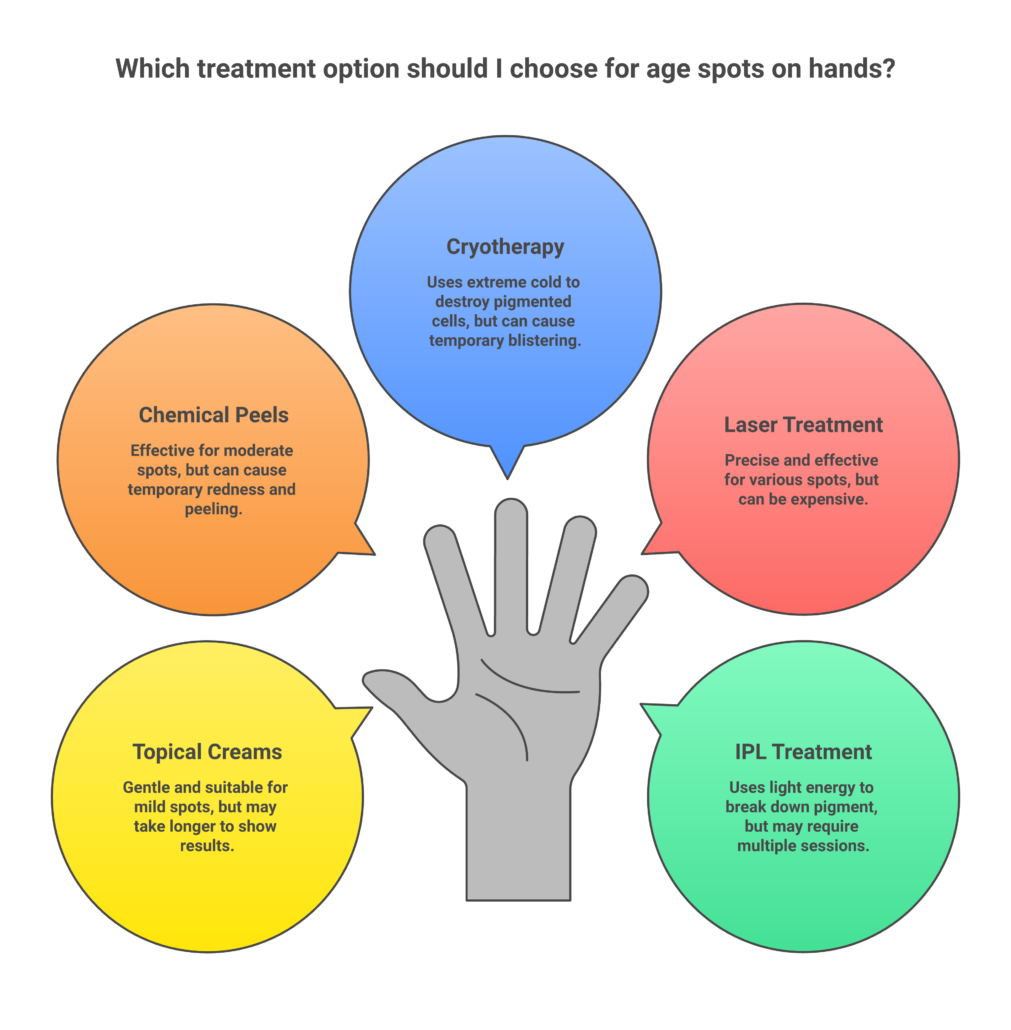
Topical Treatments and Creams for Age Spots
Topical treatments are the first line of defense for most people. They’re more affordable, less invasive, and you can do them at home. The tradeoff is time. Most topical treatments take 8-12 weeks of consistent daily use before you’ll see meaningful fading. Some of the most effective options:
Retinoids (Retinol and Tretinoin)
Retinoids are vitamin A derivatives that accelerate cell turnover, essentially pushing old, pigmented skin cells to the surface faster so they shed and get replaced by fresh, less-pigmented cells. Over-the-counter retinol products (0.25%-1% concentration) work, but prescription tretinoin (0.025%-0.1%) is more potent and faster-acting.
Expect visible improvement in 3-6 months with consistent use. Retinoids also improve overall skin texture and fine lines, so they pull double duty as an anti-aging treatment. The downside: they can cause dryness, peeling, and sun sensitivity, especially in the first few weeks. Start slow, every other night, and always pair with sunscreen during the day. For more anti-aging skincare strategies, retinoids are a cornerstone ingredient.
Vitamin C Serums
Vitamin C (L-ascorbic acid) is an antioxidant that inhibits tyrosinase, the enzyme responsible for melanin production. It won’t erase existing age spots overnight, but with daily application at 10-20% concentration, it can visibly lighten them over 8-12 weeks. It also provides some UV protection (not a replacement for sunscreen) and boosts collagen production.
Look for serums in dark, opaque bottles, vitamin C oxidizes when exposed to light and air, which destroys its effectiveness. If your serum has turned brown or orange, it’s degraded and won’t do much. A quality vitamin C product is one of the best investments for fading dark spots on both hands and face.
Hydroquinone (Bleaching Cream)
Hydroquinone is the most widely used bleaching cream for age spots, a skin lightening agent that directly inhibits melanin production. It’s available as over the counter products at 2% concentration and by prescription at 4%. Among skin lightening products, hydroquinone remains one of the most studied and effective topical treatments for age spots, with visible results typically appearing within 4-8 weeks of regular use.
However, there are important caveats. Long-term continuous use (beyond 4-5 months) can sometimes cause ochronosis, a paradoxical darkening of the skin. Most dermatologists recommend using hydroquinone in cycles: 3-4 months on, then switching to a maintenance ingredient like vitamin C or niacinamide for a few months before resuming.
Azelaic Acid
Azelaic acid (15-20% concentration) is a gentler alternative that works by interfering with melanin synthesis in abnormal melanocytes while leaving normal cells relatively unaffected. It’s particularly good for people with sensitive skin or those who can’t tolerate hydroquinone. Research shows it’s effective for treating various forms of hyperpigmentation, though it works more slowly, expect 12-16 weeks for noticeable results.
Niacinamide
Niacinamide (vitamin B3) doesn’t directly bleach or lighten skin. Instead, it works by preventing the transfer of melanin from melanocytes to the surrounding skin cells. Think of it as intercepting the pigment delivery system. At 5% concentration, it’s been shown to reduce hyperpigmentation over 8-12 weeks. It’s one of the best-tolerated ingredients available, rarely irritating, compatible with almost everything, and beneficial for overall skin barrier function.
Alpha Arbutin
Alpha arbutin is a naturally derived compound that inhibits tyrosinase similarly to hydroquinone but with a much gentler profile. It’s extracted from bearberry plants and converts to hydroquinone in the skin at a controlled, slow rate. This makes it effective without the risks associated with higher-concentration hydroquinone. Pair it with vitamin C for a synergistic brightening effect.
Kojic Acid
Derived from fungi (it’s a byproduct of sake brewing, actually), kojic acid chelates copper, which tyrosinase needs to function. No copper, less melanin production. It’s found in many dark spot remover products at 1-4% concentration. It works, but it can be irritating and sensitizing for some people, so patch-test first.
Professional In-Office Procedures
When topical treatments aren’t cutting it, or when you want faster, more dramatic results, professional procedures are the next step. These are performed by dermatologists or trained skincare professionals and can produce visible improvement in one to three sessions.
Laser Therapy
Laser therapy is one of the most effective ways to treat age spots on hands. Specific wavelengths of light target and break apart melanin deposits without damaging the surrounding skin. Q-switched lasers (like Nd:YAG) and fractional lasers are commonly used for pigmentation.
Most people see significant clearing after 1-3 laser treatments. The treated spots will darken initially (they might look worse for a few days), then crust and flake off over 1-2 weeks as the top layers of damaged skin peel away, revealing new skin underneath. Cost runs $200-$500 per session depending on the area and number of spots being treated. For stubborn age spots, laser treatments consistently deliver the best results of any available treatment.
Intense Pulsed Light (IPL)
Intense pulsed light therapy uses broad-spectrum light to target melanin deposits. Unlike lasers that use a single wavelength, IPL uses multiple wavelengths simultaneously, which allows it to treat a larger area and address multiple spots in one session. It’s less precise than laser therapy but more efficient for treating scattered spots across the entire back of both hands.
Typically 2-4 sessions are needed, spaced 3-4 weeks apart. Results are generally excellent, with 70-80% clearing reported in most studies. IPL tends to be slightly less intense than laser treatment, with minimal downtime. Most people have mild redness for 24-48 hours.
Cryotherapy
Cryotherapy involves applying liquid nitrogen to individual age spots, freezing and destroying the excess pigmented cells. It’s quick, each spot takes only a few seconds, and effective for isolated, well-defined spots. The frozen area blisters, scabs, and heals over 1-2 weeks, usually with lighter skin underneath.
The risk with cryotherapy is that it can sometimes cause permanent lightening (hypopigmentation) if the freeze is too aggressive, especially on people with darker skin tones. There’s also a small risk of infection at the treatment site, so follow aftercare instructions carefully. Cryotherapy works best on fair-skinned individuals with a few distinct spots rather than widespread, diffuse pigmentation. Many people choose to have age spots removed for cosmetic reasons alone, and cryotherapy’s speed makes it a popular option.
Chemical Peels
Chemical peels use a chemical solution, typically glycolic acid, trichloroacetic acid (TCA), or salicylic acid, applied to remove the top layers of skin where melanin deposits concentrate. As the old skin peels away, new skin with more even pigmentation grows in. A study cited by the AAD found that 47% of patients receiving chemical peels for hand age spots achieved 50% fading of their spots.
Light peels (glycolic acid 30-50%) can be done monthly with minimal downtime. Medium-depth peels (TCA 15-35%) go deeper and produce better results but require 5-7 days of recovery. For age spots specifically, a series of 3-6 light-to-medium peels typically produces the best outcome.
Microdermabrasion
Microdermabrasion physically exfoliates the outer skin layer using fine crystals or a diamond-tipped wand. On its own, it produces modest results. One study found 40% of participants achieved complete elimination of their spots. But when combined with chemical peels, that number jumped to 50%. It’s the least invasive professional option and requires no downtime, but it’s also the slowest.
Treatment Comparison: At a Glance
| Treatment | Cost per Session | Sessions Needed | Time to Results | Effectiveness | Best For |
|---|---|---|---|---|---|
| Retinoids (topical) | $10-$80 | Daily use | 3-6 months | Moderate | Mild spots + overall anti-aging |
| Vitamin C serum | $15-$60 | Daily use | 8-12 weeks | Moderate | Prevention + mild fading |
| Hydroquinone (2-4%) | $10-$50 | Daily (cycle on/off) | 4-8 weeks | High | Targeted spot lightening |
| Laser therapy | $200-$500 | 1-3 | 1-3 weeks | Very high | Stubborn, dark spots |
| IPL therapy | $300-$600 | 2-4 | 3-6 weeks | High | Multiple scattered spots |
| Cryotherapy | $50-$200 | 1-2 | 1-2 weeks | High | Isolated, well-defined spots |
| Chemical peels | $100-$300 | 3-6 | 2-4 weeks per peel | Moderate-High | Broad area treatment |
| Microdermabrasion | $75-$200 | 4-6 | 2-3 months | Moderate | Mild spots + skin texture |
Natural and Home Remedies: What Actually Helps (and What Doesn’t)
The internet is flooded with “natural” age spot remedies. Some have a grain of scientific backing; most don’t. Here’s an honest assessment.
Remedies With Some Evidence
- Aloe vera: Contains aloesin, which has been shown to inhibit melanin production in lab studies. It won’t dramatically fade existing age spots, but regular application may help prevent new ones from darkening. It’s also excellent for hydration and soothing irritated skin.
- Green tea extract: Rich in polyphenols with antioxidant and mild depigmenting properties. Topical application may help protect against further UV damage and provide a modest brightening effect over time.
- Licorice root extract: Contains glabridin, which inhibits tyrosinase. Several studies have shown measurable lightening effects at concentrations of 0.5-1%. It’s found in many commercial brightening serums as a supporting ingredient.
- Apple cider vinegar: The acetic acid provides a very mild chemical exfoliation. Will it transform your age spots? No. But diluted application (1:1 with water) can complement a proper skincare routine. Never apply undiluted. It can burn.
Remedies That Don’t Work (Despite What You’ve Read)
- Lemon juice: Yes, it contains vitamin C and citric acid. But the concentration is too low and the pH too unstable to produce meaningful depigmentation. Worse, lemon juice makes skin photosensitive, which can actually worsen age spots if you go outside without sunscreen afterward. Skip it.
- Baking soda: Far too alkaline (pH 9) for skin. Disrupts your acid mantle, causes irritation, and does nothing for melanin. Zero evidence it fades pigmentation.
- Coconut oil: Great moisturizer, does nothing for age spots. No tyrosinase inhibition, no melanin reduction, no exfoliation. If you like it as a moisturizer, fine. But don’t expect it to lighten anything.
My honest take on home remedies: they can supplement a real skincare routine, but they can’t replace it. If you’re dealing with noticeable age spots on your hands, invest in a proven topical (retinoid, vitamin C, or a quality dark spot corrector) rather than spending months squeezing lemons.
How to Prevent Age Spots on Your Hands (The Strategy Most People Skip)
Prevention isn’t glamorous. Nobody gets excited about sunscreen. But I’ll tell you this. Every dermatologist will say the same thing: preventing new age spots is dramatically easier, cheaper, and more effective than treating existing ones. And yet most people do essentially nothing to protect their hands from the sun.
Daily Sun Protection, Non-Negotiable
Apply a broad spectrum sunscreen with SPF 30 or higher to the backs of your hands every single morning. Every. Single. Morning. This is the single most impactful thing you can do to prevent new age spots and stop existing ones from darkening. The ultraviolet protection factor in your sunscreen blocks the UV radiation that triggers melanin production in the first place.
Here’s the problem: you wash your hands dozens of times a day, which strips off your sunscreen. Even without washing, you need to reapply sunscreen every two hours during prolonged sun exposure, and after swimming or heavy sweating. The solution? Keep a tube of SPF 30+ hand cream at your desk, in your car, and by your kitchen sink. Reapply after every wash. Yes, it’s extra effort. Yes, it makes a massive difference. People who adopt this habit consistently see far fewer new age spots develop compared to those who only protect their face.
Protective Clothing and Behavior
You should wear protective clothing whenever possible to reduce UV exposure to your hands and arms. Here are specific measures that make a real difference:
- Driving gloves: UPF-rated driving gloves block UV completely. If you commute 30+ minutes daily, this alone can prevent the one-sided age spot pattern that plagues drivers.
- Broad brimmed hat + long sleeves: A broad brimmed hat protects your face and neck, while long sleeves cover your arms. For hands specifically, look for UPF-rated sun gloves designed for outdoor activities like hiking or gardening.
- Seek shade: Between 10 AM and 4 PM, UV intensity peaks. Seek shade when possible, especially during prolonged outdoor time. Your hands don’t need to bake while you’re eating lunch on a patio.
- UV-blocking window film: Aftermarket window film for your car that blocks UVA (standard glass only blocks UVB) is an investment that protects every sun exposed area while driving.
- Avoid tanning beds entirely: The UV output from tanning beds is concentrated and intense. Even occasional use accelerates the entire age spot formation process. There’s no such thing as a “safe” tanning bed session.
Skincare Habits That Prevent Pigmentation
Beyond sunscreen, a few targeted ingredients can help keep melanin production under control before spots ever form:
- Daily antioxidant serum: Vitamin C or niacinamide applied to your hands each morning (under sunscreen) provides an extra layer of UV defense and helps regulate melanin production.
- Regular gentle exfoliation: Using an AHA (glycolic acid) or BHA product 2-3 times weekly helps clear melanin from the outer skin layers before it accumulates into a visible spot.
- Moisturize consistently: Healthy, well-hydrated skin has a stronger barrier function and repairs sun damage more effectively. A good hand cream at night supports your skin’s natural renewal process.
Who’s Most Likely to Develop Age Spots?
Age spots affect people of all backgrounds, but certain groups are at higher risk. While adults older than 50 are most commonly affected, younger people who spend significant time in the sun without protection can develop them too:
- Adults over 50: The cumulative effect of decades of sun exposure makes age spots increasingly likely with age. By 60, over 90% of light-skinned adults have at least a few.
- People with fair skin: Less natural melanin means less built-in UV protection. Fair-skinned individuals tend to develop age spots earlier and more prominently.
- Those with a history of frequent sun exposure: Outdoor workers, athletes, gardeners, beach lovers, anyone with a history of spending time in the sun without protection is at elevated risk. This includes people who grew up before routine sunscreen use became common.
- People with lighter skin types (Fitzpatrick I-III): These skin types are most susceptible, though people with darker skin can absolutely develop age spots too. On darker skin, age spots may appear as dark brown to black patches and can sometimes be harder to treat.
- Anyone who’s used tanning beds: Even past tanning bed use raises your cumulative UV dose and increases the likelihood of developing age spots in your 40s and 50s.
- Women experiencing hormonal changes: Menopause, in particular, seems to amplify hormone-related skin darkening and age spot formation, though the research on this connection is still evolving.
The common thread? UV exposure. Whether you have fair skin or darker skin, whether you’re 35 or 65, the more unprotected time your hands have spent in the sun, the more likely you are to see brown spots forming.
Building Your Age Spot Treatment Routine: A Step-by-Step Approach
With so many options available, it’s easy to feel overwhelmed. Here’s a practical, sequential approach I recommend:
Step 1: Get Any Suspicious Spots Checked
Before starting any treatment, make sure what you’re dealing with is actually a benign age spot and not something that requires medical attention. A dermatologist can determine this quickly through visual examination or dermoscopy.
Step 2: Start With Topical Treatments (Weeks 1-12)
Begin with a proven topical treatment, retinoid at night, vitamin C in the morning, both paired with daily SPF. This is the foundation. Most topical treatments take several months of consistent use before you can judge their effectiveness, so give it a full 12 weeks before evaluating results. Melanin turnover takes time. If you want to accelerate the process, add a targeted dark spot treatment containing hydroquinone (2%) or alpha arbutin.
Step 3: Evaluate and Escalate If Needed (Week 12+)
After 12 weeks of consistent topical use, assess your progress honestly. If spots have lightened 30-50%, continue with topicals. They’re working. If you’re seeing minimal improvement, it’s time to consider professional treatments. Laser therapy and IPL offer the most dramatic results for stubborn hand age spots.
Step 4: Maintain Results (Ongoing)
Whatever treatment gets your spots to fade, the results won’t last without ongoing sun protection. This is where most people fail. They treat the spots, see improvement, then go right back to their old habits. No sunscreen, no gloves, no shade. Within 6-12 months, the spots return. Make sun protection a permanent, non-negotiable part of your routine, and you’ll preserve your results for years.
Addressing Age Spots on Different Skin Tones
Treatment approaches need to be adjusted based on your skin tone, because the risk of side effects varies significantly between lighter and darker skin.
For people with fair skin, most treatments are relatively safe and straightforward. Cryotherapy, chemical peels, laser therapy, and IPL all work well with lower risk of post-inflammatory hyperpigmentation (ironically, creating more dark spots from the treatment itself).
For people with darker skin, caution is essential. Aggressive treatments like deep chemical peels, cryotherapy, and certain laser wavelengths can cause hypopigmentation (light spots) or post-inflammatory hyperpigmentation, creating new discoloration on darker skin tones. Other conditions like melasma or post-inflammatory hyperpigmentation can also mimic the appearance of age spots, so getting an accurate diagnosis before starting treatment is critical. Stick with gentler approaches first, azelaic acid, niacinamide, or low-concentration retinoids, and only move to professional procedures with a practitioner experienced in treating darker skin. The goal is a more even skin tone, not trading one pigmentation issue for another.
What About Nutritional Deficiencies?
You might have heard that age spots indicate a vitamin deficiency. There’s a kernel of truth here, but it’s often blown out of proportion. Deficiencies in vitamin C, vitamin E, and certain B vitamins can impair your skin’s ability to repair itself and defend against oxidative stress, which may contribute to accelerated pigmentation. Vitamin D deficiency, somewhat paradoxically, has also been loosely linked to skin health issues.
But here’s reality: supplementing vitamins won’t erase age spots that are already there. It may support your skin’s overall health and resilience, but it’s not a treatment. Some medications (including certain antibiotics and diuretics) can also increase photosensitivity, which may contribute to faster spot formation. If you suspect a deficiency or take photosensitizing medications, discuss both with your healthcare provider. But don’t expect a multivitamin to replace sunscreen and retinoids.
Frequently Asked Questions About Age Spots on Hands
What is the fastest way to get rid of age spots on hands?
Laser therapy is the fastest professional option, with visible clearing in 1-3 sessions over a few weeks. For a non-prescription approach, hydroquinone (2%) produces the quickest results among topical treatments, typically showing improvement within 4-8 weeks of daily use. Regardless of which method you choose, pairing any treatment with daily broad spectrum sunscreen prevents the spots from returning.
Can you actually reverse age spots on hands?
Yes. Age spots can be significantly lightened or completely removed with the right treatment. Topical creams like retinoids and vitamin C can fade spots over 8-12 weeks. Professional treatments like laser therapy and cryotherapy can eliminate them in just a few sessions. The key is consistency with treatment and, this is the part most people skip, ongoing sun protection so they don’t come back.
What is the best cream to remove age spots on hands?
The most effective cream ingredients, based on available research, are hydroquinone (2-4%), prescription retinoids (tretinoin 0.05%), and vitamin C serums (15-20% L-ascorbic acid). For over-the-counter options, look for products combining alpha arbutin, niacinamide, and vitamin C. These ingredients work synergistically to inhibit melanin production and fade existing pigmentation. No single product works overnight; expect 8-12 weeks minimum with any topical treatment.
Are age spots on hands permanent?
Without treatment, age spots tend to persist indefinitely and may darken further with continued sun exposure. However, with consistent treatment (topical or professional), they can be faded significantly or removed entirely. The results last as long as you maintain sun protection. Skip the sunscreen, and they’ll return, sometimes darker than before.
Do age spots on hands get worse with age?
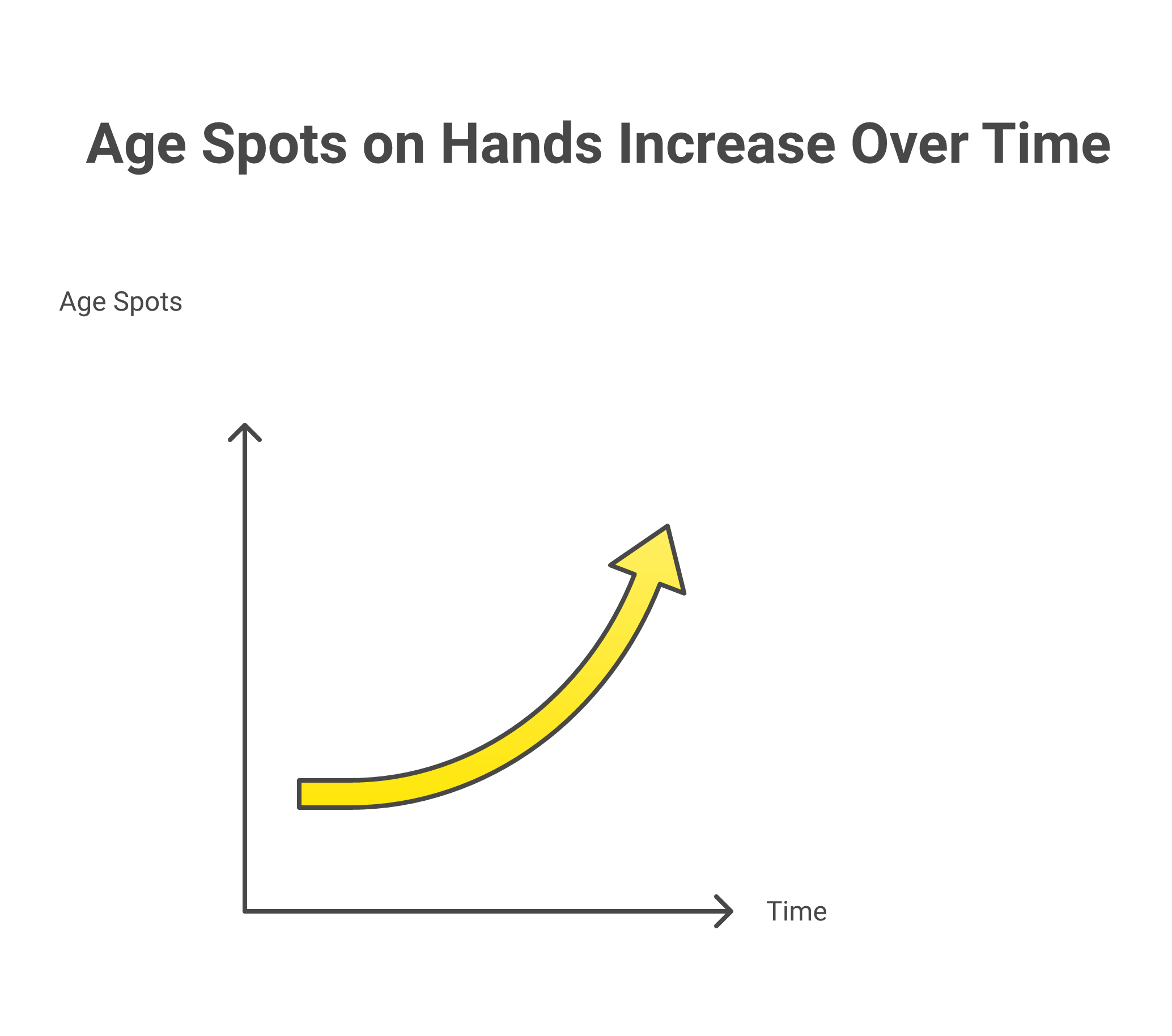
Generally, yes. As you age, melanin regulation becomes less efficient, cumulative sun damage continues to accumulate, and your skin’s natural cell turnover slows down. This means existing spots may darken and new ones are more likely to appear. That said, proactive sun protection can dramatically slow this progression at any age. It’s never too late to start protecting your hands.
How can I get rid of brown spots on my hands naturally?
Natural ingredients with scientific support include aloe vera (contains aloesin, a mild tyrosinase inhibitor), green tea extract (antioxidant protection), and licorice root extract (contains glabridin for mild depigmentation). However, these work slowly and produce modest results compared to concentrated active ingredients like retinoids or vitamin C. For the best “natural” approach, combine a natural dark spot treatment with diligent sun protection.
What deficiency causes age spots on hands?
Age spots are primarily caused by cumulative sun exposure, not nutritional deficiency. However, low levels of vitamin C, vitamin E, and selenium may compromise your skin’s antioxidant defense system, potentially making it more susceptible to UV-induced pigmentation. Maintaining adequate nutrition supports skin health, but supplementation alone won’t prevent or treat existing age spots.
The Bottom Line on Age Spots
Age spots on your hands are common, harmless, and, most importantly, treatable. Whether you go the gradual topical route or opt for a professional procedure, the treatment landscape has never been better. Making sun protection a lifestyle habit is the single most important step. But here’s the part nobody wants to hear: every treatment in the world is temporary if you don’t commit to daily sun protection on your hands.
Start with the basics. Apply SPF to your hands every morning. Pick one proven active ingredient, retinoid, vitamin C, or hydroquinone, and commit to 12 weeks of consistent use. Assess your results honestly, and escalate to professional treatment if needed. If you’re unsure where to begin, schedule a consultation with a dermatologist who can evaluate your specific skin conditions and recommend the right approach. And consult a professional about any spot that looks suspicious before you treat it yourself.
Your hands have done a lot of living. There’s no reason they can’t look healthy and even-toned while doing it.
This article is for informational purposes only and is not a substitute for professional medical advice, diagnosis, or treatment. Always consult a qualified healthcare provider with questions about a medical condition.

