
Best Dark Spot Remover for Sensitive Skin

Dr. Matthew Olesiak, MD, is the Chief Medical Director at SANESolution, a renowned wellness technology company dedicated to providing evidence-based solutions for optimal living. Dr. Olesiak earned his medical degree from the prestigious Jagiellonian University Medical College in Kraków, Poland, where he developed a strong foundation in medicine.
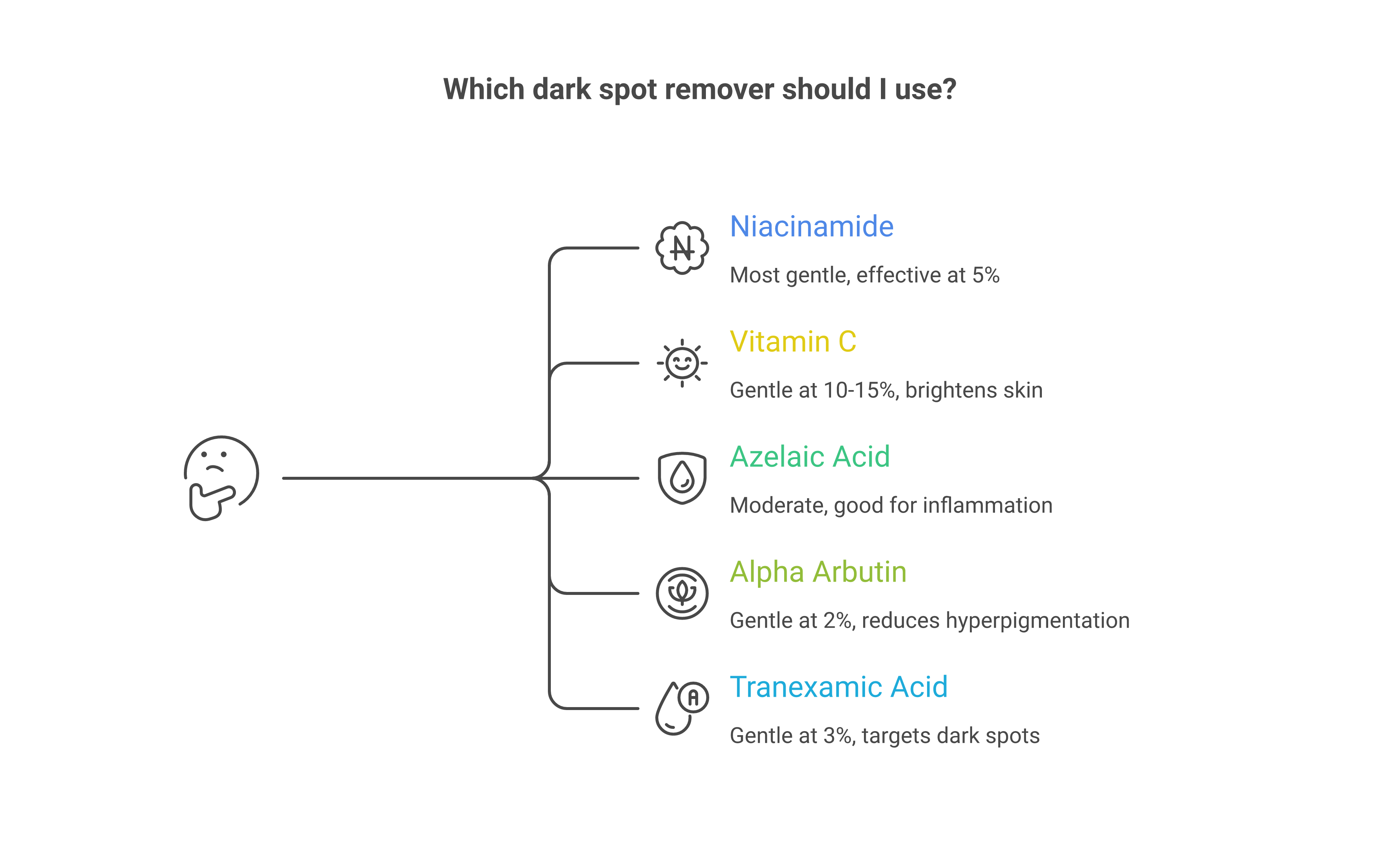
A dark spot remover for sensitive skin is a topical product formulated to fade hyperpigmentation without triggering redness, stinging, or irritation — the reactions that make harsh brightening agents like high-concentration hydroquinone or glycolic acid unsuitable for reactive skin types. The best options contain gentle melanin-inhibiting ingredients such as niacinamide (2–5%), azelaic acid (10–20%), tranexamic acid, or alpha arbutin, which clinical studies show can lighten dark spots by 20–40% over 8–12 weeks with minimal side effects. Choosing the right formulation matters as much as choosing the right active ingredient.
By Dr. Matt
Updated February 22nd, 2026
Dr. Matthew Olesiak, MD, is the Chief Medical Director at SANE MD, a beauty and wellness technology company dedicated to providing evidence-based solutions for optimal living. Dr. Olesiak earned his medical degree from the Jagiellonian University Medical College in Kraków, Poland, where he developed a strong foundation in medicine.
Best Dark Spot Remover for Sensitive Skin: Quick Answer
The best dark spot remover for sensitive skin relies on gentle, non-irritating ingredients that fade hyperpigmentation without triggering redness, breakouts, or barrier damage. After evaluating dozens of formulas, I’ve found that products built around niacinamide, alpha arbutin, tranexamic acid, azelaic acid, and stabilized vitamin C derivatives consistently deliver visible fading results for reactive skin types in 4 to 12 weeks of regular use.
The key difference between a dark spot corrector that works for sensitive skin and one that backfires? Concentration and formulation. A 10% niacinamide serum paired with soothing botanicals like licorice root extract can brighten skin and even your overall skin tone without the stinging, peeling, or inflammation that higher-strength acids often cause. According to the American Academy of Dermatology, choosing the right active ingredients and using them consistently alongside daily sunscreen is the most effective at-home approach to fade dark spots safely.
Below, I break down exactly which ingredients to look for (and which to avoid), review the top dark spot correctors safe for sensitive and reactive skin, and walk you through how to build a skin care routine that treats hyperpigmentation without sacrificing your skin barrier.
What Causes Dark Spots on Sensitive Skin?
Dark spots, also called hyperpigmentation, form when your skin produces excess melanin (an excess production of pigment) in concentrated patches. For those of us with sensitive skin, the triggers are often compounded because the very inflammation that makes skin reactive also drives melanin overproduction.
Here are the most common causes:
- Post inflammatory hyperpigmentation (PIH): This is the number one culprit for sensitive and acne prone skin. Every time your skin experiences inflammation from a pimple, an allergic reaction, eczema flare, or even an aggressive skin care product, melanin production ramps up as part of the healing response. Those lingering dark marks after acne clear? That’s PIH, and it can take months to fade on its own.
- Sun exposure and UV radiation: Unprotected sun exposure triggers melanocytes (the cells that produce melanin) to go into overdrive. Even 15 minutes of sunlight without SPF 30 or higher can worsen existing spots and create new dark spots, especially on the forehead, cheeks, and upper lip.
- Melasma: Driven by hormonal changes (pregnancy, birth control, hormone replacement therapy), melasma creates larger patches of discoloration on the face. It’s notoriously stubborn and worsens with heat, sun, and blue light exposure from screens.
- Sun damage and age spots: Years of cumulative sun exposure lead to age spots (also called sun spots or liver spots), which typically appear on the face, hands, and body after age 40. These flat, brown patches are essentially your skin’s damage receipt from decades of UV exposure.
- Genetic predisposition: Some people are simply more prone to developing dark spots. Individuals with darker skin tones and melanin rich skin tend to experience more intense and longer-lasting hyperpigmentation because their melanocytes are more active.
Understanding what causes your dark spots matters because it directly affects which dark spot corrector will work best. A product designed for sun spots may not address post inflammatory hyperpigmentation as effectively, and vice versa.
Key Ingredients That Safely Treat Dark Spots on Sensitive Skin
Not all brightening ingredients are created equal, and some that work beautifully on normal or oily skin can wreak havoc on sensitive and reactive skin. After years of reviewing formulations, here are the key ingredients most recommended by skincare experts for fading dark spots without irritation:
Niacinamide (Vitamin B3): The Gentle Powerhouse
Niacinamide is arguably the single best ingredient for sensitive skin dealing with dark spots. It works by interrupting the transfer of melanin from melanocytes to surrounding skin cells, effectively slowing the appearance of new discoloration while helping you gradually fade dark spots over time. A study by Hakozaki et al. Published in the British Journal of Dermatology (2002) found that 5% niacinamide inhibited melanosome transfer by 35-68% in laboratory skin models, and an 8-week clinical trial in the same study showed reduced hyperpigmentation in participants using 5% niacinamide moisturizer compared to a vehicle control.
What makes niacinamide exceptional for sensitive skin types is that it simultaneously strengthens the skin barrier, reduces redness, and calms inflammation. You’re treating dark spots and protecting your skin at the same time. Look for concentrations between 4-10% in fragrance free formulas.
Alpha Arbutin: The Hydroquinone Alternative
Alpha arbutin is a naturally derived lightening agent that works by inhibiting tyrosinase, the enzyme responsible for melanin production, effectively inhibiting melanin production at its source. Think of it as a gentler cousin of hydroquinone without the sensitizing side effects, irritation, or risk of rebound darkening.
At concentrations of 1-2%, alpha arbutin delivers measurable fading results within 6-8 weeks on most skin types, including sensitive skin. It pairs beautifully with niacinamide and hyaluronic acid for a brightening serum that keeps skin hydrated while targeting stubborn dark spots.
Tranexamic Acid: The Melasma Fighter
Originally developed as a pharmaceutical for blood clotting, tranexamic acid has become one of the most exciting ingredients for treating stubborn hyperpigmentation and melasma. It works differently from other brightening agents by blocking the interaction between skin cells and melanocytes, preventing pigmentation before it starts.
Multiple randomized controlled trials have studied topical tranexamic acid at 2-5% concentration for melasma. A 2017 study published in Dermatology and Therapy found that 5% topical tranexamic acid reduced melasma severity scores comparably to hydroquinone over 12 weeks, and a 2024 meta-analysis in the Journal of Dermatological Treatment confirmed its efficacy across multiple trials. For sensitive skin, tranexamic acid is particularly appealing because it rarely causes irritation, redness, or skin irritation even at effective concentrations.
Azelaic Acid: The Multi-Tasker
Azelaic acid at 10-15% is a gentle hero for people dealing with both acne and dark spots. It reduces inflammation, kills acne-causing bacteria, and normalizes melanin production in a single ingredient. People with acne prone skin and acne scars love this ingredient because it addresses the root cause of breakouts while simultaneously fading the dark marks they leave behind.
Azelaic acid also helps with rosacea-related redness, making it a versatile choice for multiple sensitive skin concerns. PCA Skin and The Ordinary both offer well-formulated azelaic acid products. These products are widely available and good for people who want effective dark spot treatments without a prescription.
Vitamin C (Stabilized Derivatives)
Vitamin C is a proven antioxidant that brightens skin tone, provides antioxidant protection against environmental damage, and can stimulate collagen production. However, traditional L-ascorbic acid (the pure form) often stings, oxidizes quickly, and triggers irritation on sensitive skin.
The solution? Stabilized vitamin C derivatives. Sodium ascorbyl phosphate, ascorbyl glucoside, and THD ascorbate provide the same brightening effect with far less irritation. A well-formulated vitamin C serum using these derivatives can target hyperpigmentation while protecting against new sun damage. Look for concentrations between 5-15% in stabilized formulas.
Licorice Root Extract: Nature’s Brightener
Licorice root extract contains glabridin, a compound that inhibits melanin production while also reducing inflammation. This dual action makes it one of the best natural ingredients for fading dark spots on sensitive and reactive skin. You’ll find licorice root in many gentle dark spot corrector formulas alongside niacinamide and vitamin E, creating a soothing blend that evens skin tone over time.
Kojic Acid: Use With Caution
Kojic acid is a naturally derived ingredient from fungi that inhibits melanin production. It can be effective for fading sun spots, age spots, and post inflammatory hyperpigmentation, but it has a catch: at concentrations above 2%, kojic acid can be sensitizing, potentially causing redness and irritation in reactive skin.
If you want to try kojic acid on sensitive skin, start with a formula at 1% or lower, patch test for two weeks, and combine it with soothing ingredients like hyaluronic acid or green tea extract to minimize potential irritation.
Best Dark Spot Correctors for Sensitive Skin: Top Picks
Based on the key ingredients above, here are the best dark spot correctors I recommend for people with sensitive and reactive skin. Each product features gentle dark spot correcting actives at concentrations that brighten skin without causing irritation. I picked these based on formulation quality, user reports, and how well they align with the skincare principles that actually fade dark spots safely.
Best Overall: La Roche-Posay Mela B3 Dark Spot Correcting Serum
La Roche-Posay Mela B3 is a good choice for sensitive skin because it combines niacinamide with melasyl (a newer dark spot correcting compound) in a lightweight, fragrance-free formula. The brand is recommended by the Women’s Dermatologic Society and the product features La Roche-Posay’s thermal spring water to soothe reactive complexions. Multiple user reviews report visible radiance within four weeks of consistent use. It helps fade dark spots, sun spots, and post-acne marks while being hydrating enough for dry-sensitive skin types. The scent is minimal and the texture absorbs fast, making it easy to layer under sunscreen and moisturizer.
Best for Acne Scars: The Ordinary Azelaic Acid Suspension 10%
For people dealing with acne scars and post inflammatory hyperpigmentation, The Ordinary’s azelaic acid formula is hard to beat at its price point. Azelaic acid at 10% helps brighten skin, reduce scarring, and calm redness in one step. The silicone-based texture feels smooth on application and works well under makeup. This product is a good option for oily and acne-prone skin types because it does not clog pores. Results typically appear within six to eight weeks, with reported improvements in overall skin texture and a brighter, more even-toned complexion.
Best for Melasma: Naturium Tranexamic Acid Topical Acid 5%
Tranexamic acid has become one of the most recommended dark spot correcting ingredients for stubborn melasma, and Naturium’s 5% formula is a great entry point. The brand blends tranexamic acid with niacinamide and kojic acid to target multiple melanin production pathways at once. It is lightweight, fast-absorbing, and free of fragrance and drying alcohols, which makes it suitable for even the most reactive skin. Users who stuck with it for eight to twelve weeks reported significant fading of melasma patches and a more radiant, glowing appearance.
Best for Sensitive-Dry Skin: SkinCeuticals Discoloration Defense
SkinCeuticals Discoloration Defense is a multi-ingredient serum that blends tranexamic acid, niacinamide, 5% HEPES (a gentle exfoliant), and kojic acid. The brand is a fan favorite among skincare experts for its research-backed formulations. The consistency is lightweight enough for layering but hydrating enough that dry skin types do not feel left without moisture. In a 12-week SkinCeuticals-sponsored clinical trial, participants reported visible improvement in dark spot appearance. It is a good product for people who want a single dark spot correcting serum rather than a complex multi-step routine.
Best Budget Option: CeraVe Skin Renewing Vitamin C Serum
CeraVe’s vitamin C serum uses 10% pure L-ascorbic acid in a formula that also features vitamin E, hyaluronic acid, and ceramides to minimize irritation. For sensitive skin, the added ceramides help protect the skin barrier while the vitamin C works on dark spot treatments. The size of the bottle offers good value compared to luxury brands. While the texture is slightly thicker than water-based serums, users find that a small amount goes a long way. Expect to see a brighter complexion and smoother skin texture within four to six weeks.
Regardless of which dark spot correcting product you pick, the formula alone is not enough. Pair any of these best dark spot correctors with a broad-spectrum sunscreen (at least SPF 30) every single day. Even the most effective skincare products cannot outpace new melanin production from unprotected sun exposure.
Ingredients to Avoid if You Have Sensitive Skin
Knowing what not to put on your face matters just as much as choosing the right actives. These are the ingredients I recommend avoiding when you have sensitive skin dealing with dark spots:
| Ingredient | Why It’s Risky for Sensitive Skin | Safer Alternative |
|---|---|---|
| Hydroquinone (2-4%) | Can cause rebound darkening, irritation, and long-term sensitization. Banned in many countries for OTC use. | Alpha arbutin, tranexamic acid |
| High-concentration glycolic acid (above 10%) | Aggressive exfoliation damages the skin barrier on reactive skin, leading to more inflammation and potentially more dark spots | Lactic acid at 5-8% (gentler AHA) |
| Retinol (above 0.3%) | While effective long-term, retinol commonly causes peeling, dryness, redness, and “retinol purging” on sensitive skin | Bakuchiol (plant-based retinol alternative) |
| Fragrance and essential oils | Leading cause of contact dermatitis in skin care products. Offers zero benefit for dark spot treatment. | Fragrance free formulas only |
| Denatured alcohol (alcohol denat.) | Strips the skin barrier, increases transepidermal water loss, and amplifies sensitivity | Fatty alcohols (cetearyl, cetyl) are fine |
| Strong chemical peels (TCA, Jessner’s) | High risk of post inflammatory hyperpigmentation, especially on darker skin tones | Gentle enzyme exfoliants, mandelic acid |
A quick rule of thumb: if a product burns, stings intensely, or turns your skin visibly red within minutes of application, it’s too strong for your skin type. That reaction is inflammation, and inflammation leads to more melanin production, which creates more dark spots. You’d be going backward.
How to Choose the Right Dark Spot Corrector for Your Skin Type
With so many dark spot correctors for face on the market, narrowing down the best option for your specific needs takes a bit of strategy. Here’s how I recommend approaching it:
Match the Corrector to Your Dark Spot Type
- Post-acne marks and PIH: Niacinamide + azelaic acid formulas work fastest because they address both inflammation and excess melanin. See our guide on dark spots after acne for a deeper look.
- Sun spots and age spots: Vitamin C derivatives + alpha arbutin target UV-induced melanin clusters effectively. Age spots on hands respond especially well to these combinations.
- Melasma: Tranexamic acid + niacinamide is the gold standard for hormonally-driven discoloration. Consistency matters more than strength here.
- General uneven skin tone: A multi-ingredient brightening serum with 2-3 of the recommended actives will provide the broadest coverage.
Consider Your Skin Concerns Beyond Dark Spots
Most people dealing with dark spots also have other skin concerns that need addressing:
- Oily skin and breakouts: Choose lightweight, oil-free serums with niacinamide and azelaic acid. Avoid heavy creams that clog pores.
- Dry, mature skin: Opt for cream-based formulas with hyaluronic acid, vitamin E, and ceramides alongside brightening actives. Dark spots after 60 require extra attention to hydration and skin barrier support.
- Acne prone skin: Look for non-comedogenic formulas. Salicylic acid at low concentrations (0.5-1%) can complement brightening actives by keeping pores clear and preventing new pimples that lead to new spots.
- Eczema or rosacea: Stick to the most minimal formulations you can find. Niacinamide alone at 5% with ceramides is your safest starting point. Avoid all forms of acid exfoliation until your barrier is stable.
Check the Formulation, Not Just the Star Ingredient
A dark spot corrector can contain the “right” active ingredient and still irritate your skin if the surrounding formula includes fragrance, drying alcohols, or synthetic dyes. Always look for:
- Fragrance free labeling (not just “unscented,” which can still contain masking fragrances)
- Short, clean ingredient lists
- Supporting soothing ingredients (aloe, centella asiatica, ceramides, green tea extract)
- pH-appropriate formulation (especially for vitamin C products, which need a lower pH to work)
How to Use a Dark Spot Remover Without Causing Irritation
Even the gentlest dark spot corrector can cause problems if you use it incorrectly. Here’s the approach I walk patients through for safely incorporating a new brightening treatment into their skin care routines:
Step 1: Patch Test First (Non-Negotiable)
Apply a small amount of the product to the inside of your forearm or behind your ear. Wait 48 hours. If you see no redness, itching, or irritation, apply it to a small area of your jawline for another 48 hours. Only then should you apply it to your full face. This two-step patch test catches both immediate allergic reactions and delayed sensitivity responses.
Step 2: Start Slow and Build Frequency
Begin by using your dark spot corrector every other night for the first two weeks. If your skin tolerates it without redness or flaking, increase to nightly use. Some people with very reactive skin may need to stay at 3-4 times per week permanently, and that’s perfectly fine. Consistency at a lower frequency beats aggressive daily use that damages your skin barrier.
Step 3: Layer Correctly in Your Routine
- Cleanse with a gentle, fragrance free cleanser
- Apply actives (your dark spot corrector serum) to clean, dry skin
- Wait 1-2 minutes for absorption
- Moisturize with a barrier-supporting cream containing ceramides or hyaluronic acid
- Sunscreen (AM only) with broad-spectrum SPF 30 or higher
Step 4: Never Skip Sunscreen
This is where most people sabotage their results. You can use the best dark spot remover for sensitive skin on the market, apply it perfectly, and still see zero improvement if you skip sunscreen. UV radiation triggers melanin production within minutes of exposure. Without daily sun protection (SPF 30+, reapplied every 2 hours outdoors), your brightening serum is fighting a losing battle.
Mineral sunscreens with zinc oxide are generally better tolerated by sensitive skin than chemical filters. Wear a wide brimmed hat for added physical protection, especially during peak UV hours between 10 AM and 4 PM. Sun avoidance during these hours dramatically improves your results.
Best Dark Spot Corrector Ingredients by Concern: Quick Reference
| Concern | Best Ingredients | Typical Timeline to Results | Ideal For |
|---|---|---|---|
| Post-acne dark marks | Niacinamide (5-10%) + Azelaic acid (10%) | 4-8 weeks | All skin types, especially acne prone |
| Sun spots & age spots | Alpha arbutin (2%) + Vitamin C derivative (10%) | 8-12 weeks | Mature skin, all skin tones |
| Melasma | Tranexamic acid (3-5%) + Niacinamide | 8-16 weeks | Hormonal discoloration, darker skin tones |
| General uneven skin tone | Niacinamide + Licorice root extract + Vitamin C | 6-10 weeks | Most skin types |
| Dark spots on body/hands | Kojic acid (1%) + Lactic acid (5%) + Glycolic acid (5%) | 8-12 weeks | Less sensitive areas, thicker skin |
| Stubborn dark spots (6+ months old) | Combination serum + prescription tretinoin (consult doctor) | 12-24 weeks | Under medical supervision |
Building a Complete Skin Care Routine for Dark Spots and Sensitive Skin
A single product won’t do the heavy lifting alone. Getting rid of dark spots on sensitive skin requires a complete routine that addresses melanin production, protects the skin barrier, and prevents new discoloration from appearing. Here’s what a complete treatment routine looks like:
Morning Routine
- Gentle cleanser (fragrance free, pH 4.5-5.5)
- Vitamin C serum (stabilized derivative, 5-15%) for antioxidant protection against sun damage and blue light
- Moisturizer with ceramides, vitamin E, and hyaluronic acid to keep skin hydrated
- Sunscreen SPF 30-50 (mineral preferred for sensitive skin), applied generously and reapplied every 2 hours when outdoors
Evening Routine
- Gentle cleanser (or double cleanse if wearing makeup)
- Dark spot corrector serum with niacinamide, tranexamic acid, or alpha arbutin
- Moisturizer with barrier-supporting ingredients
- Optional: If tolerated, a gentle lactic acid treatment (5%) 2-3 times per week to accelerate cell turnover and help remove dead skin cells from the skin’s surface. This supports the brightening effect of your serum by revealing fresh skin underneath.
Want more detail? Our full guide on how to fade dark spots on face covers this step-by-step.
At-Home Treatments vs. Professional Options
At home treatments with the right ingredients can deliver significant results for most dark spots. However, some situations call for professional help:
When to Stick With At-Home Treatments
- Your dark spots are relatively new (less than 6 months old)
- You have mild to moderate discoloration
- You’re dealing with PIH from recent acne scars
- You want to prevent new spots from developing dark spots
When to Consider Professional Treatments
- Stubborn hyperpigmentation that hasn’t responded to 12+ weeks of consistent topical treatment
- Deep melasma that worsens despite proper skin care
- Large areas of discoloration covering significant portions of your face
- Concerns about whether your dark spots might be dangerous
Professional options include chemical peels with mandelic or lactic acid (gentler choices for sensitive skin), laser treatments designed for dark spot removal, and prescription-strength retinoids or hydroquinone under medical supervision. For an in-depth look at OTC vs. Prescription dark spot treatment, see our comparison guide.
How Chemical Peels and Exfoliants Help Fade Dark Spots on Sensitive Skin
Chemical peels exfoliate the top layers of skin to remove dead skin cells that contain excess pigment. For sensitive skin, the right peel can accelerate dark spot fading by promoting faster skin cell turnover without the redness or irritation that stronger peels cause. Alpha hydroxy acids (AHAs) like lactic acid and mandelic acid are the most recommended options because they dissolve dead skin cells gently enough for reactive skin types.
Lactic acid at 5-10% is one of the safest peels for sensitive skin. It is a good choice because it simultaneously hydrates while it exfoliates, unlike glycolic acid which can be drying. Mandelic acid (derived from almonds) has a larger molecular size, which means it penetrates slower and causes less irritation. Both help gradually fade dark spots by speeding up the removal of pigmented skin cells from the surface.
If you have never used a chemical peel before, start with an enzyme exfoliant containing papain (from papaya) or bromelain (from pineapple). These work on the surface only and present almost zero risk of irritation. Use them once per week for four weeks before considering a low-concentration AHA peel.
Professional peels performed at a dermatology office typically use higher concentrations (20-30% lactic acid or 10-15% mandelic acid) under controlled conditions. These deliver faster results than at-home products but must be performed by someone experienced with sensitive and darker skin tones. The wrong peel on reactive skin can trigger the exact post inflammatory hyperpigmentation you are trying to eliminate.
Dark Spots on Specific Areas: What to Know
Hyperpigmentation doesn’t always behave the same way across your face and body. Location matters because skin thickness, oil production, and sun exposure vary dramatically from area to area.
- Dark spots on cheeks: Often melasma-related or from sun exposure. The cheek area is particularly prone to discoloration in people with darker skin tones due to higher melanocyte density. Tranexamic acid and niacinamide work well here.
- Dark spots on forehead: Usually linked to sun damage. This area gets the most direct sunlight exposure, making SPF even more critical. Vitamin C serums are especially beneficial for forehead discoloration.
- Dark spot under chin: Can signal hormonal changes or friction-related PIH. Gentle formulas without exfoliating acids tend to work best in this thin-skinned area.
- Dark spots on skin (body): Body skin is generally thicker and less sensitive, allowing you to use slightly stronger concentrations of actives like kojic acid and glycolic acid for fading.
When Dark Spots Signal Something More Serious
Most dark spots are harmless hyperpigmentation, but some changes in skin color deserve a closer look. While this article focuses on cosmetic dark spot treatments, note that certain dark marks warrant medical evaluation. The American Cancer Society recommends using the ABCDE method: check for Asymmetry, Border irregularity, Color variation, Diameter larger than a pencil eraser, and Evolving size or shape. If a dark spot appeared recently, has changed in size or shape, bleeds, itches, or looks different from your other spots, get it checked for skin cancer. Early detection matters for your overall skin health. A good rule of thumb is that cosmetic dark spots from sun exposure, aging, or acne scars remain flat, uniform in skin color, and stable over time. Anything that deviates from that pattern is worth a professional evaluation.
Understanding the Dark Spots Fading Timeline
One of the biggest reasons people give up on dark spot treatments is unrealistic expectations about timing. Here’s a realistic dark spots fading timeline based on consistent daily use:
- Weeks 1-2: No visible change. Your product is beginning to slow melanin production at the cellular level, but this isn’t visible yet. Stay patient.
- Weeks 3-4: Slight brightening of the overall skin tone. Some people notice a brighter, more radiant appearance and increased radiance even before individual spots start fading. This is the brightening serum working on skin texture and cell turnover.
- Weeks 4-8: Noticeable difference in lighter, newer spots. Post-acne marks and recent sun spots typically respond first. You should see existing spots appearing lighter and the edges softening.
- Weeks 8-12: Moderate to significant improvement across most dark spots. Deeper or older hyperpigmentation takes longer because the melanin deposits are in deeper layers of skin.
- Weeks 12-24: Stubborn spots, melasma, and deep discoloration continue to improve. This is where patience and consistent use truly pay off. Noticeable results require this kind of commitment.
Keep in mind that results slow dramatically if you skip sunscreen, use products inconsistently, or damage your skin barrier with overly aggressive treatments. Consistency beats intensity every time.
Special Considerations for Darker Skin Tones
People with darker skin tones and melanin rich skin face unique challenges for treating dark spots. The same heightened melanocyte activity that gives beautiful depth to deeper skin tones also means hyperpigmentation tends to be more severe, longer-lasting, and more easily triggered by inflammation.
Key considerations:
- Avoid hydroquinone above 2% without supervision. Higher concentrations can cause ochronosis (paradoxical darkening) in melanin rich skin. Safer alternatives like alpha arbutin and tranexamic acid provide comparable results without this risk.
- Be cautious with chemical peels and laser treatments. Aggressive energy-based treatments can trigger post inflammatory hyperpigmentation in darker skin tones. Always seek practitioners with experience covering treatments for skin of color.
- Retinol needs extra care. Retinol for dark spots can be effective but requires slow introduction and careful monitoring. Consider bakuchiol as a gentler retinol alternative that provides comparable cellular turnover benefits.
- Sunscreen is non-negotiable. Despite the common misconception that darker skin doesn’t need sun protection, UV radiation still triggers melanin overproduction. Tinted mineral sunscreens avoid the white cast that traditional mineral SPF products can leave on deeper skin tones.
Our guides on dark spots on face over 50 and dark spots during menopause address the intersection of age, hormones, and melanin production in detail.
The Role of Peptides and Advanced Ingredients
Beyond the well-known brightening agents, newer peptide-based ingredients are showing strong results for sensitive skin. Oligopeptide-68 is a synthetic peptide that reduces melanin synthesis at the genetic level, working upstream of where traditional ingredients like hydroquinone act. A 2016 randomized, double-blind trial published in the Journal of Cosmetic Dermatology found that formulas containing oligopeptide-68 reduced melasma scores comparably to 4% hydroquinone over 12 weeks, with less irritation. In manufacturer testing, 87% of participants reported a more uniform complexion after 56 days of twice-daily use.
Hydrolyzed pearl is another advanced ingredient gaining attention for its combination of brightening minerals and amino acids that smooth skin texture while gently fading discoloration. These newer ingredients represent the latest generation of gentle, effective dark spot treatments available today.
Understanding the broader science of skin darkening hormones and how oxidative stress affects skin can help you make more informed decisions about your complete treatment approach.
Common Mistakes Making Dark Spots Worse
People who are trying to get rid of dark spots on sensitive skin sometimes make the problem worse without realizing it. Here are the most common mistakes I see:
- Using too many actives at once. Adding a cocktail of vitamin C, retinol, AHAs, and a dark spot corrector into one routine overwhelms sensitive skin. Start with one active, give it four weeks, and only add a second if your skin tolerates the first. More skincare products does not mean faster fading.
- Skipping sunscreen on cloudy days. UV radiation penetrates clouds. If you are using skincare products designed to fade dark spots but leaving your face unprotected during the day, you are working against yourself. Sunscreen with at least SPF 30 is non-negotiable regardless of weather.
- Picking at acne or dark spots. Squeezing pimples or scrubbing dark spots with abrasive products creates new inflammation and new scarring. That inflammation triggers more melanin production, making the spot darker and harder to treat.
- Expecting results too fast. The reality is that dark spot correcting treatments work gradually. Most people who give up after two weeks never see the results that come at the four-to-eight week mark. Skin cell turnover takes about 28 days, so any treatment needs at least that long to show a difference.
- Ignoring overall skin health. A compromised skin barrier makes dark spots worse. If your face feels tight, flaky, or constantly red, focus on repairing your barrier with ceramides and hyaluronic acid before adding a brightening serum. A healthy barrier helps all other skincare products work more effectively.
- Not adjusting to aging skin. As skin ages, cell turnover slows, making dark spots more stubborn. After 40, adding a gentle retinoid (like bakuchiol or low-dose retinaldehyde) to your routine helps exfoliate dead skin cells and promotes new cell growth that reveals a brighter, smoother complexion.
Frequently Asked Questions About Dark Spot Removers for Sensitive Skin
What is the most effective ingredient for removing dark spots on sensitive skin?
Niacinamide at 5-10% concentration is the most effective and best-tolerated single ingredient for sensitive skin dealing with dark spots. It reduces melanin transfer to skin cells, strengthens the skin barrier, calms inflammation, minimizes fine lines and wrinkles, and improves overall skin texture. It works across all skin types without causing irritation. For stubborn hyperpigmentation, combining niacinamide with tranexamic acid amplifies results while maintaining a gentle profile.
How long does it take for a dark spot corrector to show results?
Most people see a noticeable difference in lighter spots within 4-8 weeks of consistent daily use. Deeper, older dark spots and melasma typically require 8-16 weeks for visible improvement. Full results for stubborn dark spots can take 12-24 weeks. The timeline depends on spot depth, your skin’s natural cell turnover rate, ingredient concentration, and whether you’re using sunscreen consistently to protect against new melanin production.
Can I use a dark spot remover every day with sensitive skin?
Yes, but start slowly. Begin with every other day for the first two weeks to gauge your skin’s tolerance. If you experience no redness, stinging, or increased sensitivity, you can move to daily use. Products containing niacinamide, alpha arbutin, and tranexamic acid are gentle enough for twice-daily application on most sensitive skin types. Products with vitamin C or azelaic acid may be better suited to once daily use in the evening for very reactive skin.
Do I need sunscreen while using a dark spot corrector?
Absolutely. Sunscreen is the single most important step in any dark spot treatment routine. Without broad-spectrum SPF 30 or higher applied daily (rain or shine, indoors or out), UV radiation will continue to trigger melanin production, effectively canceling out everything your dark spot corrector is trying to do. Mineral sunscreens with zinc oxide tend to be the gentlest option for sensitive skin.
Is vitamin C or azelaic acid better for hyperpigmentation on sensitive skin?
It depends on your specific skin concerns. Vitamin C (in a stabilized derivative form) is better for general brightening, antioxidant protection, and sun damage-related dark spots. Azelaic acid is better for acne-related dark marks, rosacea, and situations where you need anti-inflammatory and anti-bacterial benefits alongside brightening. For very sensitive skin, azelaic acid is often the safer starting point because stable vitamin C formulations can still cause mild tingling on reactive skin.
Can natural remedies remove dark spots on sensitive skin?
Some natural ingredients have evidence supporting their use for mild dark spots. Licorice root extract, red algae, amber algae, and green tea extract all show melanin-inhibiting properties in research. However, natural doesn’t automatically mean gentle. Lemon juice, for example, is natural but dangerously acidic for sensitive skin. For evidence-based natural dark spot treatments, stick to formulated products that use standardized extracts at tested concentrations rather than DIY home remedies.
What should I do if a dark spot corrector irritates my skin?
Stop using the product immediately and return to a minimal routine: gentle cleanser, fragrance free moisturizer, and sunscreen only. Give your skin barrier at least 1-2 weeks to recover. Once your skin calms down, try a different formula with different key ingredients at a lower concentration. Sometimes it’s not the active ingredient that caused the reaction but rather other ingredients like fragrance, preservatives, or essential oils. Always patch test new skincare products for 48-96 hours before full application.
Our Verdict: What Actually Works
After reviewing the research and working with patients who have sensitive, reactive skin, here’s what I can tell you with confidence: the best dark spot remover for sensitive skin isn’t the strongest formula on the shelf. It’s the gentle, well-formulated combination of proven ingredients that you can use consistently for 8-12+ weeks without damaging your skin barrier.
My overall pick for most people with sensitive skin dealing with dark spots is a combination approach: a niacinamide-based serum (5-10%) paired with a sunscreen you’ll actually use every day. Add in tranexamic acid or alpha arbutin if you need extra fading power, especially for melasma or deep discoloration.
Remember: slow skin cell turnover, consistent gentle treatment, and daily sun protection will get you further than any aggressive, fast-acting formula that leaves your skin red and inflamed. Treat your skin with respect, give your dark spot corrector time to work, and you’ll see the even toned skin you’re after. For our full roundup of the best dark spot removers for face, explore our complete guide.

