

Dark Spots After Acne

Dr. Matthew Olesiak, MD, is the Chief Medical Director at SANESolution, a renowned wellness technology company dedicated to providing evidence-based solutions for optimal living. Dr. Olesiak earned his medical degree from the prestigious Jagiellonian University Medical College in Kraków, Poland, where he developed a strong foundation in medicine.
Dark spots after acne are one of the most frustrating skin concerns you can deal with. You finally get a breakout under control, and just when you think the worst is over, flat brown or reddish marks linger where pimples and blemishes used to be. This post acne hyperpigmentation can stick around for months. They have a way of creating an uneven skin tone and dull appearance long after acne blemishes have healed, left behind like unwanted souvenirs.
I’ve spent years researching hyperpigmentation, and here’s what I want you to understand right away: these dark marks are not permanent scars. They’re a condition called post inflammatory hyperpigmentation, sometimes written as post-inflammatory hyperpigmentation, commonly abbreviated as post inflammatory hyperpigmentation PIH, and with the right approach, you can fade them significantly. The key is understanding exactly what’s happening in your skin so you can choose treatments that actually work, rather than wasting money on skin care products that don’t deliver.
This guide will help you manage post acne marks by breaking down why acne leaves dark spots behind, how to get rid of them, how to tell the difference between PIH and true acne scars, the most effective treatments for post acne dark spots you can use at home, and when professional procedures make sense. Whether you’re dealing with a few stubborn marks that haven’t healed or widespread discoloration that can lead to self-consciousness, you’ll walk away with a clear treatment plan so you can work toward clearer skin with confidence.
What Are Dark Spots After Acne? Understanding Post-Inflammatory Hyperpigmentation
Post inflammatory hyperpigmentation (also written post-inflammatory hyperpigmentation, or post acne hyperpigmentation when caused by breakouts) refers to the flat dark spots that appear after an acne lesion heals. Unlike acne scars, which involve changes to your skin texture and damage caused by collagen loss, PIH is purely a pigmentation issue. The skin feels smooth to the touch and the surface remains flat, but the color is darker than the surrounding area.
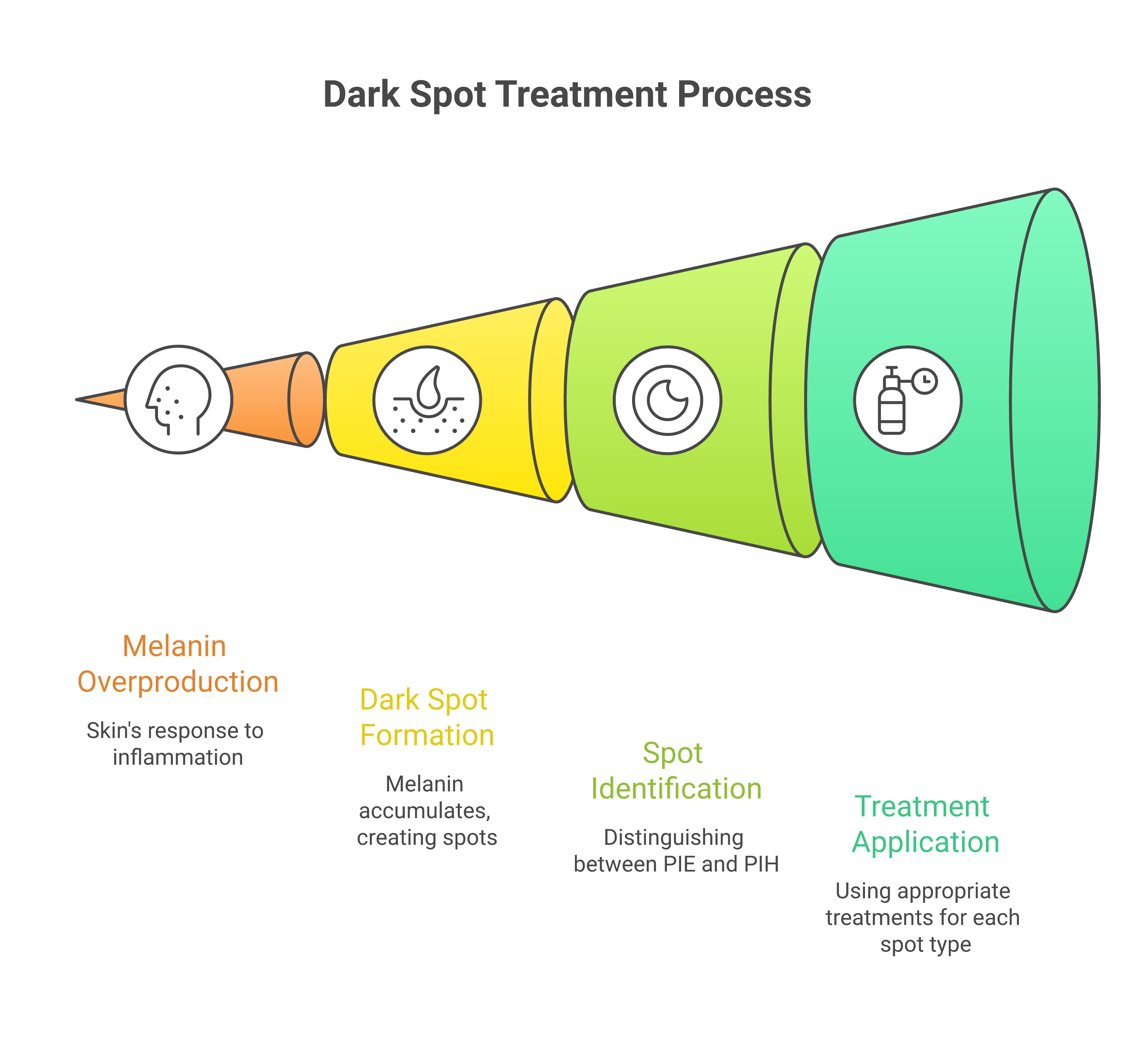
Here’s what happens at the cellular level: when a pimple forms, it triggers inflammation in your skin. That inflammation activates melanocytes, the cells responsible for producing melanin (the pigment that gives skin its color). In response to the injury, these melanocytes go into overdrive and produce excess melanin. Once the acne blemish has healed, that extra pigment gets deposited in the skin cells, leaving behind a visible dark mark on the affected areas. Once the skin has healed on the surface, the pigment left behind can linger for months.
Think of it like this. Your skin is essentially leaving a “memory” of the inflammation. The darker the mark, the more melanin was deposited during the healing process.
Epidermal vs. Dermal PIH
Not all dark spots are created equal. Where the excess melanin ends up determines how the mark looks and how it responds to treatment:
- Epidermal PIH (surface-level): These appear brown or tan and sit in the top layer of skin (the epidermis). They respond well to topical treatments and typically fade within 3 to 6 months once the skin has healed and you begin consistent care.
- Dermal PIH (deeper layers): These look gray, blue-gray, or slate-colored because the melanin has dropped into the dermis. They’re more stubborn, often taking 6 to 12 months or longer to fade, and may require professional procedures.
- Mixed PIH: A combination of both epidermal and dermal pigment. This is actually the most common presentation. You’ll see both brown and grayish tones in the same mark.
A simple test: shine a Wood’s lamp (a type of UV light) on the mark. Epidermal pigment becomes more visible under UV light, while dermal pigment stays relatively unchanged. Your dermatologist can perform this test during an office visit.
Dark Spots vs. Acne Scars: Know the Difference
I see people confuse dark spots with acne scars constantly, and it matters because the treatments are completely different. Here’s how to tell them apart:
| Feature | Dark Spots (PIH) | Acne Scars (Atrophic/Hypertrophic) |
|---|---|---|
| Appearance | Flat dark spots: brown, tan, or grayish | Indented scars (pitted) or raised scars (bumpy) |
| Skin Texture | Smooth, skin’s surface is unchanged | Altered, depressions, bumps, or scar tissue |
| Cause | Excess melanin production from inflammation | Loss or overproduction of collagen during healing |
| Does It Fade? | Yes, fades over time with or without treatment | Permanent without intervention |
| Timeline | 3-12 months with treatment | Requires ongoing professional treatments |
| Best Treatments | Brightening serums, sunscreen, chemical peels | Laser resurfacing, microneedling, fillers |
Types of True Acne Scars
If your marks have texture changes. If you can feel them when you run a finger across your skin, you’re dealing with actual scars rather than PIH. There are several different types:
- Ice pick scars: Narrow, deep acne scars with V-shaped indentations that look like tiny pitted puncture marks. These icepick scars are the hardest to treat.
- Boxcar scars: Wider depressed acne scars or craterlike scars with sharp, defined edges. They look like small craters.
- Rolling scars: Broad depressions with smooth, sloping edges that create a wave-like uneven appearance across the skin.
- Hypertrophic and keloid scars: These raised, thickened areas form where the body produced too much collagen during healing. Hypertrophic scars stay within the original wound boundary, while keloid scars extend beyond it, forming raised tissue that can be difficult to treat.
Many people have both PIH and atrophic scars simultaneously. Unlike dark marks (where the skin has healed flat), atrophic scars involve actual structural damage below the skin’s surface and texture. If in that case, address the acne marks first with brightening treatments, then tackle the textural scars with procedures that stimulate collagen production. For a deeper look at scar-specific treatments, read our guide on laser treatments for dark spots and scars.
Why Does Acne Leave Dark Spots? The Science Behind It
Understanding why your skin reacts this way helps you make smarter treatment choices. Several biological factors determine whether a breakout leaves a mark, and how severe that mark will be.
The Inflammation-Melanin Connection
Every pimple, whether it’s a small whitehead or a deep, inflamed cyst, causes some level of skin inflammation. Inflamed acne lesions release inflammatory mediators (cytokines and prostaglandins) that directly signal melanocytes to ramp up melanin production. The more severe the inflammation, the more melanin gets produced, and the more pronounced the resulting mark.
This is exactly why popping or picking at pimples makes dark spots dramatically worse. When you squeeze a blemish, you’re amplifying the inflammatory response, pushing bacteria and debris deeper into the skin, and increasing the chance of a more visible mark. Research published in the Journal of Clinical and Aesthetic Dermatology found that inflammation occurs at every stage of acne development, even before visible lesions form. Mechanical manipulation of breakouts extends this inflammatory cascade, which increases both the severity and duration of resulting hyperpigmentation.
Who Gets Dark Spots After Acne?
Anyone can develop post acne marks, but certain factors increase your risk considerably:
- Darker skin tones: People with deeper skin tones and more melanin (Fitzpatrick skin types III through VI) are significantly more prone to PIH because their melanocytes are naturally more active. The marks tend to be more pronounced in deeper skin tones. Dermatology research consistently shows that PIH occurs more frequently and with greater severity in people with darker skin due to higher baseline melanocyte activity.
- Inflammatory acne types: Cystic acne, nodular acne, and large pustules cause more damage and deeper inflammation than blackheads or small whiteheads.
- Picking or squeezing: Every time you touch a blemish, you extend the inflammatory cascade and increase melanin production.
- Sun exposure: UV radiation stimulates melanocytes independently. If you have existing marks and go unprotected in the sun, those spots will darken further and take much longer to fade.
- Delayed acne treatment: The longer a breakout persists, the longer the inflammation continues, and the more pigment accumulates. Ongoing breakouts that go untreated compound the problem, which is why early acne treatments are so important for preventing post acne hyperpigmentation.
The Role of Oxidative Stress
Beyond direct melanocyte stimulation, acne-related inflammation generates free radicals that cause oxidative stress on skin cells. These free radicals damage surrounding tissue and further stimulate melanin overproduction. Antioxidants help repair that oxidative damage and promote healthier cell turnover. This is one reason why antioxidant-rich treatments like vitamin C serums can make all the difference in both preventing and fading dark marks.
How to Get Rid of Dark Spots After Acne: Top At-Home Ingredients
The good news? Knowing which ingredients actually work makes all the difference. Most post acne marks can be treated effectively at home with the right over the counter ingredients, and dark spots fade faster when you use evidence-backed actives consistently. I’ve seen people waste hundreds of dollars on products that sound fancy but contain negligible concentrations of active ingredients. Here are the ones with the strongest evidence behind them. Look for the following ingredients in your products.
Vitamin C (L-Ascorbic Acid)
Vitamin C is one of the most effective treatments for fading dark spots, and it does double duty as an antioxidant that helps fade discoloration. It works by inhibiting tyrosinase, the enzyme that drives melanin production, while also neutralizing free radicals that contribute to further discoloration.
Look for serums containing 10% to 20% L-ascorbic acid for best results. Check the label to confirm the product is formulated at the right concentration. Lower concentrations can still help, but you’ll see faster improvements with higher percentages. Apply it in the morning. It actually boosts your sunscreen’s protective effects.
Who should use it: All skin types and skin tones. Vitamin C is gentle enough for sensitive skin at lower concentrations (around 10%).
Niacinamide (Vitamin B3)
Niacinamide is a powerhouse for hyperpigmentation. It works differently than most brightening ingredients. Rather than stopping melanin production, it prevents existing melanin from being transferred to surrounding skin cells. This makes it remarkably effective for fading post inflammatory hyperpigmentation marks while preventing new ones.
Concentrations of 4% to 5% are well-studied and effective. It also helps reduce inflammation, regulate excess oil production, and strengthen your skin barrier, improving your overall complexion while it fades existing marks, which makes it especially useful if you’re still dealing with active breakouts. Learn more about how this ingredient works in our guide to niacinamide benefits for skin.
Retinoids (Retinol, Retinal, Tretinoin)
Retinoids accelerate cell turnover, making your skin shed pigmented cells faster, making room for fresh cells underneath. This helps replace them with fresh , evenly-toned skin cells. They also boost collagen production, which improves the skin’s texture over time.
Over the counter options include retinol (0.25% to 1%) and retinal (retinaldehyde). Prescription-strength tretinoin (0.025% to 0.1%) works faster but causes more irritation. Start with a low concentration 2 to 3 nights per week and gradually increase frequency. For a complete breakdown, see our retinol for dark spots guide.
Caution: Retinoids increase sun sensitivity significantly. Always pair with SPF 30 or higher sunscreen during the day. And never start a retinoid during the same week you introduce other active ingredients. That’s a fast track to irritation.
Azelaic Acid
Azelaic acid is one of the most underrated treatments for dark spots after acne. At concentrations of 15% to 20%, it inhibits tyrosinase (reducing melanin production), kills acne-causing bacteria, and reduces inflammation, all at once. It’s one of the few ingredients that simultaneously treats active acne and fades the marks it leaves behind.
What makes azelaic acid especially valuable is its safety profile for darker skin tones. Unlike hydroquinone, which can cause paradoxical darkening (ochronosis) with long-term use in melanin-rich skin, azelaic acid carries virtually no risk of making hyperpigmentation worse.
Alpha Hydroxy Acids (Glycolic Acid, Lactic Acid)
Alpha hydroxy acids work by dissolving the bonds between dead skin cells on the surface, accelerating exfoliation and helping brighten skin and reveal a more even tone underneath. Glycolic acid (the smallest AHA molecule) penetrates most effectively and is the most studied for hyperpigmentation.
At-home products typically contain 5% to 10% glycolic acid. Start with lower concentrations and use 2 to 3 times per week. These acids can cause sun sensitivity, so sunscreen is non-negotiable when using AHAs.
Alpha Arbutin
Alpha arbutin is a naturally derived ingredient and a great option for fading stubborn dark patches. It slowly releases hydroquinone in a controlled, gentle manner. It blocks melanin production without the irritation or safety concerns associated with straight hydroquinone. Concentrations of 1% to 2% are effective and well-tolerated across all skin types. For persistent acne scars and dark spots, read our full breakdown of alpha arbutin for skin brightening.
Kojic Acid
Derived from fungi, kojic acid inhibits melanin production by chelating copper, a mineral that tyrosinase needs to function. It’s commonly found in cleansers and serums at concentrations of 1% to 4%. Kojic acid can cause irritation in sensitive skin, so patch test first and watch for redness or stinging.
Your Morning and Evening Skincare Routine for Dark Marks
Having the right ingredients is only half the battle. Layering them correctly, in the right order, can make all the difference in how quickly your post acne marks fade.
Morning Routine
- Gentle cleanser: Use a mild, non-foaming cleanser that won’t strip your skin barrier. Harsh cleansers strip oils, dirt, and protective lipids all at once, causing irritation, which can trigger more melanin production.
- Vitamin C serum: Apply to clean, dry skin. Wait 60 seconds for absorption.
- Niacinamide moisturizer or serum: Layer over the vitamin C for additional brightening and barrier support.
- Sunscreen (SPF 30 to 50): This is the single most important step in the process. Wearing sunscreen daily, even on cloudy days, prevents UV-triggered melanin production that darkens existing marks and creates new ones. Reapply every 2 hours if outdoors.
Evening Routine
- Double cleanse: Step one is an oil-based cleanser (removes sunscreen and makeup), then a gentle water-based cleanser.
- Exfoliant (2-3x per week): Glycolic acid or salicylic acid treatment. Salicylic acid is especially useful if you still have active breakouts because it can penetrate clogged pores clear out pores, and fight acne while also fading marks.
- Treatment serum: On non-exfoliant nights, apply your retinoid or azelaic acid.
- Moisturizer: Look for one containing hyaluronic acid or ceramides to support your skin barrier. A strong moisture barrier improves your overall skin appearance, reduces irritation from active ingredients, and helps skin recover faster. When skin heals in a nourished environment, post acne hyperpigmentation tends to resolve more quickly.
Important note on patience: Even with a solid routine, expect 4 to 8 weeks before you see noticeable improvement. Skin cell turnover takes roughly 28 to 56 days, depending heavily on your age, so the pigmented cells need time to shed and be replaced. Consistency beats intensity. Using products sporadically will get you nowhere.
Prescription-Strength Treatments for Stubborn Dark Spots
When over the counter products aren’t delivering results after 3 to 4 months of consistent use, it may be time to talk to a doctor about prescription options. Many recommend starting with a prescription retinoid or combination cream. These contain higher concentrations of active ingredients and can target dark spots more aggressively.
Tretinoin (Prescription Retinoid)
Tretinoin at 0.025% to 0.05% is one of the most effective treatments for post-inflammatory hyperpigmentation. It accelerates cell turnover significantly, pushes pigmented cells to the surface faster, and simultaneously boosts collagen production to improve the skin’s texture. Most acne patients who use tretinoin see results improving within 8 to 12 weeks for both active breakouts and dark marks.
Hydroquinone
Hydroquinone at 4% (prescription-strength, FDA-regulated) remains one of the most potent skin-lightening agents available. While more aggressive treatments exist, hydroquinone at this concentration strikes a good balance. It works by directly inhibiting tyrosinase and reducing melanin production at the source. However, it should be used in cycles (typically 3 months on, 2 months off) because prolonged continuous use can cause a condition called ochronosis (paradoxical darkening).
Hydroquinone is especially effective when combined with tretinoin and a mild corticosteroid in what’s called a “tri-combination cream.” This formulation accelerates fading while minimizing irritation.
Azelaic Acid (Prescription 15-20%)
While lower concentrations are available over the counter, prescription-strength azelaic acid (15% gel or 20% cream) delivers more dramatic results. It’s particularly recommended for acne prone skin and darker skin types because it treats both active acne and hyperpigmentation with a favorable safety profile.
Professional Procedures to Clear Dark Spots Faster
For deep or widespread post acne marks that haven’t responded to topical treatments, in office procedures can deliver faster, more dramatic results. Here’s what to know about the most effective options.
Chemical Peels
Professional chemical peels use higher concentrations of acids than anything available over the counter. They work by removing the top layers of pigmented skin, allowing fresh skin cells to emerge.
- Superficial peels (glycolic acid 30-50%, salicylic acid 20-30%): Minimal downtime, treats epidermal PIH. You’ll need 4 to 6 sessions spaced 2 to 4 weeks apart. Cost: $100 to $300 per session.
- Medium-depth peels (TCA 15-35%): Reaches deeper layers, more effective for stubborn marks. Requires 5 to 7 days of downtime with peeling and redness. Cost: $200 to $600 per session.
Chemical peels can make a real difference for widespread discoloration, but they must be performed carefully on darker skin tones to avoid triggering more hyperpigmentation. Always choose a provider experienced with treating melanin-rich skin.
Laser Treatments and Laser Resurfacing
Laser therapy uses focused light energy from specialized lasers to break down melanin deposits. Different types of post acne hyperpigmentation are best addressed with different laser wavelengths. The body’s immune system then clears the fragmented pigment over the following weeks.
- IPL (Intense Pulsed Light): Best for lighter skin tones with brown PIH. Targets surface pigment effectively. 3 to 5 sessions needed. Cost: $300 to $600 per session.
- Fractional laser resurfacing (Fraxel): Creates microscopic zones of treatment that stimulate collagen production and clear both pigment and scar tissue. Works on a wider range of skin types. 3 to 6 sessions. Cost: $500 to $1,500 per session.
- Nd:YAG laser: Among all lasers, the safest option for darker skin tones. Penetrates deeper without overheating surface melanin. 4 to 6 sessions. Cost: $300 to $800 per session.
Laser treatments carry higher risk in darker skin because the laser can accidentally target normal melanin rather than just the excess pigment. If you have a darker skin tone, seek a provider who specializes in treating melanin-rich skin with lasers designed for darker complexions. For more details, see our complete guide on laser to remove dark spots.
Microneedling
Microneedling uses tiny needles to create controlled micro-injuries in the skin. This triggers a wound-healing response that stimulates collagen production and helps topical brightening agents penetrate more deeply. It’s effective for both dark marks and depressed acne scars, making it a solid choice if you’re dealing with both. Unlike dermal fillers, which only address volume loss in scars, microneedling tackles both pigment and texture.
Professional microneedling (needle depths of 1.0 to 2.0mm) typically requires 3 to 6 sessions spaced 4 to 6 weeks apart. Cost ranges from $200 to $700 per session. Downtime is usually 24 to 72 hours of redness.
Microdermabrasion
Microdermabrasion uses a specialized device to gently exfoliate the skin’s surface, removing the outermost layer of dead and pigmented skin cells. It’s less aggressive than chemical peels or laser treatments, which makes it suitable for mild PIH. Results are gradual, depending on severity. Expect 6 to 10 sessions for noticeable improvement. Cost: $75 to $200 per session.
Treatment Comparison Chart
| Treatment | Best For | Sessions Needed | Downtime | Cost Per Session |
|---|---|---|---|---|
| Superficial chemical peels | Mild to moderate PIH | 4-6 | None to minimal | $100-$300 |
| Medium-depth peels | Stubborn PIH | 2-4 | 5-7 days | $200-$600 |
| IPL | Light skin tones, brown spots | 3-5 | Minimal | $300-$600 |
| Fractional laser resurfacing | PIH + scars | 3-6 | 3-7 days | $500-$1,500 |
| Microneedling | PIH + scars, all skin tones | 3-6 | 24-72 hours | $200-$700 |
| Microdermabrasion | Mild PIH | 6-10 | None | $75-$200 |
Treating Dark Spots on Darker Skin Tones: What You Need to Know
If you have a deeper skin tone, post-inflammatory hyperpigmentation is almost certainly your biggest skin concern after acne. Dark patches can linger for a year or longer, particularly in areas that experienced severe inflammation. In a 2021 review published in the Journal of Clinical and Aesthetic Dermatology, nearly 50% of non-Caucasian women rated PIH as “severely troublesome” and a significant proportion of Hispanic, Asian, and South Asian individuals. The marks tend to be darker, last longer, and carry a greater emotional burden than in lighter-skinned individuals.
The challenge is that many treatments designed to fade dark spots can actually cause more damage in darker skin types if used incorrectly. Here’s what works and what to avoid.
Safe and Effective Options for Darker Skin
- Azelaic acid (15-20%): First-line treatment for post inflammatory hyperpigmentation. Brightens without risk of paradoxical darkening. Also treats active acne.
- Niacinamide (4-5%): Gentle, well-tolerated, no photo-sensitivity risk. Can be used morning and evening.
- Vitamin C (10-15%): Effective brightener and antioxidant. Start at lower concentrations to assess tolerance.
- Alpha arbutin (1-2%): Safer alternative to hydroquinone with similar mechanisms.
- Topical retinoids (start low): Begin at 0.025% retinol or retinal. Increase slowly. Watch for irritation, because irritation triggers more melanin production in darker skin.
What to Approach with Caution
- Hydroquinone above 4%: Risk of ochronosis with prolonged use. Limit to 3-month cycles under supervision.
- Aggressive chemical peels: Medium and deep peels carry higher risk of post-inflammatory hyperpigmentation in Fitzpatrick types IV to VI. Start with gentler superficial peels.
- IPL and ablative lasers: Higher risk of burns and worsening hyperpigmentation. Nd:YAG laser is the safest laser option for darker skin.
- High-concentration AHAs: Glycolic acid above 10% can cause irritation and rebound hyperpigmentation. Lactic acid or mandelic acid are gentler alternatives with similar benefits.
The cardinal rule for treating dark marks on melanin-rich skin: go slow. Introduce one active ingredient at a time, wait 2 weeks before adding another, and stop immediately if you notice irritation, burning, or new darkening. Aggressive treatment does more harm than good when dealing with reactive melanocytes.
How to Prevent Dark Spots After Acne in the First Place
Prevention is always easier than treatment. If you’re currently dealing with active breakouts and want to minimize the dark marks they leave behind, these strategies can reduce PIH risk by 50% or more.
Stop Picking and Squeezing
This is the single most impactful change you can make. Every time you give in and put your hands on pimples to start popping pimples, you force bacteria and inflammatory debris deeper into the dermis, amplify the inflammatory response, and guarantee a darker, longer-lasting mark. Once acne clears, the marks will be much less challenging to treat. If you must extract, let a professional do it, or at minimum, wait until the blemish has a visible white head and use a proper comedone extractor with sterile technique.
Treat Acne Breakouts Quickly and Aggressively
The faster you clear acne, the less time inflammation has to trigger excess melanin production, and you prevent acne from leaving new dark spots in its wake. Use spot treatments containing benzoyl peroxide (2.5%) or salicylic acid at the first sign of a breakout. If you get frequent acne breakouts, a consistent preventive skin care routine (niacinamide + retinoid + gentle cleanser) keeps breakouts from forming in the first place.
Apply Sunscreen Every Single Day
Sun protection is non-negotiable if you care about preventing and fading dark spots. UV radiation independently stimulates melanocytes, which means unprotected sun exposure will darken existing marks and create new hyperpigmentation. Use a broad-spectrum SPF 30 to 50 sunscreen daily, rain or shine. Reapply every 2 hours when outdoors. Tinted sunscreens with iron oxide provide additional protection against visible light, which also contributes to hyperpigmentation in darker skin tones. This added layer of protection helps keep existing spots from darkening.
Use Anti-Inflammatory Ingredients Proactively
Ingredients that reduce inflammation, like niacinamide, niacinamide in specific concentrations, centella asiatica, and green tea extract. These help reduce the inflammatory cascade, can calm the inflammatory response before it triggers melanin overproduction. Building these into your daily skin care routine helps act as insurance against future dark marks and helps your skin heal faster after breakouts.
Consider Your Diet and Lifestyle
While no food alone will erase dark marks, an anti-inflammatory diet rich in antioxidants (berries, leafy greens, fatty fish) can support your skin’s ability to restore itself and repair damage from within. Staying hydrated and managing stress also help reduce inflammation that can lead to more pronounced hyperpigmentation.
Don’t Neglect Your Moisture Barrier
A compromised skin barrier lets irritants penetrate more easily, causing more inflammation and, predictably, more melanin production. Keep your barrier strong with ceramide-based moisturizers, avoid over-exfoliating (no more than 2 to 3 times per week), and skip harsh, stripping cleansers that leave your skin feeling “squeaky clean.”
When Should You See a Dermatologist?
While most post acne marks respond to at-home treatment, there are situations where professional evaluation makes sense. A dermatologist or skin specialist can offer personalized advice, rule out other skin concerns, and prescribe stronger treatments when needed.
Consider booking an appointment if:
- Your dark marks haven’t improved after 3 to 4 months of consistent at-home treatment
- You have deep or widespread PIH covering large areas of your face or body
- You’re unsure whether your marks are PIH, post-inflammatory erythema (PIE), or true scars
- You have darker skin and want guidance on treatments that won’t make discoloration worse
- Any dark spot changes in size, shape, or color. This warrants evaluation to rule out other conditions
- Dark marks are significantly affecting your self esteem and daily quality of life
A dermatologist can also create a customized treatment plan that combines prescription topicals with professional procedures for faster, more complete results. For tips on what to expect at your visit, see our guide on seeing a dermatologist for dark spots on the face.
How Long Do Dark Spots After Acne Take to Fade?
Knowing the expected timeline is half the battle. One of the most common questions I hear is “when will these marks disappear?” The honest answer is that it depends on several factors, but having realistic expectations makes the process much less frustrating.
| Factor | Faster Fading | Slower Fading |
|---|---|---|
| PIH Type | Epidermal (brown/tan) | Dermal (gray/blue-gray) |
| Skin Tone | Lighter skin tones | Darker skin tones |
| Severity | Light marks from minor blemishes | Deep marks from cystic acne |
| Sun Protection | Consistent SPF 30+ daily | Irregular or no sunscreen use |
| Treatment | Active topical treatment plan | No treatment (waiting it out) |
General timeline with treatment:
- Mild marks (light brown, recent): 4 to 8 weeks
- Moderate marks (darker, several months old): 3 to 6 months
- Severe marks (deep pigment, long-standing): 6 to 12+ months
Without any treatment at all, mild PIH can take 6 to 12 months to fade on its own. Moderate to severe marks may take 1 to 2 years. Active treatment accelerates this timeline significantly, which is why doing something is always better than waiting.
For a detailed breakdown of what to expect week by week, read our dark spots fading timeline.
Frequently Asked Questions About Dark Spots After Acne
Do dark spots after acne go away on their own?
Yes, post-inflammatory hyperpigmentation will eventually fade without treatment because your skin naturally sheds pigmented cells over time through regular cell turnover. However, this natural process is slow. Mild marks may take 6 to 12 months to disappear on their own, and darker or deeper marks can persist for 1 to 2 years. Using targeted treatments like vitamin C, niacinamide, or retinoids combined with daily sunscreen can cut this timeline roughly in half.
What is the fastest way to get rid of post acne dark spots?
The fastest approach combines topical brightening ingredients (vitamin C in the morning, a retinoid at night) with strict daily sunscreen use. For stubborn marks that don’t respond to at-home care within 3 months, professional chemical peels or laser treatments can accelerate results dramatically. A dermatologist can also prescribe a tri-combination cream (hydroquinone + tretinoin + steroid) for particularly resistant post acne marks.
What ingredient works best for dark spots after acne?
There’s no single “best” ingredient because effectiveness depends on your skin type, and using the wrong concentration can lead to irritation that makes discoloration worse. Depending on whether you have acne scars or PIH, the depth matters. That said, retinoids and vitamin C are consistently the most effective at-home options according to published research. Azelaic acid is the best choice if you have darker skin or still have active acne. For an all-around gentle approach, niacinamide combined with alpha arbutin covers most bases.
Can lemon juice or toothpaste fade dark spots?
No. These home remedies can actually make things worse. Lemon juice has an extremely low pH (around 2.0) that can cause chemical burns, irritation, and phytophotodermatitis (increased sensitivity to sunlight that causes worse dark marks). Toothpaste contains ingredients like sodium lauryl sulfate, menthol, and hydrogen peroxide that irritate skin and disrupt the moisture barrier. Stick with ingredients that have actual clinical evidence behind them. Your skin will thank you. There are plenty of proven options, so choosing the right ingredients matters far more than choosing expensive brands.
How long does post-inflammatory hyperpigmentation take to fade?
With consistent treatment and daily sunscreen, epidermal PIH (brown or tan spots) typically fades in 3 to 6 months. Dermal PIH (gray or blue-gray marks) takes longer, usually 6 to 12 months, sometimes more. The most important factor is sun protection. Without daily sunscreen, even effective treatments will produce slow or minimal results because UV exposure constantly restimulates melanin production.
Is PIH the same as post-inflammatory erythema (PIE)?
No. PIH (post inflammatory hyperpigmentation) is a pigmentation issue caused by excess melanin: it appears brown, tan, or grayish. PIE is a vascular issue caused by damaged or dilated blood vessels beneath the skin: it appears pink, red, or purple. PIE is more common in lighter skin tones, while PIH is more common in darker skin tones. A quick test: press a clear glass against the mark (this is called “diascopy”). If the color disappears under pressure, it’s PIE (blood vessels). If it stays visible, it’s PIH (pigment).
Can I wear makeup over dark spots while treating them?
Absolutely. Non-comedogenic makeup won’t interfere with your treatment or make dark marks worse. In fact, mineral-based foundations and tinted sunscreens often contain iron oxide, which provides additional protection against visible light, a known trigger for hyperpigmentation. Just make sure you’re thoroughly removing makeup every evening with a double cleanse so your treatment products can penetrate properly.
Building Your Treatment Plan: Where to Start
If you’re feeling overwhelmed by all the options, here’s a simplified starting point based on how severe your post acne marks are:
- Mild marks (a few light spots): Vitamin C serum (morning) + niacinamide moisturizer + SPF 30 sunscreen. This simple routine addresses most light marks within 6 to 8 weeks.
- Moderate marks (multiple darker spots): Add a retinol product (evening, 2-3x per week) and consider an azelaic acid treatment. Fading dark spots on face with this approach typically takes 3 to 6 months.
- Severe or widespread marks: Consult a dermatologist for prescription tretinoin or hydroquinone. Professional procedures (chemical peels, microneedling) combined with topicals deliver the best results for dark spots on face treatment.
Regardless of severity, every treatment plan needs three non-negotiable elements: sun protection, patience, and consistency. Focus on improving one area at a time rather than making too many changes at once. Whether you’re dealing with acne scars or post acne marks, the damage didn’t appear overnight, and marks won’t disappear overnight either. Keep in mind that results grow more visible with each passing week. Remember that consistency beats intensity. But with the right approach, clearer skin is absolutely within reach.
For more information on managing dark spots and finding the right dark spot treatments, explore our complete resource library. We’re sharing new content regularly to help you make informed decisions about your skin. You can also learn about how to remove dark spots from face with additional techniques and ingredient breakdowns.

