
Dark Spots on Skin

Dr. Matthew Olesiak, MD, is the Chief Medical Director at SANESolution, a renowned wellness technology company dedicated to providing evidence-based solutions for optimal living. Dr. Olesiak earned his medical degree from the prestigious Jagiellonian University Medical College in Kraków, Poland, where he developed a strong foundation in medicine.
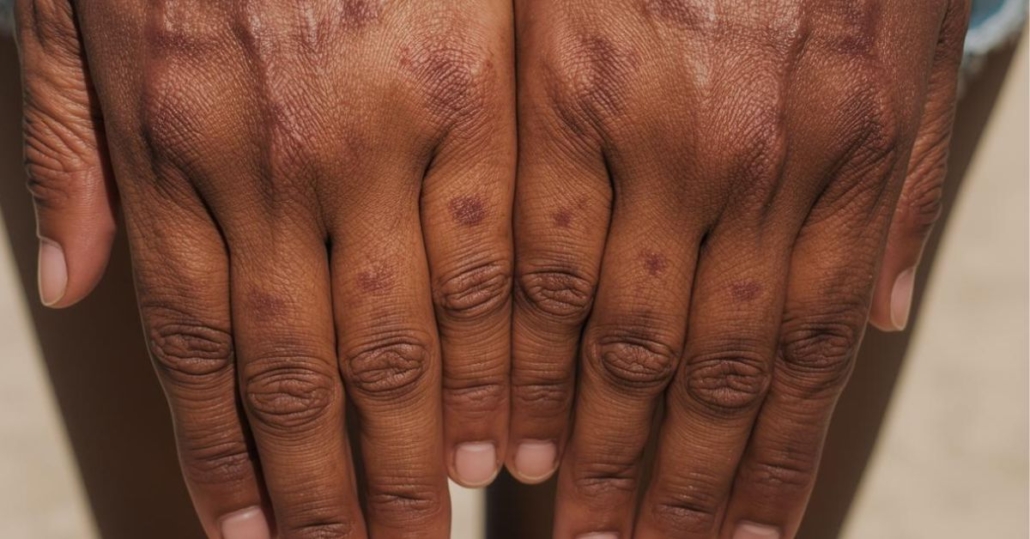
Dark spots on skin are flat, discolored patches where excess melanin, the pigment that gives your skin its color, accumulates in concentrated clusters. They range from light brown to dark brown or even gray-black, and they show up on the face, hands, shoulders, chest, and arms more than anywhere else. About 1 in 3 people who visit a dermatologist bring up some form of hyperpigmentation as a concern, making it one of the biggest reasons people seek skin care advice.
I’. Ve spent years helping patients understand, while most dark spots are harmless, they can signal everything from cumulative sun damage to hormonal shifts to underlying medical conditions that warrant attention. Good news: Nearly every type of dark spot responds to treatment if you match the right approach to the right cause.
This guide covers every angle: the different types of dark spots, what triggers them, the full range of treatment options from over-the-counter creams and serums to in-office procedures, and the prevention strategies that actually work long-term. Whether you’re dealing with a few sun spots on your hands, persistent dark spots on your legs, or widespread melasma across your cheeks, you’ll find actionable answers below.
What Are Dark Spots? Understanding Hyperpigmentation
Dark spots, also called age spots, sun spots, or liver spots (sometimes also called sunspots), are a form of hyperpigmentation. That’s the medical term for any area of skin that appears darker than the surrounding skin. The mechanism behind it’s straightforward: specialized skin cells called melanocytes produce a pigment called melanin, and when those cells become damaged or overstimulated, they churn out extra melanin that deposits in the upper layers of your skin.
Think of melanin as your body’. S built-in sunscreen. When UV light hits your skin, melanocytes ramp up melanin production to shield your DNA from damage. The tan you develop after sun exposure is actually a defense mechanism. But when this process goes haywire (from chronic sun exposure, inflammation, hormonal changes, or other triggers, the result is uneven melanin distribution that creates dark patches and brown spots visible on the skin’. S surface.
Dark spots can affect people of every age, ethnicity, and skin type. But they’. Re way more common in adults older than 50, people with darker skin tones (Fitzpatrick skin types III-VI), and those with a history of frequent, unprotected sun exposure. The spots themselves are almost always flat to the touch, distinguishing them from raised moles or skin tags.
Quick Anatomy: How Skin Pigmentation Works
Your skin produces melanin through a process called melanogenesis. Here’. S the simplified chain of events:
- Trigger activation: UV light, hormones, or inflammation signal melanocytes in the basal layer of your epidermis.
- Melanin synthesis: An enzyme called tyrosinase converts the amino acid tyrosine into melanin inside structures called melanosomes.
- Pigment transfer: Melanosomes travel outward through tiny arms (dendrites) and transfer melanin packages to surrounding keratinocytes, the dominant skin cells.
- Visible color: As keratinocytes migrate to the skin’. S surface, the melanin they carry determines your visible skin tone. Concentrated deposits create dark spots.
This matters for treatment because different therapies target different steps. Vitamin C and alpha arbutin block tyrosinase. Retinoids speed up cell turnover so pigmented dead skin cells shed faster. Chemical peels exfoliate the top layers where pigment concentrates. Understanding the mechanism helps you pick the right approach (or combination of approaches, for your specific situation.
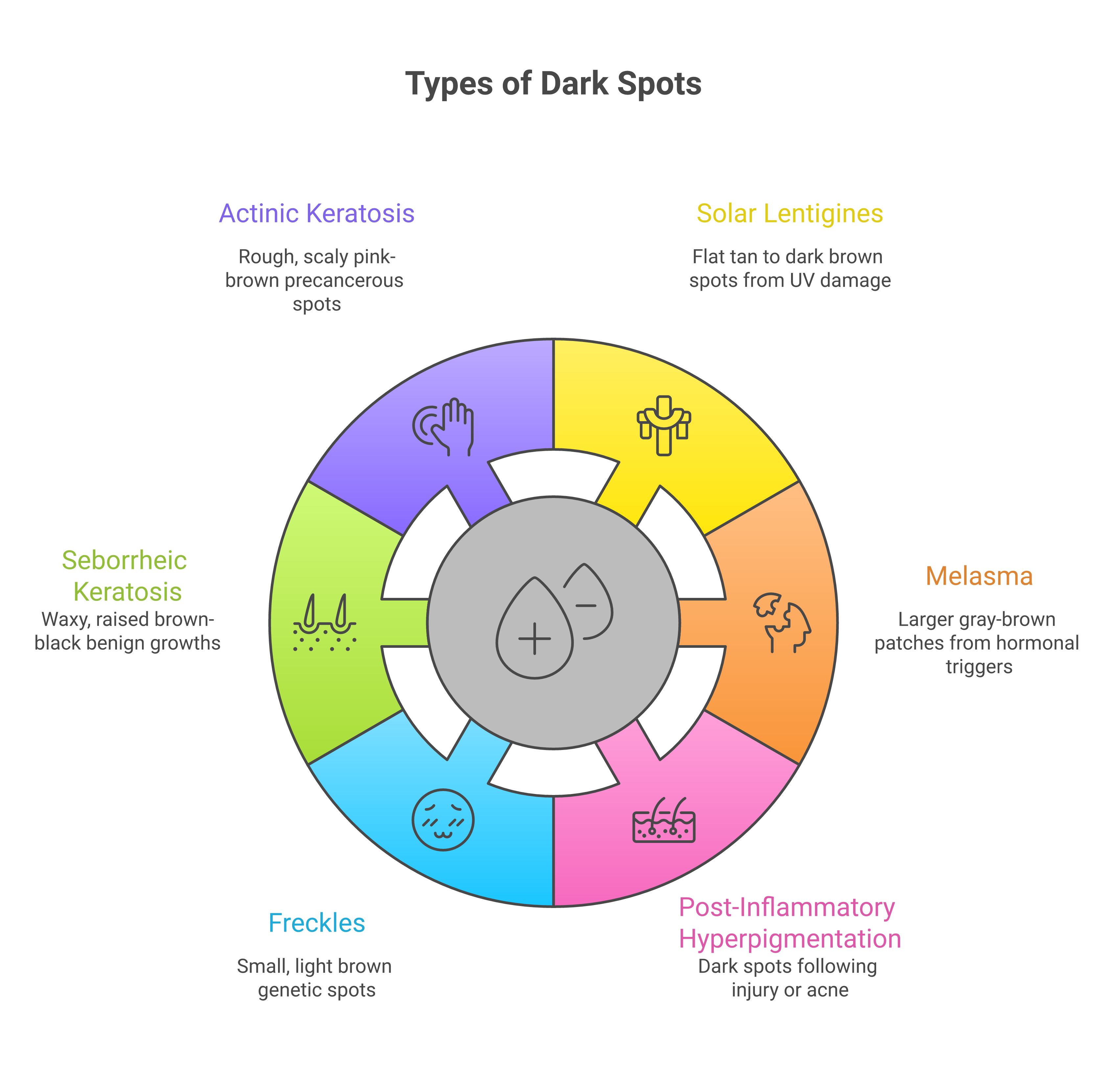
The 6 Most Common Types of Dark Spots
Not all dark spots are the same. Identifying which type you’. Re dealing with is the first and most important step toward effective treatment, because what works for sun spots may actually worsen melasma. Here’. S the breakdown:
1. Sun Spots (Solar Lentigines)
These are the classic “. Age spots”., flat, oval brown spots that develop on areas that get the most sun exposure: face, backs of hands, forearms, shoulders, and upper chest. Despite the name, they’. Re caused by cumulative sun damage rather than aging itself. A 25-year-old lifeguard can develop solar lentigines. A 60-year-old who’. S always worn sunscreen may have none.
Sun spots typically range from tan to dark brown, measure 1-3 centimeters across, and have well-defined borders. According to the American Academy of Dermatology, over 90% of white adults over age 60 have at least one solar lentigo. They respond well to most treatments, including topical retinoids, chemical peels, and laser therapy.
2. Post-Inflammatory Hyperpigmentation (PIH)
PIH, or post inflammatory hyperpigmentation, is the dark mark left behind after a skin injury or inflammation heals. Acne is the number-one culprit (those flat brown spot marks that linger for months after a pimple resolves? That’s PIH. But it also occurs after eczema flares, burns, cuts, insect bites, rashes, and even aggressive cosmetic procedures that cause skin injury.
PIH affects all skin types, but it’. S disproportionately common in people with darker skin because melanocytes in darker skin tones are more reactive to inflammation. PIH is one of the most common reasons people with darker skin seek dermatological care, according to research published in the Journal of Clinical and Aesthetic Dermatology. Good news: PIH often fades on its own over 3-24 months, and topical treatments like niacinamide, azelaic acid, and vitamin C can speed the process considerably. You can learn more in our detailed guide on dark spots after acne.
3. Melasma
Melasma creates larger, irregular dark patches, usually on the cheeks, forehead, nose bridge, chin, and upper lip. It’. S sometimes called the “. Mask of pregnancy”. Because hormonal changes during pregnancy are one of its most common triggers. Birth control pills, hormone replacement therapy, and thyroid disorders can also trigger melasma, as can chronic sun exposure and heat.
What makes melasma uniquely frustrating is its stubborn nature. Unlike sun spots, melasma involves both epidermal (surface) and dermal (deeper) pigment, and it has a strong tendency to recur even after successful treatment. About 90% of melasma cases occur in women, though men account for roughly 10% of cases. If you suspect pregnancy-related skin changes, our guide on dark spots during pregnancy covers this in depth.
4. Freckles (Ephelides)
Freckles are small, flat spots (usually under 5mm (that vary from red to light brown. They’. Re genetically determined and appear in childhood, darkening with sun exposure and fading in winter. Freckles are most common in people with fair skin and red or blonde hair. While they’. Re technically a form of uneven skin pigmentation, most people don’. T consider them a cosmetic concern, and they don’. T carry any medical risk.
5. Seborrheic Keratoses
These are waxy, slightly raised, brown-to-black growths that look like they’. Ve been “. Stuck on”. The skin’. S surface. They’. Re extremely common after age 50. Seborrheic keratoses are completely benign, but they can sometimes be mistaken for melanoma due to their dark color and irregular shape. If you notice any growth that changes rapidly, itches, or bleeds, get it checked by a doctor. While seborrheic keratoses don’. T technically fall under hyperpigmentation, I include them here because patients often confuse them with age spots or liver spots.
6. Drug-Induced Hyperpigmentation
Certain medications can cause dark patches as a side effect. The most common offenders include:
- Minocycline (an antibiotic used for acne)
- Amiodarone (a heart medication)
- Antimalarial drugs (hydroxychloroquine)
- Chemotherapy agents
- Nonsteroidal anti-inflammatory drugs (NSAIDs) in some cases
- Oral contraceptives (which can trigger melasma)
Drug-induced skin discoloration often fades after discontinuing the medication, though it can take months. Never stop a prescribed medication without talking to your doctor first.
What Causes Dark Spots? The 7 Primary Triggers
Knowing what caused your dark spots tells you which treatment will actually do something. Here are the seven triggers I see most often, in order of frequency:
1. Sun Damage (The #1 Cause)
UV radiation, both UVA and UVB rays, is far and away the #1 trigger for dark spots. UVB rays cause sunburn and directly damage DNA in skin cells. UVA rays penetrate deeper, breaking down collagen and triggering melanin production that leads to photoaging and brown spots. Years of cumulative sun damage overwhelm your melanocytes, causing them to produce melanin unevenly.
A 2013 study published in Clinical, Cosmetic and Investigational Dermatology (Flament et al.) found that up to 80% of visible facial aging, including dark spots, wrinkles, and skin texture changes, is attributable to UV exposure rather than chronological aging. Tanning beds accelerate this damage. Even a single blistering sunburn during childhood increases your lifetime risk of developing persistent dark spots and discolored skin patches.
2. Hormonal Changes
Fluctuations in estrogen and progesterone stimulate melanocytes directly, triggering overproduction of melanin. That’s why melasma frequently develops during pregnancy, while using birth control pills, or during hormone replacement therapy. The skin darkening hormone connection runs deeper than most people realize (even thyroid imbalances and stress-related cortisol spikes can contribute to hormonal hyperpigmentation.
3. Inflammation and Skin Injury
Whenever your skin heals from injury, whether from acne, eczema, psoriasis, a burn, a cut, or an insect bite, there’. S a risk of post-inflammatory hyperpigmentation. The inflammatory process itself stimulates melanocytes. That’s why picking at pimples or scratching at bug bites nearly guarantees a dark mark. Aggressive skincare products that irritate the skin can also trigger inflammation-driven dark spots, especially those with high concentrations of acids or exfoliants used too frequently.
4. Aging
As skin ages, melanocytes become less evenly distributed. After decades of UV exposure, some melanocytes enlarge and cluster together, while others disappear entirely. The result: age-related dark spots (technically solar lentigines) in sun-exposed areas, paired with lighter patches in sun-protected areas. The process accelerates after age 40, which is why dark spots after 50 and during menopause become way more common.
5. Medications
As mentioned above, certain medications cause hyperpigmentation as a side effect. Beyond the drugs listed earlier, photosensitizing medications (including some antibiotics, diuretics, and retinoids themselves, can make your skin more vulnerable to sun-induced dark spots. Always review medication side effects with your prescribing physician, and wear broad spectrum sunscreen religiously if you’. Re taking any photosensitizing drug.
6. Genetics
Your genetic background matters a lot in how prone you’re to developing dark spots. Your skin type (largely inherited) determines how reactive your melanocytes are. People with darker skin produce more melanin and have more active melanocytes, making them more susceptible to post-inflammatory hyperpigmentation. Family history of freckles, melasma, or age spots increases your personal risk as well.
7. Medical Conditions
Rarely, dark spots signal an underlying medical condition. Addison’. S disease (adrenal insufficiency) causes widespread skin darkening. Hemochromatosis (iron overload) can cause a bronze skin discoloration. Vitamin B12 and folic acid deficiencies have been linked to hyperpigmentation. If dark spots develop rapidly without an obvious cause, or if they’. Re accompanied by fatigue, weight changes, or other symptoms, medical evaluation is warranted.
How to Diagnose Dark Spots: What to Expect
Most of the time, a doctor can diagnose dark spots just by looking at them. When you see a dermatologist about dark spots, expect the following:
- Medical history review: Your doctor will ask about medications, sun exposure habits, skincare routine, family history, and whether you’. Re pregnant or using hormonal contraceptives.
- Physical exam with a dermatoscope: This handheld magnifying device with built-in lighting allows visualization of pigment patterns invisible to the naked eye. It’. S particularly important for distinguishing benign sun spots from atypical moles or early melanoma.
- Wood’. S lamp examination: This UV light helps determine whether pigment sits in the epidermis (surface, easier to treat) or the dermis (deeper (harder to treat). Epidermal melanin becomes more prominent under Wood’. S lamp. Dermal melanin doesn’t.
- Biopsy (if needed): For any spot that looks suspicious, asymmetric, multicolored, rapidly changing, your dermatologist may perform a small skin biopsy to rule out skin cancer.
At-Home Treatments: Ingredients That Actually Fade Dark Spots
The right skincare routine with creams, serums, and antioxidants can do a lot to reduce the appearance of mild to moderate dark spots. Here are the ingredients actually worth spending money on, ranked by how strong the research behind them is:
Vitamin C (L-Ascorbic Acid)
Vitamin C is an antioxidant that inhibits tyrosinase (the enzyme driving melanin production, while also neutralizing free radicals from sun damage. A concentration of 10-20% L-ascorbic acid at pH 2.5-3.5 provides the best results. You’. Ll typically see improvement in 8-12 weeks with consistent daily use. Apply it in the morning before sunscreen for both brightening and photoprotective benefits. Vitamin C serums work well as a dark spot serum when used consistently.
Retinoids (Retinol, Tretinoin, Adapalene)
Retinol and prescription retinoids speed up cell turnover, which means pigmented dead cells are shed faster and replaced by fresh, evenly pigmented skin. Over-the-counter retinol (0.25-1%) works for mild hyperpigmentation. Prescription tretinoin (0.025-0.1%) is more effective for stubborn discoloration. Start slowly (two to three nights per week (and build up to nightly use over 4-6 weeks to minimize irritation. Retinoids promote collagen production as well, so they simultaneously address fine lines and skin texture.
Niacinamide (Vitamin B3)
Niacinamide works differently from most brightening ingredients. Rather than blocking melanin production, it prevents the transfer of melanin from melanocytes to surrounding keratinocytes. A 5% niacinamide serum, applied twice daily, can reduce the appearance of dark spots by 35-68% over 8-12 weeks based on published clinical data. It’. S gentle enough for sensitive skin and pairs well with nearly every other active ingredient.
Azelaic Acid
Azelaic acid at 15-20% concentration is one of the more versatile treatments available. It inhibits tyrosinase, reduces inflammation, and kills acne-causing bacteria, making it an ideal choice for post-inflammatory hyperpigmentation from acne. It’. S also one of the few topical treatments considered safe during pregnancy, which is relevant for those dealing with melasma.
Hydroquinone
Hydroquinone remains the gold standard for treating hyperpigmentation. It works by inhibiting tyrosinase and is available over the counter at 2% concentration. Prescription-strength formulations (4%) are way more effective. But hydroquinone shouldn’. T be used continuously for more than 3-5 months because prolonged use can cause a condition called ochronosis, a paradoxical darkening of the skin. Use it in cycles under medical supervision for best results. Learn more about how it compares to other options in our OTC vs prescription treatment guide.
Kojic Acid
Derived from fungi used in sake and soy sauce fermentation, kojic acid inhibits tyrosinase and is a common ingredient in brightening serums and creams. It’. S less potent than hydroquinone but carries fewer side effects. Concentrations of 1-4% are typical. It can cause contact dermatitis in some people, so patch testing is wise before applying it to your face.
Alpha Arbutin and Tranexamic Acid
Alpha arbutin is a naturally derived tyrosinase inhibitor related to hydroquinone but with a gentler profile. Tranexamic acid (oral or topical) has emerged as a promising treatment for melasma specifically, with a randomized clinical trial (Heydari et al., Journal of Cosmetic Dermatology) finding that 5% topical tranexamic acid cream applied twice daily reduced MASI (Melasma Area and Severity Index) scores by approximately 51% over 12 weeks. Oligopeptide-68 is another newer ingredient showing promise in early research for its ability to regulate melanin synthesis.
Treatment Comparison: At-Home Ingredients
| Ingredient | Strength | Best For | Time to Results | Pregnancy Safe? |
|---|---|---|---|---|
| Vitamin C (10-20%) | Moderate | Sun spots, general brightening | 8-12 weeks | Yes |
| Retinol (0.25-1%) | Moderate-High | Sun spots, PIH, aging | 12-24 weeks | No |
| Niacinamide (5%) | Moderate | PIH, sensitive skin | 8-12 weeks | Yes |
| Azelaic Acid (15-20%) | Moderate-High | PIH, acne marks, melasma | 12-24 weeks | Yes |
| Hydroquinone (2-4%) | High | Stubborn spots, melasma | 4-12 weeks | No |
| Kojic Acid (1-4%) | Moderate | Sun spots, mild PIH | 8-16 weeks | Likely safe (limited data) |
| Alpha Arbutin (2%) | Moderate | General dark spots, sensitive skin | 8-12 weeks | Likely safe (limited data) |
| Tranexamic Acid (2-5%) | Moderate-High | Melasma specifically | 8-12 weeks | Consult doctor |
Professional Treatments for Stubborn Dark Spots
When topical treatments plateau (or when you want faster, more dramatic results, professional cosmetic procedures offer the next level of effectiveness. These should always be performed by a qualified dermatologist or trained skincare professional, especially if you have darker skin, where aggressive treatments can actually trigger more harm through post-procedural hyperpigmentation.
Chemical Peels
Chemical peels use concentrated acid solutions for exfoliation of the top layers of skin, revealing brighter, more even looking skin beneath. These procedures can effectively lighten skin and reduce the appearance of dark spots. They’re categorized by depth:
- Superficial peels (glycolic acid 20-50%, salicylic acid, lactic acid): Minimal downtime. Treat mild discoloration. Typically require a series of 4-6 treatments spaced 2-4 weeks apart. Cost: $100-$250 per session.
- Medium peels (trichloroacetic acid 15-35%): Greater effectiveness for moderate dark spots. Expect 5-7 days of peeling and redness. Cost: $200-$600 per session.
- Deep peels (phenol-based): Reserved for severe sun damage. Big downtime (2-3 weeks). Usually a one-time treatment. Cost: $1,500-$3,000. Risk of complications is higher, particularly for darker skin types.
Laser Therapy
Laser treatments for dark spots use targeted light energy to break apart concentrated melanin deposits. The fragmented pigment is then absorbed and cleared by your body’. S immune system. Key options include:
- Intense Pulsed Light (IPL): Not technically a laser, but uses broad-spectrum light to target pigment. Works best on lighter skin types (I-III). Multiple sessions needed. Cost: $300-$600 per session.
- Q-Switched Nd:YAG laser: Delivers precise energy that shatters pigment without damaging surrounding skin. Effective across multiple skin types, including darker skin tones. 2-4 sessions typically needed. Cost: $400-$800 per session.
- Fractional lasers (Fraxel): Create microscopic treatment zones surrounded by untouched tissue, promoting faster healing. Effective for widespread sun damage and improve overall skin texture alongside pigment reduction. Cost: $1,000-$2,000 per session.
- Picosecond lasers: Newer technology delivering ultra-short pulses (trillionths of a second) that shatter pigment particles more efficiently with less heat. Reduced risk of side effects compared to older laser therapy technologies. Cost: $400-$1,000 per session.
Microdermabrasion
Microdermabrasion uses fine crystals or a diamond-tipped wand to mechanically exfoliate the outermost skin layer. It’. S gentler than chemical peels or lasers, with zero downtime. Best for very mild discoloration. Usually 6-10 sessions are needed, spaced 1-2 weeks apart. Cost: $75-$200 per session. Don’. T expect dramatic results for persistent dark spots. It works better as a maintenance approach or complement to other treatments.
Cryotherapy
Cryotherapy applies liquid nitrogen to individual dark spots, freezing and destroying the pigmented skin cells. New, unpigmented skin grows in its place. It’. S quick (seconds per spot), affordable ($50-$150 per session), and works well for isolated age spots and liver spots. But there’. S a risk of creating lighter patches (hypopigmentation) at the treatment site, which makes it less suitable for darker skin tones.
Microneedling
Microneedling creates thousands of tiny punctures in the skin using fine needles, triggering your body’. S wound-healing response and collagen production. When combined with topical brightening agents (vitamin C, tranexamic acid) applied immediately after (a technique called “. Meso-infusion”. , it can significantly improve hyperpigmentation. 3-6 sessions are typically recommended. Cost: $200-$700 per session.
Professional Treatment Comparison
| Procedure | Effectiveness | Downtime | Sessions Needed | Cost Range | Safe for Darker Skin? |
|---|---|---|---|---|---|
| Superficial Chemical Peel | Mild-Moderate | 1-2 days | 4-6 | $100-$250/session | Yes (with caution) |
| Medium Chemical Peel | Moderate-High | 5-7 days | 1-3 | $200-$600/session | Caution needed |
| IPL | Moderate | 1-3 days | 3-5 | $300-$600/session | No (risk of burns) |
| Q-Switched Nd:YAG | High | 3-7 days | 2-4 | $400-$800/session | Yes |
| Fractional Laser | High | 5-10 days | 2-4 | $1,000-$2,000/session | With experienced provider |
| Microneedling | Moderate | 1-3 days | 3-6 | $200-$700/session | Yes |
| Cryotherapy | Moderate | 1-2 weeks | 1-2 | $50-$150/spot | No (hypopigmentation risk) |
Natural and Home Remedies: What the Evidence Actually Shows
Every other TikTok and Pinterest board pushes lemon juice, apple cider vinegar, turmeric, and a dozen other home remedies for dark spots. I get asked about them constantly. Here’. S my honest assessment:
Remedies With Some Scientific Support
- Licorice root extract (glabridin): Contains glabridin, which inhibits tyrosinase. A handful of small studies show mild brightening effects. It’. S found in many commercial natural dark spot treatments. Won’. T replace proven ingredients, but reasonable as an adjunct.
- Green tea extract: Contains EGCG, a polyphenol with antioxidant and anti-inflammatory properties. Some evidence it can reduce melanin production when applied topically.
- Soy extracts: Contain serine protease inhibitors that may reduce pigment transfer. Found in several OTC moisturizers.
- Aloe vera (aloesin): Contains aloesin, which has been shown to inhibit tyrosinase in lab studies. More human research needed, but unlikely to cause harm.
Remedies to Avoid
- Lemon juice: The citric acid is far too harsh for facial skin and can cause chemical burns, especially with sun exposure. It also has minimal impact on melanin itself. More harm than good.
- Baking soda: pH too alkaline (8-9) for skin. Disrupts your skin’. S acid mantle and can cause irritation-driven dark spots (the exact opposite of what you want.
- Apple cider vinegar (undiluted): Can cause chemical burns. No evidence of clinically meaningful brightening effects.
- Toothpaste: Contains abrasives and irritants. Won’t lighten dark spots and may cause contact dermatitis.
My advice: if you want to go the natural route, opt for well-formulated creams and serums containing researched botanical extracts (licorice root, green tea, soy) rather than applying raw kitchen ingredients to your face. These natural skin care products can help reduce the appearance of dark spots over time. And regardless of which approach you try, always pair it with daily sunscreen. Without sun protection, any treatment (natural or clinical) will fail.
Building an Effective Anti-Dark Spot Skincare Routine
The most effective approach to fading dark spots combines multiple evidence-based ingredients in a strategic daily skincare routine. Here’. S the framework I’d go with:
Morning Routine
- Gentle cleanser: Avoid harsh sulfates that can irritate skin and trigger inflammation. Look for fragrance-free formulas.
- Vitamin C serum (10-20%): Apply to clean, dry skin. Brightens existing spots and provides antioxidant protection against UV-generated free radicals.
- Niacinamide moisturizer or serum: Layer over vitamin C (despite old myths, these two work well together). Reduces pigment transfer and strengthens your skin barrier.
- Broad spectrum sunscreen SPF 30+ (minimum): This is non-negotiable. A tinted sunscreen with iron oxide provides additional protection against visible light, which can also worsen dark spots, especially melasma. Reapply every 2 hours when outdoors or after swimming and sweating.
Evening Routine
- Double cleanse (oil-based then water-based): Removes sunscreen thoroughly.
- Retinoid (retinol or prescription tretinoin): Apply to dry skin, wait 10 minutes for absorption. Accelerates cell turnover and promotes collagen production.
- Targeted treatment (azelaic acid or tranexamic acid): Use on nights you skip the retinoid, or layer cautiously if your skin tolerates it. These complement retinoids without duplication of mechanism.
- Rich moisturizer: Seal in active ingredients and support your skin barrier overnight. Look for ceramides, hyaluronic acid, and peptides.
For an even more complete breakdown, check our complete guide on dark spot treatment options and the best dark spot correctors for face.
How to Prevent Dark Spots (and Stop Them From Coming Back)
Prevention beats treatment every time. And it’s way cheaper. The most effective way to prevent hyperpigmentation is to limit your skin’s exposure to sunlight and protect it with the right skin care products. Here’s the full prevention playbook:
Daily Sunscreen (Non-Negotiable)
Apply a broad spectrum sunscreen with SPF 30 or higher every single morning, even on cloudy days. UV rays penetrate clouds, glass, and light clothing. For dark spot prevention specifically:
- Choose SPF 30-50 with both UVA and UVB protection
- Apply a nickel-sized amount (about 1/4 teaspoon) to your face alone
- Apply 15 minutes before sun exposure
- Reapply every 2 hours outdoors, or immediately after swimming or heavy sweating
- Consider a tinted sunscreen, the iron oxide provides protection against visible light and high-energy visible (HEV) light, both of which can trigger melasma
According to a randomized trial published in Annals of Internal Medicine (Hughes et al., 2013), daily sunscreen use reduced signs of skin aging (including the appearance of dark spots) by 24% compared to occasional use.
Protective Clothing
Sunscreen alone isn’. T enough for high-exposure situations. Wearing protective clothing adds a critical second layer of defense:
- Wide brimmed hats (3+ inch brim) to shield your face, ears, and neck
- Sunglasses with UV protection to prevent dark spots around the eyes
- UPF-rated clothing (UPF 50+ blocks 98% of UV rays), especially long sleeves when outdoors between 10 a.m. And 2 p.m.
- Seek shade during peak UV hours (10 a.m and 2 p.m. Being the highest risk window) whenever possible
Don’. T Pick, Pop, or Scratch
I can’. T stress this enough: manipulating your skin (squeezing pimples, scratching insect bites, picking at scabs, really increases your risk of developing post-inflammatory hyperpigmentation. The inflammation from the original lesion is bad enough. Adding mechanical trauma on top of it almost guarantees a dark mark that can take months to fade.
Use Gentle Skincare Products
Harsh exfoliants, overly fragranced products, and high-concentration acids can cause irritation and inflammation that leads to new dark spots. If a product makes your skin burn, sting, or turn red, it’. S doing more harm than good. Be especially careful with physical scrubs, the microabrasions they create can trigger PIH in sensitive or darker skin types. For recommendations, see our guide to the best treatments for sensitive skin.
Manage Underlying Conditions
If acne, eczema, or another skin condition is driving your dark spots, treating the underlying cause is essential. You can’. T effectively treat dark spots after acne if the acne itself is still active (new spots will keep forming. Similarly, menopause-related dark spots may require hormonal management alongside topical treatment.
Dark Spots on Different Skin Tones: What You Need to Know
Skin color significantly affects both the risk of developing dark spots and the safety of treatment options. This topic deserves attention because most guides treat all skin types identically, and that can lead to serious complications.
Darker Skin Tones (Fitzpatrick IV-VI)
- Higher melanocyte activity means greater susceptibility to post-inflammatory hyperpigmentation
- Aggressive treatments (deep peels, IPL, certain lasers) can paradoxically cause new dark spots or lighter patches
- Q-Switched Nd:YAG laser and gentle chemical peels are safer choices
- Topical treatments (azelaic acid, niacinamide, vitamin C) are first-line and highly effective
- Hydroquinone should be used cautiously, risk of ochronosis is higher with prolonged use
Lighter Skin Tones (Fitzpatrick I-III)
- Sun spots and solar lentigines develop more visibly against lighter complexions
- Broader range of laser and light-based treatments are safe options
- IPL works particularly well for widespread sun damage
- Lower risk of post-treatment hyperpigmentation, but still not zero
Regardless of skin tone, always choose a provider experienced in treating your specific skin type (especially those with darker skin. The risk factors for complications increase when providers lack experience with melanin-rich skin.
Are Dark Spots Dangerous? When to See a Doctor
Most dark spots are cosmetically bothersome but medically harmless. But some dark spots can be dangerous. Skin cancer, particularly melanoma, the most serious form (can masquerade as a dark spot. Here’. S when to seek medical care immediately:
The ABCDE Warning Signs
Use this framework to evaluate any spot that concerns you:
- A (Asymmetry: One half doesn’. T match the other half
- B, Border: Edges are irregular, ragged, notched, or blurred
- C, Color: The spot has multiple colors (brown, black, pink, red, white, or blue within the same lesion)
- D (Diameter: The spot is larger than 6mm (about the size of a pencil eraser), though melanomas can be smaller
- E, Evolving: The spot is changing in size, shape, color, or texture, or it develops new symptoms like itching or bleeding
The American Cancer Society recommends monthly self-exams of your skin and annual professional skin checks, especially if you have a history of significant sun exposure or a family history of skin cancer.
Other Reasons to See a Dermatologist
- Dark spots that appear suddenly without an obvious cause
- Spots that are tender, raised, or have a different texture than surrounding skin
- Any spot larger than a quarter inch that’. S new and growing
- Dark spots on your forehead, under your chin, or on your hands that don’. T respond to 3+ months of consistent at-home treatment
- Widespread darkening of skin without explanation
- Dark spots accompanied by other symptoms (fatigue, weight changes, hair loss), which may suggest thyroid or adrenal conditions
Frequently Asked Questions About Dark Spots
What’s the main cause of dark spots on the face?
Sun damage is the single most common cause of dark spots on the face. Cumulative UV exposure over years and decades triggers melanocytes to overproduce melanin in certain areas, creating visible brown spots and uneven skin tone. That’s why dark spots appear primarily on sun-exposed areas like the face, hands, and chest (and why daily sunscreen is the foundation of both prevention and treatment.
Can dark spots go away completely?
Yes, many dark spots can fade completely with the right treatment. Post-inflammatory hyperpigmentation from acne often resolves on its own within 3-24 months, and topical treatments can accelerate this. Sun spots respond well to laser therapy, chemical peels, and consistent use of retinoids. Melasma is the most persistent type, it can be managed effectively but has a high recurrence rate without ongoing sun protection. For a detailed fading timeline by type, see our dedicated guide.
How long does it take for dark spots to fade?
It really depends on the type, depth, and cause. Superficial PIH may fade in 3-6 months with treatment. Sun spots typically take 6-12 months of consistent topical therapy to lighten significantly, or 2-4 sessions of laser therapy over 2-3 months. Melasma can take 6-12+ months to show meaningful improvement and requires indefinite maintenance. The deeper the pigment sits in your skin, the longer treatment takes.
What’s the fastest way to get rid of dark spots?
Professional laser treatments (specifically Q-switched or picosecond lasers (deliver the fastest visible results, often showing significant improvement after just 1-2 sessions. Medium-depth chemical peels also work relatively quickly. For at-home approaches, combining a prescription retinoid with hydroquinone (under medical supervision) typically produces the fastest topical results, with visible improvement in 4-8 weeks.
Does Vitamin C actually work on dark spots?
Yes, vitamin C (L-ascorbic acid) has solid clinical evidence supporting its ability to lighten dark spots. A 2017 systematic review in the Journal of Clinical and Aesthetic Dermatology confirmed that topical vitamin C at concentrations of 5-20% reduces hyperpigmentation through tyrosinase inhibition. The catch: it works gradually (8-12 weeks minimum), and not all formulations are created equal. Look for L-ascorbic acid at 10-20% concentration in an airtight, opaque container, as vitamin C degrades rapidly when exposed to light and air.
Are dark spots a sign of skin cancer?
Most dark spots are not skin cancer. But melanoma, the most dangerous form of skin cancer (can look like a dark spot in its early stages. Use the ABCDE checklist (Asymmetry, Border, Color, Diameter, Evolving) to evaluate any spot that concerns you. Any new dark spot that changes rapidly, has irregular borders, contains multiple colors, or bleeds should be evaluated by a dermatologist promptly. Early-stage melanoma is over 99% curable, so catching it early matters enormously.
Do dark spots get worse with age?
Generally, yes. The cumulative effect of sun damage means more melanocyte irregularity over time. After age 40, the skin’. S natural repair mechanisms slow, and existing dark spots can become more prominent while new ones appear. This is one of the strongest arguments for starting sun protection early. It’. S never too late to benefit from sunscreen, but the earlier you start, the fewer spots you’. Ll develop. Explore our guides on dark spots over 60 and anti-aging skincare tips for age-specific strategies.
What deficiency causes dark spots on the skin?
Vitamin B12 deficiency and folic acid deficiency have both been linked to hyperpigmentation. B12 deficiency can cause a distinctive darkening of the skin, particularly on the knuckles, palms, and soles. Iron deficiency doesn’. T typically cause dark spots but can affect overall skin appearance. If dark spots appear alongside fatigue, weakness, or neurological symptoms, ask your doctor to check your B12, folate, and iron levels.
Can I use multiple dark spot treatments at once?
Yes, and in fact, combination therapy typically outperforms single-ingredient approaches. A common, effective combination: vitamin C in the morning (antioxidant + brightening), retinoid at night (cell turnover), and niacinamide twice daily (pigment transfer inhibition), all anchored by daily sunscreen. Just introduce new ingredients one at a time, spaced 2 weeks apart, to identify any that irritate your skin. Avoid combining hydroquinone with benzoyl peroxide (causes temporary staining) or multiple strong exfoliants at once.
Is there a difference between age spots and liver spots?
No, they’. Re the same thing. Age spots, liver spots, and sun spots are all common names for solar lentigines. “. Liver spots”. Is a misnomer. They’ve nothing to do with liver function or liver disease. The term persists from an era when people incorrectly assumed these spots were related to liver health. See our full breakdown in our guide on age spots vs sun spots vs liver spots.
The Bottom Line
Dark spots are one of the most fixable skin issues out there. But you have to match the right treatment to the right cause. Sun spots respond beautifully to retinoids and lasers. PIH fades with time and topical niacinamide or azelaic acid. Melasma demands patience, sun protection, and often a multi-pronged approach. And some spots need nothing more than a doctor’. S reassurance that they’. Re completely benign.
Three principles drive everything I’ve outlined here: protect your natural skin from UV exposure every single day, treat persistent dark spots with evidence-based ingredients in creams and serums at effective concentrations, and seek professional evaluation for any spot that changes, concerns you, or doesn’t respond to treatment. If you’re feeling overwhelmed, start with the two highest-impact steps: daily broad spectrum sunscreen and a single proven active ingredient. Vitamin C or retinol creams are both excellent starting points to reduce the appearance of brown spots and restore your natural skin tone. Build from there.
For more targeted guidance on specific situations, explore our complete library of dark spot resources, including guides on removing dark spots from the face, the best dark spot removers, and treatment approaches for specific areas and age groups.
This article is for informational purposes only and doesn’t constitute medical advice. Always consult with a qualified healthcare provider before starting any new treatment for skin concerns. Individual results vary based on skin type, cause of hyperpigmentation, and treatment adherence.

