
Dark Spots on Face Causes Over 60: Why They Appear and What to Do

Dr. Matthew Olesiak, MD, is the Chief Medical Director at SANESolution, a renowned wellness technology company dedicated to providing evidence-based solutions for optimal living. Dr. Olesiak earned his medical degree from the prestigious Jagiellonian University Medical College in Kraków, Poland, where he developed a strong foundation in medicine.
Quick Answer
The most common causes of dark spots on face after age 60 are decades of cumulative sun exposure, natural skin aging that slows cell turnover, hormonal shifts from menopause, medication side effects, and post-inflammatory hyperpigmentation from minor skin injuries. Most age spots are harmless, but any spot that changes shape, color, or size should be evaluated by a dermatologist to rule out skin cancer.
You’ve lived six decades. You’ve earned every laugh line and story behind it. But somewhere along the way, small flat patches of dark brown or tan started showing up on your cheeks, forehead, and temples, and now you’re wondering: why are these dark spots appearing on my face, and should I be worried?
I get this question constantly from people over 60, and the short answer is that your skin has been quietly keeping a record of every sunny afternoon, every sunburn, every hormonal shift you’ve ever experienced. Those records are now showing up as visible age spots.
The longer answer involves some fascinating biology, a few surprises about medications, and one critical distinction every person over 60 needs to understand: the difference between harmless hyperpigmentation and something that deserves a closer look.
Let me walk you through exactly what’s happening inside your skin and, more importantly, what you can do about it.
What Are the Dark Spots on a 60-Year-Old’s Face, Really?
Before we get into the “why,” let’s clear up the vocabulary. The dark spots on your face go by several names, and the confusion around them drives me nuts.
- Age spots: the most common everyday term
- Liver spots: a misleading name that has absolutely nothing to do with your liver or liver function
- Sun spots: perhaps the most accurate casual name
- Solar lentigines: the clinical term used by dermatologists
Regardless of the name, they’re all describing the same thing: flat, oval areas of increased pigmentation that range from dark brown to tan and typically appear on sun exposed areas of the body. Some people call them brown spots, others call them liver spots, and your skin doctor might write “solar lentigines” on your chart. On the face, they’re especially common across the cheeks, forehead, nose bridge, and temples.
Solar lentigines are a form of hyperpigmentation, meaning your skin is producing excess melanin (the pigment that determines skin color) and depositing it unevenly. In people with mature skin over 60, this process accelerates for reasons we’ll explore below.
The key reassurance: the vast majority of age spots are completely harmless. They’re a cosmetic concern, not a health emergency. But that “vast majority” qualifier matters, which is why I’ve dedicated an entire section to knowing when to see a dermatologist later in this guide.
Cause #1: A Lifetime of Sun Exposure (The Biggest Factor by Far)
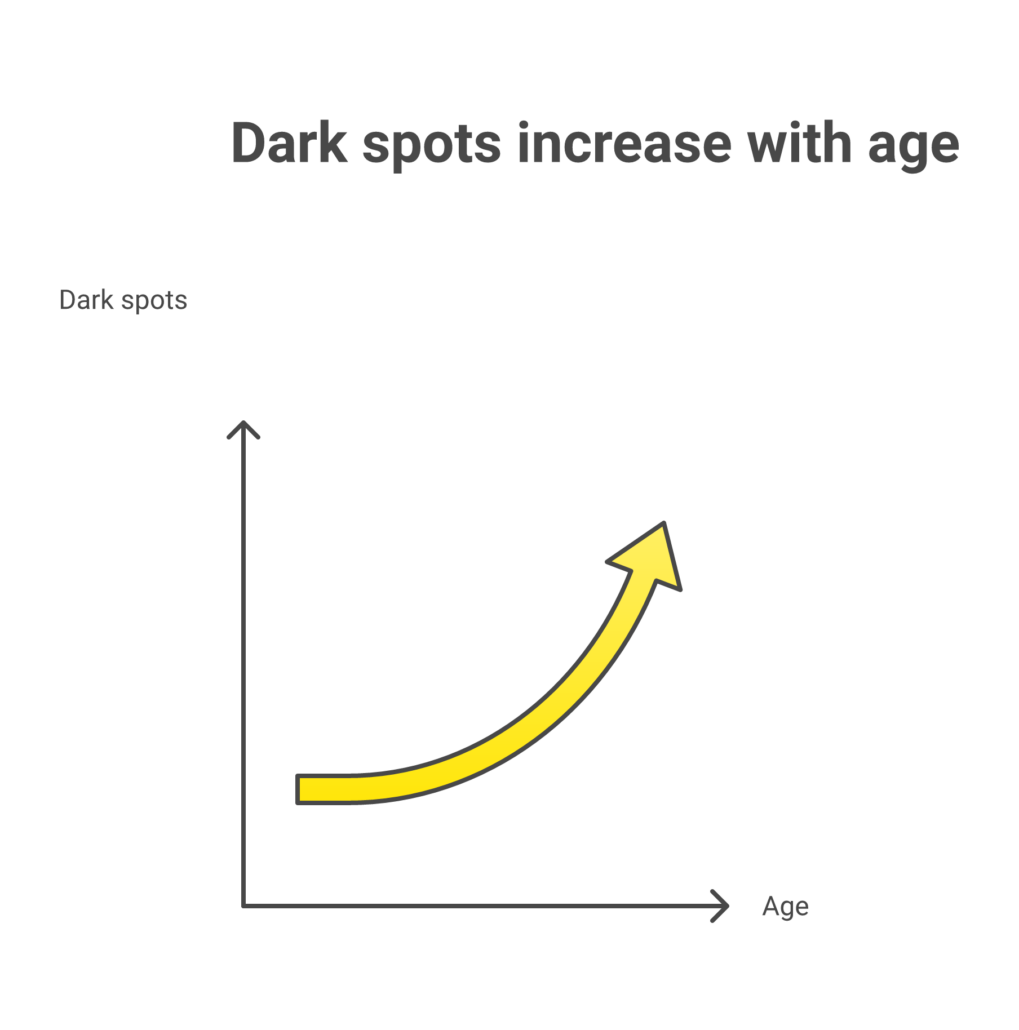
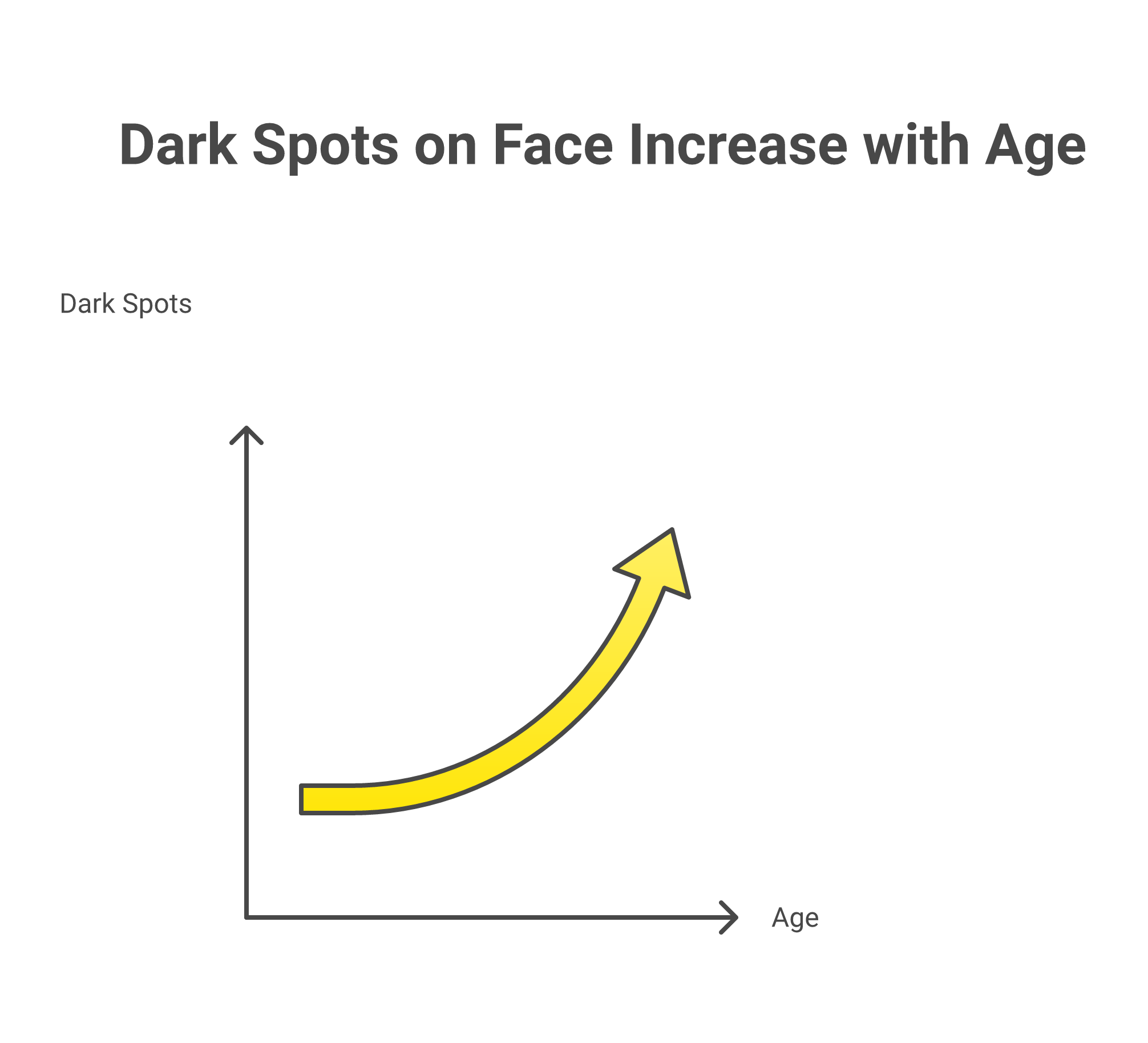
Here’s the uncomfortable truth: the age spots you’re seeing in the mirror at 62 or 68 aren’t actually caused by aging itself. They’re caused by sun damage that accumulated over 40, 50, even 60 years of your life.
Every single time your skin was exposed to UV radiation (every beach vacation in your 20s, every afternoon gardening without sunscreen in your 40s, every forgotten hat on a cloudy day) your body responded by ramping up melanin production. Melanin is your skin’s built-in sun protection system, absorbing UV rays before they can damage the DNA in your skin cells.
How UV Damage Becomes Visible Age Spots
When you’re young, this system works beautifully. Your skin produces melanin, distributes it relatively evenly, and then sheds those pigmented cells during its normal turnover cycle. The process is invisible.
But after decades of repeated sun exposure, something breaks down. The melanocytes (the cells responsible for melanin production) become damaged and start misfiring. Instead of distributing pigment evenly, they begin producing melanin in concentrated clusters. Those clusters are what you see as age spots on the surface of your skin.
Think of it like a printer that’s been running for 60 years. At first the ink goes down perfectly, but eventually the print heads get worn and start depositing ink in uneven blobs. Your melanocytes are doing the same thing.
According to the American Academy of Dermatology, age spots are most common in adults over 50 who have a history of frequent sun exposure. But by 60, they’re nearly universal in people with lighter skin tones who spent any significant time outdoors without consistent sun protection.
The Tanning Bed Factor
If you used tanning beds at any point in your life, even briefly in the 1980s or 1990s when they were considered safe, you’ve likely accelerated the timeline. Tanning beds emit concentrated UV radiation that’s 10 to 15 times stronger than midday sun, and that excessive sun exposure in compressed sessions causes disproportionate melanocyte damage. Tanning beds are a significant contributor to age spots showing up earlier and more prominently.
Even people who only used tanning beds a handful of times report more pronounced sun spots decades later, particularly on the face and chest.
Where Age Spots Appear Most
Dark spots from sun damage follow a predictable pattern. They cluster on sun exposed skin, the areas that catch the most UV rays over a lifetime:
- Face (especially cheeks, nose, and forehead)
- Back of hands (one of the earliest areas to show brown spots)
- Shoulders and upper back
- Forearms and lower legs (especially in women who wore skirts or shorts regularly)
- Upper chest (the “V” area)
The hands and legs are worth paying attention to because patients often notice spots there first, long before facial age spots become obvious.
If you notice age spots primarily on these sun exposed areas, you can be fairly confident that cumulative UV exposure is the driving force. For a deeper look at how sun damage intersects with other causes, I’d recommend reading our full guide on dark spots on face causes.
Cause #2: Your Skin’s Cell Turnover Has Slowed Dramatically
Even without sun exposure, aging itself changes how your skin handles pigment. And after 60, those changes become hard to ignore.
Here’s what’s happening beneath the surface:
Cell Renewal Slows to a Crawl
In your 20s, your skin renewed itself roughly every 28 days. Dead skin cells on the surface sloughed off naturally, and fresh cells moved up to replace them. If a melanocyte deposited extra pigment, that pigmented cell was gone within a month.
By age 60, that turnover rate has slowed to 45-60 days or more. Dead skin cells linger on the surface far longer, and pigmented cells that would have been shed in weeks now hang around for months. The result? Dark spots appear darker, larger, and more stubborn because your skin simply can’t remove dead skin cells as quickly as it used to.
The Epidermis Thins and Becomes Transparent
Your epidermis (the outermost skin layer) loses roughly 6-8% of its thickness per decade after age 30. By 60, your epidermis is significantly thinner than it was at 25. This means underlying pigmentation that might have been masked by thicker skin now shows through more clearly.
Add in the decline of collagen production (which drops approximately 1% per year after age 20) and you’ve got skin that’s thinner, less resilient, and less capable of hiding the melanin clusters underneath. The collagen loss also means your skin’s structural support weakens, making every imperfection more visible.
These natural skin aging processes explain why people who were careful about sun protection their entire lives can still develop age spots in their 60s. The skin simply processes pigment differently at this stage of life. For more on what changes after midlife, our guide to dark spots on face over 50 covers the earlier stages of this progression.
Cause #3: Hormonal Changes After Menopause
This one catches a lot of women off guard. You’ve made it through menopause, the hot flashes have mostly subsided, and now. New dark spots?
The connection is estrogen. During your reproductive years, estrogen played a regulatory role in melanin production, helping keep pigment distribution relatively even. Once estrogen levels drop during and after menopause, that regulation breaks down.
Without estrogen’s moderating influence, melanocytes become more reactive to UV stimulation. They produce more melanin in response to the same amount of sun exposure that would have had minimal visible effect 10 years earlier. This is a key reason why many women notice a sudden increase in age spots during their late 50s and 60s, even if their sun habits haven’t changed.
Hormone replacement therapy (HRT) can sometimes influence this process in either direction, which is worth discussing with your doctor if you’re on it. Some women report new dark spots appearing after starting HRT, while others see improvement. The response varies significantly from person to person.
It’s also worth noting that women who experienced melasma during pregnancy sometimes see those same patches darken again after menopause. Pregnancy-related pigmentation changes can leave melanocytes permanently sensitized in certain facial areas, making those areas more prone to age spots decades later.
Men aren’t exempt from hormonal effects either. Declining testosterone levels after 60 alter skin thickness and oil production, which can change how the skin responds to UV exposure and how visible existing pigmentation becomes. Our detailed article on the skin darkening hormone explains the melanin-hormone connection in much greater depth.
Cause #4: Medications That Make Your Skin Photosensitive
Here’s a cause that almost nobody talks about, and it’s incredibly common in the over-60 population: medication-induced photosensitivity.
Many of the medications prescribed most frequently to adults over 60 can make your skin dramatically more sensitive to sun exposure. When you take a photosensitizing drug and then spend even 15-20 minutes in sunlight, your skin produces far more melanin than it otherwise would. Over months and years, this leads to age spots that seem to appear out of nowhere.
Common photosensitizing medications include:
- Diuretics (hydrochlorothiazide, furosemide), among the most prescribed blood pressure medications
- Certain antibiotics (tetracycline, doxycycline, fluoroquinolones)
- NSAIDs (ibuprofen, naproxen), especially with regular use
- Statins: used by millions for cholesterol management
- Some antidepressants (tricyclics and certain SSRIs)
- Amiodarone: a heart rhythm medication
I want to be clear: never stop taking a prescribed medication because you’re worried about dark spots. But if you’ve noticed new age spots developing after starting a medication, it’s absolutely worth mentioning to your prescribing doctor. They may adjust the timing of your dose, recommend enhanced sun protection, or in some cases switch to an alternative medication.
The irony? People over 60 take more medications on average than any other age group, while simultaneously having the cumulative sun damage that makes photosensitivity effects even more visible. It’s a double hit that dermatologists see constantly.
Cause #5: Post-Inflammatory Hyperpigmentation (PIH)
Post-inflammatory hyperpigmentation, or PIH, is when a dark spot forms at the site of a previous skin injury or inflammation. For people over 60, this is a bigger deal than most realize.
Common PIH triggers in mature skin:
- A minor cut, scratch, or burn that takes longer to heal
- Eczema flare-ups or contact dermatitis
- Reactions to skincare products (especially harsh ones with high acid concentrations)
- Insect bites that become inflamed
- Irritation from aggressive facial treatments
In younger skin, PIH typically fades within a few weeks to months because cell turnover is fast enough to shed the pigmented cells. But in mature skin over 60? Those same marks can persist for 6 months, a year, or even longer. The slower healing response means more inflammation, which means more melanin production at the injury site, which means darker and more stubborn marks.
If you’ve noticed a dark spot appearing exactly where you had a scratch, breakout, or rash, PIH is almost certainly the culprit. For people who deal with recurring skin issues, understanding PIH is essential. Our article on dark spots after acne covers the PIH-inflammation connection in more detail.
Other Contributing Factors Worth Knowing
Beyond the five major causes above, several additional factors can contribute to dark spots on face after 60:
Genetics and Family History
If your parents or grandparents had prominent age spots, you’re more likely to develop age spots yourself. Your genetic makeup determines melanocyte behavior, skin color, and how aggressively your skin responds to UV radiation. People with naturally lighter skin (Fitzpatrick skin types I-III) develop age spots more readily, though they can occur in all skin tones.
Vitamin Deficiencies
There’s a common question about whether vitamin B12 or folate deficiency causes dark spots. The honest answer: it’s possible but uncommon as a primary cause. Severe B12 deficiency can cause hyperpigmentation, but if you’re eating a reasonably balanced diet or taking a multivitamin, this is unlikely to be the main driver of your age spots.
That said, vitamin D deficiency (extremely common in people over 60) can impair skin repair processes, making existing dark spots more resistant to fading. If you haven’t had your vitamin D levels checked recently, it’s worth asking about.
Oxidative Stress and Free Radical Damage
Cumulative oxidative stress from pollution, smoking history, poor diet, and UV exposure damages melanocytes over time. This oxidative damage is another reason age spots seem to multiply in the 60s because multiple factors converge after decades of accumulated cellular stress. For a deeper dive into this mechanism, see our article on oxidative stress on skin.
When to Worry: Are Age Spots Dangerous?
This is the section I need you to read carefully, because it could genuinely save your life. Are age spots dangerous? In themselves, no. But the real question is whether every dark spot on your face is actually an age spot.
The overwhelming majority of dark spots on the face after 60 are benign solar lentigines (harmless and purely cosmetic). But skin cancer, including melanoma, is most common in adults over 50, and some early melanomas can look disturbingly similar to age spots.
The risk of melanoma increases with age. Adults over 65 account for a disproportionately high percentage of melanoma diagnoses, in part because they’ve had the most cumulative sun exposure and in part because screening tends to decline in older adults. Knowing the difference between harmless age spots and a potential warning sign is a skill everyone should develop.
The ABCDEs of Melanoma: Your Self-Check Guide
Use this checklist every time you notice a new or changing spot on your face. If a spot meets even one of these criteria, schedule a dermatologist appointment:
| Letter | What to Look For | Normal Age Spot | Warning Sign |
|---|---|---|---|
| A, Asymmetry | Draw an imaginary line through the center | Both halves match | One half doesn’t match the other |
| B, Border | Examine the edges | Smooth, well-defined | Ragged, scalloped, or blurry |
| C, Color | Check for color uniformity | One consistent shade of brown | Multiple colors (brown, black, red, white, blue) |
| D, Diameter | Measure the spot | Typically under 6mm | Larger than 6mm (pencil eraser size) |
| E, Evolving | Monitor over time | Stays the same | Changing in size, shape, or color |
I want to emphasize something that gets lost in generic advice: age spots are static. Once they form, they stay roughly the same size, shape, and color for years. A spot that’s growing, darkening, itching, bleeding, or developing an irregular border is not behaving like a normal age spot. That’s when you need professional evaluation, period.
The Skin Cancer Foundation recommends annual full-body skin exams for all adults, but especially for those over 60 with a history of significant sun exposure. According to the American Cancer Society, the average age of melanoma diagnosis is 66, which puts people over 60 squarely in the highest-risk group. Don’t skip this. Early detection of melanoma is associated with a 99% five-year survival rate when caught at Stage I. Late detection drops that number dramatically. For more guidance on professional evaluation, check our article about when to see a dermatologist about dark spots.
How to Treat and Get Rid of Age Spots After 60
Now for the part most people are here for: can you actually get rid of these spots? Yes. But the approach needs to account for the specific needs of mature skin, which is thinner, drier, and more sensitive than younger skin.
Topical Treatments (Start Here)
Topical treatments are the safest first step for fading age spots on mature skin. The most effective options include:
- Retinoids (tretinoin, retinol), speed up cell turnover to remove dead skin cells and push pigmented cells to the surface faster. Start with a low concentration (0.025%) to avoid irritation on sensitive skin.
- Vitamin C serums (L-ascorbic acid, 10-20%), inhibit melanin production and provide antioxidant protection against further sun damage.
- Niacinamide (vitamin B3), one of the gentlest yet most effective ingredients for fading dark spots on sensitive mature skin. It interrupts melanin transfer without causing irritation. Our full breakdown of niacinamide benefits for skin explains why this ingredient is particularly well-suited for aging skin.
- Alpha arbutin: a natural melanin inhibitor that works gradually but consistently to lighten age spots without the harsh side effects of hydroquinone. We’ve covered this ingredient extensively in our alpha arbutin guide.
- Azelaic acid (15-20%), reduces melanin production and has anti-inflammatory benefits that help with PIH.
Other options include hydroquinone creams (2% available over the counter, 4% by prescription) and kojic acid creams that can brighten dark patches over several months of consistent application. Some patients combine multiple serums and creams for better results. For example, using a vitamin C serum in the morning to brighten and protect, then a retinoid cream at night to accelerate cell turnover, gives your skin round-the-clock support to fade stubborn spots.
Here’s my honest take: most patients over 60 should start with topical treatments, creams, and serums before considering anything more aggressive. Give any product at least 8-12 weeks of consistent use before judging results. Fading and reducing age spots is a marathon, not a sprint, but the right combination of creams and serums can brighten your complexion and reduce the appearance of spots significantly.
Professional Treatments and Procedures
When topical treatments alone aren’t enough to get rid of stubborn spots, a skin doctor or dermatologist can offer several in-office procedures. Each procedure has different costs, recovery times, and effectiveness depending on the patient’s skin type and severity of spots:
- Chemical peels: use glycolic acid, trichloroacetic acid, or salicylic acid to remove dead skin cells and surface pigment. Chemical peels work well for widespread age spots but require careful selection of peel depth for mature skin. Superficial chemical peels (30-50% glycolic acid) are generally safe for patients over 60, while deeper chemical peels carry more risk of complications. This procedure costs roughly $150-$300 per session.
- Laser treatments: lasers target melanin clusters specifically without damaging surrounding tissue. Laser therapy can produce dramatic results in 1-3 sessions, and many patients see their spots fade significantly after the first procedure. IPL (intense pulsed light) is another option that treats broader areas efficiently. Lasers are pricier ($200-$500+ per session) but produce faster, more even results.
- Cryotherapy: freezing individual spots with liquid nitrogen. Quick and effective for isolated age spots but can sometimes cause temporary lightening or darkening of surrounding skin. Often combined with light chemical peels for broader coverage.
- Microdermabrasion: uses fine crystals or a diamond-tipped wand to physically resurface the top layer of skin, gradually helping to reduce the appearance of age spots and achieve a more even skin tone. Microdermabrasion requires multiple sessions (typically 4-6) and is gentler than chemical peels, making it a popular procedure for patients with sensitive mature skin.
- Microneedling: stimulates collagen production and enhances absorption of topical treatments and serums, helping lighten age spots and reduce wrinkles simultaneously.
A note on insurance: most insurance plans consider age spot removal a cosmetic procedure and won’t cover the cost. The exception is if your dermatologist identifies a spot as potentially precancerous (such as an actinic keratosis), in which case removal may be covered. Always ask your skin doctor about insurance before scheduling.
For a complete comparison of these approaches (including lasers, creams, and peels), our guide to dark spots on face treatment walks through each option in detail.
What About Natural Remedies and Home Treatments?
Can you remove age spots naturally? I know lemon juice, apple cider vinegar, aloe vera, and baking soda get mentioned constantly online as natural remedies. I’ll be straightforward: most natural remedies for dark spots don’t have strong evidence behind them, and some (especially lemon juice applied directly to skin) can cause burns, irritation, and actually worsen hyperpigmentation through PIH.
If you want to get rid of age spots safely and affordably, stick with proven over-the-counter creams and serums containing niacinamide, vitamin C, or alpha arbutin. These products brighten skin and fade spots more effectively than any kitchen remedy, and they’re available without a prescription for under $20.
Prevention: How to Keep Your Skin Healthy and Stop New Spots
You can’t undo 60 years of sun exposure, but you can absolutely prevent new age spots from forming. And here’s what surprises people: consistent sun protection starting today will make your existing treatment efforts roughly 40% more effective, because you’re no longer fighting ongoing damage while trying to repair old damage.
Daily Sunscreen (Non-Negotiable)
Apply a broad-spectrum sunscreen with a sun protection factor (SPF) of 30 or higher every single morning, even on cloudy days, even in winter, even if you’re just sitting near a window. Reapply every two hours if you’re outdoors. This is the single most impactful thing you can do to prevent new age spots and help existing ones fade.
For people over 60, I recommend mineral sunscreens (zinc oxide or titanium dioxide) over chemical formulas. They’re gentler on sensitive mature skin, less likely to cause irritation, and start working immediately upon application.
Wear Protective Clothing to Prevent Age Spots
Sunscreen alone isn’t enough to prevent age spots from forming. Wear protective clothing when you’re outdoors for extended periods, especially during peak sun hours (10 AM to 4 PM):
- Wide-brimmed hats (3+ inches) that shade the face, ears, and neck
- Sun protective clothing with an ultraviolet protection factor (UPF) rating of 50+
- UV-blocking sunglasses to protect the delicate skin around your eyes
- Protective clothing that covers arms, hands, and legs during peak sun hours
I know it can feel like a hassle, especially if you enjoy gardening, walking, or swimming. But these habits make a measurable difference in your ability to prevent age spots. People who consistently wear protective clothing alongside sunscreen develop age spots at roughly half the rate of those who rely on sunscreen alone.
Build a Skin-Healthy Routine
A simplified daily routine designed to keep skin healthy and prevent new pigmentation:
- Morning: Gentle cleanser, vitamin C serum, moisturizer, SPF 30+ sunscreen
- Evening: Gentle cleanser, retinol (2-3 nights per week) or niacinamide serum, rich moisturizer
- Weekly: Gentle exfoliant to remove dead skin cells and support cell turnover (avoid harsh scrubs; opt for a mild AHA product instead)
The emphasis on “gentle” is deliberate. Mature skin over 60 doesn’t tolerate aggressive products well, and irritation from harsh treatments can trigger PIH, creating the exact problem you’re trying to solve. For a complete age-appropriate regimen, our anti-aging skincare tips guide covers everything from product selection to application technique.
A Summary of All Dark Spots on Face Causes Over 60
Let me bring it all together. Here’s a quick-reference table of every major cause we’ve covered:
| Cause | Mechanism | What You Can Do |
|---|---|---|
| Cumulative sun exposure | Decades of UV radiation damage melanocytes | Daily SPF 30+, protective clothing for face and hands, treat age spots with topicals |
| Slower cell turnover | Pigmented cells linger 45-60+ days vs. 28 | Retinoids, gentle exfoliation, chemical peels |
| Hormonal changes | Estrogen decline makes melanocytes more UV-reactive | Discuss HRT effects with doctor, intensify sun protection |
| Medications | Drug-induced photosensitivity amplifies UV damage | Consult prescribing doctor, enhanced sun protection |
| Post-inflammatory hyperpigmentation | Excess melanin at sites of skin injury/inflammation | Avoid skin irritation, use topical treatments with niacinamide |
| Genetics | Inherited melanocyte behavior and skin sensitivity | Can’t change genetics, but can modify all other factors |
| Tanning beds | Concentrated UV accelerates melanocyte damage | Avoid completely, treat age spots with proven methods |
Frequently Asked Questions
What are the brown spots on a 70-year-old’s face?
In the vast majority of cases, the brown spots on a 70-year-old’s face are solar lentigines (commonly called age spots or liver spots). They’re caused by decades of cumulative sun exposure combined with the natural slowdown in cell turnover that occurs with aging. These flat, dark brown or tan patches are benign, but any spot that changes color, shape, or size should be evaluated by a dermatologist to rule out skin cancer.
How do you get rid of dark spots on your face when you’re older?
The most effective approach to get rid of dark spots on an older face combines consistent topical treatments (retinoids, vitamin C, niacinamide, or alpha arbutin) with daily sun protection. For faster results, chemical peels, laser therapy, or cryotherapy performed by a dermatologist can target stubborn spots directly. Expect to need 8-12 weeks of consistent use with topicals before seeing noticeable fading.
Are age spots a sign of poor health or liver problems?
No. Despite the misleading “liver spots” name, age spots have absolutely no connection to liver health or liver disease. They’re a sign of past sun exposure and natural skin aging, not an indicator of internal health problems. The name likely originated because the spots can have a similar color to liver tissue.
What vitamin deficiency causes dark spots on the face?
Severe vitamin B12 deficiency can cause hyperpigmentation, including dark spots on the face. Folate deficiency has also been linked to skin pigmentation changes. However, vitamin deficiency is rarely the primary cause of age spots in people over 60, cumulative sun damage is far more likely. If you suspect a deficiency, a simple blood test can confirm or rule it out.
When should I be worried about a dark spot on my face?
See a dermatologist promptly if any spot shows the ABCDEs warning signs: Asymmetry (one half doesn’t match), Border irregularity (ragged or blurry edges), Color variation (multiple shades), Diameter over 6mm, or Evolving (changing in any way). Also seek evaluation for any spot that itches, bleeds, crusts over, or appears dramatically different from your other spots.
Can you prevent more age spots from appearing after 60?
Absolutely. While you can’t erase past sun damage, you can prevent new age spots from forming by applying SPF 30+ sunscreen daily, wearing sun protective clothing and wide-brimmed hats, avoiding tanning beds entirely, and using antioxidant skincare (vitamin C, niacinamide) to neutralize ongoing oxidative damage. People who adopt consistent sun protection after 60 see significantly fewer new spots develop.
Do age spots get darker with more sun exposure?
Yes. Existing age spots can darken with continued sun exposure because the damaged melanocytes in those areas remain hyperactive. This is another reason why daily sun protection is critical. This prevents new spots and keeps existing age spots from becoming more prominent. If you’re using any product to lighten age spots, unprotected sun exposure will undermine your results.
Disclaimer: This article is for informational purposes only and is not a substitute for professional medical advice, diagnosis, or treatment. Always consult a qualified healthcare provider with questions about your skin health.

