
Dark Spots on Face Over 50: Why They Appear and How to Treat Them

Dr. Matthew Olesiak, MD, is the Chief Medical Director at SANESolution, a renowned wellness technology company dedicated to providing evidence-based solutions for optimal living. Dr. Olesiak earned his medical degree from the prestigious Jagiellonian University Medical College in Kraków, Poland, where he developed a strong foundation in medicine.
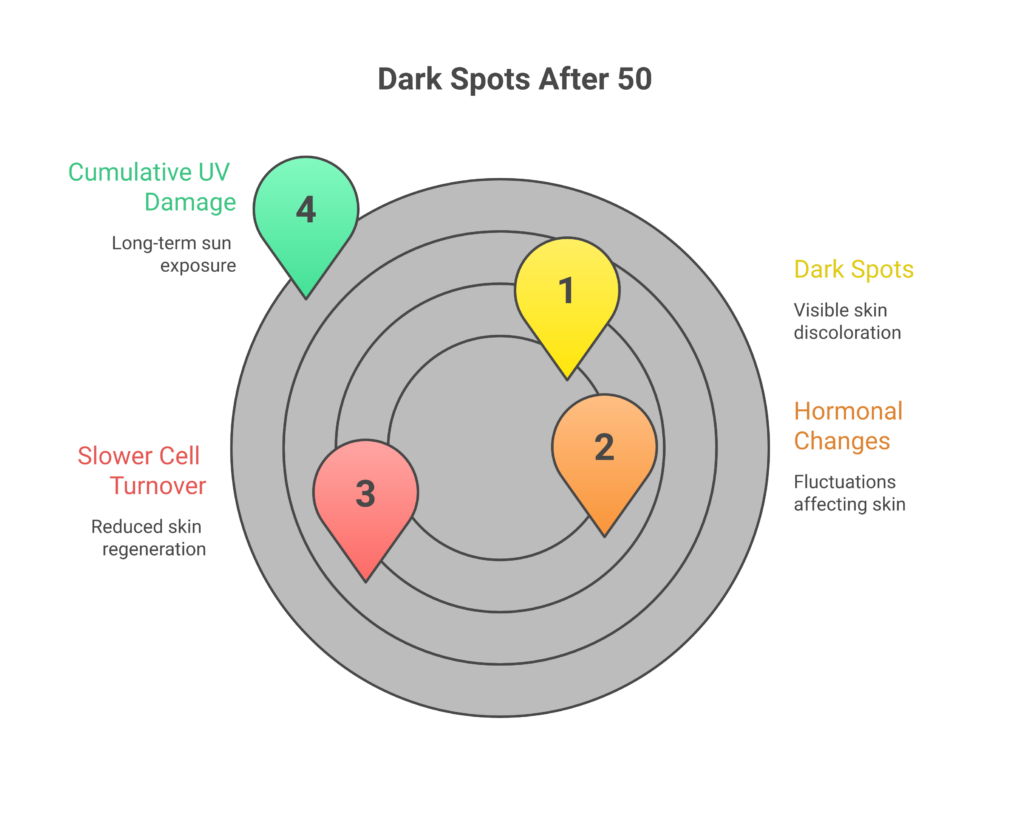
Dark spots on the face after 50 are one of the most common skin concerns in the United States, and they’re almost certainly not dangerous. These flat, tan-to-dark brown patches — formally called solar lentigines, but better known as age spots or liver spots — result from decades of cumulative UV damage combined with the natural slowdown in skin cell turnover that begins around midlife. According to the American Academy of Dermatology, more than 90% of white adults over 60 have at least one age spot, and they start appearing with increasing frequency after age 50. Hormonal changes during menopause further accelerate excess melanin production, which is why so many women notice a sudden increase in dark spots during their 50s. The good news: multiple treatment options exist, from over the counter products you can start tonight to professional in-office procedures that deliver visible results in a matter of weeks.
This guide breaks down why dark spots develop on mature skin, what each treatment option actually does at a cellular level, which approaches work fastest for skin over 50, and — just as importantly — when a dark spot might signal something more serious that deserves a doctor’s attention.

What Are Dark Spots on the Face? Types You’ll See After 50
Dark spots on the face are areas of hyperpigmentation where melanin — the skin pigment that gives your skin its natural color — has accumulated in concentrated clusters. Not every dark mark is the same, though. Understanding which type you’re dealing with matters because it determines which treatment plan will actually work.
Age Spots (Solar Lentigines)
Age spots are flat brown or dark brown patches, usually between 0.2 and 2.0 centimeters in diameter, that develop on areas frequently exposed to the sun’s rays over prolonged periods. Your face, hands, forearms, and upper chest are the most common locations. They’re sometimes called liver spots — not because they have anything to do with your liver, but because of their brownish color. True age spots are completely flat, have well-defined edges, and range from tan to dark brown depending on your skin tone. Solar lentigines affect people of all skin types, though they tend to be more visible on fair skin.
Melasma
Melasma produces larger, more diffuse darkened patches — typically on the cheeks, forehead, upper lip, and chin. While younger people develop melasma during pregnancy, the condition is extremely common in women over 50 because of hormonal fluctuations during perimenopause and menopause. Estrogen and progesterone shifts trigger the melanin producing cells (melanocytes) to go into overdrive. Melasma is often symmetrical, appearing on both sides of the face, and it responds differently to treatment than standard age spots.
Post-Inflammatory Hyperpigmentation (PIH)
PIH refers to dark marks left behind after skin conditions like acne, eczema, or even minor injuries. In skin over 50, PIH can linger far longer than it does in younger people because the slower skin cell turnover means the excess pigment takes more time to clear. PIH from acne or irritation often appears as scattered dark marks rather than the uniform spots associated with sun damage.
Why Dark Spots Increase After 50: The Science Behind Age-Related Hyperpigmentation
Getting more age spots after 50 isn’t random or cosmetic bad luck. Several biological processes converge at midlife to make dark spots almost inevitable without intervention.
Cumulative Sun Damage
Every sunburn and every hour of unprotected sun exposure from your teens through your 40s has been accumulating damage in your skin cells. UV rays cause DNA changes in the melanocytes that control melanin production. By the time you reach 50, decades of this cumulative sun damage have programmed certain melanocytes to overproduce pigment permanently. A 2019 study in the British Journal of Dermatology confirmed that the total lifetime UV dose is the single strongest predictor of solar lentigines — even stronger than current sun habits.
Slower Skin Cell Turnover
In your 20s, your skin cells regenerate roughly every 28 days. By age 50, that cycle stretches to 40–50 days, and by 60, it can take up to 70 days. This slower turnover means pigmented dead skin cells sit on the surface longer before being replaced, making spots appear darker and more persistent. The body simply can’t remove dead skin cells and shed pigmented layers as efficiently as it once did.
Hormonal Changes During Menopause
Declining estrogen levels during menopause don’t just cause hot flashes — they fundamentally alter how your skin behaves. Estrogen has a regulatory effect on melanocyte activity, and as levels drop, melanocytes become more reactive to UV stimulation. This is why women who never had significant sun spots often develop them rapidly in their late 40s and 50s. Hormonal changes also thin the skin, making existing spots more prominent against the surrounding skin.
Medication Side Effects
After 50, people are more likely to take medications that increase sun sensitivity — a factor that often gets overlooked. Common culprits include certain blood pressure drugs, non-steroidal anti-inflammatory medications, some antibiotics, and even hormone replacement therapy. These medications can accelerate melanin production when the skin is exposed to UV radiation, contributing to new age spots even with moderate sun exposure.
Are Dark Spots Dangerous? Warning Signs That Need Medical Attention
The vast majority of age spots and liver spots are purely cosmetic — they don’t cause serious health problems and many people choose to treat them for cosmetic reasons alone. But after 50, your risk of skin cancer increases substantially, and certain changes in a dark spot should prompt an immediate dermatologist visit.
The ABCDEs of Melanoma
Use this checklist from the American Academy of Dermatology to evaluate any new or changing spot:
- A — Asymmetry: One half of the spot doesn’t match the other
- B — Border: The edges are ragged, blurred, or have an irregular border
- C — Color: The spot contains multiple shades of brown, black, red, or blue rather than a uniform color
- D — Diameter: The spot is larger than 6mm (roughly the size of a pencil eraser)
- E — Evolving: The spot is changing in size, shape, or color over weeks to months
True age spots are stable. They don’t itch, don’t bleed, and don’t grow noticeably once they appear. If any spot on your face meets one or more of these ABCDE criteria, schedule a skin cancer screening. According to the Skin Cancer Foundation, 1 in 5 Americans will develop skin cancer by age 70, and early detection makes treatment far more effective.
The bottom line: age spots are not dangerous, but the only way to be certain a darkened patch is truly benign is to have a dermatologist examine it — especially if it’s new, changing, or looks different from your other spots.
At-Home Treatments to Fade Age Spots After 50
For most people, treating dark spots begins at home with targeted skin care products containing active ingredients that inhibit melanin production or accelerate the removal of pigmented skin cells. Here’s what actually works, based on published research — and what mature skin can realistically tolerate.
Retinoids (Retinol and Tretinoin)
Retinol and prescription-strength tretinoin (Retin-A) remain among the most effective topical treatments for age spots. Retinoids work by dramatically accelerating skin cell turnover — pushing pigmented cells to the surface faster so they shed sooner. They also help redistribute melanin more evenly throughout the skin. A study published in the Journal of Cosmetic Dermatology found that 0.1% tretinoin reduced solar lentigines by 37% after 24 weeks of consistent use.
For skin over 50, the key is starting slow. Mature skin is often thinner and more sensitive skin, so begin with a low-concentration retinol (0.25–0.5%) two to three nights per week and gradually increase. Expect visible results in 8–12 weeks. Retinoids also stimulate collagen production, which can help improve skin texture, fine lines and wrinkles — a welcome secondary benefit for anti-aging.
Vitamin C Serums
Vitamin C (L-ascorbic acid) is an antioxidant that inhibits tyrosinase, the enzyme responsible for melanin production. Applied topically at concentrations of 10–20%, vitamin C can fade dark spots while protecting against further UV damage. It’s one of the gentlest active ingredients, making it an excellent starting point for sensitive skin. Look for serums containing 15% L-ascorbic acid combined with vitamin E for enhanced stability and absorption. Apply in the morning under your broad spectrum sunscreen.
Niacinamide
Niacinamide (vitamin B3) works through a different mechanism — it blocks the transfer of melanin granules from melanocytes to surrounding skin cells. At concentrations of 5%, niacinamide has been shown to reduce hyperpigmentation significantly after 8 weeks, according to research published in the British Journal of Dermatology. It’s well-tolerated by virtually all skin types and pairs well with other active ingredients. Niacinamide also strengthens the skin barrier, which is particularly valuable for mature skin that tends to be drier and more reactive.
Alpha Hydroxy Acids (Glycolic Acid and Lactic Acid)
Chemical exfoliants like glycolic acid and lactic acid dissolve the bonds holding dead skin cells to the surface, revealing fresher skin underneath and accelerating the fading of brown spots. Glycolic acid has the smallest molecular size of the AHAs, so it penetrates deepest and works fastest — but it can also be the most irritating. Lactic acid is a milder alternative that hydrates while it exfoliates, making it better suited for dry, mature skin.
Start with a product containing 5–10% glycolic acid, used two to three times per week. You can also try beta hydroxy acids (like salicylic acid), though AHAs generally produce more noticeable improvements for age spots specifically.
Other Effective Ingredients
Several other ingredients can help fade age spots on the face:
- Alpha arbutin — A naturally derived tyrosinase inhibitor that’s gentler than hydroquinone
- Kojic acid — Derived from fungi; effective as a skin lightener but can cause irritation in some people
- Tranexamic acid — Originally used to treat heavy bleeding, now recognized as an effective treatment for melasma and sun spots at 5% topical concentration
- Licorice root extract — Contains glabridin, which inhibits melanin production with very low irritation risk
- Azelaic acid — A gentle, anti-inflammatory ingredient that inhibits melanin synthesis; available over the counter at 10% or by prescription at 15–20%
- Hydroquinone — Considered the gold standard skin lightening products ingredient at 2% (OTC) or 4% (prescription). Effective but should be used under guidance — long-term use beyond 3 months can paradoxically cause darkening in some skin tones. The FDA limits over the counter products to 2% concentration
Professional Treatments for Stubborn Dark Spots on Mature Skin
When at-home creams and serums aren’t producing the results you want — or when spots are deep, widespread, or particularly stubborn — in-office procedures offer faster, more dramatic improvement. However, treating skin over 50 requires specific considerations. Mature skin heals more slowly, is more prone to post-inflammatory hyperpigmentation from aggressive treatments, and may be thinner than younger skin.
Chemical Peels
Chemical peels use a chemical solution — typically containing glycolic acid, trichloroacetic acid (TCA), or lactic acid — applied to the face to remove the outer layer of damaged skin. As the skin heals, new skin with more even pigmentation emerges. For age spots on mature skin, medium-depth peels (30–50% glycolic or 15–25% TCA) tend to be most effective without excessive downtime.
A series of 3–6 chemical peels, spaced two weeks to a month apart, can significantly reduce the appearance of age spots, liver spots, and uneven skin tone. Superficial peels require minimal recovery — expect light flaking for 2–5 days — while medium-depth peels may involve a week of peeling. Chemical peels also help with fine lines, skin texture irregularities, and overall radiance. Cost typically ranges from $150 to $600 per session depending on peel depth and geographic location.
Laser Therapy and Intense Pulsed Light (IPL)
Laser treatments use focused light energy to target and break apart melanin clusters beneath the skin surface without significantly damaging the surrounding skin. Several laser therapy options are commonly used to treat age spots:
- IPL (Intense Pulsed Light) — Uses broad spectrum light to target pigment. Best for widespread, shallow age spots. Typically requires 3–5 sessions. Cost: $300–$600 per session
- Q-Switched Nd:YAG Laser — Delivers very short pulses of energy to shatter pigment. Effective for deeper spots. Usually 1–3 sessions. Cost: $200–$500 per session
- Fractional Laser (Fraxel) — Creates microscopic treatment zones, stimulating collagen production while treating pigmentation. Excellent for overall skin rejuvenation plus spot treatment. Usually 1–3 sessions. Cost: $700–$1,500 per session
Laser treatments for dark spots typically show visible results within 2–4 weeks after each session as treated pigment rises to the surface and flakes away. For skin over 50, fractional lasers often provide the best balance of effectiveness and safety because they leave surrounding tissue intact, which helps the skin heal faster. Post-treatment, the treated areas may darken temporarily before clearing — this is normal.
Cryotherapy
Cryotherapy involves applying liquid nitrogen to individual age spots, freezing the excess melanin in the treated area. As the skin heals over the next one to two weeks, the dark spot typically fades or disappears entirely. It’s quick (a few seconds per spot), relatively inexpensive ($100–$300 per session), and works well for isolated, well-defined liver spots. The downside: cryotherapy carries a risk of leaving a lighter patch than the surrounding skin, particularly on darker skin tones.
Microneedling
Microneedling creates tiny controlled punctures in the skin, triggering the body’s natural healing response and enhancing the penetration of topical skin care products like vitamin C or tranexamic acid. For hyperpigmentation, microneedling alone produces modest improvement, but when combined with brightening serums applied immediately after treatment, results can be significant. A series of 3–6 sessions at 4-week intervals is typical. Cost: $200–$700 per session.
Comparing Treatment Options: Cost, Effectiveness, and Downtime for Skin Over 50
Choosing between treatment options depends on your budget, tolerance for downtime, and how quickly you want visible results. This comparison table covers the most common approaches to treat age spots on the face:
| Treatment | Effectiveness | Time to Results | Downtime | Cost per Session | Best For |
|---|---|---|---|---|---|
| Retinol/Tretinoin | Moderate | 8–12 weeks | None | $15–$80/month | Mild spots, overall skin texture |
| Vitamin C Serum | Mild–Moderate | 8–16 weeks | None | $20–$60/month | Prevention + mild fading |
| Hydroquinone (2–4%) | High | 4–8 weeks | None | $10–$50/month | Targeted spot lightening |
| Glycolic Acid Peels | Moderate–High | 3–6 sessions | 2–5 days flaking | $150–$400 | Multiple spots, uneven skin tone |
| TCA Chemical Peels | High | 2–4 sessions | 5–10 days peeling | $250–$600 | Stubborn, deeper spots |
| IPL Photofacial | High | 3–5 sessions | 1–3 days redness | $300–$600 | Widespread sun spots |
| Q-Switched Laser | Very High | 1–3 sessions | 3–7 days darkening | $200–$500 | Individual deep spots |
| Fractional Laser | Very High | 1–3 sessions | 5–7 days redness | $700–$1,500 | Overall rejuvenation + spots |
| Cryotherapy | High (isolated spots) | 1–2 sessions | 1–2 weeks healing | $100–$300 | Individual well-defined spots |
| Microneedling + Serum | Moderate | 3–6 sessions | 1–3 days redness | $200–$700 | Shallow spots + texture |
For most adults over 50 with moderate age spots, a combination approach produces the best outcomes: use a retinoid and vitamin C serum at home daily, protect skin with broad spectrum sunscreen, and supplement with 2–3 professional treatments (IPL or medium-depth chemical peels) for faster, more comprehensive results.
How to Prevent New Dark Spots From Forming After 50
Treating existing age spots is only half the equation. Without consistent sun protection, you’ll develop new age spots just as fast as you fade the old ones. Prevention is especially critical for mature skin because cumulative damage continues to accelerate with each passing year.
Sunscreen Is Non-Negotiable
Apply sunscreen with at least SPF 30 every single day — even on cloudy days, even in winter, even if you’re mostly indoors. Up to 80% of UV rays penetrate cloud cover and pass through windows. Choose a broad spectrum sunscreen that blocks both UVA (aging/pigmentation) and UVB (burning) rays. For skin over 50, mineral sunscreens containing zinc oxide or titanium dioxide tend to be less irritating than chemical formulas. Reapply every two hours when outdoors, and immediately after sweating or swimming.
Physical Sun Protection
Sunscreen alone isn’t perfect — physical barriers provide the most reliable UV protection:
- Wear a wide brimmed hat (3+ inches) whenever you’re outdoors for prolonged periods
- Choose sun protective clothing with an ultraviolet protection factor (UPF) rating of 50+
- Seek shade between 10 AM and 4 PM when harmful UV rays are strongest
- Wear UV-blocking sunglasses to protect skin around the eyes — a common area for age spots on the face
Antioxidant Protection From Within
Topical antioxidants like vitamin C and green tea extract help neutralize free radicals generated by UV radiation before they can trigger excess melanin production. Apply an antioxidant serum under your sunscreen every morning for an additional layer of protection. Some research suggests that oral antioxidants — including vitamin E and polyphenols from green tea — may offer modest additional protection against UV-induced pigmentation, though they should never replace sunscreen and physical sun protection.
A Morning and Evening Skincare Routine for Fading Dark Spots After 50
Consistency matters more than having the most expensive skin care products. Here’s a straightforward routine designed specifically for mature skin that addresses dark spots without causing irritation.
Morning Routine
- Gentle Cleanser — Use a hydrating, non-foaming cleanser to remove dirt, oil, and overnight product residue without stripping mature skin. Avoid harsh sulfate-based washes
- Vitamin C Serum (10–20%) — Apply 4–5 drops to the face and neck. Let it absorb for 2–3 minutes. This is your primary daytime brightening and antioxidant step
- Moisturizer with Hyaluronic Acid — Hyaluronic acid holds up to 1,000 times its weight in water, helping maintain hydration in thinner, drier mature skin. Look for formulas with ceramides for added barrier repair
- Broad Spectrum Sunscreen (SPF 30+) — Apply generously (about a nickel-sized amount for the face) as the final step. This is the single most important product for preventing new spots and protecting treatment results
Evening Routine
- Double Cleanse — First, an oil-based cleanser or micellar water to dissolve sunscreen and makeup. Then a gentle water-based cleanser to remove remaining residue
- Treatment Product — Apply retinol (2–3 nights per week) OR a targeted treatment like dark spot corrector containing tranexamic acid or alpha arbutin (on non-retinol nights)
- Niacinamide Serum (5%) — Can be used alongside retinol or on alternate nights. Helps with melanin transfer, barrier strength, and overall skin health
- Rich Night Cream — A thicker moisturizer with peptides, ceramides, or squalane to support overnight repair and offset any dryness from active ingredients
Important for mature skin: Don’t introduce all active ingredients at once. Start with sunscreen and vitamin C for 2–4 weeks, then add retinol at the lowest concentration, then layer in additional treatments as your skin adjusts. If you experience redness or peeling, reduce frequency — not concentration — before considering a different product.
Home Remedies: Do They Work for Age Spots?
You’ll find dozens of websites recommending home remedies like lemon juice, apple cider vinegar, aloe vera, and turmeric for fading dark spots. It’s worth addressing these directly.
Lemon juice contains citric acid and low levels of vitamin C, so it has mild exfoliating properties. But the pH is extremely acidic (around 2.0) and can cause chemical burns, especially on mature skin. It also makes skin dramatically more photosensitive, which can worsen dark spots with even brief sun exposure. Dermatologists consistently advise against it.
Apple cider vinegar similarly has an acidic pH that can irritate and damage the skin barrier. There are no peer-reviewed studies demonstrating meaningful improvement in solar lentigines from ACV application.
Aloe vera has genuine anti-inflammatory and moisturizing benefits, and a compound called aloesin has shown mild melanin-inhibiting effects in lab studies. It won’t produce dramatic fading, but it’s safe and soothing as a supporting ingredient.
Bottom line: the home remedies with the strongest evidence — retinol, vitamin C, niacinamide, glycolic acid — are all available in affordable over the counter products. Skip the kitchen-counter experiments and use formulations specifically designed for safe topical application on facial skin.
What a Dermatologist Can Do That Home Treatment Cannot
While this guide covers many effective at-home approaches, there are specific situations where professional evaluation becomes essential:
- Spots that haven’t improved after 3–4 months of consistent OTC treatment — A dermatologist can prescribe stronger formulations like 4% hydroquinone, prescription-strength tretinoin, or combination creams containing both
- Deep pigmentation in the dermis — Some dark spots extend below the epidermis (the top layer of skin) into the deeper dermis, where topical products can’t reach effectively. Laser treatments and deeper chemical peels can target this pigment
- Melasma that worsens despite treatment — Melasma is notoriously stubborn. Dermatologists may recommend oral tranexamic acid, which addresses melanin production systemically rather than just topically
- Potential skin cancer concern — Any dark spot that changes shape, size, or color needs professional evaluation to rule out melanoma or other skin conditions
- Widespread hyperpigmentation — When spots cover large areas of the face, a dermatologist can create a comprehensive treatment plan combining prescription topicals with professional procedures for the best overall result
The American Academy of Dermatology recommends annual full-body skin checks for all adults, and more frequently for those over 50 with significant sun damage history. If you’re concerned about dark spots, that annual exam is the perfect time to discuss treatment options while also screening for skin cancer.
Frequently Asked Questions About Dark Spots on the Face After 50
How can I get rid of dark spots on my face after 50?
Start with daily broad spectrum sunscreen (at least SPF 30) to prevent new spots, then add a vitamin C serum in the morning and a retinol product at night. For faster results, prescription-strength treatments like 4% hydroquinone or tretinoin can accelerate fading. If spots are stubborn, professional treatments like IPL, chemical peels, or laser therapy can produce significant improvement in 1–3 sessions. Most people see the best results from combining at-home and professional approaches.
What is the best treatment for age spots on the face over 50?
There’s no single best treatment — it depends on spot depth, skin tone, and budget. For mild to moderate age spots, retinoids combined with vitamin C and consistent sunscreen often produce excellent results within 3–4 months. For stubborn or deep spots, IPL photofacial or fractional laser treatments deliver the most dramatic improvement. A dermatologist can assess your specific situation and recommend the most effective treatment plan for your skin type and goals.
Is it normal to get more dark spots in your 50s?
Yes, completely normal. Age spots affect more than 90% of light-skinned adults over 60, and they typically begin appearing with greater frequency after 50. The combination of cumulative sun damage, slower skin cell turnover, hormonal shifts during menopause, and increased medication use all contribute to more frequent and visible dark spots. This is a natural part of aging — not a sign of a health problem.
Can dark spots from aging go away permanently?
Treatments can fade or remove existing age spots, but they cannot change the underlying tendency of sun-damaged melanocytes to overproduce pigment. Without consistent sun protection, new age spots will continue to develop. Professional treatments like laser therapy and cryotherapy can eliminate individual spots entirely, but maintaining results requires ongoing UV protection and regular use of brightening skin care products. Think of it as management rather than a permanent cure.
What is the fastest way to fade dark spots on the face?
Professional laser treatments and cryotherapy provide the fastest visible results — typically within 1–3 weeks after a single session. Among at-home options, 4% prescription hydroquinone creams can show improvement in as little as 4 weeks. Over the counter products containing retinol or vitamin C generally require 8–12 weeks of consistent use before dark spots fast show meaningful fading. Combining a prescription topical with professional treatments will produce the quickest overall improvement.
What vitamin is good for dark spots on the face?
Vitamin C (L-ascorbic acid) is the most effective vitamin for fading dark spots when applied topically at 10–20% concentration. It inhibits the enzyme tyrosinase that drives melanin production, provides antioxidant protection against further UV damage, and boosts collagen production for overall skin rejuvenation. Niacinamide (vitamin B3) at 5% concentration is another excellent choice that blocks melanin transfer. Vitamin E supports vitamin C stability and provides additional antioxidant UV protection when used together.
Can you reverse sun damage on your face after 50?
You can significantly reduce the visible signs of sun damage — including age spots, uneven skin tone, fine lines and wrinkles, and rough skin texture — but you can’t fully reverse the DNA-level changes that decades of UV exposure have caused. Retinoids, chemical peels, and laser treatments can dramatically improve the appearance of sun-damaged skin, with studies showing 30–50% improvement in pigmentation with consistent treatment. Preventing further damage through daily sunscreen and sun protective clothing is equally important as treating existing damage to maintain healthier, more even skin long-term.
This article is for informational purposes only and does not constitute medical advice. Consult a qualified healthcare provider before beginning any new treatment.

