
OTC vs Prescription Dark Spot Treatment: Which Actually Works Better?

Dr. Matthew Olesiak, MD, is the Chief Medical Director at SANESolution, a renowned wellness technology company dedicated to providing evidence-based solutions for optimal living. Dr. Olesiak earned his medical degree from the prestigious Jagiellonian University Medical College in Kraków, Poland, where he developed a strong foundation in medicine.
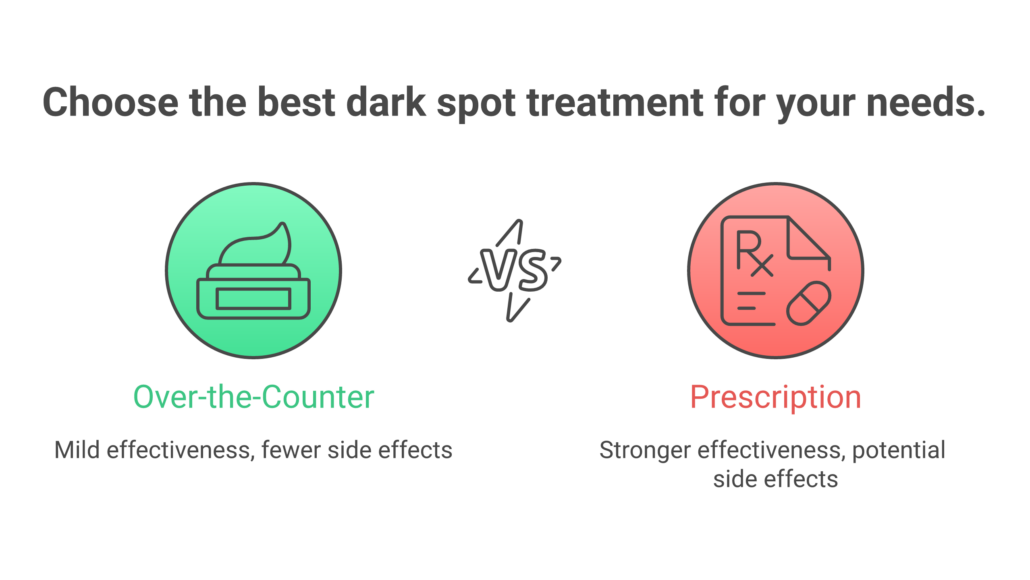
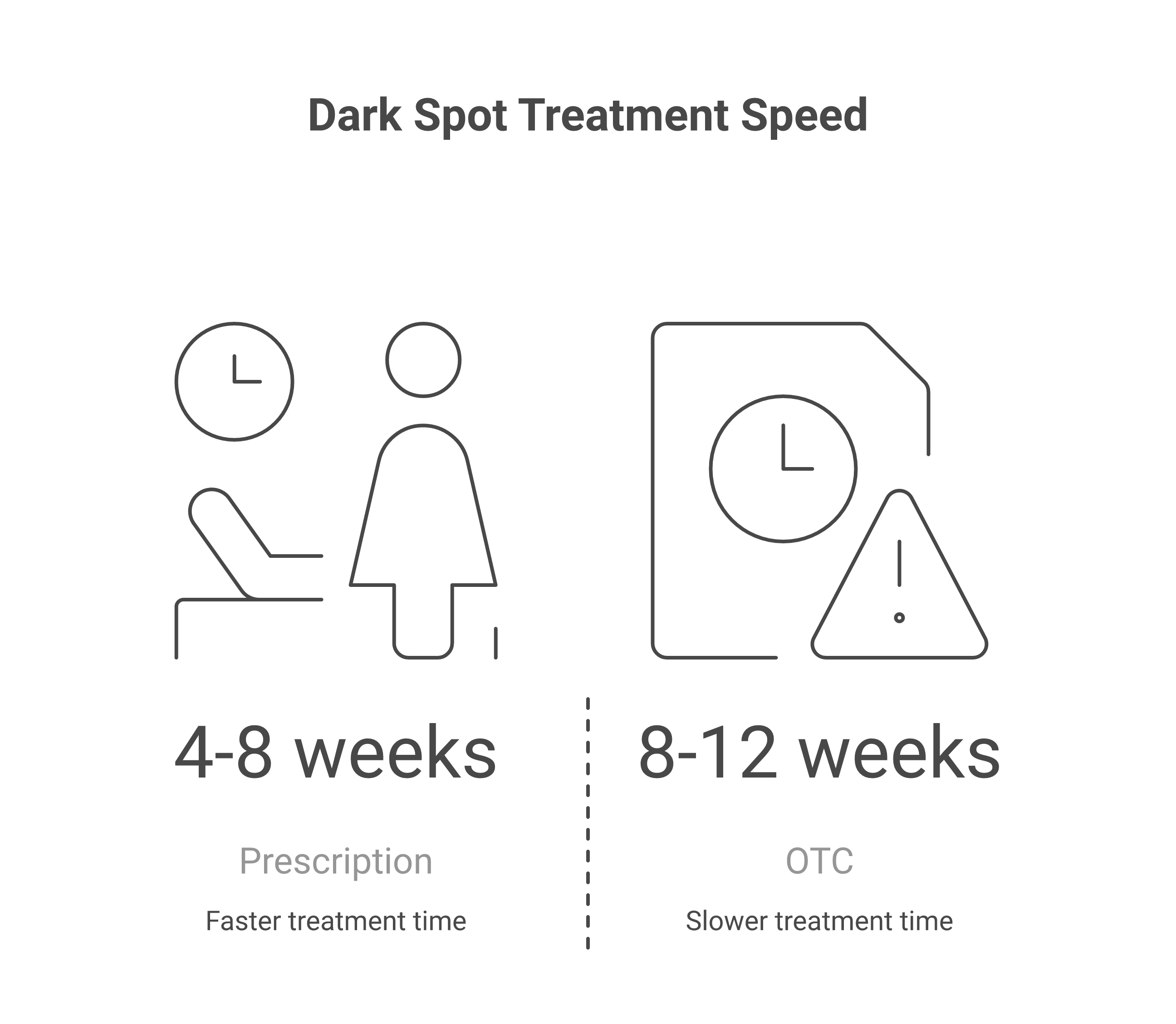
OTC (over-the-counter) dark spot treatments use lower-concentration active ingredients like niacinamide (2–5%), vitamin C (10–20%), alpha arbutin, and azelaic acid (10%) to gradually fade hyperpigmentation over 8–16 weeks. Prescription treatments — including hydroquinone (4–12%), tretinoin, and combination creams like tri-luma — deliver stronger melanin suppression and faster results (4–8 weeks), but carry higher risks of irritation, rebound hyperpigmentation, and require medical supervision. The core difference is potency: OTC products work on surface-level pigment, while prescriptions can reach deeper melanin deposits in the dermis.
I’ve spent years researching dark spots on skin and the active ingredients that fade them. This guide breaks down OTC vs prescription dark spot treatment side by side — ingredients, timelines, costs, risks, and who each option actually works best for. No fluff. Just the comparison you need to make a decision.
What Causes Dark Spots in the First Place?
Before diving into treatments, it helps to understand what you’re fighting. Dark spots — technically called hyperpigmentation — happen when your skin overproduces melanin in concentrated areas. That excess pigment shows up as flat, darkened patches that range from light brown to nearly black depending on your skin tone.
The triggers vary, but the most common culprits include:
- Sun exposure: UV damage triggers melanocytes (your pigment-producing cells) to go into overdrive, creating sun spots and age spots
- Post-inflammatory hyperpigmentation (PIH): The marks left behind after acne, cuts, burns, or any skin injury — especially common on darker skin tones
- Melasma: Hormonally driven patches that often appear during pregnancy, on birth control, or with hormone therapy. Notoriously stubborn
- Acne scars: Dark marks that linger long after breakouts have healed, sometimes lasting months or years without treatment
The type of hyperpigmentation you have directly shapes which treatment path makes sense. Surface-level PIH from a recent breakout? OTC products can absolutely handle that. Deep-set melasma that’s been there for years? You’ll likely need prescription-strength help. For a deeper dive into causes, check out our guide on dark spots on face causes.
OTC Dark Spot Treatments: Your First Line of Defense
Over-the-counter dark spot treatments are where most people start, and honestly, for mild to moderate hyperpigmentation, they’re often all you need. These are the products you can buy at any drugstore, beauty retailer, or online without a doctor’s visit.
The key advantage? Accessibility. You can start tonight if you want. But OTC products contain lower concentrations of active ingredients compared to prescription formulas, which means results take longer and may plateau with severe dark spots.
The Most Effective OTC Ingredients
Not all OTC dark spot correctors are created equal. The ingredient list on the back of the bottle matters far more than the promises on the front. Here’s what actually works and how:
Vitamin C (L-Ascorbic Acid) — This antioxidant is probably the most popular brightening ingredient in skincare right now, and for good reason. Vitamin C serum inhibits tyrosinase, the enzyme responsible for melanin production, and also fights oxidative damage from UV exposure. At concentrations between 10-20%, it delivers visible brightening in 8-12 weeks. Works best in the morning paired with sunscreen.
OTC Retinol — Retinol (a vitamin A derivative) accelerates skin cell turnover, pushing pigmented dead skin cells to the surface faster so they shed. OTC retinol concentrations typically range from 0.25% to 1%, and while it’s gentler than its prescription cousin tretinoin, it still delivers meaningful fading over 12-24 weeks. A 2020 clinical trial of 37 volunteers found that both 0.3% and 0.5% retinol serums reduced skin hyperpigmentation over 12 weeks, with measurable improvement at 56 and 84 days. If you’re new to retinol, start low and go slow — your skin barrier needs time to adapt.
Niacinamide (Vitamin B3) — A personal favorite because it works without irritation. Niacinamide doesn’t stop melanin production directly. Instead, it blocks the transfer of melanin from melanocytes to surrounding skin cells. That’s a different mechanism than most brighteners, which makes it an excellent layering partner with other active ingredients. Effective at 5% concentration or higher.
Azelaic Acid (10%) — Available OTC at up to 10% concentration, azelaic acid is a multi-tasker. It reduces melanin production, gently exfoliates, and calms inflammation. It’s one of the few brightening agents that’s safe during pregnancy, making it a go-to for melasma linked to hormonal changes. It’s also excellent for sensitive skin because it rarely causes significant irritation.
Alpha Hydroxy Acids (AHAs) — Glycolic acid and lactic acid are the stars here. These chemical exfoliants dissolve the bonds between dead skin cells on the surface, revealing fresher skin underneath. Glycolic acid (the smallest AHA molecule) penetrates deepest and works fastest, while lactic acid is gentler on sensitive skin and darker skin tones. Look for concentrations between 5-10% for daily use.
Alpha Arbutin — Derived from bearberry plants, alpha arbutin inhibits tyrosinase activity without the irritation or safety concerns of stronger brighteners. It’s gentle, stable, and works well across all skin tones.
Kojic Acid — A byproduct of rice fermentation, kojic acid is another tyrosinase inhibitor. It’s effective but can be irritating at higher concentrations, so patch testing matters.
Salicylic Acid — While primarily known for treating acne and stubborn acne breakouts, salicylic acid also helps with post-acne dark spots by exfoliating within the pore and reducing inflammation. It won’t fade sun spots effectively, but for PIH from acne? It’s a solid supporting player.
Pros and Cons of OTC Treatments
| Pros | Cons |
|---|---|
| No doctor’s visit required | Lower concentrations = slower results |
| Widely available at drugstores and online | May not work for severe dark spots or deep melasma |
| More affordable ($10-$60 per product) | Results can plateau after initial improvement |
| Generally gentler with fewer side effects | Requires 8-24 weeks for visible change |
| Easy to incorporate into your existing skincare routine | Ingredient quality varies wildly between brands |
| Many options for sensitive skin | Some ingredients (retinol, AHAs) still cause irritation if misused |
Prescription Dark Spot Treatments: When You Need More Firepower
If you’ve tried OTC products consistently for 3-6 months with minimal improvement — or if your dark spots are deep, widespread, or tied to melasma — prescription treatments are the next step. These formulas contain higher concentrations of active ingredients (or entirely different compounds) that simply aren’t available over the counter.
The trade-off is real, though. Prescription treatments work faster and harder, but they also come with more potential side effects, higher costs, and require a dermatologist’s guidance.
The Key Prescription Ingredients
Hydroquinone (4%+) — For decades, hydroquinone has been the gold standard for skin lightening and treating stubborn hyperpigmentation. It works by directly inhibiting tyrosinase activity, effectively shutting down melanin production in treated areas. Prescription-strength hydroquinone (4% and higher) delivers dramatically faster results than the 2% OTC versions — most people notice visible fading within 4-8 weeks.
But here’s what you need to know: hydroquinone isn’t meant for long-term use. Most protocols cap treatment at 4-5 months, followed by a 2-3 month rest period. Extended use carries the risk of ochronosis — a paradoxical blue-black skin discoloration that’s extremely difficult to treat. That’s why it requires supervision.
Tretinoin (Retin-A) — Prescription-strength tretinoin is the big brother of OTC retinol, and the difference isn’t subtle. While OTC retinol needs to be converted by your skin into retinoic acid before it works, tretinoin IS retinoic acid. It dramatically accelerates skin cell turnover — pushing pigmented cells to the surface 2-3x faster than retinol can. Common concentrations range from 0.025% to 0.1%. Expect noticeable results in 6-12 weeks, but also expect peeling, dryness, and sun sensitivity during the adjustment period.
High-Strength Azelaic Acid (15-20%) — Prescription azelaic acid (like Finacea at 15% or Azelex at 20%) is significantly more potent than the 10% OTC versions. At these concentrations, it’s powerful enough to address moderate melasma, skin discoloration, and PIH while also treating acne — making it an efficient choice if you’re dealing with both breakouts and dark spots after acne.
Combination Creams (Tri-Luma) — This is the prescription heavy-hitter. Tri-Luma combines three active ingredients into one formula: hydroquinone (4%) to suppress melanin, tretinoin (0.05%) to speed turnover, and fluocinolone acetonide (a mild corticosteroid) to reduce inflammation. It’s considered the gold standard and most effective single treatment for melasma, but it’s also the most likely to cause skin irritation, and long-term use of the steroid component raises additional concerns.
Tranexamic Acid (Oral/Topical) — An emerging prescription option that’s gaining serious traction. Originally used to reduce heavy bleeding, tranexamic acid has shown remarkable effectiveness for melasma when used either topically or orally. It works by blocking the interaction between keratinocytes and melanocytes, reducing pigment production through an entirely different pathway than hydroquinone or retinoids.
Pros and Cons of Prescription Treatments
| Pros | Cons |
|---|---|
| Higher concentrations = faster, more dramatic results | Requires a doctor’s visit and prescription |
| Access to ingredients not available OTC (high-dose HQ, tretinoin) | Higher cost ($50-$300+ per product, plus office visit) |
| Professional monitoring for safety | Greater risk of skin irritation, peeling, and redness |
| Can address severe dark spots and deep melasma | Some ingredients have usage limits (hydroquinone: 4-5 months max) |
| Combination formulas attack pigment from multiple angles | Increased photosensitivity — sunscreen is absolutely non-negotiable |
| Visible results often in 4-8 weeks | Not suitable for all skin types without careful supervision |
Head-to-Head: OTC vs Prescription Dark Spot Treatment at a Glance
Here’s the comparison you’ve been scrolling for. This table puts OTC and prescription treatments side by side across every factor that actually matters:
| Factor | OTC Products | Prescription Treatments |
|---|---|---|
| Strength | Lower concentrations (retinol 0.25-1%, azelaic acid 10%, HQ 2%) | Higher concentrations (tretinoin 0.025-0.1%, azelaic acid 15-20%, HQ 4%+) |
| Speed of Results | 8-24 weeks for noticeable improvement | 4-12 weeks for visible fading |
| Best For | Mild to moderate PIH, new sun spots, uneven skin tone | Stubborn melasma, severe dark spots, deep hyperpigmentation |
| Key Ingredients | Vitamin C, retinol, niacinamide, AHAs, kojic acid, alpha arbutin | Hydroquinone 4%, tretinoin, high-dose azelaic acid, combination creams |
| Cost Per Month | $10-$60 | $50-$300+ (plus doctor visit: $100-$250) |
| Accessibility | Drugstore, online, no prescription needed | Requires dermatologist visit, may need follow-up appointments |
| Side Effects | Mild irritation, dryness, occasional redness | Peeling, redness, photosensitivity, potential rebound pigmentation |
| Usage Duration | Ongoing maintenance is safe | Some ingredients limited (HQ: 4-5 month cycles) |
| Skin Tone Safety | Most ingredients safe for all skin tones when used correctly | Higher risk of irritation-induced PIH on darker skin tones without careful supervision |
Effectiveness by Type of Dark Spot
This is where things get practical. Not all hyperpigmentation responds the same way to treatment, and matching your specific type of dark spots to the right approach saves you months of frustration.
Sun Spots (Solar Lentigines)
These flat, brown spots from cumulative sun exposure are actually among the easiest to treat. OTC products containing vitamin C, retinol, and glycolic acid work well for mild sun spots. For deeper, long-standing sun spots, prescription tretinoin or a chemical peel at a dermatologist’s office will deliver faster results. A 12-week study published in the Journal of Drugs in Dermatology found that a targeted dark spot corrector significantly reduced solar lentigines with minimal side effects.
Post-Inflammatory Hyperpigmentation (PIH)
Dark marks from acne, injuries, or inflammation. PIH is extremely common on darker skin tones and can linger for 6-12 months without treatment. The good news? OTC products work well here. Niacinamide, azelaic acid, and vitamin C are all effective for PIH. The critical factor is avoiding further inflammation — which means benzoyl peroxide (a common acne treatment used for severe acne and stubborn acne breakouts that can worsen PIH in some people) should be used cautiously, and you absolutely must avoid picking at spots.
Melasma
The toughest of the three. Melasma involves deeper pigment deposits driven by hormonal factors and UV exposure. OTC treatments can help manage mild melasma, but most cases benefit from prescription treatments — specifically hydroquinone-based combination creams or oral tranexamic acid. If you suspect melasma, our article on dark spots during pregnancy covers the hormonal connection in detail.
Safety and Side Effects: What You Actually Need to Know
Every active ingredient that’s powerful enough to fade dark spots is powerful enough to cause side effects. That’s just the reality. The question isn’t “will there be risks?” but rather “what are the specific risks, and can I manage them?”
OTC Side Effect Profile
Most OTC brightening ingredients are well-tolerated. The main concerns:
- Retinol: Dryness, peeling, and redness during the first 2-4 weeks (called “retinization”). Builds tolerance over time. To prevent skin irritation, start with every-other-night application
- Vitamin C: Can sting on broken skin. L-ascorbic acid is notoriously unstable — if your serum turns brown or orange, it’s oxidized and useless
- AHAs (glycolic acid, lactic acid): Increase photosensitivity. Daily sunscreen is mandatory when using AHAs. Can cause temporary stinging on sensitive skin
- Kojic acid: Contact dermatitis in some people. Patch test first, especially on sensitive skin
Prescription Side Effect Profile
Higher potency means higher risk. Here’s what to watch for:
- Hydroquinone: Risk of ochronosis with long-term use (>5 months continuously). Can cause mild burning or redness. May trigger rebound hyperpigmentation if stopped abruptly without sun protection
- Tretinoin: Significant peeling, dryness, and redness for 4-8 weeks (“retinoid dermatitis”). Dramatically increases sun sensitivity. Can temporarily worsen dark spots before improving them — a process called “purging”
- Combination creams (Tri-Luma): The corticosteroid component can thin skin with extended use. Should be used in limited cycles under supervision
- Oral tranexamic acid: Generally well-tolerated, but carries a small risk of blood clots — contraindicated for people with clotting disorders
For darker skin tones specifically, both OTC and prescription treatments carry the risk of triggering additional PIH if they cause irritation. That’s why starting with lower concentrations and increasing gradually is essential regardless of which path you choose. This concept of protecting your skin barrier while treating hyperpigmentation is something we explore in our dark spots on face treatment guide.
The Cost Comparison: What You’ll Actually Spend
Let’s talk real numbers, because the sticker price on a product doesn’t tell the full story.
OTC Cost Breakdown (Annual)
| Item | Cost Range | Notes |
|---|---|---|
| Dark spot corrector serum | $12-$60 | Lasts 1-3 months depending on product |
| Retinol product | $10-$45 | Many affordable options at 0.5% concentration |
| Sunscreen (SPF 30+) | $10-$30 | Non-negotiable with ANY brightening treatment |
| Annual estimate | $150-$500 | Includes replacing products every 2-3 months |
Prescription Cost Breakdown (Annual)
| Item | Cost Range | Notes |
|---|---|---|
| Dermatologist consultation | $100-$250 | Initial visit; follow-ups may be required |
| Prescription hydroquinone 4% | $30-$100 | 4-5 month cycle |
| Tretinoin cream | $25-$150 | Insurance may cover; generics available |
| Tri-Luma (combination) | $150-$300 | Often not covered by insurance |
| Sunscreen (SPF 30+) | $10-$30 | Even more critical with prescriptions |
| Annual estimate | $400-$1,200+ | Varies greatly with insurance coverage |
Here’s a factor most comparison articles skip: the hidden cost of wrong choices. I’ve talked to countless people who spent $200+ on random OTC products over 6-8 months before seeing a dermatologist — who then prescribed something that worked in 6 weeks. If your dark spots are clearly severe, the “expensive” prescription route might actually save you money in the long run.
The Non-Negotiable: Sunscreen With EVERY Treatment
I cannot stress this enough: no dark spot treatment — OTC or prescription — will work if you’re not wearing broad-spectrum SPF 30 or higher every single day. Period.
According to the American Academy of Dermatology, UV exposure is the single biggest driver of melanin overproduction. Every minute of unprotected sun exposure can create new dark spots and darken existing ones, completely undoing weeks or months of treatment progress. This applies to all skin tones. Even if you have darker skin and don’t burn easily, UV still triggers melanin overproduction in areas already prone to hyperpigmentation.
The rules are simple: SPF 30+ minimum. Reapply every 2 hours when outdoors. Wear it indoors too if you sit near windows — UVA penetrates glass. Mineral sunscreens (zinc oxide, titanium dioxide) are less likely to irritate skin that’s already sensitized by treatment. This single habit will improve your results from ANY treatment by 40-60%.
How to Choose: Which Treatment Path Is Right for You?
Stop guessing. Use this decision framework based on your actual situation:
Start With OTC Products If:
- Your dark spots are mild to moderate and relatively new (less than 6-12 months old)
- You’re dealing primarily with PIH from acne or minor sun spots
- You have sensitive skin and want to start with gentler formulas
- Your budget is limited and you want to try the most affordable approach first
- You want to fade dark spots on your face gradually without a doctor’s visit
- You’ve never used active brightening ingredients before and want to build tolerance
Go Straight to Prescription If:
- You have severe dark spots that have been present for 1+ years
- You suspect or have been diagnosed with melasma
- You’ve used OTC products consistently for 3-6 months with minimal improvement
- Your skin discoloration is widespread across large areas of your face
- You have darker skin tones and are concerned about worsening PIH from irritating OTC products
- You want the fastest possible results and are willing to manage side effects
Consider Combining Both If:
- You’re using a prescription for active treatment and want OTC products for maintenance between cycles
- Your dermatologist recommends a multi-ingredient skincare routine that includes both prescription and OTC active ingredients
- You want to layer vitamin C (morning) with prescription tretinoin (evening) for maximum skin cell turnover and antioxidant protection
For a complete breakdown of the best dark spot removers for face, including specific product recommendations, check out our dedicated review.
Building a Smart Skincare Routine (OTC + Prescription)
Whether you go OTC, prescription, or a mix of both, here’s a framework for an effective skincare routine targeting dark spots and uneven skin tone:
Morning Routine:
- Gentle cleanser (avoid harsh soaps that strip your skin barrier)
- Vitamin C serum (10-20%) — antioxidant protection + brightening
- Niacinamide moisturizer (5%+) — reduces pigment transfer
- Broad-spectrum sunscreen SPF 30+ (this is the step that makes everything else work)
Evening Routine:
- Double cleanse (oil cleanser + gentle foaming cleanser to remove sunscreen)
- Active treatment: OTC retinol OR prescription tretinoin (never both at once)
- Azelaic acid (if using — can go before or after retinoid depending on formulation)
- Hydrating moisturizer to prevent skin irritation from actives
Weekly:
- Alpha hydroxy acids exfoliant (glycolic acid or lactic acid peel, 1-2x per week) — skip on nights you use retinoid
- Hydrating mask to support your skin barrier if treating acne and dark spots simultaneously
A word on skin texture: brightening treatments often improve overall skin texture as a bonus. Retinoids (both OTC retinol and prescription tretinoin) smooth fine lines and pores while fading dark spots. Vitamin C and niacinamide improve radiance. So your dark spot treatment doubles as anti-aging skincare. The same prescription retinoids that fade stubborn dark spots also stimulate collagen production, smooth fine lines, and improve overall complexion — anti aging benefits you’d otherwise need separate products to achieve. That’s a win.
When to See a Dermatologist
There’s no shame in getting professional help. In fact, for certain situations, a dermatologist visit isn’t just helpful — it’s the smartest move you can make. Consider booking an appointment if:
- You’ve used OTC products faithfully for 3-6 months with no visible improvement
- Your dark spots are getting worse despite treatment
- You notice a spot that’s changed in size, shape, color, or texture (this needs medical care to rule out skin cancer — don’t wait on this one)
- You suspect melasma, especially if dark spots appeared during pregnancy or while taking hormonal medication
- Your hyperpigmentation is widespread or affecting your quality of life
- You have questions about professional dark spot treatments, including chemical peels, laser treatment, or intense pulsed light (IPL)
A dermatologist can determine the best course of action for stubborn cases that haven’t responded to home treatment. They can do things OTC products simply can’t. In-office procedures like chemical peels (using high-concentration glycolic acid or TCA), laser treatment, and microneedling can reach deeper layers of skin where stubborn pigment lives. These are typically recommended when both OTC and prescription topicals have reached their limits.
Common Mistakes When Choosing Dark Spot Treatments
After years of helping people find the best course of treatment for their dark spots, I’ve noticed the same patterns over and over. Here are the common mistakes that waste your time and money:
Switching products too quickly. Patience matters with any skincare routine. OTC and prescription treatments need several weeks to deliver visible improvements. Swapping to a new product every two weeks means nothing ever gets a real chance to work. Commit to one approach for at least 12 weeks before deciding it isn’t working.
Skipping sunscreen. I’ve already covered this, but it bears repeating because it’s the single biggest mistake I see. People spend hundreds on prescription skincare or OTC skincare products and then skip SPF on a cloudy Tuesday. UV damage undoes everything.
Using too many active ingredients at once. More isn’t better with skin concerns like hyperpigmentation. Layering retinol, glycolic acid, vitamin C, and azelaic acid all in the same evening routine is a recipe for skin irritation, redness, and potentially worse dark patches. A gentler approach — one or two actives at a time — delivers better results with less risk. This matters especially for people with sensitive skin or acne prone skin.
Ignoring skin type and skin sensitivity. Someone with dry skin and eczema-prone skin needs a completely different approach than someone with oily, acne prone skin. Prescription retinoids at full strength on already-irritated skin can cause peeling, flaking, redness, and even worsen the condition you’re trying to fix. Adapalene (available OTC as Differin gel at 0.1%) is a solid stepping stone for beginners because it’s better tolerated than tretinoin while still offering genuine skin cell turnover benefits. For people dealing with psoriasis, rosacea, or eczema, consult your provider before adding any brightening actives.
Not understanding the real differences between OTC and prescription strength. The biggest difference between over the counter and prescription dark spot creams comes down to concentrations of active ingredients. OTC retinol at 0.5% is converted slowly by your skin cells into retinoic acid — the active form. Prescription retinoids like tretinoin skip that conversion entirely and work faster because they’re already in their active form. That deeper penetration and faster cell turnover is why prescription treatments deliver faster, more targeted results, but also why they cause more side effects.
OTC Products vs Prescription Skincare: Key Factors for Darker Skin Tones
If you have darker skin tones, choosing between OTC and prescription dark spot treatment requires extra care. Darker skin produces more melanin (your skin’s natural pigment), which means it’s more prone to both hyperpigmentation and post-inflammatory dark marks from irritation.
The FDA pulled over-the-counter hydroquinone products from drugstore shelves in 2020, so accessing hydroquinone now requires visiting a dermatologist and getting a prescription. For patients with darker skin tones, many dermatologists recommend starting with gentler OTC options — azelaic acid, niacinamide, or vitamin C serums — before moving to prescription retinoids or hydroquinone-based prescription dark spot creams.
Adapalene gel (0.1%) is widely available without a prescription at pharmacies and drugstores, and clinical trials have shown it helps with both treating acne and reducing post-inflammatory hyperpigmentation in darker skin. A 2021 review in the American Journal of Clinical Dermatology found that topical retinoids are effective for PIH in skin of color, though the authors stressed that preventing irritation-induced scarring is crucial when deciding on treatment intensity.
Topical metronidazole is another prescription option worth mentioning — while it’s primarily prescribed for rosacea, some providers use it alongside other treatments for reducing inflammation-driven dark marks. For people with mild skin concerns, OTC skincare products with niacinamide and gentle exfoliation (lactic acid at 5-8%) offer a convenient, accessible starting point that many users find effective for their skin concerns without the risks associated with prescription strength ingredients.
Cost and insurance considerations also play into this decision. Many prescription skincare products and prescription retinoids aren’t covered by insurance, making them an out-of-pocket expense. OTC products from drugstores offer more budget-friendly treatment options. If your dark spots are caused by acne, some insurance plans will cover prescription retinoids like tretinoin when prescribed specifically for treating acne rather than cosmetic concerns — so it’s worth asking your provider about coverage before assuming you need to pay full price.
My Honest Take: The Practical Reality
After years of researching and writing about dark spot treatments, here’s my honest assessment. Most people overcomplicate this.
If your dark spots are recent and mild, start with a vitamin C serum in the morning, an OTC retinol at night, and wear your sunscreen religiously. Give it 12 weeks. That combination addresses melanin production, skin cell turnover, and UV protection — the three pillars of any effective brightening strategy. For additional natural approaches, see our guide on how to remove dark spots from face.
If 12 weeks pass and you’re not satisfied, don’t keep buying more OTC products hoping the next one will be “the one.” That’s where most people waste money and time. See a dermatologist. Prescription tretinoin alone, or a hydroquinone combination for severe cases, will almost certainly outperform whatever your fifth or sixth OTC product would have done.
And regardless of which route you take, sunscreen is doing 50% of the heavy lifting. That’s not a sales pitch. It’s just what the research consistently shows.
Frequently Asked Questions
What is the most effective prescription for dark spots?
Hydroquinone 4% remains the most widely prescribed treatment for stubborn dark spots, often combined with tretinoin and a mild corticosteroid in formulas like Tri-Luma. This combination attacks hyperpigmentation from three angles: suppressing melanin production, accelerating skin cell turnover, and reducing inflammation. For melasma specifically, oral tranexamic acid is emerging as a highly effective alternative that works through a completely different mechanism.
Can you get rid of dark spots without a prescription?
Yes, absolutely — especially if your dark spots are mild to moderate. OTC ingredients like vitamin C (10-20%), retinol (0.5-1%), niacinamide (5%+), and azelaic acid (10%) are all backed by research for fading hyperpigmentation. The catch is patience: OTC products typically take 8-24 weeks to show results versus 4-12 weeks for prescription options. Consistent daily sunscreen use is essential either way.
Is tretinoin or hydroquinone better for dark spots?
They work differently and are strongest when used together. Hydroquinone directly suppresses melanin production (it targets the “factory”), while tretinoin accelerates the shedding of existing pigmented cells (it speeds up the “conveyor belt”). Most dermatologists prescribe them in combination rather than choosing one over the other. Hydroquinone delivers faster visible results, but tretinoin provides additional anti-aging benefits and can be used long-term.
How long does it take for prescription dark spot treatment to work?
Most prescription treatments show initial improvement in 4-8 weeks, with significant results at the 8-12 week mark. Hydroquinone often shows the fastest initial response (4-6 weeks), while tretinoin takes longer to build up (6-12 weeks) but provides more complete results. Combination formulas like Tri-Luma typically show meaningful improvement within 8 weeks. Complete resolution of severe dark spots can take 4-6 months of consistent treatment.
What do dermatologists recommend for dark spots on darker skin tones?
Darker skin tones require extra care because aggressive treatments can trigger additional post-inflammatory hyperpigmentation. Most dermatologists recommend starting with gentler OTC products like niacinamide, azelaic acid, and vitamin C before moving to prescriptions. When prescriptions are needed, lower concentrations of tretinoin (0.025%) and shorter hydroquinone cycles are common. Tranexamic acid is increasingly popular for darker skin tones because it carries a lower risk of irritation-induced PIH compared to traditional options.
Can I use OTC and prescription dark spot treatments together?
Yes, but strategically. A common approach is prescription tretinoin at night paired with OTC vitamin C serum in the morning. Niacinamide pairs well with almost anything. However, don’t layer multiple strong active ingredients (like retinol + glycolic acid + hydroquinone) without guidance — that’s a recipe for destroying your skin barrier and potentially worsening your dark spots through irritation. More isn’t always more with active ingredients.
Are dark spot treatments safe during pregnancy?
Retinoids (both OTC retinol and prescription tretinoin) are absolutely off-limits during pregnancy. Hydroquinone is also typically avoided. Safe options include azelaic acid (even prescription strength), vitamin C, and niacinamide. If you’re dealing with pregnancy-related melasma, azelaic acid at 15-20% with consistent sunscreen is the standard recommendation. Always confirm with your healthcare provider before starting any new skincare active during pregnancy.

