

Best Dark Spot Remover for Face: What Actually Works in 2026

Dr. Matthew Olesiak, MD, is the Chief Medical Director at SANESolution, a renowned wellness technology company dedicated to providing evidence-based solutions for optimal living. Dr. Olesiak earned his medical degree from the prestigious Jagiellonian University Medical College in Kraków, Poland, where he developed a strong foundation in medicine.
The best dark spot remover for face discoloration depends entirely on the type of hyperpigmentation you’re dealing with, your skin tone, and how long those dark spots have been there. I’ve spent years evaluating dark spot correctors and studying the research behind their active ingredients, and the truth is, most skincare products on the market rely on outdated formulations or concentrations too low to produce meaningful results.
Dark spots on the face, whether from sun damage, post acne marks, melasma, or age spots, are caused by excess melanin deposited in the epidermis and upper dermis. To actually fade them, you need ingredients that interrupt melanin production at multiple points in the pigment formation pathway, accelerate skin cell turnover to remove dead skin cells and shed pigmented layers faster, and protect against new pigment formation from UV exposure and blue light. A good dark spot remover does all three simultaneously through a combination approach that can gradually fade dark spots over several weeks of consistent use.
Below, I break down the key ingredients that the research supports, the different kinds of dark spots and which treatments work best for each, how to choose the right dark spot corrector for your skin type, and the professional procedures worth considering when topical treatments fall short. I also cover the critical role of sun protection, because without it, even the best dark spot treatment is fighting a losing battle.
Related: Dark Spot Corrector for Face · Dark Spots After Acne · Dark Spots on Cheeks · Dark Spots Fading Timeline
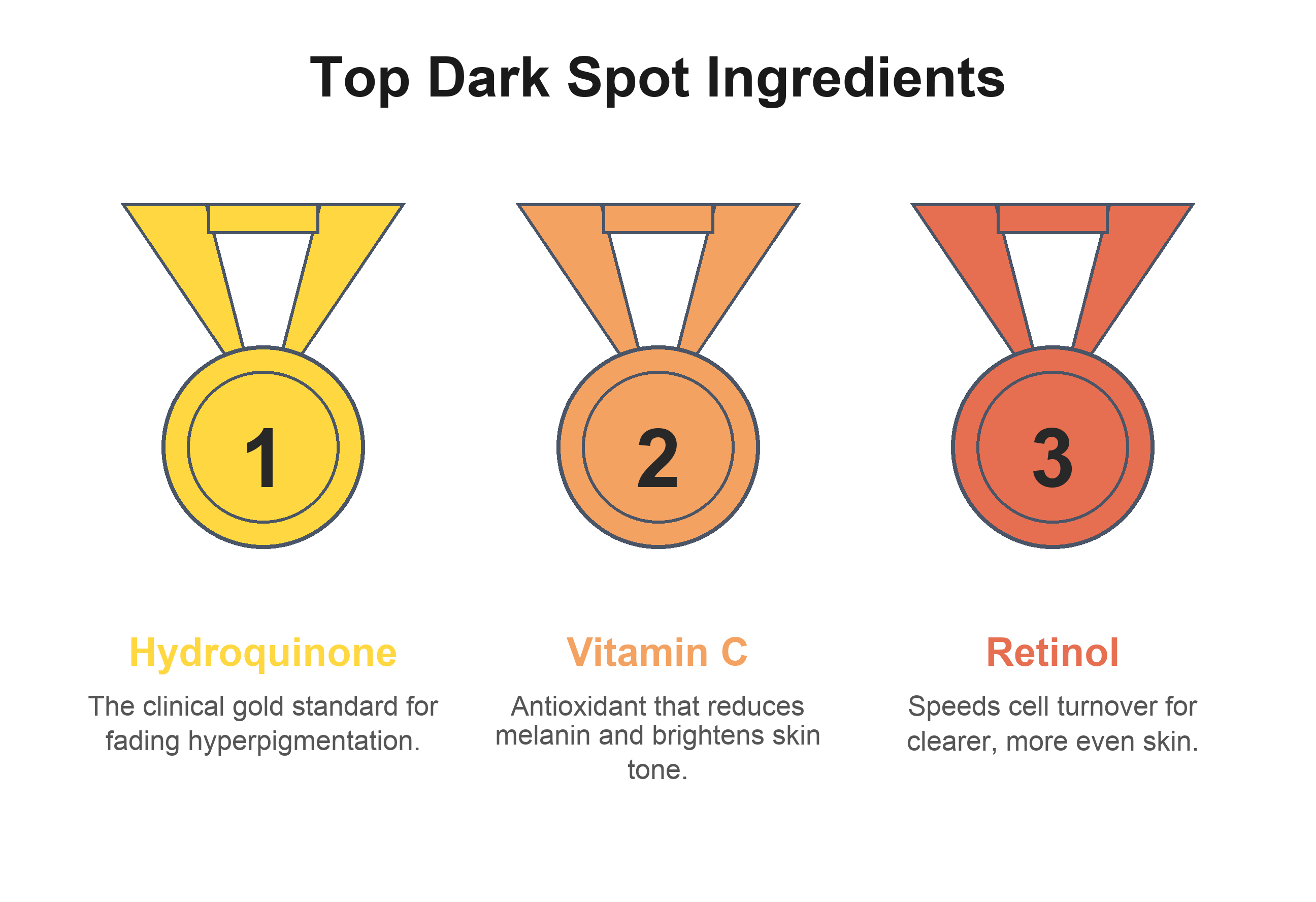
What Causes Dark Spots on the Face?
Dark spots, also known as hyperpigmentation, form when melanocytes (the pigment-producing cells in your skin) generate excess melanin in response to a trigger. That trigger could be UV exposure, hormonal changes, skin trauma, or chronic inflammation. The result is the same: concentrated clusters of melanin that appear as flat, brown or dark patches on the skin’s surface.
Understanding the root cause matters because different types of hyperpigmentation respond to different treatments. A dark spot corrector that works brilliantly on sun spots may do nothing for melasma, and some ingredients can actually make certain conditions worse if you don’t target hyperpigmentation at its source.
Sun Spots (Solar Lentigines)
Sun spots are the most common type of dark spots on the face. Also called age spots or liver spots, they develop from cumulative, unprotected sun exposure over years and decades. UV radiation stimulates melanocytes to produce extra melanin as a protective response, and over time this pigment accumulates in concentrated patches within the epidermis. Sun spots are flat, brown, and typically appear on areas that get the most sun: cheeks, forehead, nose, and the backs of hands.
According to research published by the American Academy of Dermatology, solar lentigines are most common in adults over 50, though they can develop in younger individuals with significant sun exposure. They tend to darken with continued sun damage, making broad spectrum sunscreen the single most important preventive measure. Treatments that work well on sun spots include vitamin C, glycolic acid, kojic acid, and retinol, all of which target melanin through different mechanisms.
Post Inflammatory Hyperpigmentation (PIH)
Post inflammatory hyperpigmentation is the dark discoloration left behind after acne, an insect bite, a cut, eczema flare, or any other form of skin trauma. It’s the most common type of hyperpigmentation in people with deeper complexions and darker skin tones (Fitzpatrick skin types IV through VI), and it frequently overlaps with acne scars. When the skin is injured or inflamed, the healing process triggers increased melanin production in the affected area, leaving behind post acne marks or dark marks that can persist for months.
PIH typically responds well to gentle brightening ingredients like niacinamide, azelaic acid, and alpha arbutin. Harsh treatments (particularly high-strength chemical peels or aggressive laser treatment on darker skin) can sometimes worsen post inflammatory hyperpigmentation by creating additional inflammation and rebound pigmentation. A gentle, consistent approach is generally the best treatment plan for PIH.
Melasma
Melasma is the most stubborn form of facial hyperpigmentation. It presents as large, symmetrical brown or gray-brown patches, typically across the cheeks, forehead, upper lip, and chin. Unlike sun spots or post acne marks, melasma has a strong hormonal component. It’s triggered or worsened by pregnancy, oral contraceptives, hormone replacement therapy, and even certain medications. Roughly 90% of melasma cases occur in women.
What makes melasma uniquely difficult to treat is that both UV exposure and visible light (including blue light from screens) can trigger flares. Standard sunscreen alone isn’t always sufficient; iron oxide-containing sunscreens that also block visible light show better results for melasma patients. The most effective treatment plans for melasma typically combine tranexamic acid (oral or topical), azelaic acid, and strict sun protection. Hydroquinone remains the most studied treatment for melasma, though it carries risks of rebound pigmentation and ochronosis with prolonged use.
Age Spots and Hormonal Discoloration
Age spots overlap significantly with sun spots, but the term is broader and includes pigmentation changes related to natural skin aging and hormonal shifts during menopause. As we age, our skin’s ability to regulate melanin production declines, and years of accumulated sun damage become more visible. Wrinkles and uneven skin tone tend to appear together because both are driven by UV damage and collagen loss. Hormonal changes (particularly declining estrogen levels) alter how skin responds to UV exposure and inflammation, making new spots more likely and existing ones harder to fade.
For more detail on how aging affects dark spots, see our guides on dark spots after 60 and dark spots during menopause.
Key Ingredients That Actually Fade Dark Spots
Not every ingredient marketed as a “brightening agent” has strong clinical evidence behind it. Below are the key ingredients with real research support, what they do, how they work, and who they’re best for. When evaluating any dark spot corrector or dark spot remover, look for products that combine several of the following active ingredients at effective concentrations.
Vitamin C (L-Ascorbic Acid)
Vitamin C is one of the most well-studied brightening ingredients in dermatology. It works by inhibiting the enzyme tyrosinase, which is required for melanin production. At concentrations of 10-20%, vitamin C can visibly reduce dark spots, even out uneven skin tone, brighten skin, and provide antioxidant protection against further UV and environmental damage. It also plays a role in stimulating collagen production, which improves overall skin texture and firmness for smoother, more even toned skin over time.
The challenge with vitamin C is stability. L-ascorbic acid (the most potent form) degrades quickly when exposed to light, air, and heat. Encapsulated vitamin C and vitamin C derivatives like ascorbyl glucoside or ethyl ascorbic acid offer more stability but may be slightly less potent. For best results, choose a vitamin C serum in an opaque, airtight container and use it in the morning under broad spectrum sunscreen.
Vitamin C pairs well with vitamin E and ferulic acid, a combination that Pinnell et al. (2005) found provides approximately 8-fold photoprotection versus unprotected skin, doubling the protection of vitamins C and E alone. If you’re comparing vitamin C to niacinamide for dark spots, know that they work through different pathways and can be used together. Read our full breakdown on niacinamide benefits for skin.
Niacinamide (Vitamin B3)
Niacinamide is a personal favorite for fading dark spots, particularly in people with sensitive skin or acne prone skin. It doesn’t directly inhibit melanin production. Instead, it blocks the transfer of melanin from melanocytes to the surrounding skin cells (keratinocytes), which effectively reduces the appearance of existing dark spots and prevents new pigment from reaching the skin’s surface.
A 2011 randomized controlled trial published in Dermatology Research and Practice found that 4% niacinamide performed comparably to 4% hydroquinone for treating melasma, with significantly fewer side effects. Niacinamide also strengthens the skin barrier, reduces inflammation, controls oil production in oily skin, and supports overall skin tone. It’s gentle enough for daily use on most skin types and works well alongside other brightening agents.
For a deeper dive into niacinamide concentrations and clinical evidence, see niacinamide for age spots.
Retinol and Retinoids
Retinol (vitamin A) is one of the most powerful ingredients for addressing dark spots and overall skin aging. It works by dramatically accelerating cellular turnover, shedding pigmented cells from the skin’s surface faster and promoting new, evenly pigmented skin underneath. Retinol also inhibits melanin production at the cellular level while stimulating collagen production for improved skin texture, leaving skin noticeably smoother within weeks.
Prescription-strength retinoids like tretinoin are more potent and produce faster results, but over-the-counter retinol at 0.25-1% concentration can be highly effective with consistent use over several weeks to months. The tradeoff is irritation: retinol can cause dryness, peeling, and increased sun sensitivity, especially during the first two to three weeks of use. Start slow (two to three times per week) and gradually increase frequency. Always pair retinol with a moisturizer to keep skin hydrated and daily SPF to protect against increased photosensitivity.
For a complete usage guide, see retinol for dark spots.
Tranexamic Acid
Tranexamic acid has emerged as one of the most exciting ingredients for treating stubborn dark spots, particularly melasma. Originally developed as an oral medication to reduce bleeding, researchers discovered that it also interrupts the melanin production cascade by blocking the interaction between keratinocytes and melanocytes. In topical form (typically 2-5%), tranexamic acid reduces hyperpigmentation, prevents recurrence, and works well alongside other brightening agents without causing significant irritation.
A 2020 systematic review found that both oral and topical tranexamic acid produced significant improvements in melasma severity scores. Topical tranexamic acid is especially valuable for people who can’t tolerate hydroquinone or retinoids, and it’s safe for use on darker skin tones with minimal risk of rebound pigmentation. I recommend it as a first-line ingredient for melasma and as a strong supporting ingredient for other forms of hyperpigmentation.
Kojic Acid
Kojic acid is derived from fungi and works by inhibiting tyrosinase, the key enzyme in melanin production. A 2003 review in the International Journal of Cosmetic Science found kojic acid effective at concentrations of 1-4% for fading dark spots, sun spots, and acne scars. It’s a popular ingredient in many dark spot correctors and is often combined with glycolic acid or vitamin C for enhanced results.
The main concern with kojic acid is skin sensitization. It can cause contact dermatitis in some individuals, so patch testing is recommended. People with sensitive skin may want to start with lower concentrations or choose products that buffer kojic acid with soothing ingredients like licorice root extract or green tea extract.
Azelaic Acid
Azelaic acid is a multi-tasking ingredient that addresses both dark spots and acne, making it an ideal choice for people dealing with post inflammatory hyperpigmentation from breakouts. It works by interfering with tyrosinase activity and by normalizing the growth of pigment-producing cells. At 15-20% concentration (prescription strength), it’s a well-established treatment for melasma and PIH. Over-the-counter formulations at 10% can also produce meaningful results with consistent use.
What makes azelaic acid particularly appealing is its safety profile. It’s one of the few brightening ingredients considered safe during pregnancy and for acne prone skin. It also has anti-inflammatory and antibacterial properties, which help prevent the breakouts that lead to new post acne marks in the first place.
Alpha Hydroxy Acids (Glycolic Acid and Lactic Acid)
Alpha hydroxy acids (AHAs) like glycolic acid and lactic acid work by dissolving the bonds between dead skin cells on the skin’s surface, accelerating cell turnover and helping remove dead skin cells that carry excess pigment. Glycolic acid, with the smallest molecular size of the AHAs, penetrates most deeply and produces the most dramatic exfoliation. Lactic acid is gentler and also has hydrating properties, making it a better choice for dry or sensitive skin.
For dark spot treatment, glycolic acid at 5-10% in daily use products (or 20-70% in professional chemical peels) can improve skin texture, fade discoloration, reduce the appearance of existing spots, and create a smoother, more even tone. Regular use of AHAs makes the skin more light-sensitive, so daily broad spectrum sunscreen is absolutely non-negotiable, even on cloudy days when UV still reaches the skin.
Other Notable Ingredients
Several other ingredients deserve mention as supporting players in an effective dark spot corrector formula:
- Alpha arbutin: A natural tyrosinase inhibitor derived from bearberry. Gentler than hydroquinone with a strong safety record across all skin types. Read more about alpha arbutin.
- Licorice root extract: Contains glabridin, which inhibits melanin production and has anti-inflammatory properties. A great dark spot corrector ingredient for sensitive skin.
- Ferulic acid: An antioxidant that stabilizes vitamin C and enhances its ability to protect against sun damage.
- Green tea extract: Provides antioxidant protection and reduces inflammation that can trigger excess pigment production.
- Diglucosyl gallic acid: A newer brightening agent that interrupts melanin at multiple stages and shows promise for treating various types of hyperpigmentation.
- Hydroquinone: The strongest OTC tyrosinase inhibitor (available at 2% without prescription). Highly effective but carries risks including skin irritation and ochronosis (paradoxical darkening) with long-term use beyond 12 weeks. Use under medical supervision.
- Amber algae: An emerging marine-derived brightening ingredient with anti-melanogenic properties and antioxidant benefits.
How to Choose the Best Dark Spot Corrector for Your Skin Type
Your skin type significantly impacts which dark spot remover will give you the best results without causing irritation or making things worse. Here’s what I recommend for each skin type:
Sensitive Skin
If you have sensitive skin, avoid aggressive actives like high-concentration glycolic acid, retinol, or hydroquinone as your first-line treatment. Instead, look for dark spot correctors built around niacinamide, azelaic acid, alpha arbutin, and tranexamic acid. All of these fade dark spots effectively while being gentle enough to avoid triggering redness or irritation. Fragrance free formulations are strongly preferred, and always do a patch test on your inner forearm before applying anything new to your face.
For more specific guidance, check out our dedicated article on best dark spot remover for sensitive skin.
Oily and Acne Prone Skin
For oily skin and acne prone skin, lightweight serums absorb quickly and won’t clog pores or trigger breakouts. Niacinamide is a standout here: it fades dark spots, controls sebum production, keeps pores clear, and reduces inflammation. Azelaic acid is another excellent choice since it targets both post acne marks and active pimples simultaneously. Avoid heavy creams or products with comedogenic oils that can worsen acne and create new post inflammatory hyperpigmentation.
Dry and Mature Skin
Dry skin needs brightening ingredients delivered in hydrating, cream-based formulations that won’t strip moisture. Look for dark spot correctors that combine vitamin C with sodium hyaluronate (hyaluronic acid), ceramides, or peptides to keep skin hydrated while fading discoloration. Retinol is a powerful choice for mature skin because it addresses dark spots, wrinkles, fine lines, and lost collagen production simultaneously. Pair it with a rich moisturizer to minimize irritation and keep the skin barrier intact.
Darker Skin Tones
People with darker skin tones need to be particularly careful about ingredient selection. Aggressive treatments (including high-concentration chemical peels, certain laser treatments, and hydroquinone above 2%) carry a higher risk of post inflammatory hyperpigmentation and rebound pigmentation on darker skin. The best dark spot correctors for deeper complexions use gentle, proven ingredients like niacinamide, tranexamic acid, azelaic acid, and alpha arbutin. These effectively treat dark spots without provoking an inflammatory response that could worsen pigmentation.
Also be cautious with sunscreens: mineral sunscreens with zinc oxide can leave a white cast on darker skin tones. Look for tinted mineral sunscreens or chemical broad spectrum sunscreen formulations that absorb without visible residue.
How to Use Dark Spot Removers for Best Results
Having the right product only gets you halfway there. How you use it matters just as much. Here’s the approach I recommend for maximum effectiveness.
Build the Right Skincare Routine
A complete skincare routine for fading dark spots should follow this order:
- Cleanse: Wash with a gentle cleanser to start with clean skin. Avoid harsh sulfate cleansers that can compromise your skin barrier.
- Treat: Apply your dark spot corrector (serum or treatment) to clean, dry skin so the active ingredients can penetrate effectively. This is when skincare products with vitamin C, niacinamide, tranexamic acid, or retinol go on.
- Moisturize: Layer on a moisturizer to lock in the treatment and keep skin hydrated. This step also minimizes irritation from potent actives.
- Protect (AM only): Apply broad spectrum sunscreen with at least SPF 30. Reapply every two hours if outdoors. This is the single most important step, because without sun protection, your dark spot treatment is essentially pointless.
If using retinol, apply it at night only. Vitamin C works best in the morning for its antioxidant protection benefits.
Daily SPF Is Non-Negotiable
I can’t stress this enough: sunscreen is your best friend when treating dark spots. UV exposure is the primary trigger for most dark spots and the number one reason existing spots darken or return after treatment. Even a single day of unprotected sun exposure can undo weeks of progress with your dark spot corrector. The American Academy of Dermatology recommends daily SPF for everyone, but it’s especially critical when using brightening ingredients that increase photosensitivity.
Choose a broad spectrum sunscreen rated SPF 30 or higher. For melasma specifically, look for formulations with iron oxide that also block visible light and blue light. Wear a wide brimmed hat when spending extended time outdoors, and don’t skip sunscreen on cloudy days because up to 80% of UV rays still penetrate cloud cover. Reapply every two hours, or immediately after sweating or swimming.
Patch Test Before Full Application
Always do a patch test when trying a new dark spot treatment. Apply a small amount to the inside of your forearm or behind your ear and wait 24-48 hours. Watch for redness, itching, burning, or swelling. This is particularly important for sensitive skin and for products containing retinol, glycolic acid, or kojic acid, all of which can trigger irritation in some individuals. Skipping this step risks a reaction that could lead to (you guessed it) more post inflammatory hyperpigmentation.
Be Patient and Stay Consistent
Most dark spots didn’t appear overnight, and they won’t disappear overnight either. With consistent use of effective skin care products, most people start seeing visible improvement within four to eight weeks. Meaningful fading typically takes eight to twelve weeks, and stubborn or deep dark spots may require three to six months of consistent treatment. Set realistic expectations: you’re looking for gradual, progressive fading, not instant transformation.
The biggest mistake I see is people abandoning a product after two weeks because they haven’t seen major improvements. Stick with your treatment plan for a minimum of eight to twelve weeks before judging results. If after three weeks you’re experiencing significant irritation without improvement, that’s a different signal: it may be time to switch to a gentler formulation.
For a detailed look at realistic timelines, read our guide on the dark spots fading timeline.
Professional Treatments for Stubborn Dark Spots
When topical dark spot removers aren’t producing sufficient results, or when you’re dealing with deep, stubborn dark spots that have been there for years, professional in office procedures can provide more aggressive treatment. These should always be performed by a qualified dermatologist or skincare professional who can evaluate your skin and recommend a treatment plan designed for your specific type of hyperpigmentation.
Chemical Peels
Professional chemical peels use higher concentrations of glycolic acid, lactic acid, trichloroacetic acid (TCA), or combination formulas to remove layers of pigmented skin more aggressively than OTC products. Superficial peels (glycolic 30-50%) are suitable for most skin types and can be done monthly. Medium-depth peels (TCA 15-35%) provide more dramatic results but require more downtime and carry higher risk of complications, especially on darker skin tones.
Chemical peels are particularly effective for sun spots and mild to moderate post inflammatory hyperpigmentation. For melasma, peels should be approached cautiously, the inflammation from a peel can actually trigger a melasma flare if the peel is too aggressive.
Laser Treatment and Light Therapy
Laser treatment options for dark spots include Q-switched lasers, fractional lasers, and intense pulsed light (IPL). These work by targeting melanin directly: the laser energy is absorbed by the pigment, breaking it up so the body can gradually clear it. Q-switched Nd:YAG lasers are generally the safest option for darker skin tones because of their wavelength selectivity.
Laser treatments can produce significant improvements in fewer sessions than topical treatments, but they’re not without risks. Recovery typically requires a few days to a week of redness and sensitivity. Potential side effects include temporary darkening (post inflammatory hyperpigmentation), scarring, and in rare cases, permanent skin lightening at the treatment site. Multiple sessions are usually required, spaced four to six weeks apart. Post-treatment care includes strict sun avoidance and a gentle, hydrating skincare routine. For more information, see our guide on laser to remove dark spots.
Microneedling
Microneedling creates tiny, controlled injuries in the skin using fine needles, stimulating collagen production and allowing topical treatments to penetrate more deeply. When combined with brightening serums (vitamin C, tranexamic acid), microneedling can accelerate the fading of dark spots beyond what topical application alone achieves. The process also helps smooth out acne scars and rough skin texture over several sessions. It’s generally safe for most skin types when performed by a professional, though results take several sessions to become apparent.
Prescription-Strength Treatments
For severe or treatment-resistant hyperpigmentation, prescription options include tretinoin (prescription retinoid), hydroquinone at 4%+ concentration, and combination creams (often called tri-luma or modified Kligman’s formula) that combine tretinoin, hydroquinone, and a mild corticosteroid. These prescription dark spot treatments are the most effective treatment for severe melasma and deep pigmentation, but they require monitoring by a physician due to potential side effects.
For a comparison of over-the-counter versus prescription options, see our detailed guide on OTC vs prescription dark spot treatment.
Preventing Dark Spots from Coming Back
Treating existing dark spots is only half the equation. Without a prevention strategy, new spots will continue to form and existing ones that you’ve worked hard to fade can return. To prevent new dark spots from appearing while you treat current ones, here’s what works for long-term prevention:
- Daily broad spectrum sunscreen (SPF 30+): This is the first line of defense against new dark spots and the single most important habit. Apply 15 minutes before sun exposure and reapply every two hours. For melasma, use a tinted sunscreen with iron oxide that blocks visible light.
- Protective clothing: A wide brimmed hat, sunglasses, and sun-protective clothing dramatically reduce UV exposure on the face, neck, and hands.
- Antioxidant protection: Daily use of a vitamin C serum in the morning provides a second layer of defense against UV-induced pigmentation and environmental damage from pollution.
- Don’t pick or squeeze blemishes: Skin trauma from picking at pimples or acne causes inflammation that triggers post inflammatory hyperpigmentation. Hands off.
- Manage hormonal triggers: If you’re prone to melasma, discuss hormonal contraceptive alternatives with your physician if you notice pigmentation worsening on oral birth control.
- Maintenance brightening routine: Even after dark spots have faded, continue using a gentle brightening ingredient (niacinamide or vitamin C) to prevent new discoloration and maintain smoother, more radiant skin with an even tone.
The Cleveland Clinic emphasizes that hyperpigmentation prevention is far easier and more cost-effective than treatment. A few minutes of daily sun protection can save you months of trying to fade new dark spots later.
What to Look for (and What to Avoid) in a Dark Spot Remover
Look For
- Multiple active ingredients that target different pathways: The best dark spot correctors combine ingredients that inhibit melanin production (vitamin C, kojic acid, alpha arbutin), accelerate cell turnover (retinol, glycolic acid, lactic acid), and reduce inflammation (niacinamide, azelaic acid, licorice root extract). This combination approach gets rid of existing spots faster and helps prevent new ones.
- Effective concentrations: Vitamin C at 10-20%. Niacinamide at 4-5%. Retinol at 0.25-1%. Azelaic acid at 10-20%. If a product lists these powerful ingredients but doesn’t disclose concentrations, it’s likely using sub-therapeutic amounts.
- Fragrance free, non-comedogenic formulas: Unnecessary fragrances can cause irritation and inflammation. Non-comedogenic formulas won’t clog pores or trigger breakouts that lead to more post acne marks.
- Clinical evidence or published research: Look for products backed by peer-reviewed studies, not just marketing claims. Brands that cite specific research demonstrate a commitment to efficacy over hype.
- Stable packaging: Active ingredients like vitamin C degrade when exposed to light and air. Opaque bottles, airless pumps, and tubes outperform clear glass dropper bottles every time.
Avoid
- Hydroquinone without medical supervision: While effective, prolonged use (beyond 8-12 weeks) without monitoring risks ochronosis and rebound pigmentation.
- Harsh bleaching agents: Mercury-containing skin lightening creams are still sold online and are dangerous. Avoid any product that doesn’t clearly list its ingredients.
- Overly aggressive formulations for your skin type: A product that works for oily, resilient skin may devastate sensitive skin. Match the formulation to your tolerance level.
- Products without SPF guidance: Any legitimate dark spot treatment will emphasize the need for sun protection. If SPF isn’t mentioned, the brand isn’t serious about results.
Dark Spot Treatments Compared: Ingredients at a Glance
| Ingredient | How It Works | Best For | Time to See Results | Irritation Risk |
|---|---|---|---|---|
| Vitamin C (10-20%) | Inhibits tyrosinase, provides antioxidant protection | Sun spots, overall brightening | 4-12 weeks | Low-Medium |
| Niacinamide (4-5%) | Blocks melanin transfer to keratinocytes | All types, sensitive skin, acne prone skin | 8-12 weeks | Very Low |
| Retinol (0.25-1%) | Accelerates cell turnover, inhibits melanin | Sun spots, age spots, skin texture | 8-24 weeks | Medium-High |
| Tranexamic Acid (2-5%) | Blocks melanocyte-keratinocyte interaction | Melasma, stubborn dark spots | 4-8 weeks | Very Low |
| Kojic Acid (1-4%) | Inhibits tyrosinase | Sun spots, post acne marks | 4-12 weeks | Medium |
| Azelaic Acid (10-20%) | Normalizes melanocyte activity, anti-inflammatory | PIH, acne prone skin, melasma | 8-16 weeks | Low |
| Glycolic Acid (5-10%) | Exfoliates pigmented cells from skin’s surface | Sun spots, dull skin, rough texture | 4-8 weeks | Medium |
| Lactic Acid (5-10%) | Gentle exfoliation plus hydration | Dry or sensitive skin, mild dark spots | 6-12 weeks | Low |
| Hydroquinone (2-4%) | Strongest tyrosinase inhibitor | Severe hyperpigmentation, melasma | 4-8 weeks | Medium-High |
| Alpha Arbutin (1-2%) | Gentle tyrosinase inhibitor (bearberry-derived) | Sensitive skin, darker skin tones | 8-12 weeks | Very Low |
Frequently Asked Questions
What is the most effective dark spot remover for the face?
There’s no single “most effective” product because it depends on the type of dark spots you’re treating. For sun spots, vitamin C combined with retinol tends to produce the best results. For melasma, tranexamic acid and azelaic acid are the top performers. For post inflammatory hyperpigmentation from acne, niacinamide and alpha arbutin offer the best balance of efficacy and gentleness. The most effective approach combines multiple active ingredients targeting different steps in the melanin production pathway, paired with daily broad spectrum sunscreen.
How long does it take for dark spot correctors to work?
Most dark spot correctors show initial improvement within four to eight weeks of consistent use. Meaningful fading typically takes eight to twelve weeks, and stubborn or deep dark spots may require three to six months of consistent treatment. Prescription treatments and professional procedures like chemical peels or laser therapy can accelerate results but still require patience and multiple sessions. Consistency and daily sunscreen use are the two biggest factors determining how fast you’ll see results.
Can dark spots be permanently removed?
Many dark spots can be faded to the point of being virtually invisible, but “permanent” removal depends on the type. Sun spots and post acne marks can be faded significantly, and even completely, with the right treatment plan. Melasma is chronic and prone to recurrence, meaning it can be managed but not permanently cured. Laser treatment can permanently destroy pigment in individual spots, but without ongoing sun protection and maintenance, new dark spots will form.
Is vitamin C or niacinamide better for dark spots?
Both are effective but work differently. Vitamin C directly inhibits melanin production and provides antioxidant protection. Niacinamide blocks melanin transfer to the skin’s surface and offers anti-inflammatory benefits. For sensitive skin, niacinamide is generally better tolerated. For maximum potency, vitamin C at 15-20% produces faster visible brightening. The good news? They work through completely different mechanisms, so you can use both, vitamin C in the morning and niacinamide in the evening, or layered in the same routine.
What should I avoid when treating dark spots?
Avoid picking at dark spots or pimples, which causes skin trauma and worsens post inflammatory hyperpigmentation. Avoid skipping sunscreen, even one day of unprotected sun exposure can reverse weeks of treatment progress. Avoid using multiple strong actives simultaneously (like retinol + glycolic acid + kojic acid) without building up tolerance gradually, as this can damage the skin barrier and trigger irritation. And avoid unregulated skin lightening products that may contain mercury or unlisted steroids.
Do dark spot removers work on all skin tones?
Yes, but ingredient selection matters. People with darker skin tones should favor gentle ingredients like niacinamide, tranexamic acid, azelaic acid, and alpha arbutin, which are effective without causing the irritation that can trigger rebound pigmentation on deeper complexions. Aggressive treatments like high-concentration chemical peels and certain laser treatments carry a higher risk of side effects on darker skin. Always consult a dermatologist experienced in treating hyperpigmentation on various skin tones before starting in office procedures.
Can makeup help cover dark spots while treating them?
Absolutely. Color-correcting primers and concealers can effectively camouflage dark spots while your treatment works underneath. For brown dark spots, look for peach or orange color correctors (depending on your skin tone) applied under your foundation. Tinted sunscreens that contain iron oxide pull double duty. They provide SPF protection, block visible light that worsens melasma, and offer coverage that evens out overall skin tone. Just make sure your makeup doesn’t interfere with your treatment products. Apply your dark spot corrector first, let it absorb, then follow with moisturizer, sunscreen, and finally makeup.
This content is for informational purposes only and does not constitute medical advice. Consult a qualified healthcare professional for diagnosis, treatment recommendations, and before starting any new skincare regimen.
References
- Navarrete-Solís, J., et al. (2011). A Double-Blind, Randomized Clinical Trial of Niacinamide 4% versus Hydroquinone 4% in the Treatment of Melasma. Dermatology Research and Practice, 2011, 379173. https://doi.org/10.1155/2011/379173
- Bissett, D. L., et al. (2005). Niacinamide: A B vitamin that improves aging facial skin appearance. Dermatologic Surgery, 31(7), 860-865. https://doi.org/10.1111/j.1524-4725.2005.31732
- Ogbechie-Godec, O. A., & Elbuluk, N. (2017). Melasma: an Up-to-Date Complete Review. Dermatology and Therapy, 7(3), 305-318. https://doi.org/10.1007/s13555-017-0194-1
- Zhu, W., & Gao, J. (2008). The use of botanical extracts as topical skin-lightening agents for the improvement of skin pigmentation disorders. Journal of Investigative Dermatology Symposium Proceedings, 13(1), 20-24. https://doi.org/10.1038/jidsymp.2008.8
- Bala, H. R., et al. (2018). Oral Tranexamic Acid for the Treatment of Melasma: A Review. Dermatologic Surgery, 44(6), 814-825. https://doi.org/10.1097/DSS.0000000000001518

