
Magnesium Aluminum Silicate for Skin: Benefits, Safety, and Uses

Dr. Matthew Olesiak, MD, is the Chief Medical Director at SANESolution, a renowned wellness technology company dedicated to providing evidence-based solutions for optimal living. Dr. Olesiak earned his medical degree from the prestigious Jagiellonian University Medical College in Kraków, Poland, where he developed a strong foundation in medicine.
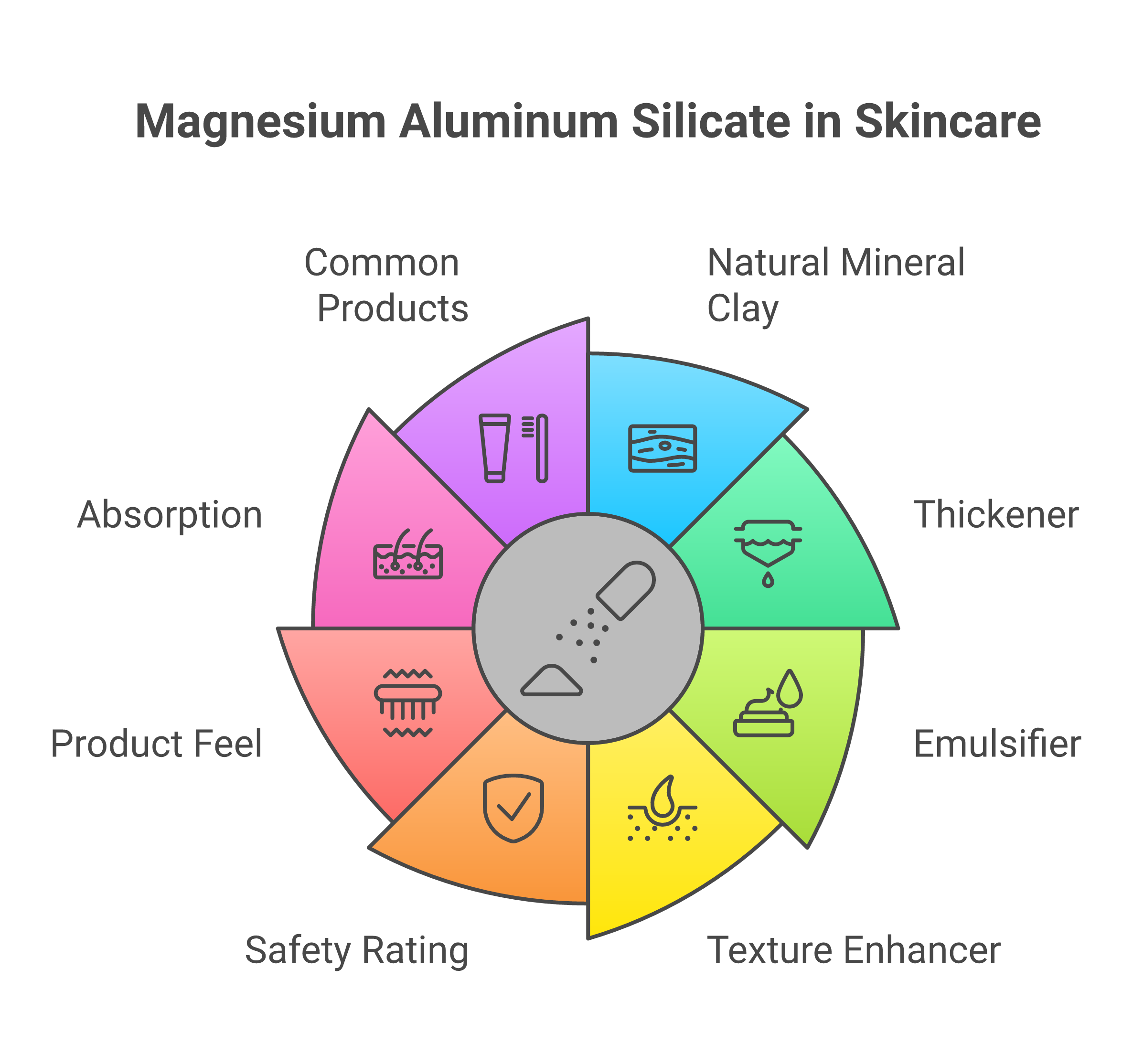
Magnesium aluminum silicate is one of those skin care products ingredients that sounds intimidating but is actually remarkably straightforward. It is a naturally occurring purified clay mineral, often sold under the trade name Veegum, that acts as a thickening agent, emulsion stabilizer, absorbent, and texture enhancer in hundreds of cosmetic formulations. If you have ever wondered why your favorite lotion feels silky instead of greasy, or why your clay mask stays smooth instead of separating into a gritty puddle, there is a strong chance magnesium aluminum silicate is doing that work behind the scenes.
I spend a lot of time reading ingredient labels, and this one appears far more often than most people realize. According to 2021 FDA voluntary cosmetic reporting data, magnesium aluminum silicate appeared in 383 different cosmetic products across categories ranging from eye makeup to sunscreens to leave-on skin care products and preparations. And despite the word “aluminum” raising concern for some consumers, decades of safety data from the Cosmetic Ingredient Review (CIR) Expert Panel confirm that this key ingredient is considered safe as currently used in cosmetics.
This guide covers everything worth knowing: what magnesium aluminum silicate actually is, how it benefits your skin, what the safety research and report findings show, which products contain it, and how it compares to other popular clays like bentonite and kaolin. In addition, I will address the risks, the cancer question, and what dermatology experts have reported about silicates in personal care.
What Is Magnesium Aluminum Silicate?
Magnesium aluminum silicate is a complex silicate refined from naturally occurring smectite clay minerals found in the earth’s crust. Chemically, it is composed of magnesium, aluminum, silicon, and oxygen atoms bonded together into a layered, sheet-like crystal structure. In its raw form, it is a fine, off-white powder that is insoluble in water but swells dramatically when mixed with the water phase of a formula, forming a creamy, gel-like consistency.
Cosmetic chemists sometimes refer to it by its trade name, Veegum, and classify it within the broader family of phyllosilicates. The clay is obtained from natural mineral deposits, then refined and purified to remove impurities before it is included in personal care products. This purification step is what separates cosmetic-grade silicates from the raw mineral you would find in the ground.
Ancient civilizations in Egypt and Greece already recognized the value of silicate-rich clays for their absorbent and protective properties. The modern cosmetics industry has simply taken that same basic material and refined it into a standardized, consistent ingredient that cosmetic chemists can rely on batch after batch. Today, silicates like this one are added to thousands of personal care formulations worldwide, and their use continues to grow.
Key Physical and Chemical Properties
- Appearance: Fine white to off-white powder
- pH: 9 to 10 in solution
- Solubility: Insoluble in water but swells to form colloidal dispersions
- Typical concentration in cosmetics: 0.5% to 5%
- Molecular size: Too large to penetrate the skin barrier
- Functions: Thickener, binder, emulsion stabilizer, absorbent, opacifying agent, non toxic at standard use levels
That last point about molecular size matters a great deal for safety, which I will cover in detail below. Because magnesium aluminum silicate molecules are unable to pass through the skin surface, this ingredient stays exactly where you apply it and does its job topically. This has been shown in multiple studies reviewed by the CIR and confirmed across repeated report findings.
5 Key Benefits of Magnesium Aluminum Silicate for Skin
This ingredient is primarily a formula workhorse rather than an active treatment, but several of its functions translate directly into real skin benefits. Here is what it actually does when you apply a product containing it.
1. Absorbs Excess Oil and Sebum
The porous, layered structure of this smectite clay acts like a microscopic sponge for oil. When applied to the skin, magnesium aluminum silicate draws out excess sebum and impurities from the surface. That makes it especially helpful for people with oily or acne-prone skin who struggle with midday shine. Products formulated with this absorbent clay can reduce visible oiliness without stripping the skin or causing the tight, dried-out feeling that harsher ingredients sometimes produce.
2. Creates a Smooth, Matte Finish
Because of its oil-absorbing ability, magnesium aluminum silicate contributes to a matte, refined appearance on the skin surface. This is why you will find it in primers, foundations, and mattifying moisturizers. The fine powder fills in minor textural irregularities and minimizes shine, providing a smooth canvas for makeup application or simply a more polished bare-skin look. Women and men both reach for these types of matte-finish skin care products.
3. Improves Product Texture and Spreadability
As a texture enhancer, magnesium aluminum silicate transforms the feel of lotions, creams, gels, and serums. It creates a uniquely smooth, non-tacky finish that is difficult to replicate with other thickening agents like xanthan gum alone. When you apply a product and it glides on effortlessly without that heavy, greasy residue, this ingredient is often the reason. It is one of the most effective silicates at improving how a formula feels on contact with the skin.
4. Stabilizes Emulsions and Extends Shelf Life
Oil and water do not naturally stay mixed. Magnesium aluminum silicate works as an emulsion stabilizer by forming a three-dimensional network within the water phase that traps oil droplets and prevents them from separating. This keeps your creams and lotions uniform from the first day you open the bottle until you finish it. Without stabilizers like this, many formulations would break down into an oily layer on top and a watery layer on the bottom within weeks.
5. Suspends Pigments and Active Ingredients
In makeup products and medicated formulations such as calamine lotion, magnesium aluminum silicate keeps pigments and active ingredients evenly distributed throughout the formula. This suspension function ensures consistent color and dosage every time you apply the product, which matters both for cosmetic results and for delivering the correct concentration of active ingredients to the skin. The ingredient also functions as a binder in pressed powders for the eyes, helping the product maintain its structure in the compact.
Is Magnesium Aluminum Silicate Safe? What the Research Shows
I understand why people get nervous when they see “aluminum” on an ingredient label. The fear is understandable, given years of headlines about aluminum compounds in antiperspirants and their supposed connection to cancer risks. But the aluminum in magnesium aluminum silicate is chemically and functionally different from the aluminum salts in antiperspirants.
Here is the truth: the aluminum atoms in this ingredient are locked within a stable silicate crystal structure. They are not free ions capable of being absorbed through the skin. Think of it this way: the sodium in table salt (sodium chloride) is not the same as pure sodium metal, which explodes in water. Similarly, aluminum bound in a silicate is not the same as free aluminum. Humans cannot absorb it through topical application.
What the Cosmetic Ingredient Review Found
The CIR Expert Panel reviewed magnesium aluminum silicate and a group of related silicates in a complete safety assessment published in the International Journal of Toxicology in January 2003. Their report findings were clear:
- Topical application to human skin daily for one week produced no adverse effects
- At 4% concentration, it was only a weak primary skin irritant in animal studies
- Guinea pigs showed no cumulative skin irritation over repeated exposure
- The ingredient was found to be non-genotoxic and non-teratogenic
- No evidence of endocrine disruption, reproductive toxicity, or carcinogenicity was noted
- Minimal eye irritation was observed at worst
The Panel concluded that magnesium aluminum silicate is safe as currently used in cosmetic formulations. They updated and reaffirmed this conclusion in their amended safety assessment published in December 2021, which covered the full family of silicates used in cosmetics. That amended report reviewed all data on silicates added to personal care products, including new studies on silicates published between the original 2003 report and 2021.
The Cancer and Aluminum Compounds Question
Since this question comes up constantly, it deserves a direct answer. There is no scientific evidence linking magnesium aluminum silicate to cancer. The cancer concerns that circulate online typically conflate this ingredient with free aluminum salts found in antiperspirants. Those are chemically distinct. The aluminum compounds in this clay are bound within a stable crystal lattice, making them non-bioavailable when applied to the skin.
Multiple peer-reviewed studies examining the broader relationship between aluminum exposure and health risks in humans have concluded that cosmetic-grade silicates, including magnesium aluminum silicate, do not present a meaningful exposure pathway. The effects of aluminum compounds on health remain a subject of ongoing study, but the specific form found in magnesium aluminum silicate has been shown repeatedly to be non-toxic for external use on skin.
EWG Safety Rating
The Environmental Working Group (EWG) Skin Deep database rates magnesium aluminum silicate a 1 out of 10, the lowest possible hazard score. That places it among the safest cosmetic ingredients reviewed by the database. The EWG is considered a conservative organization, so a score of 1 is a strong indicator.
The Inhalation Caveat
The one safety consideration the CIR Panel flagged relates to inhalation. In occupational settings where workers are exposed to concentrated dust over long periods, respirable silicate particles can cause pulmonary issues. However, the Panel noted that most finished cosmetic products are not respirable, and those that are (such as loose powders) contain the ingredient at very low concentrations. The recommendation is simply that spray-type products should be formulated to minimize inhalation of the powder.
For everyday skincare use on skin, this is a non-issue. You are applying creams, lotions, gels, and masks that pose no inhalation risk. Properly formulated silicates in these product types are safe for all normal use patterns.
Who Should Use Skin Care Products with Magnesium Aluminum Silicate?
Because of its non-toxic, non-comedogenic profile, magnesium aluminum silicate is suitable for most skin types. That said, certain people will find it especially beneficial:
- Oily skin: The oil-absorbing properties help control excess sebum and reduce shine throughout the day
- Combination skin: Products with this clay manage oiliness in the T-zone without over-drying cheeks
- Acne-prone skin: Its absorbent nature helps keep pores clearer, and its non-comedogenic status means it will not trigger breakouts
- Sensitive skin: CIR studies confirm low irritation potential, making it generally well-tolerated even by reactive skin
- Mature skin (women and men): The temporary tightening effects can improve the appearance of fine lines
People with very dry skin should be aware that the absorbent properties can be slightly drying in some formulations, particularly in clay masks used too frequently. If your skin skews dry, choose leave-on products (moisturizers, serums) containing the ingredient rather than rinse-off masks, and remember to follow with a good hydrating layer.
If you have a known allergy to any mineral clay or silicate ingredient, do a patch test before committing to a full-face application. Allergic reactions to magnesium aluminum silicate are rare, but individual sensitivities do exist. If irritation occurs, seek guidance from a physician or dermatology professional who can help identify the specific cause.
Where You Will Find It: Common Product Categories
Magnesium aluminum silicate appears across a wide range of cosmetics and personal care products. Here is where you are most likely to encounter it:
- Clay masks and face masks: Serves as the primary absorbent clay that draws out oil and impurities while giving the mask its smooth, spreadable texture
- Lotions and creams: Added as an emulsion stabilizer and thickening agent that keeps the formula uniform and gives it a non-greasy feel
- Liquid foundations and color cosmetics for eyes and face: Suspends pigments evenly for consistent color payoff and a smooth matte finish
- Sunscreens: Helps distribute UV filters evenly throughout the formula for reliable sun protection coverage
- Cleansers and shower gels: Controls viscosity so the product is thick enough to hold in your hand but rinses cleanly
- Shampoos and haircare: Added to improve body in thin formulas, helping keep active ingredients mixed into the water phase
- Deodorants: Absorbs moisture and helps the formula adhere to skin for longer-lasting freshness
When reading ingredient labels on any of these products, you may see it listed simply as “magnesium aluminum silicate” or by its INCI name. It typically appears in the middle to lower portion of the ingredient list because it is used at low concentrations of 0.5% to 5%.
Magnesium Aluminum Silicate in Food Products
Beyond cosmetics, magnesium aluminum silicate is also added to certain food products as an anti-caking agent. The FDA considers it Generally Recognized as Safe (GRAS) for food use at concentrations up to 2%. You may find it included in table salt, dried spice blends, and powdered food mixes where it prevents clumping. The food-grade form goes through the same purification process as the cosmetic-grade version. Like other silicates approved for food contact, it must meet strict purity requirements. Oral toxicity studies in the CIR report showed no adverse effects in mice, rabbits, dogs, or rats fed the ingredient at up to 10% of their diet for 90 days. Among all silicates tested in the food-grade category, magnesium aluminum silicate had one of the cleanest safety profiles.
Magnesium Aluminum Silicate vs. Other Cosmetic Clays
Cosmetic chemists choose between several different clays and silicates depending on what a formula needs. Here is how magnesium aluminum silicate compares to two other popular options:
| Property | Magnesium Aluminum Silicate | Bentonite | Kaolin |
|---|---|---|---|
| Clay type | Smectite clay (purified) | Smectite clay (montmorillonite-based) | Non-swelling clay (kaolinite) |
| Oil absorption | Moderate | High | Moderate-Low |
| Thickening power | High (forms colloidal gels) | Moderate | Low |
| Emulsion stabilizing | Excellent | Good | Poor |
| Texture on skin | Silky, smooth, refined | Drying, tightening | Gentle, soft, matte |
| Best for skin type | All types, especially oily | Oily and acne-prone | Sensitive and dry |
| Primary use | Stabilizer + texture enhancer | Deep-cleansing masks | Gentle masks + powders |
| Swelling in water | Yes (forms gel) | Yes (expands significantly) | No |
The key differentiator is versatility. Bentonite is the strongest oil absorber and is best for deep-cleansing masks, but it can be too aggressive for sensitive or dry skin. Kaolin is the gentlest option but offers virtually no thickening or stabilizing function. Magnesium aluminum silicate occupies a middle ground, providing moderate absorption with excellent stabilizing and thickening properties. That is why cosmetic chemists reach for it when they need a formula to feel smooth, stay mixed, and perform consistently over time.
Many formulations use a mixture of two or more of these clays to combine their strengths. You might see bentonite paired with magnesium aluminum silicate in a clay mask, for example, where bentonite handles the heavy-duty oil absorption and magnesium aluminum silicate contributes the smooth, even texture. These combinations of silicates have been shown to be particularly effective at improving product performance. When silicates are added together, the resulting formulations often outperform single-clay products in both texture and stability.
Myth vs. Fact: Clearing Up Common Misconceptions
- Myth: The aluminum in this ingredient is dangerous. Fact: The aluminum is chemically bound within a stable silicate structure and is unable to be absorbed through the skin. It is not the same as the aluminum salts in antiperspirants
- Myth: Magnesium aluminum silicate causes cancer. Fact: No evidence of carcinogenicity has been found in any of the safety reports reviewed by the CIR Expert Panel. The cancer concern comes from confusion with unrelated aluminum compounds
- Myth: Magnesium aluminum silicate is the same as talc. Fact: While both are silicates, they have different chemical compositions. Talc is a magnesium silicate hydroxide used primarily for moisture absorption. Magnesium aluminum silicate contains aluminum and functions mainly as a thickening agent and emulsion stabilizer
- Myth: This ingredient clogs pores. Fact: Magnesium aluminum silicate is non-comedogenic. Its primary function is actually to absorb oil, which helps keep pores clearer
- Myth: Natural clay ingredients are unregulated. Fact: Cosmetic-grade magnesium aluminum silicate is reviewed by the CIR Expert Panel and monitored by the FDA’s Office of Cosmetics and Colors. Only refined, purified material meeting strict standards is included in finished cosmetic products
How It Works in Different Formulation Types
The function of magnesium aluminum silicate shifts depending on the product type and the concentration used. Understanding these roles helps you appreciate why the same ingredient appears in such different products.
In Serums and Lightweight Formulas
At low concentrations, it adds just enough body to thin, watery serums to prevent dripping during application. This makes the product easier to control and apply evenly across the face without wasting product.
In Creams and Night Treatments
At slightly higher concentrations, it acts as both a thickening agent and emulsion stabilizer, maintaining the cream’s stability over time and preventing the oil and water phases from separating. These emulsions remain uniform from purchase to the last application.
In Combination with Other Thickeners
Magnesium aluminum silicate is frequently paired with other viscosity-building ingredients like xanthan gum and carbomers. Each thickener contributes a different texture quality. Xanthan gum provides elasticity, carbomers provide clarity, and magnesium aluminum silicate provides that smooth, silky finish. Together, they create complex, refined textures that a single thickener cannot achieve alone.
As an Opacifying Agent
In clear or translucent formulations, adding magnesium aluminum silicate turns the product a creamy, opaque white. This opacifying agent function is purely aesthetic but contributes to the perceived quality and richness of products like body lotions and color cosmetics.
Risks, Side Effects, and Precautions
While the overall safety profile of magnesium aluminum silicate is strong, it is worth covering the specific risks and potential side effects that have been noted in the scientific literature.
Drying effects: Because this ingredient absorbs oil, overuse in clay masks can leave skin feeling dried out or tight, particularly for people who already have dry skin. Limiting clay mask use to one to three times per week avoids this problem. Helping your skin recover by applying a moisturizer after rinsing is also a good practice.
Eye area sensitivity: Products containing higher concentrations of silicates near the eyes can occasionally cause mild irritation. The CIR report noted that minimal eye irritation was the most significant adverse finding in animal studies. If a product stings or irritates your eyes, rinse immediately with water.
Inhalation risks: Loose powder products pose the only real inhalation concern. Avoid breathing in large amounts of loose face powder or setting powder. This applies to all mineral powders, not just magnesium aluminum silicate.
Allergic reactions: These are rare but not impossible. If you have a history of contact dermatitis or sensitivity to clay minerals, do a patch test on your inner forearm and wait 24 hours before applying a new product to your face.
These risks are considered minimal by every major safety body that has reviewed the ingredient. For the vast majority of humans, this is a non-issue.
Frequently Asked Questions
Is magnesium aluminum silicate a natural ingredient?
Yes. It is derived from naturally occurring smectite clay minerals found in the earth’s crust and then refined and purified for cosmetic use. The purification process removes impurities but does not fundamentally alter the mineral’s structure, so it retains its natural origin. Some formulations use a synthetically produced version, but both are considered safe and vegan-friendly.
Does magnesium aluminum silicate clog pores?
No. This ingredient is non-comedogenic, meaning it does not block pores. Its primary function is actually to absorb excess oil from the skin surface, which can help keep pores clearer. If you are dealing with breakouts on your forehead or other oily areas, products containing this clay should not make the problem worse.
Can I use products with this ingredient every day?
Yes, for most product types. Leave-on formulations like moisturizers, serums, foundations, and sunscreens containing magnesium aluminum silicate are safe for daily use. The typical concentration range of 0.5% to 5% is well within the safety margins established by the CIR Expert Panel. Clay masks, however, are best used one to three times per week rather than daily, as the higher absorbent clay content can be drying with overuse.
Is magnesium aluminum silicate safe during pregnancy?
Research indicates it is non-teratogenic and non-toxic for external use on the skin. The CIR safety assessment found no evidence of reproductive toxicity. Because the molecule is too large to penetrate the skin barrier, systemic exposure does not occur during normal topical application. As with any ingredient concern during pregnancy, discussing preferences with a physician or healthcare provider is always a reasonable step.
How is it different from magnesium silicate (talc)?
Though they share the magnesium silicate base, they are different ingredients. Talc (magnesium silicate hydroxide) is primarily used to absorb moisture, reduce friction, and provide a dry, powdery feel. Magnesium aluminum silicate adds the aluminum component, which changes its crystal structure and gives it superior thickening, stabilizing, and gel-forming properties. Their applications in cosmetics overlap minimally.
Should I avoid this ingredient if I have sensitive skin?
Probably not. The CIR safety studies showed low irritation potential, and the EWG rates it at 1 out of 10 for hazard risk. Most people with sensitive skin tolerate it without any issues. However, if you have a specific allergy to clay or silicate minerals, do a patch test on your inner forearm and wait 24 hours before applying a new product to your face.
Does this ingredient have anti-aging benefits?
Not directly in the way that ingredients like retinol or niacinamide target aging at a cellular level. However, magnesium aluminum silicate does create a thin film on the skin surface that produces a temporary tightening effect, which can visibly reduce the appearance of fine lines for several hours after application. This is a cosmetic effect rather than a structural change, but it contributes to a smoother, more refined appearance while the product is on your skin.
The Takeaway
Magnesium aluminum silicate for skin is one of those ingredients that does not get the attention it deserves. It is not a flashy active ingredient, but it is the reason so many of your favorite skin care products feel good, stay stable, and work consistently over time. The safety data from the Cosmetic Ingredient Review, the FDA, and the EWG all point in the same direction: this is a well-studied, safe ingredient with a long track record in cosmetics.
If you have oily or combination skin, products containing this purified clay can help manage excess oil and provide a matte finish without irritation. If you have sensitive skin, its gentle profile makes it one of the more reliable ingredients you will encounter on a label. And if you are simply someone who wants to understand what goes into the products you apply to your face every day, now you know exactly what this ingredient does and why it is there.
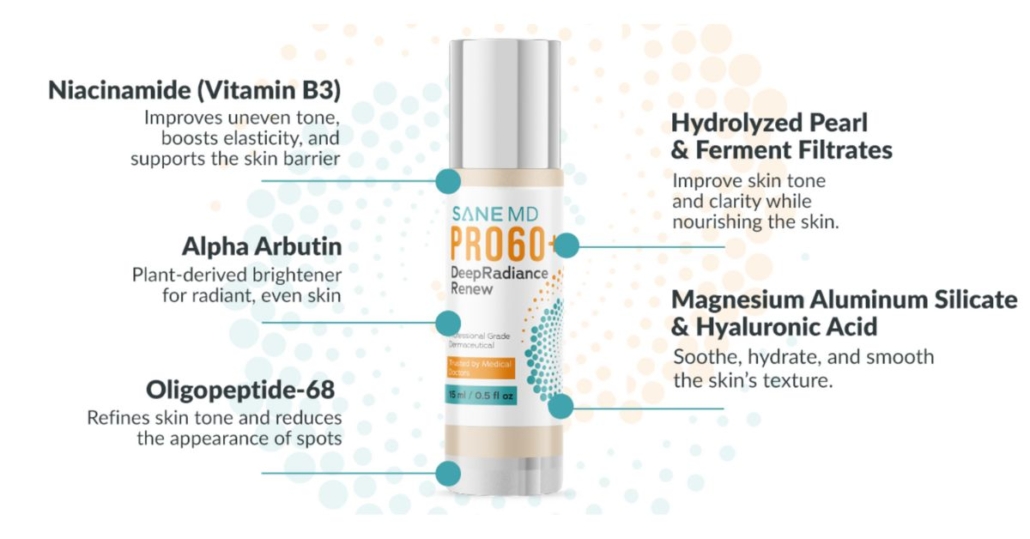
For more on skincare ingredients and how they affect your skin, explore our guides on alpha arbutin, oligopeptide-68, hydrolyzed pearl, and oxidative stress and skin health.

