
How to Fade Dark Spots on Face

Dr. Matthew Olesiak, MD, is the Chief Medical Director at SANESolution, a renowned wellness technology company dedicated to providing evidence-based solutions for optimal living. Dr. Olesiak earned his medical degree from the prestigious Jagiellonian University Medical College in Kraków, Poland, where he developed a strong foundation in medicine.
Dark spots on your face are frustrating. You’ve probably noticed them forming after a bad breakout, a summer without enough sunscreen, or during pregnancy, and they just refuse to fade on their own. I’ve spent years researching hyperpigmentation treatments and talking to people who deal with this daily, and here’s what I’ve discovered: fading dark spots on your skin is absolutely possible, but it demands the right ingredients, consistency, and realistic expectations about how long things actually take.
Whether you’re dealing with post inflammatory hyperpigmentation from acne, aging spots from decades of sun exposure, or melasma patches triggered by hormonal changes, this guide covers every effective treatment option available as of February 2026. From at-home skincare products and serum options to in-office procedures that deliver faster, more dramatic results, you’ll find clear steps to reduce dark spots, lighten dark spots that have already formed, and prevent new ones for good. If uneven skin tone has been causing you grief, you’re in the right place.
What Are Dark Spots and Why Do They Form on Your Face?
Dark spots, also called hyperpigmentation, age spots, liver spots, or dark marks, are flat areas of skin that appear darker than your surrounding skin tone. They develop when skin cells produce excess melanin, the natural pigment responsible for your skin color. This excess pigment deposits in the top layer of the skin (epidermis) or deeper within the dermis, creating visible discoloration that ranges from light brown to nearly black.
The underlying process is straightforward: something triggers your melanocytes (pigment-producing skin cells) to go into overdrive. That trigger can be UV radiation, inflammation from conditions like acne or psoriasis, hormonal shifts during pregnancy, or even certain medications. Once the excess melanin is deposited in those layers of skin, it takes deliberate, consistent effort to fade it. The good news? Most dark spots are completely harmless and respond well to the right treatment approach. Whether you’re dealing with aging-related spots, post-acne marks, or melasma causing uneven skin tone, proven treatments exist that are worth the effort and consistency.
Understanding why your dark spots formed is the key first step toward choosing an effective solution. A spot caused by pimples requires a different approach than one caused by sun damage or melasma, and getting this wrong means wasting months on products that won’t work for your specific type of pigmentation.
The 4 Main Causes of Dark Spots on Face
Sun Damage and UV Exposure
Cumulative sun damage is the number one cause of dark spots on the face. Every time you step outdoors without sun protection, harmful UV rays trigger your melanocytes to produce extra melanin as a defense mechanism. Over time, this process creates age spots, sun spots, and liver spots on areas exposed to the most sunlight: your forehead, cheeks, nose, and upper lip.
According to the American Academy of Dermatology (AAD), UV radiation doesn’t just cause new spots. It also darkens existing dark spots and can undo weeks of treatment progress overnight. That’s why dermatologists consider daily sunscreen with SPF 30 or higher the single most important step in any dark spot treatment plan. Without adequate protection from harmful rays, even prescription strength creams won’t deliver lasting results.
Post Inflammatory Hyperpigmentation (PIH)
Post inflammatory hyperpigmentation occurs when skin inflammation from acne, eczema, psoriasis, insect bites, cuts, or burns triggers excess melanin production during the healing process. The pimple or wound heals, but a flat, darkened patch remains. PIH is especially common in people with darker skin tones because their melanocytes are more reactive to inflammation and tend to develop more pigmentation in response to any skin irritation.
PIH typically responds well to topical treatments and can gradually fade on its own over 6 to 12 months according to the AAD, though active treatment with ingredients like niacinamide and azelaic acid speeds that timeline to 4-8 weeks for superficial spots.
Melasma and Hormonal Changes
Melasma produces symmetrical, brown or grayish-brown patches on the face, typically across the cheeks, forehead, nose bridge, and upper lip. It’s driven by hormonal changes during pregnancy, birth control use, or hormone replacement therapy, combined with sun exposure. Melasma is notoriously difficult to treat because the pigmentation tends to be deeper in the skin and recurs easily with any UV exposure.
According to the NCBI StatPearls database, roughly 90% of melasma cases occur in women, and the condition affects darker skin tones more frequently, with prevalence as high as 40% in some Southeast Asian populations. Treatment requires a multi-ingredient combination approach paired with strict, daily broad spectrum sun protection. If you suspect melasma, consult a dermatologist for a proper diagnosis before starting treatment, since the condition requires a different strategy than standard age spots or PIH.
Age-Related Pigmentation Changes
As we age, melanin distribution becomes increasingly uneven. After age 40, melanocyte function starts to shift: some areas of skin produce too much pigment while others produce too little. Combined with accumulated sun damage from earlier decades, this creates the scattered dark spots and areas of darkening that people over 60 commonly notice on their face, hands, and body. These age spots are harmless but cosmetically frustrating. The slow skin cell turnover that develops with aging (from 28 days in young adults to 45-60+ days after age 60) means pigmented cells stay on the surface longer, which is why spots on your skin take longer to clear as you get older. Genetics also play a role: if your parents developed prominent age spots, you’re more likely to see them too. The aging process also contributes to wrinkles, enlarged pores, and changes in overall appearance alongside darker spots.
7 Ingredients That Actually Fade Dark Spots
Not every ingredient marketed as a “brightening” solution actually works. After reviewing peer-reviewed dermatology research and analyzing what the most effective products contain, these seven active ingredients have the strongest evidence for treating hyperpigmentation on the face. I’ve listed specific concentrations, expected timelines, and which conditions each ingredient works best for. Knowledge of how certain ingredients interact with melanin production is worth your time, because choosing the wrong product may take months of wasted effort before you realize it isn’t helping.
Vitamin C (L-Ascorbic Acid)
Vitamin C is a powerful antioxidant that inhibits tyrosinase, the enzyme responsible for melanin production, while simultaneously offering brightening and protective effects against further sun damage. A 2017 review by Al-Niaimi and Chiang published in the Journal of Clinical and Aesthetic Dermatology confirmed that topical vitamin C reduces melanin formation and has demonstrated depigmenting properties across multiple clinical trials. A separate systematic review in the Journal of Cosmetic Dermatology (Correia et al., 2023) validated vitamin C’s efficacy in treating melasma and photoaging. For best results, apply a vitamin C serum at 10-20% concentration every morning before sunscreen. Concentrations under 10% aren’t potent enough, and above 20% significantly increases irritation risk without proportional benefit. It pairs well with vitamin E and ferulic acid for enhanced formula stability and effectiveness.
Retinoids: Retinol and Tretinoin
Retinol and prescription tretinoin accelerate skin cell turnover, pushing pigmented dead skin cells to the surface faster so they’re shed and replaced by new, evenly toned cells. Retinol is available over the counter at 0.25-1% concentrations, while tretinoin (0.025-0.1%) requires a prescription. A landmark study published in the New England Journal of Medicine found that tretinoin produced significant lightening of hyperpigmented lesions, with improvement first noted after 4 weeks of treatment. Start slow with retinoids: two to three times per week in the evening. They can cause initial redness, peeling, and irritation, especially on sensitive skin. Most people notice visible improvement within 8 to 12 weeks of consistent use.
Niacinamide (Vitamin B3)
Niacinamide works differently than most brightening ingredients. Rather than blocking melanin production, it prevents the transfer of pigment from melanocytes to surrounding skin cells. A study by Hakozaki et al. In the British Journal of Dermatology (2002) found that 5% niacinamide significantly reduced hyperpigmentation after 8 weeks of daily use, with 35-68% inhibition of melanosome transfer observed in laboratory models. A separate double-blind clinical trial comparing 4% niacinamide to 4% hydroquinone found a 62% reduction in melasma severity with niacinamide after 8 weeks. Niacinamide is gentle enough for all skin types, reduces redness and inflammation, and plays well with almost every other ingredient in your routine.
Azelaic Acid
Azelaic acid is a multi-tasking ingredient that gently exfoliates, reduces pigmentation, and calms inflammation, making it particularly effective for post inflammatory hyperpigmentation from acne. Available over the counter at 10% and by prescription at 15-20%, azelaic acid is one of the few treatments considered safe during pregnancy. A clinical study found that 20% azelaic acid cream applied twice daily for 24 weeks produced good or excellent results in 73% of patients with darker skin tones, comparable to hydroquinone but with better tolerability. It works by inhibiting tyrosinase and reducing abnormal melanocyte activity.
Alpha Hydroxy Acids: Glycolic Acid and Lactic Acid
Glycolic acid and lactic acid exfoliate the top layer of dead skin cells, revealing fresh, more evenly pigmented skin underneath. Glycolic acid (the smallest AHA molecule) penetrates deepest and works fastest, while lactic acid is gentler and better suited for sensitive skin or darker skin tones prone to scarring. Regular exfoliation with AHAs at 5-10% concentration can visibly brighten your complexion and improve skin texture within 4-6 weeks. Use them 2-3 times per week in the evening, and always wear sunscreen the next day because AHAs make skin more exposed to UV damage. Chemical peeling with higher concentrations of these acids is an effective professional procedure for stubborn spots.
Kojic Acid and Licorice Extract
Kojic acid, derived from fungi, inhibits tyrosinase to slow melanin production and brighten existing dark spots. It’s commonly combined with other lightening agents for enhanced effects. Licorice extract contains glabridin, which also inhibits melanin production and has anti-inflammatory properties. Both ingredients are found in many over-the-counter brightening cream and serum products and work well as supporting players in a multi-ingredient approach. For example, kojic acid at 1-4% concentration in a daily serum can contribute to noticeable results within 4-8 weeks when used consistently.
Alpha Arbutin and Tranexamic Acid
Alpha arbutin is a gentle, effective melanin inhibitor derived from bearberry plants. It’s well-tolerated by all skin types and safe for long-term daily use. Tranexamic acid, originally prescribed for heavy bleeding, has emerged as a powerful option for stubborn discoloration, particularly melasma. A randomized controlled study published in the Journal of the European Academy of Dermatology and Venereology found that topical 5% tranexamic acid was as effective as 3% hydroquinone cream for melasma after 12 weeks, with higher patient satisfaction due to fewer side effects. Researchers and dermatology experts now consider tranexamic acid one of the most promising options for people who can’t tolerate hydroquinone.
What About Hydroquinone?
Hydroquinone has been the gold standard for treating hyperpigmentation for decades. It works by inhibiting tyrosinase and reducing melanin production, delivering noticeable results in 4-8 weeks. Over-the-counter hydroquinone is available at 2% concentration in the United States, while prescription creams go up to 4%. For particularly resistant cases, a doctor may prescribe higher concentrations up to 10-12% under close supervision.
But hydroquinone comes with important caveats. In September 2020, the FDA enacted regulations through the CARES Act prohibiting the sale of over-the-counter hydroquinone products, meaning you now need a prescription from your healthcare provider. Long-term use beyond 5-6 months without a break can cause ochronosis, a paradoxical darkening of the skin that’s extremely difficult to reverse. According to the NCBI StatPearls entry on hydroquinone, about 35-45% of the drug is absorbed systemically after topical application. Most dermatologists recommend using hydroquinone in 3-month cycles with breaks in between, supervised by a professional. For people with darker skin tones, alternative ingredients like azelaic acid, tranexamic acid, or niacinamide often deliver comparable results with less risk.
Building a Daily Routine to Fade Dark Spots
Using the right ingredients in the right order matters more than you’d think. Here’s a sample morning and evening routine designed to fade dark spots while protecting your skin from forming new ones. You can find most of these products at any major retailer or your local pharmacy.
| Step | Morning (AM) | Evening (PM) |
|---|---|---|
| 1. Cleanse | Gentle, fragrance free cleanser | Double cleanse (oil + water-based) |
| 2. Treat | Vitamin C serum (10-20%) | Retinol or tretinoin (start 2-3x/week) |
| 3. Target | Niacinamide serum (5%) | Azelaic acid cream (10-20%) on dark spots |
| 4. Moisturize | Lightweight moisturizer | Richer moisturizer or cream |
| 5. Protect | Broad spectrum sunscreen SPF 30-50 | – |
A few essential rules to follow:
- Never combine retinoids with AHA exfoliants on the same night. Alternate them on different days to prevent irritation, redness, and peeling
- Always apply sunscreen as the last step every single morning, even on cloudy days. Wear it daily and reapply every 2 hours when outdoors
- Introduce one new active ingredient at a time, waiting 2 weeks before adding another to your routine
- If you experience persistent irritation, scale back frequency before giving up on an ingredient entirely. Your skin needs time to adjust
- Look for products with ingredients like vitamin C, niacinamide, and azelaic acid that work well together in combination
Consistency is more important than product strength. Using a gentle vitamin C and niacinamide serum daily for 3 months will outperform a harsh prescription cream used sporadically. Commit to the routine, give each ingredient at least 8 weeks before judging its efficacy, and protect your results with daily sunscreen.
Professional In-Office Treatments for Stubborn Dark Spots
When topical treatments alone aren’t delivering the results you need, or when dark spots are deep, widespread, or have been present for years, professional in-office procedures can dramatically accelerate the fading process. These treatments should be performed by a qualified dermatologist who can assess your skin type, the depth of pigmentation, and recommend the safest approach. Always schedule an appointment to discuss your options before committing to any procedure.
Chemical Peels
Chemical peels apply a concentrated acid solution (glycolic acid, salicylic acid, trichloroacetic acid, or a combination) to remove the outer layers of pigmented skin. Superficial peeling with 20-30% glycolic acid requires minimal downtime and can be repeated every 2-4 weeks. Medium-depth peels penetrate deeper and produce more dramatic results but require 5-7 days of recovery. A series of 3-6 chemical peels typically produces significant improvement in overall skin tone, texture, and dark spot reduction. These procedures range from $150-$500 per session depending on the type and depth.
Laser Therapy and Intense Pulsed Light (IPL)
Laser treatment uses focused light energy to break apart melanin deposits beneath the skin’s surface. Fractional lasers (like Fraxel) create microscopic columns of treated tissue, stimulating collagen production and new skin growth while leaving surrounding tissue intact for faster healing. IPL (intense pulsed light) uses broad-spectrum light to target and destroy pigmented cells across larger areas of the face.
These laser procedures are highly effective for removing sun damage and age spots, but caution is essential for patients with darker skin tones. Certain lasers can cause post-treatment hyperpigmentation in Fitzpatrick skin types IV-VI. Always choose a provider experienced in treating your specific skin type. Consult your dermatologist about which laser approach is best for your specific condition. Expect 1-3 sessions spaced 4-6 weeks apart, with costs typically ranging from $300-$1,500 per treatment.
Microdermabrasion and Microneedling
Microdermabrasion uses fine crystals or a diamond-tipped wand to physically exfoliate the top layer of dead skin cells. It’s the gentlest professional option and suitable for mild dark spots and overall skin texture improvement. Results are gradual, requiring 6-10 sessions to see a clear difference.
Microneedling creates thousands of tiny micro-injuries in the skin using tiny needles, triggering a wound-healing response that stimulates collagen production and can reduce pigmentation. When combined with topical treatments like vitamin C serum or tranexamic acid applied immediately after the procedure, microneedling delivers enhanced ingredient absorption and more effective treatment of stubborn dark marks. The tiny needles promote cell turnover in treated areas and can improve the overall appearance of aging skin.
Cryotherapy
Cryotherapy involves applying liquid nitrogen to individual dark spots to freeze and destroy the pigmented cells. It’s a quick, targeted procedure best suited for isolated age spots or liver spots. The treated area typically blisters, scabs, and heals over 1-2 weeks, revealing lighter skin underneath. However, cryotherapy carries a risk of leaving a lighter patch (hypopigmentation), particularly on darker skin tones, so it’s generally recommended for people with lighter complexions and isolated spots only. Talk to your dermatologist about whether this approach is safe for your specific skin conditions.
Treatments for Specific Skin Conditions
Fading Dark Spots from Acne (PIH)
Post inflammatory hyperpigmentation from acne responds best to a combination of ingredients that simultaneously reduce pigmentation and calm inflammation. The most effective approach combines niacinamide (to prevent pigment transfer), azelaic acid (to reduce redness and brighten), and retinoids (to speed skin cell turnover). Avoid picking or squeezing active pimples, as this dramatically increases the risk of PIH forming and potential scarring. If you’re still experiencing active acne breakouts, treat that first. Fading spots while new ones keep forming is an exercise in frustration that won’t produce clear results.
Fading Melasma
Melasma requires the most aggressive and sustained treatment approach of any common skin condition involving hyperpigmentation. The combination of tranexamic acid, azelaic acid, and prescription tretinoin tends to be most effective, often paired with strict daily sunscreen use and wide-brimmed hat protection whenever you’re outdoors. Some dermatologists prescribe a “triple combination” cream containing hydroquinone, tretinoin, and a corticosteroid for short-term intensive treatment. Be prepared for a longer timeline: melasma often takes 3-6 months to improve and can recur with hormonal shifts or any sun exposure. Maintaining results requires ongoing vigilance and continued daily care.
Treating Dark Spots on Darker Skin Tones
People with darker skin tones face a unique challenge: the very treatments designed to fade hyperpigmentation can sometimes cause additional pigment changes if they’re too harsh or irritating. For darker complexions, ingredients like niacinamide, azelaic acid, tranexamic acid, and alpha arbutin are generally safe and effective. Darker skin types should be especially cautious with hydroquinone, using it only under professional supervision. Glycolic acid peeling and certain laser treatments carry higher risks for darker skin tones, so always work with a dermatologist experienced in treating skin of color. Avoid harsh scrubs, over-exfoliation, and anything causing visible irritation or redness because inflammation creates more dark spots in reactive darker skin. Things like aggressive chemical peels, high-concentration retinoids, and unsupervised use of prescription products are common culprits causing worsened pigmentation in darker complexions.
The Non-Negotiable Step: Sunscreen and Prevention
I cannot overstate this: sunscreen is the single most important product in your dark spot routine. Without it, every serum, cream, and treatment you apply is working against harmful UV radiation that’s actively making your spots worse and causing new ones to develop.
Here’s what effective sun protection looks like for people serious about fading facial pigmentation:
- Daily sunscreen: Broad spectrum SPF 30 minimum, applied to your entire face every morning, even on cloudy days, even if you’re staying indoors near windows. Look for a label that says “broad spectrum” to protect against both UVA and UVB rays
- Reapplication: Every 2 hours when outdoors, or immediately after swimming or sweating
- Tinted sunscreens: Formulas with iron oxide provide additional protection against visible light, which can also trigger melanin production (especially important for melasma prevention)
- Physical barriers: Wide-brimmed hats, sunglasses, and seeking shade during peak UV hours (10 AM to 2 PM) add layers of protection that help prevent new spots from forming while you treat existing ones
The UC Davis Health dermatology team emphasizes that limiting UV exposure is the single biggest factor in preventing age spots and protecting your skin from further damage. Think of sunscreen as the foundation that makes every other treatment effective. Skip it, and you’re essentially erasing your progress daily.
How Long Does It Take to Fade Dark Spots?
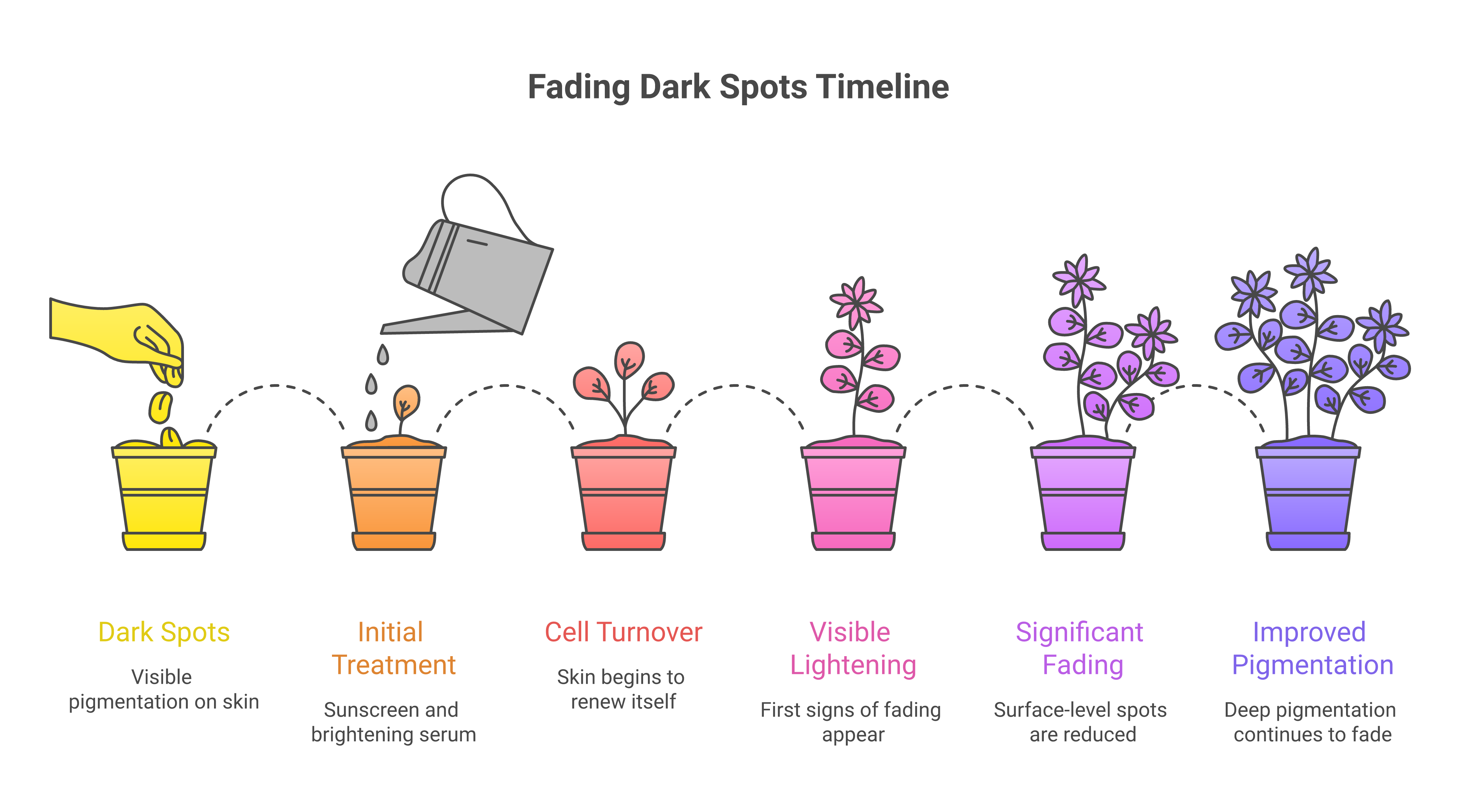
This is probably the most common question, and the answer depends on several factors. Here’s a realistic timeline for fading dark spots based on spot type:
| Spot Type | Depth | At-Home Treatment | Professional Treatment |
|---|---|---|---|
| Superficial PIH (light brown) | Epidermis | 4-8 weeks | 2-4 weeks |
| Deep PIH (dark brown/purple) | Dermis | 3-6 months | 2-3 months |
| Sun spots / Age spots | Epidermis | 2-4 months | 1-3 treatments |
| Melasma | Epidermis + Dermis | 3-6+ months | 3-6+ months (ongoing) |
According to the AAD, a spot that’s a few shades darker than your natural skin tone will typically fade within 6 to 12 months with consistent treatment. Deeper pigmentation, the kind that appears dark brown, blue-gray, or black, can take significantly longer and may require professional procedures to remove.
Key factors that affect your timeline:
- Consistency of treatment: Using products daily without skipping produces faster results than sporadic application
- Sunscreen compliance: A single sunburn can set your progress back weeks. Wear SPF 30 every day
- Depth of pigmentation: Epidermal (surface) spots fade faster than dermal (deep) spots located in lower skin layers
- Your natural skin tone: Darker skin tones produce more melanin, which can mean a longer treatment timeline
- The combination of treatments used: Multi-ingredient approaches work faster than single-ingredient products. Using both vitamin C and retinol, for example, accelerates improvement compared to using either alone
Don’t give up too early. Most people who claim treatments “don’t work” simply haven’t continued long enough to see results. Give any approach at least 8-12 weeks before changing your entire routine. Consult a dermatologist if you’re not seeing any improvement after that period, as they can recommend stronger options or different procedures.
When to See a Dermatologist About Dark Spots
Most dark spots are harmless and purely cosmetic. But there are situations where you should schedule an appointment with a dermatologist for a professional examination and proper diagnosis rather than treating spots yourself:
- A spot changes in size, shape, or color: This could indicate a skin condition that needs medical evaluation, including skin cancer. Any rapidly changing spot warrants a visit to your doctor
- Spots appear suddenly without an obvious cause: New spots that develop rapidly without recent sun exposure, acne, or injury may signal an underlying medical issue
- Over-the-counter products haven’t worked after 3-6 months: A dermatologist can prescribe stronger options like prescription strength creams (tretinoin, higher-concentration hydroquinone) or recommend in-office procedures
- You need help with diagnosis: Post inflammatory hyperpigmentation, melasma, and age spots each require different treatment approaches. A doctor can diagnose age spots, melasma, and other conditions accurately and create an effective plan
- You have darker skin and want to avoid worsening pigmentation: Professional guidance from a dermatology team with expertise in skin of color helps you choose treatments that are safe for your specific skin type and conditions
Mistakes That Make Dark Spots Worse
Avoid these common errors that slow your progress or actively worsen facial pigmentation:
- Skipping sunscreen: The number one mistake. Even the best prescribed treatment can’t outpace daily UV damage from harmful rays
- Using too many harsh products at once: Layering multiple strong acids and retinoids simultaneously causes inflammation, redness, and, ironically, more dark spots and scarring
- Picking at pimples or peeling skin: This triggers post inflammatory hyperpigmentation and can leave permanent marks on your face
- Expecting overnight results: Most treatments need 8 weeks minimum to produce noticeable improvement. Switching products every 2 weeks never gives any ingredient enough time to work effectively
- Using lemon juice or other DIY remedies: Citrus juice is extremely irritating, disrupts the skin barrier, and can cause chemical burns and permanent darkening when exposed to sunlight. Scientists have found no reliable evidence that lemon juice fades dark spots safely
- Ignoring the underlying cause: If acne is causing your dark spots, you need to treat the acne first. If hormonal changes are the trigger, discuss the hormonal component with your doctor alongside topical treatments
- Skipping moisturizer: A damaged skin barrier from over-exfoliation or harsh products makes pigmentation worse. Keep skin hydrated and use fragrance free, gentle formulas to reduce inflammation and speed healing
Tips for Faster Results and Maintaining Clear Skin
Once you start seeing improvement, here are practical ways to speed the process and prevent new spots from forming on your face and body:
- Wear SPF 30+ daily, rain or shine. Apply liberally and reapply every 2 hours outdoors. Choose a broad spectrum formula and look for one labeled water-resistant
- Use antioxidant serums in the morning (vitamin C is ideal) to protect against environmental damage and reduce the production of excess melanin
- Start retinol or tretinoin at low doses and gradually increase frequency over weeks to improve tolerance and reduce peeling
- Consider combination products: Many recommended serums combine niacinamide, vitamin C, and alpha arbutin for a complete brightening approach in a single step
- Protect your hands and body too: Age spots and sun spots develop on hands, arms, and the chest area just as easily as the face. Apply sunscreen to all exposed skin areas when outdoors
- Take notes and photos: Track your progress with weekly photos in the same lighting. Spots fade so gradually day to day that you might not notice the difference without documentation
How These Ingredients Work Together for Faster Results
Each ingredient in a dark spot routine plays a specific role in helping fade hyperpigmentation. Vitamin C works by helping block melanin at the production stage. Niacinamide focuses on helping prevent the transfer of that pigment to surrounding cells. Retinoids are great at helping speed up the rate at which pigmented dead skin cells are shed and replaced. Azelaic acid pulls double duty, helping calm inflammation while also helping reduce abnormal melanocyte activity that’s causing excess pigmentation.
The reason combination approaches work so much better than single ingredients is that you’re targeting the production of melanin at multiple points simultaneously. One ingredient alone may only address one part of the process, while a well-designed routine with 2-3 complementary actives is helping at every stage. This explains why dermatologists rarely recommend just one product. They know that helping patients achieve the best results requires addressing the problem from multiple angles, which is also why certain ingredients paired together (like vitamin C in the AM helping protect and retinol in the PM helping renew) produce dramatically faster improvement.
Understanding Dark Spots in Aging Skin
As we get older, dark spots become more common and more stubborn. The aging process affects pigmentation in several important ways that people over 40 should understand:
Skin cell turnover slows from about 28 days in younger adults to 45-60+ days after age 60. This means pigmented cells stay on your skin’s surface for longer periods before being replaced. Combined with decades of accumulated sun exposure, reduced collagen production, and thinner skin that’s more vulnerable to UV damage, it’s easy to see why age spots tend to develop and persist.
The good news? Age-related dark spots respond well to the same treatments effective for other types of hyperpigmentation, including vitamin C, retinoids, and chemical peels. Professional laser and IPL treatments can produce especially good results for isolated age spots on the face and hands. The key is to start treatment earlier rather than later, since longer-established spots take more time and effort to improve.
Regular visits to a dermatologist become more important with age, not just for cosmetic concerns but also for skin cancer screening. Your doctor can help distinguish harmless age spots from potentially concerning lesions that need further examination.
Product Ingredients to Look For (and What to Avoid)
When shopping for dark spot treatments, whether at your local pharmacy, a retailer like Sephora, or a dermatology office website, the label matters more than the brand name. Here’s a quick guide to what a great dark spot product should contain and what to skip:
Worth buying: Products that list certain ingredients like L-ascorbic acid (vitamin C), niacinamide, retinol, tranexamic acid, azelaic acid, alpha arbutin, or kojic acid as active ingredients. The formula should clearly state concentrations. A good serum for treating hyperpigmentation will combine 2-3 of these in one product. Brands like SkinCeuticals have built their reputation on effective vitamin C formulas, though many affordable alternatives offer similar efficacy at lower prices.
Avoid: Any product containing mercury (sometimes listed as “mercurous chloride” or “calomel”), which is banned by the FDA but still appears in some imported skin lightening products. Also skip products making claims about overnight results, because any treatment causing rapid change is more likely doing more harm than good. Consult a dermatologist or your doctor if you’re unsure about a specific product, especially if you’re taking medications that may interact with active skincare ingredients or increase sun sensitivity. Tinted sunscreens and mineral makeup with SPF can also help cover dark spots while treating them, which is a practical option for things like job interviews or events where you want a more even appearance without causing additional irritation.
For user-friendly options, look for fragrance free formulas with clearly listed active ingredient concentrations. Many dermatology practices, from major academic centers in New York to smaller clinics, now offer virtual consultations where you can discuss your specific concerns. Whether you’re based in New York, Los Angeles, or a smaller city, you can often schedule a video appointment with a dermatology team that offers telehealth services to get recommended product lists tailored to your needs. These services are particularly helpful for people with darker skin who want guidance from providers experienced with darker complexions.
More Posts About Dark Spots and Skin Care
If you found this guide on how to fade dark spots on face helpful, explore these related posts on our website for more in-depth coverage of specific topics:
- Dark Spots Fading Timeline: When to Expect Results
- Retinol for Dark Spots: Complete Guide
- Niacinamide Benefits for Skin
- Dark Spots After Acne: How to Treat PIH
- Dark Spots During Pregnancy
- Dark Spots After 60: Treatment for Aging Skin
- Laser Treatment for Dark Spots
- Home Remedies for Dark Spots
Frequently Asked Questions About Fading Dark Spots
What is the fastest way to get rid of dark spots on the face?
The fastest method to get rid of dark spots is a combination approach: use a vitamin C serum and niacinamide daily, apply retinol at night, and wear broad spectrum sunscreen every morning. For the quickest professional results, a series of chemical peels or IPL laser therapy sessions can visibly reduce spots in 2-4 weeks. However, there’s no legitimate overnight solution. Even the fastest procedures require multiple weeks of consistent home care or multiple office visits to produce clear results.
Can dark spots on the face go away on their own?
Some dark spots can gradually fade on their own without treatment, particularly post inflammatory hyperpigmentation from mild acne. According to the AAD, a spot a few shades darker than your natural complexion may fade within 6 to 12 months. However, sun spots, age spots, and melasma rarely improve without active treatment and consistent sun protection. Waiting without wearing sunscreen actually allows existing spots to darken further over time.
Does vitamin C actually fade dark spots?
Yes. Vitamin C is one of the most well-researched ingredients for treating dark spots. It inhibits tyrosinase (the enzyme that produces melanin) and acts as a potent antioxidant that protects against UV-induced pigmentation. A systematic review published in the Journal of Cosmetic Dermatology (2023) confirmed that topical vitamin C is effective in treating melasma and photoaging. Clinical studies show that vitamin C serums at 10-20% concentration produce visible brightening results within 8-12 weeks. For best results, apply it every morning before sunscreen and choose a stabilized formula with L-ascorbic acid.
How do you get rid of dark spots from pimples?
Dark spots from pimples (post inflammatory hyperpigmentation) respond well to a targeted routine: apply niacinamide (5%) daily to reduce pigment transfer, use azelaic acid (10-20%) directly on the dark marks, and incorporate a retinoid 2-3 times per week to speed cell turnover. Avoid picking at active acne and always wear sunscreen. Most PIH from acne shows noticeable improvement within 4-8 weeks with consistent use of these ingredients. For stubborn spots, a dermatologist can recommend prescription options or an in-office treatment plan.
Is hydroquinone safe for fading dark spots?
Hydroquinone is effective for short-term use under professional supervision. According to NCBI StatPearls, patients should use it for no more than 5-6 months to limit side effects, and it’s generally considered safe at 2-4% concentrations for those periods. However, prolonged use without breaks can cause ochronosis (paradoxical skin darkening). People with darker skin tones should use it cautiously. Many dermatologists now recommend alternatives like tranexamic acid, azelaic acid, or alpha arbutin that offer comparable results with fewer side effects and a better long-term safety profile.
What works better for dark spots: retinol or vitamin C?
Both are highly effective, but they work through different mechanisms. Vitamin C inhibits melanin production and protects against UV damage, making it ideal for daytime use. Retinol accelerates cell turnover to shed pigmented skin cells faster, making it best for nighttime use. The combination of both (vitamin C in the morning, retinol at night) delivers significantly better results than using either one alone. If you have sensitive skin, start with vitamin C first, as it’s generally better tolerated.
Can home remedies fade dark spots naturally?
Some natural ingredients show mild brightening effects in research: licorice extract, green tea extract, and aloe vera all have some published evidence. However, the efficacy of these home remedies is significantly weaker compared to established treatments like vitamin C, retinoids, and niacinamide. If you prefer a natural treatment approach, choose ingredients that have at least some clinical backing rather than unproven folk remedies. And regardless of which products you choose, sunscreen remains the essential foundation that determines whether any treatment, natural or otherwise, can work effectively.

