
Dark Spots on Forehead: Causes, Treatments, and How to Get Rid of Them

Dr. Matthew Olesiak, MD, is the Chief Medical Director at SANESolution, a renowned wellness technology company dedicated to providing evidence-based solutions for optimal living. Dr. Olesiak earned his medical degree from the prestigious Jagiellonian University Medical College in Kraków, Poland, where he developed a strong foundation in medicine.
Dark spots on the forehead are areas of hyperpigmentation where the skin produces extra melanin, creating flat patches that appear brown, dark brown, or even black depending on your skin tone. The forehead is especially vulnerable because it receives the most sun exposure of any part of the face, with direct sun damage accumulating over years. The three most common types are sunspots (also called age spots or liver spots), melasma from hormonal changes, and post-inflammatory hyperpigmentation left behind after acne or skin injury. According to the American Academy of Dermatology, hyperpigmentation affects people of every skin color, though it tends to be more persistent and noticeable in darker skin tones.
Below you will find each type of forehead discoloration explained, what causes it, how to tell different types apart, and every treatment option from over-the-counter skin care products and serums to in-office procedures like chemical peels and laser therapy. There is also a sun protection plan and clear guidance on when dark patches on your forehead need medical care.
What Are Dark Spots on the Forehead?
Dark spots on the forehead are localized areas of discolored skin caused by an overproduction of melanin, the pigment that determines your natural skin color. Specialized skin cells called melanocytes produce melanin as a defense mechanism against ultraviolet light. When these cells become overstimulated by UV radiation, hormonal shifts, inflammation, or trauma, they deposit extra pigment into the surrounding skin, creating visible spots or patches of skin discoloration that appear darker than your baseline complexion. This process can result in anything from small, well-defined spots to large areas of uneven skin tone.
The appearance of forehead spots can vary. Some people develop small, well-defined freckles or age spots (also called liver spots or solar lentigines). Others see larger, blotchy dark patches with irregular borders, a pattern more typical of melasma. Still others notice dark marks that follow the exact shape of a previous pimple or wound, a pattern that signals post-inflammatory hyperpigmentation (PIH).
One common misconception: dark spots on the forehead are rarely a sign of something dangerous. In most cases, they are a cosmetic skin condition that does not affect your physical health. That said, any spot that changes rapidly in size, shape, or color deserves a prompt evaluation to rule out skin cancer, including melanoma. A doctor can examine the spot and determine whether it needs further testing.
Common Causes of Dark Spots on the Forehead
Several factors can lead you to develop dark spots on the forehead, and many overlap with the broader causes of dark spots on the face. Understanding the specific cause behind yours matters because each type responds best to different treatments.
UV Damage (Solar Lentigines and Age Spots)
Your forehead is one of the areas that gets the most direct UV light on your body. Years of accumulated damage from UVA and UVB rays, including damage from tanning beds, causes melanocytes to produce extra melanin in concentrated clusters. These spots are commonly called sun spots, age spots, or liver spots (though they have nothing to do with the liver).
Solar lentigines typically appear as small, flat spots that range from light brown to dark brown. They are the most common type of hyperpigmentation in adults over 40, but people who spend time outdoors regularly or skip sunscreen can develop them much earlier. These spots are also sometimes called sunspots. According to research published in the Journal of Clinical and Aesthetic Dermatology, chronic exposure to the sun’s rays is the single largest modifiable risk factor for developing these spots.
The key distinguishing feature of UV-induced dark spots: they tend to show up in the areas that receive the most sun exposure, including the forehead, cheeks, nose bridge, and upper lip. You may also notice them on your hands, arms, shoulders, legs, and neck.
Melasma (Hormonal Hyperpigmentation)
Melasma produces larger dark patches on the forehead that often appear symmetrical, with matching discoloration on both sides. Unlike age spots, melasma patches tend to have irregular, diffuse borders rather than crisp edges. The color can range from light brown to dark brown or even blue-gray in deeper forms of the skin condition.
Hormonal changes are the primary driver. Pregnancy is one of the most common triggers. Between 15% and 50% of pregnant women develop melasma, according to StatPearls (NCBI), earning it the nickname “mask of pregnancy.” Birth control pills, oral contraceptives, and hormone replacement therapy can also trigger melasma or make existing patches worse. Beyond hormones, UV radiation and even visible light can trigger melasma flares, making the forehead an especially vulnerable zone.
Melasma disproportionately affects women. Roughly 90% of cases occur in females, according to the Cleveland Clinic. The condition is more common in people with darker skin tones, including those of Latin American, Asian, Middle Eastern, and African descent. Between 33% and 50% of people who develop melasma report a family history of the condition, which suggests genetics play a significant role. Melasma most commonly begins between ages 20 and 40. Postinflammatory hyperpigmentation can also be confused with melasma in some cases, so professional diagnosis is important.
The condition commonly appears on the forehead, cheeks, upper lip, nose, and chin. It can also develop on the forearms and neck in people who receive significant UV radiation in those areas. Anyone trying to treat melasma should know that it tends to recur, so a long-term skin care routine with consistent UV protection is essential.
Post-Inflammatory Hyperpigmentation (PIH)
Post inflammatory hyperpigmentation develops after any event that causes inflammation or injury to the skin. On the forehead, acne is the most frequent culprit. After a pimple heals, the inflammatory response triggers melanocytes to overproduce pigment, leaving behind a flat dark mark at the site of the original blemish.
PIH is not limited to acne, though. It can also follow eczema flares, allergic reactions, burns, insect bites, aggressive scrubbing, certain cosmetics, and even some skin procedures that irritate the skin. The spots mirror the exact size and shape of the original inflammation.
This common type of hyperpigmentation is especially noticeable and persistent in people with darker skin. A 2010 review in the Journal of Clinical and Aesthetic Dermatology found that PIH was among the most common reasons people with skin of color sought dermatology consultations. The good news: PIH typically fades on its own over time, though the process can take months to years without active treatment. Using the right skin care products can speed the fading process.
Other Contributing Factors
Beyond the three major causes, certain risk factors and triggers can contribute to dark spots on the forehead:
- Certain medications: Some drugs increase photosensitivity, making your skin more vulnerable to UV damage. These include certain antibiotics (tetracyclines), nonsteroidal anti-inflammatory medications, and some chemotherapy agents.
- Genetics: Family history of melasma or freckling increases your risk. If your parents developed dark spots early, you are more likely to as well.
- Skin conditions: Chronic conditions like eczema, psoriasis, and other forms of dermatitis can trigger repeated cycles of inflammation and PIH on the forehead.
- Cosmetics and fragrances: Some products contain ingredients that cause photosensitivity or direct skin irritation, leading to discoloration over time. Patch testing new products helps avoid this.
- Heat exposure: Infrared heat from cooking, saunas, and hot environments can worsen melasma independently of UV light.
- Thyroid disorders: Thyroid imbalances have been associated with changes in melanin production, according to the Cleveland Clinic’s overview of hyperpigmentation.
How to Tell Your Dark Spots Apart: Melasma vs. Age Spots vs. PIH
Figuring out which type of dark spot you are dealing with is the first step toward choosing the right treatment. Here is a comparison that covers the key differences between these different types of hyperpigmentation:
| Feature | Sun Spots / Age Spots | Melasma | PIH |
|---|---|---|---|
| Appearance | Small, well-defined spots; light to dark brown | Large, diffuse patches; brown, dark brown, or gray | Flat marks matching prior injury; brown, dark brown, or black |
| Borders | Sharp, distinct edges | Irregular, blotchy edges | Matches shape of original inflammation |
| Common location | Forehead, cheeks, hands, shoulders | Forehead, cheeks, upper lip, chin, nose | Anywhere inflammation occurred |
| Primary cause | Cumulative UV damage over years | Hormonal changes + UV and visible light | Acne, eczema, insect bite, burns |
| Who it affects most | Adults over 40; lighter skin tones | Women ages 20-40; darker skin tones | All ages; especially darker skin |
| Fades on its own? | Rarely; tends to be permanent without treatment | Varies; may lighten after pregnancy or stopping hormones | Yes, gradually over months to years |
| Worsened by UV? | Yes | Yes, significantly (UV and visible light) | Yes |
A dermatologist can confirm the exact type through a physical exam, sometimes using a Wood’s lamp (a special ultraviolet light) to determine how deep the pigment sits in the skin. Your medical history, including any medications you take, pregnancy status, and family history, also helps narrow down the diagnosis.
At-Home Treatments That Fade Dark Spots on the Forehead
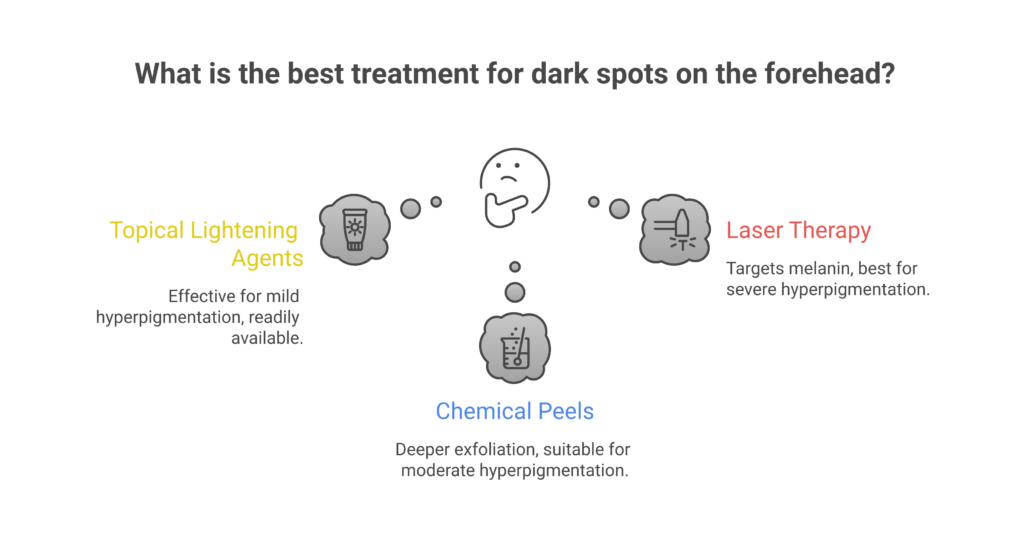
Many people can meaningfully fade dark spots with the right over-the-counter products and consistent use. If you want product recommendations, see our guide to the best dark spot removers for the face. Results typically take 8 to 12 weeks to become noticeable, so patience matters. Some people also explore natural treatments and home remedies as part of their skin care routine.
Vitamin C Serums
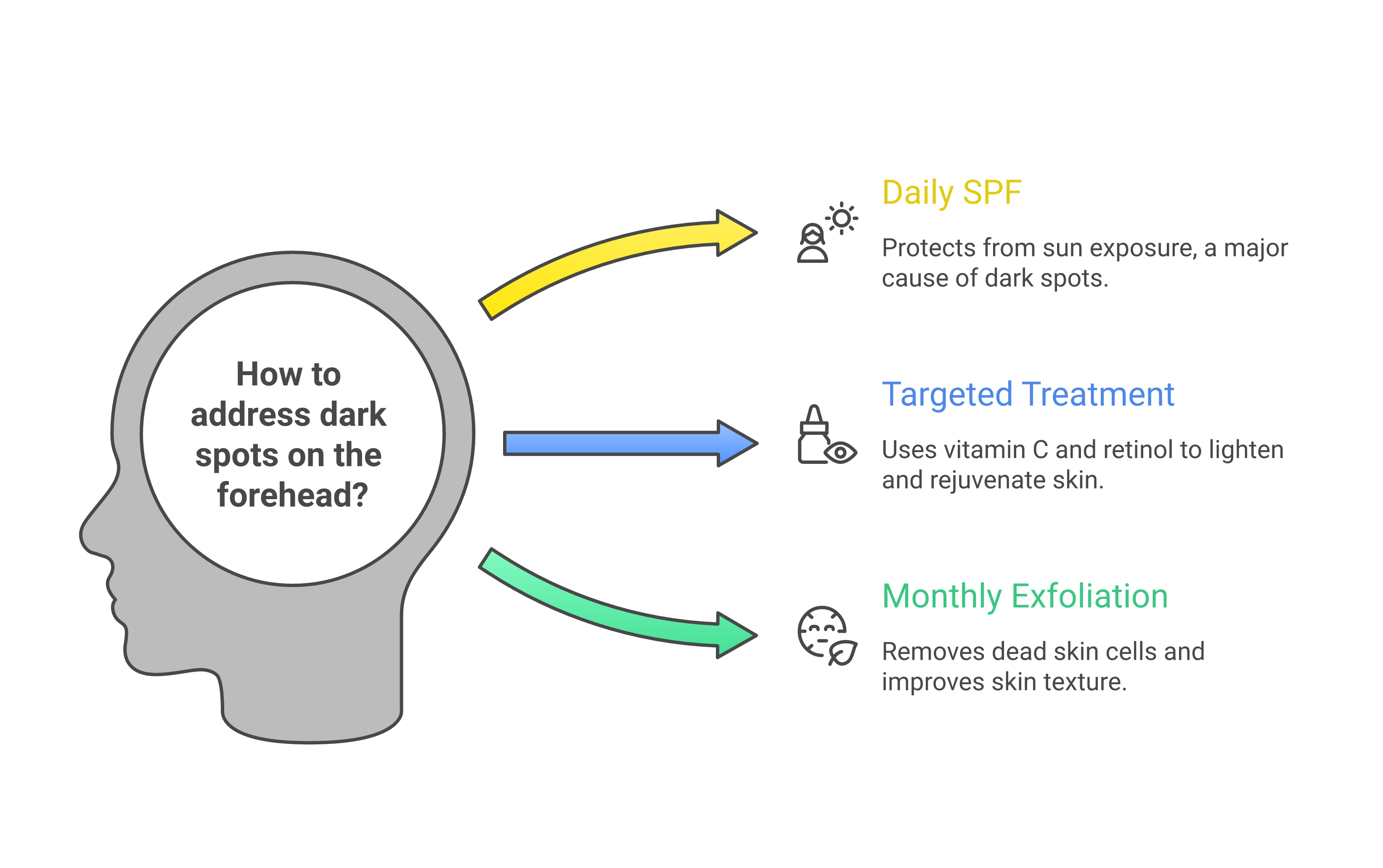
Vitamin C (L-ascorbic acid) is one of the most well-studied topical ingredients to treat hyperpigmentation. It works by inhibiting the enzyme tyrosinase, which is essential for melanin production. A 2019 meta-analysis in the Journal of Clinical and Aesthetic Dermatology confirmed that topical vitamin C can prevent ultraviolet-induced pigmentation and gradually fade dark spots with consistent use over 12 weeks. Vitamin C also provides antioxidant protection against future UV damage, making it both a treatment and a prevention tool.
For best results, apply a vitamin C serum in the morning before sunscreen. Look for products in opaque, airless packaging to prevent oxidation. Concentrations of 10-20% are the most common in effective formulas.
Retinol and Retinoids
Retinol accelerates skin cell turnover, which means pigmented cells are shed faster and replaced with new, evenly pigmented ones. Over-the-counter retinol products (typically 0.25%-1.0%) are effective for mild to moderate dark spots. Prescription-strength tretinoin works faster but can irritate the skin initially. Starting low and building up gradually reduces the risk of redness and peeling.
Use retinol at night, since it increases photosensitivity. Always pair it with daily sunscreen. Your dermatologist can recommend the right concentration based on your skin type and the severity of your dark spots.
Niacinamide
Niacinamide (vitamin B3) reduces hyperpigmentation by blocking the transfer of melanin from melanocytes to surrounding skin cells. Studies have shown that niacinamide at 5% concentration can lighten dark spots and improve overall skin tone within 8 weeks. It is well-tolerated even by people with sensitive skin, making it a good starting point for darker skin tones that may be prone to irritation from stronger actives.
Azelaic Acid
Azelaic acid works by inhibiting tyrosinase and reducing abnormal melanocyte activity. At over-the-counter concentrations (10%), it can lighten mild dark spots and is gentle enough for most skin types. Prescription-strength azelaic acid (15-20%) is frequently used to treat melasma specifically and can be used safely during pregnancy, unlike many other treatment options. It also has anti-inflammatory properties that help with acne-related PIH.
Alpha Arbutin and Kojic Acid
Alpha arbutin is a naturally derived ingredient that suppresses increased melanin production without the irritation associated with hydroquinone. Kojic acid, derived from fungi used in Japanese rice fermentation, has a similar mechanism. Both are commonly found in dark spot correctors and brightening creams and work well as part of a combination approach.
Gentle Exfoliants: AHAs and BHAs
Alpha hydroxy acids like glycolic acid and lactic acid dissolve the bonds between dead cells on the surface, speeding up the removal of pigmented skin. Beta hydroxy acid (salicylic acid) penetrates into pores, making it especially useful for PIH left behind by acne. Used 2-3 times weekly, these gentle exfoliants can complement other brightening products in your routine. Start with lower concentrations if you have sensitive skin or a darker complexion to avoid irritation that could trigger new dark spots. Exfoliation helps remove pigmented cells from the skin’s surface and accelerates the fading process when used consistently as part of a broader treatment plan.
Licorice Root Extract and Other Ingredients
Licorice root extract contains glabridin, which inhibits tyrosinase and has anti-inflammatory properties. It is a common ingredient in brightening serums and creams, especially those marketed for sensitive skin types. Other ingredients to look for in skin care products include tranexamic acid (topical), soy extract, and mulberry extract. While some people try home remedies like apple cider vinegar, these lack the clinical evidence supporting the ingredients listed above and can irritate the skin.
Antioxidant-Rich Products and Daily Sunscreen
Sunscreen is both a treatment and a prevention tool, and skipping it is the single biggest mistake people make when trying to treat dark spots. Without daily UV protection, every other product you use is fighting a losing battle because ultraviolet radiation will continue to darken existing spots and create new spots. Apply a broad spectrum sunscreen with SPF 30 or higher every single day, rain or shine. Apply sunscreen every two hours when outdoors and after swimming or sweating.
Mineral sunscreens containing zinc oxide or titanium dioxide offer broad UV protection and tend to be less irritating for people with melasma or sensitive skin. For melasma specifically, a tinted sunscreen with iron oxide provides added protection against visible light, which can trigger melasma flares even indoors. Adding antioxidant-rich products like vitamin C or vitamin E underneath your sunscreen provides an additional layer of defense against free radical damage.
Professional Treatments for Stubborn Dark Spots
When at-home products have not produced adequate results after 3-6 months, or when hyperpigmentation is deep or widespread, professional in-office procedures can accelerate improvement. Talk to your doctor or dermatologist about which of these options matches your skin type, condition, and budget.
Prescription Topicals
When over-the-counter creams and serums fall short, prescription-strength treatments deliver high concentrations of active ingredients:
- Hydroquinone (2-4%): Long considered the standard for skin lightening. Hydroquinone directly inhibits melanin production and can produce noticeable results within 4-8 weeks. Use is typically limited to 3-5 month cycles to avoid a rare side effect called ochronosis (paradoxical darkening). A doctor can recommend the appropriate strength.
- Tretinoin (0.025-0.1%): Prescription retinoid that increases cell turnover dramatically. Often combined with hydroquinone and a mild corticosteroid in a formula sometimes called a “triple combination cream” that research suggests is effective for treating melasma.
- Tranexamic acid (oral or topical): Originally developed for blood clotting, tranexamic acid has emerged as a treatment for melasma. Oral doses of 250 mg twice daily showed improvement in multiple clinical studies, including a 2012 study where 65% of patients experienced good to excellent response after 6 months. Your dermatologist can determine if oral tranexamic acid is appropriate for you.
Chemical Peels
Chemical peels use concentrated acids to remove the outer layers of skin, taking excess pigment with them. Superficial peels (glycolic, salicylic, or lactic acid at 20-70%) are the safest option for most skin tones and can lighten dark spots with a series of 4-6 treatments spaced 2-4 weeks apart.
Medium-depth peels (such as TCA peels) penetrate deeper and produce more dramatic results, but carry a higher risk of post inflammatory hyperpigmentation, especially for people with darker skin. Choosing an experienced dermatologist for chemical peels is essential. Using the wrong peel strength or type on the wrong skin type can do more harm than good.
Laser Treatment and IPL
Laser treatment uses focused light energy to break apart pigment deposits in the skin. Fractional lasers (like Fraxel) create microscopic treatment zones, which speeds healing and reduces risk. Intense Pulsed Light (IPL) therapy targets pigmented cells selectively without damaging the surface skin.
One thing to know before booking: laser treatment carries a real risk of worsening pigmentation in people with darker skin, particularly for melasma. Not all lasers are appropriate for all skin types. The Nd:YAG laser at 1064nm is generally considered the safest option for darker complexions, though multiple sessions are typically required. Find a practitioner who has expertise with your skin type before proceeding.
Microneedling
Microneedling creates thousands of tiny punctures in the skin using fine needles. This controlled injury stimulates collagen production and allows topical products (like vitamin C or tranexamic acid serums) to penetrate deeper. Studies have shown improvement when microneedling is combined with targeted topical solutions to treat dark spots, though it is generally less effective as a standalone treatment for hyperpigmentation.
Microdermabrasion and Cryotherapy
Microdermabrasion uses fine crystals or a diamond tip to physically exfoliate the outer layer of skin cells. It works best for surface-level spots and carries a low risk of side effects, making it suitable for patients who cannot tolerate stronger procedures. Most people need a series of treatments to see meaningful improvement.
Cryotherapy involves applying liquid nitrogen to individual dark spots. The freezing destroys pigmented cells, and new, lighter skin grows in their place. It is most effective for isolated age spots rather than widespread discoloration. Your dermatologist can recommend whether cryotherapy makes sense for your specific situation.
At-Home vs. Professional Treatment Comparison
| Factor | At-Home Treatments | Professional Procedures |
|---|---|---|
| Cost | $15-$80 per product | $150-$1,500+ per session |
| Time to results | 8-12 weeks minimum | 2-6 weeks (varies by procedure) |
| Best for | Mild to moderate spots, maintenance | Deep, stubborn, or widespread pigmentation |
| Risk level | Low (if products used as directed) | Moderate (depends on skin tone and procedure) |
| Requires professional? | No | Yes |
| Downtime | None | None to 7+ days depending on procedure |
| Best approach | Combination of 2-3 active ingredients + sunscreen | Professional treatment + at-home maintenance |
In many cases, the best results come from a combination approach: professional procedures to accelerate improvement followed by a consistent at-home skin care routine with proven active ingredients to maintain results and prevent future hyperpigmentation.
Dark Spots on Forehead in Darker Skin Tones
Forehead hyperpigmentation can affect people of all skin tones, but it tends to be more pronounced and longer-lasting in people with darker skin. This happens because melanocytes in darker skin produce more pigment overall, so when they become overstimulated, the resulting discolored skin is often more noticeable and takes longer to fade. People with Fitzpatrick skin types IV through VI should choose treatments carefully.
Treatment considerations for darker skin tones include:
- Avoid aggressive treatments: High-concentration chemical peels and certain lasers can trigger new post inflammatory hyperpigmentation in darker complexions. Begin with lower concentrations and gentler approaches.
- Niacinamide and azelaic acid first: These ingredients effectively lighten dark spots with a lower risk of irritation compared to hydroquinone or retinoids.
- Patch test everything: Before applying any new skin care product to your entire forehead, test on a small area first and wait 48 hours.
- UV protection is just as critical: A common misconception is that darker skin does not need sunscreen. While melanin provides some natural protection, it is not enough to prevent UV-triggered hyperpigmentation. A tinted sunscreen with iron oxide adds visible light protection as well.
- Find practitioners experienced with skin of color: Not every dermatologist has equal experience treating hyperpigmentation in darker complexions. Look for practitioners who specifically work with diverse skin tones and understand the risks of PIH from procedures.
How to Prevent Dark Spots on Your Forehead
Prevention takes less effort than treatment. These steps will reduce your risk of developing new dark spots and keep existing ones from getting worse:
- Apply sunscreen daily: Use a broad spectrum sunscreen with at least SPF 30 every morning, even on cloudy days. UV rays penetrate clouds and windows. Reapply every 2 hours when outdoors and after swimming or sweating. A tinted sunscreen offers additional visible light protection for people prone to melasma.
- Wear sun protective clothing: A wide brimmed hat with at least a 3-inch brim provides physical shade for the forehead, nose, cheeks, and chin. Clothing with an ultraviolet protection factor (UPF) rating of 50+ offers UV protection for the neck, arms, and shoulders. Wear sun protective clothing whenever you spend extended time outside, especially between 10 a.m. and 4 p.m.
- Wear sunglasses: UV-blocking sunglasses protect the delicate skin around your eyes and reduce squinting, which contributes to UV exposure on the upper forehead.
- Avoid peak hours: UVA and UVB rays are strongest between 10 a.m. and 4 p.m. If you spend time outdoors during these hours, seek shade when possible.
- Do not pick at acne: Squeezing or popping pimples on the forehead dramatically increases the risk of PIH. Let blemishes heal naturally or use targeted spot treatments.
- Use gentle skincare: Avoid harsh scrubs and products that irritate the skin. Choose fragrance-free cosmetics when possible, especially if your skin is sensitive or has reacted to products before. Gentle exfoliants like lactic acid are safer than physical scrubs.
- Manage hormonal triggers: If you have noticed that birth control pills or other hormonal medications trigger melasma, speak with your healthcare provider about alternatives. Protecting your skin from UV and visible light is especially important during pregnancy.
- Use antioxidant-rich products daily: A morning vitamin C serum underneath sunscreen provides an extra layer of protection against free radical damage from UV and pollution.
When to See a Doctor About Dark Spots on Your Forehead
Most dark spots on the forehead are harmless, but you should seek medical care if you notice any of the following warning signs:
- A spot that changes rapidly in size, shape, or color over weeks
- A spot with irregular or uneven borders
- Pink spots, red spots, or any spot that is painful, itchy, or bleeding
- Any new dark spot that looks different from your other spots (the “ugly duckling” sign)
- Black spots that appeared suddenly without an obvious cause
- Spots that have not responded to consistent at-home treatment after 3-6 months
These symptoms do not necessarily indicate skin cancer, but they warrant a professional evaluation. A dermatologist can perform a physical exam and, if needed, a skin biopsy to determine the exact cause. Early diagnosis of melanoma or other forms of skin cancer dramatically improves outcomes.
Even if your dark spots are not medically concerning, seeing a dermatologist can be valuable for cosmetic reasons. They can diagnose whether you are dealing with melasma, sun spots, or PIH and create a personalized treatment plan. A dermatologist with expertise in your skin type can also recommend which specific skin care products and in-office procedures will work best for your particular skin condition, which avoids the trial-and-error of over-the-counter products alone. No one cause explains every case of forehead hyperpigmentation, so professional evaluation helps identify what skin issues are involved and which approach will work fastest.
Frequently Asked Questions
What causes dark patches on the forehead?
Dark patches on the forehead are most commonly caused by melasma (triggered by hormonal changes and UV exposure), cumulative UV damage from years of unprotected time outdoors, or post inflammatory hyperpigmentation following acne or other skin injuries. Genetics, certain medications, and chronic skin conditions like eczema and psoriasis can also play a role. The forehead is particularly susceptible because it receives direct UV light throughout the day.
What is the safest approach to removing dark spots from my forehead?
Start with daily broad spectrum sunscreen (SPF 30+) and a proven brightening ingredient like vitamin C, retinol, niacinamide, or alpha arbutin. Give products at least 8-12 weeks of consistent use before evaluating results. If spots remain, a dermatologist can prescribe hydroquinone or tretinoin, or recommend in-office procedures like chemical peels or laser treatment. Combining multiple approaches typically produces the best outcome.
Is melasma on the forehead permanent?
Melasma is a chronic skin condition that tends to recur, but it is not necessarily permanent in every case. Melasma triggered by pregnancy often fades within 3 months after delivery. Melasma caused by birth control pills may improve within 3-6 months of discontinuing the medication. However, melasma linked to genetics and chronic UV exposure can be persistent and may require ongoing maintenance treatment. Consistent UV protection is the single most important factor in keeping melasma under control. A dermatologist can help you find the right combination of treatments to manage recurring melasma effectively.
Can stress cause dark spots on the forehead?
Stress does not directly cause dark spots, but it can contribute indirectly. Chronic stress affects hormone levels, particularly cortisol and progesterone, which can trigger melasma in people who are already predisposed. Stress can also worsen acne breakouts, leading to more post inflammatory hyperpigmentation. Some people pick at their skin more when stressed, causing further inflammation and new dark spots. Managing stress through sleep, exercise, and other healthy habits will not cure existing spots, but it can reduce flares.
What vitamin deficiency causes dark spots on the face?
Deficiencies in vitamin B12, vitamin B3 (niacinamide), vitamin D, and folate have all been associated with changes in skin pigmentation. Vitamin B12 deficiency in particular can cause hyperpigmentation that appears on the face, hands, and feet. However, a vitamin deficiency is not the most common type of cause for dark spots on the forehead. UV damage, hormones, and PIH account for the vast majority of cases. If you suspect a deficiency, a simple blood test through your doctor can confirm it.
How long does it take for dark spots on the forehead to fade?
The fading timeline depends on the type and depth of pigmentation. Surface-level PIH may fade in 3-6 months with treatment and UV protection. Age spots typically require 6-12 months of consistent treatment or professional procedures. Melasma is the most stubborn and may take 6+ months of combination therapy to lighten noticeably, with ongoing maintenance needed to prevent recurrence. Deeper pigmentation that extends into the dermis layer takes longer to respond to any treatment. Regardless of the type, treatment takes time and consistent effort with your skin care routine.
Do dark spots on the forehead go away on their own?
It depends on the type. PIH from a recent pimple or minor injury will often gradually fade on its own over several months, especially with UV protection. Melasma may lighten after pregnancy or after discontinuing hormonal medications. Age spots and sun spots, however, rarely fade without active treatment. They tend to become more noticeable over time with continued unprotected UV exposure. Regardless of the type, applying sunscreen daily will prevent any dark spot from darkening further and protect against new spots from forming.
This article is for educational purposes only and does not replace professional medical advice. If you have concerns about changes in your skin, consult a qualified healthcare professional for a personalized evaluation.

