
How to Remove Dark Spots from Face

Dr. Matthew Olesiak, MD, is the Chief Medical Director at SANESolution, a renowned wellness technology company dedicated to providing evidence-based solutions for optimal living. Dr. Olesiak earned his medical degree from the prestigious Jagiellonian University Medical College in Kraków, Poland, where he developed a strong foundation in medicine.
Dark spot removal is the process of fading excess melanin deposits in the skin, whether from sun damage, acne scars, hormonal changes, or aging, using topical treatments, professional procedures, or a combination of both. If you want to get rid of facial dark spots, the most effective methods include prescription-strength hydroquinone (which reduces melanin production by up to 50% in 8-12 weeks), vitamin C serums, retinoids, chemical peels, and laser therapy. The right approach depends on the type of hyperpigmentation, your skin tone, and how deep the pigment sits in the skin.
By Dr. Matt
Updated February 22nd, 2026
Dr. Matthew Olesiak, MD, is the Chief Medical Director at SANE MD, a health and wellness company focused on evidence-based skincare and nutrition solutions. He earned his medical degree from Jagiellonian University Medical College in Kraków, Poland.
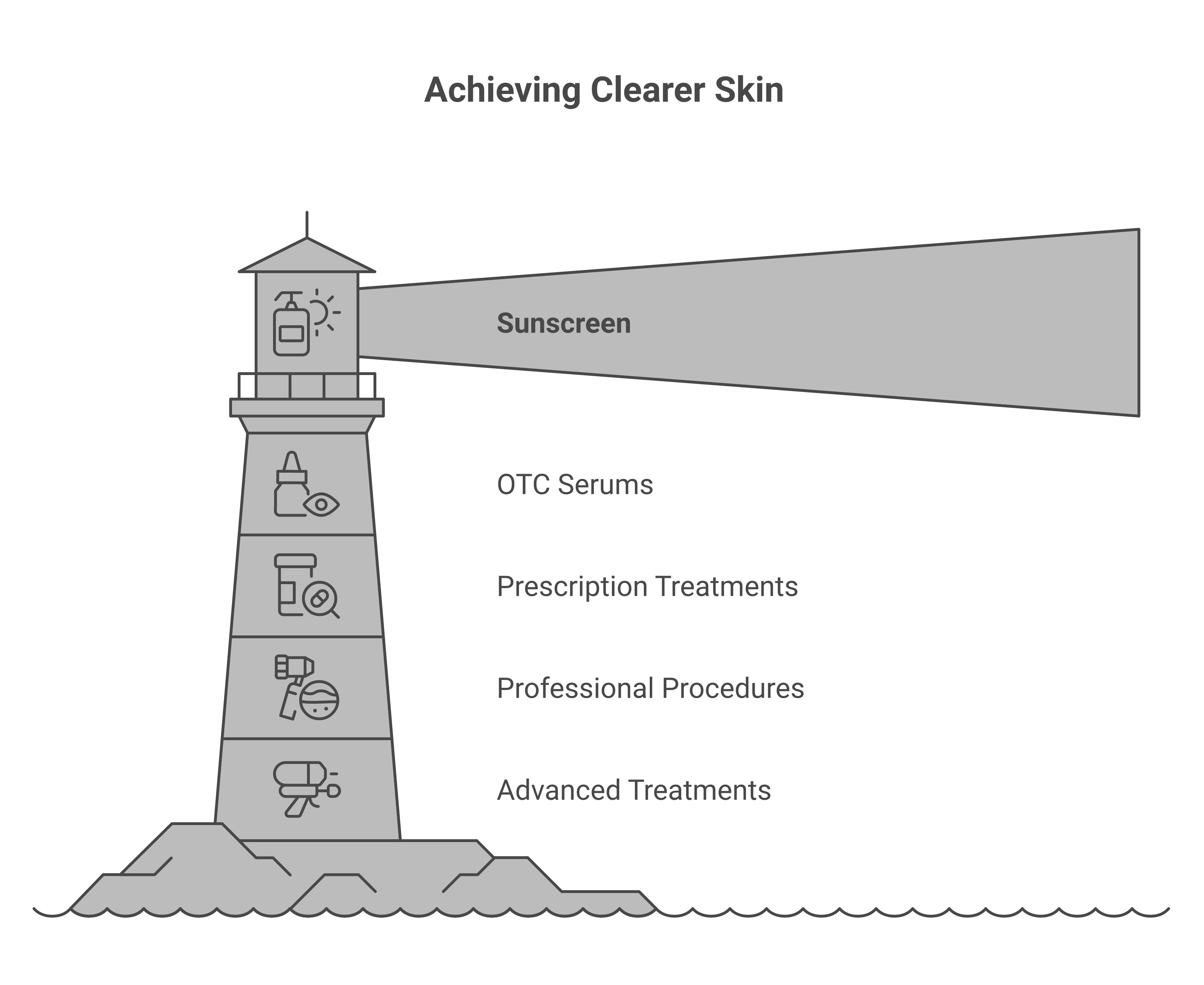
How to Remove Dark Spots from Face: What Actually Works
Dark spots on the face are one of the most frustrating skin concerns I hear about. You wake up, look in the mirror, and there they are: flat, discolored patches that cosmetics barely cover up and that seem to multiply with every passing summer. Whether you’re dealing with leftover marks from a breakout, sun damage that crept up over the years, or patches that showed up during pregnancy, you’re not alone. Hyperpigmentation is one of the most common reasons people visit a dermatologist. The American Academy of Dermatology considers it one of the most prevalent skin concerns in the United States.
The good news? Most dark spots on the face can be treated. You can get rid of mild spots with topical products alone, and eliminate deeper discoloration with professional help, and many can fade significantly or disappear completely with the right approach. But here’s what trips most people up: they try one random product for two weeks, see no change, and give up. Getting rid of dark spots requires understanding why they form, learning how to choose the right treatment option and the following ingredients that work best for your specific type of discoloration, and, above everything else, protecting your skin from the sun while you treat it.
In this guide, I’ll walk you through all the effective options for treatment, from topical creams you can pick up today to professional procedures for stubborn spots that won’t budge. If you want a deeper look at what causes dark spots on your face, I’ve written an entire separate guide on that.
What Causes Dark Spots on the Face?
Before we get into how to remove dark spots from your face, you need to learn what’s happening underneath the skin. Dark spots, sometimes called black spots in deeper skin tones (the medical term is hyperpigmentation), form when your body produces too much melanin. Specifically, the body produces melanin as a protective response to damage, in certain areas. Melanin is the natural substance that gives skin its color, as well as hair and eyes their color. When skin cells produce extra melanin (too much melanin in concentrated areas), it accumulates in deposits that show up as flat, darker patches on the surface. The darker the deposit, the deeper it tends to sit in the skin. Spots that appear darker brown or nearly black usually involve pigment in the deeper dermis, while lighter, less darker spots sit closer to the surface.
There are several distinct types of dark spots on the face, and identifying yours matters because you need to effectively treat hyperpigmentation to address and treat the specific type you have, since different types respond to different approaches:
Sun Spots (Solar Lentigines)
Also referred to as age spots or liver spots, these flat brown or tan patches develop in areas that grow progressively darker over time. These darker marks typically appear on areas that get the most sun exposure: common areas like the forehead, cheeks, upper lip, and the bridge of the nose. They’re caused by years of cumulative UV damage. UV light triggers melanocytes (melanin-producing cells) to overproduce pigment as a protective response. Sun spots develop on the face, hands, arms, and shoulders. The backs of the hands are especially common, and spots located on the face tend to be more visible. They are extremely common after age 40, according to the Mayo Clinic, though they can appear much earlier in people who spend significant time outdoors or use tanning beds. To learn the nuances between these terms, see our breakdown of age spots vs sun spots vs liver spots.
Post-Inflammatory Hyperpigmentation (PIH)
These dark marks appear after skin inflammation or injury, most commonly from acne and pimples, but also from eczema, psoriasis, burns, insect bites, cuts, or even aggressive skincare treatments. When your skin heals from inflammation, melanocytes sometimes go into overdrive and deposit extra melanin in the affected area. Post inflammatory hyperpigmentation (PIH) is especially common in darker skin tones, where the melanocytes are larger and more reactive. The marks can range from pink or red to dark brown or even black, depending on your natural skin tone, with darker skin tones seeing more pronounced marks. People with darker complexions have more active melanocytes, which makes the resulting marks darker and more persistent. Even minor skin trauma can trigger darker spots in these skin types, and the darker the original skin tone, the longer these marks take to resolve. I cover this in detail in my guide on dark spots after acne.
Melasma
Melasma shows up as larger, symmetrical brown patches, often on the cheeks, forehead, upper lip, and jawline. Hormonal changes are the primary driver. Melasma can occur during pregnancy, causing patches that become progressively darker. These darker patches respond poorly to standard treatments, which is why melasma frequently appears during pregnancy ((earning the nickname “mask of pregnancy”)), while on oral contraceptives, or during hormone replacement therapy. Sun exposure makes it dramatically worse. As the Cleveland Clinic notes, melasma is one of the most stubborn forms of hyperpigmentation because it involves deeper layers of skin and has a hormonal trigger that topical treatments alone can’t fully address. For pregnancy-specific guidance, see dark spots on face during pregnancy.
Other Contributing Factors
Certain medications (like some antibiotics, anti-seizure medications, and blood pressure medications), chronic skin conditions like psoriasis, rashes, and eczema. These skin conditions can all trigger melanin overproduction. Underlying medical conditions and other skin conditions like thyroid disorders may also contribute to darker patches, and even oxidative stress can trigger hyperpigmentation. Aging can also affect pigmentation, as we get older, melanin distribution becomes more uneven, and dark spots occur more frequently, and accumulated skin damage from decades of sun exposure, combined with genetics, starts showing up as visible spots. If you’re over 50, age-related pigment changes have their own patterns, which I discuss in dark spots on face over 50.
The Best Ingredients for Treating Dark Spots at Home
Your first line of defense against dark spots is a targeted skin care routine using proven skin care products built around ingredients that are backed by peer-reviewed research. These topical treatments work by interrupting melanin production, accelerating the turnover of pigmented skin cells, or both. Here are the most proven options, along with how these treatments and ingredients work against dark spots:
Vitamin C (L-Ascorbic Acid)
Vitamin C is one of the most studied, recommended, and widely used ingredients for hyperpigmentation. It works by inhibiting tyrosinase, the enzyme that drives melanin production, helping reduce pigment deposits over time. A systematic review published in the Journal of Clinical and Aesthetic Dermatology found that topical vitamin C at concentrations of 10-20% significantly reduced hyperpigmentation across multiple clinical trials.
Beyond fading existing dark spots, vitamin C is a potent antioxidant that protects cells from UV-induced damage, helping your skin fight free radical damage and oxidative stress on skin caused by UV rays and pollution. So it helps prevent new spots from forming while also working on existing ones while helping fade existing dark spots. For best results, apply a vitamin C serum in the morning before sunscreen. Look for L-ascorbic acid formulas at 15-20% concentration with a pH below 3.5, as these deliver the most penetration.
Retinoids (Retinol and Tretinoin)
Retinoids (vitamin A derivatives) are arguably the most versatile ingredients in skincare. For dark spots, they work by dramatically speeding up skin cell turnover, pushing pigmented dead skin cells off the surface faster, helping reveal fresher skin underneath and replacing them with new skin underneath. Retinoids also thin the outer layer of dead skin, allowing other brightening ingredients to penetrate more effectively.
Over-the-counter retinol (the gentler form) is a good starting point. Prescription-strength tretinoin is more potent and works faster. In a 10-month placebo-controlled study, 83% of patients using tretinoin 0.1% had visibly lighter age spots, compared to only 29% of the control group (p < 0.0002). I've covered concentrations, side effects, and how to build tolerance in retinol for dark spots.
Start with 0.25% retinol two to three nights per week and gradually increase. Always use retinoids at night, they break down in sunlight, and expect mild redness, increased sensitivity, and peeling during the first several weeks as your skin adjusts.
Niacinamide (Vitamin B3)
Niacinamide takes a different approach: rather than blocking melanin production, it prevents melanin from being transferred from melanocytes to surrounding cells, helping even out your complexion. Research published in the British Journal of Dermatology demonstrated that 5% niacinamide reduced hyperpigmentation significantly after 8 weeks of use.
What makes niacinamide especially valuable is its tolerability. It is beneficial for all skin tones, rarely causes irritation, and pairs well with nearly every other active ingredient. People with sensitive skin who can’t tolerate retinoids or acids often do well with niacinamide as their primary brightening agent. For a full breakdown, read our guide on niacinamide for age spots and niacinamide benefits for skin.
Azelaic Acid
Azelaic acid is a standout. For example, it tackles for treating dark spots because it tackles hyperpigmentation from multiple angles. It inhibits tyrosinase (like vitamin C), has anti-inflammatory properties (reducing the skin inflammation that triggers PIH in the first place), and is gentle enough for sensitive skin. It’s available over the counter at 10% and by prescription at 15-20%.
Azelaic acid is one of the few ingredients considered safe during pregnancy and is particularly effective for treating melasma. It’s also been shown to reduce acne, making it a two-for-one treatment for people dealing with breakouts and the dark spots they leave behind.
Kojic Acid
Derived from fungi used in Japanese rice wine fermentation, kojic acid works by chelating copper, an essential cofactor for tyrosinase, effectively shutting down excess melanin production, helping lighten dark patches. Concentrations of 1-4% are typical in over-the-counter skin lightening products. A 2019 study found kojic acid comparable to hydroquinone for its ability to lighten hyperpigmentation, with fewer side effects.
Kojic acid can cause contact dermatitis in some people, so patch testing is essential. It’s often combined with glycolic acid or vitamin C in formulas to enhance efficacy.
Hydroquinone
Hydroquinone has long been considered the gold standard for skin lightening, according to DermNet. It works by directly inhibiting tyrosinase and reducing melanin production in overactive melanocytes. Over-the-counter products contain up to 2% hydroquinone (the FDA-approved maximum for non-prescription use). Prescription products go up to 4% or higher, while prescription formulas go up to 4% or higher.
However, hydroquinone comes with caveats. Extended use (beyond 3-5 months continuously) can cause a condition called ochronosis, a paradoxical darkening of the skin, especially in darker skin tones. Most dermatologists recommend cycling hydroquinone: use it for 3 months, take a break for 1-2 months, then resume if needed. For a detailed comparison, see our guide on OTC vs prescription dark spot treatments.
Alpha Hydroxy Acids (AHAs)
AHAs (alpha hydroxy acids) like glycolic acid, lactic acid, and mandelic acid are acids that work by helping remove dead skin cells through gentle exfoliation, dissolving the bonds between dead skin cells on the outer layer so they shed faster. This accelerates the removal of pigmented cells, helping reveal brighter skin and reveals newer, more evenly toned skin underneath. For example, glycolic acid has the smallest molecule size, so it penetrates deepest and works fastest, but can cause more irritation. Lactic acid is gentler and better suited for sensitive skin or darker skin tones.
Alpha Arbutin
A naturally derived alternative to hydroquinone, alpha arbutin blocks tyrosinase without the risks associated with long-term hydroquinone use. Studies show it can reduce melanin production by up to 60% at concentrations of 1-2%. It’s gentle, well-tolerated across all skin tones, and safe for extended daily use.
Your Step-by-Step At-Home Routine to Fade Dark Spots
If you want to fade dark spots at home, you need a structured routine built on the right products, applied in the right order. Random product application rarely produces results. The following morning and evening routines are designed to fade and reduce dark spots using a layered approach where each step builds on the previous one.
Having the right ingredients matters, but how you layer and use them determines your results. Here are the practical tips and steps for the morning and evening skin care routine I recommend to help you fade dark spots effectively:
Morning Routine
- Gentle Cleanser. Wash with a sulfate-free, pH-balanced cleanser on clean skin. Harsh cleansers strip the skin barrier and can worsen hyperpigmentation.
- Vitamin C Serum. Apply 4-5 drops of a 15-20% L-ascorbic acid serum to your face and neck. Wait 1-2 minutes to absorb.
- Niacinamide Moisturizer. Layer a moisturizer containing 4-5% niacinamide. This boosts brightening effects and strengthens the skin barrier.
- Broad-Spectrum Sunscreen (SPF 30 or higher). This is the single most critical step. No dark spot treatment will work if you skip sunscreen. UV exposure reactivates melanocytes and darkens existing spots on the face within hours. Use a broad-spectrum sunscreen formula with at least SPF 30. Many dermatologists recommend SPF 50 for people who are prone to hyperpigmentation. Apply the equivalent of two finger-lengths to cover your face, and reapply every two hours if you’re outdoors.
Evening Routine
- Double Cleanse. First, use an oil-based cleanser or micellar water to remove sunscreen and makeup. Follow with your regular gentle cleanser.
- Treatment Serum. Apply your retinoid (retinol or tretinoin) OR azelaic acid. On alternate nights. Don’t use both on the same night when starting out, alternate nights until your skin adjusts.
- Moisturizer. Lock everything in with a barrier-supporting moisturizer, helping your skin recover and heal overnight. Ingredients like ceramides and hyaluronic acid help your skin recover overnight.
How long until you see results? Most topical treatments need 8-12 weeks of consistent, daily use before dark spots. Consistency is the key factor here gradually fade to a lighter shade. Skin cell turnover takes roughly 28 days (longer as we age), so you’re waiting for multiple cycles of new skin to replace the pigmented cells. For a detailed look at what to expect week by week, check our dark spots fading timeline.
Natural and Home Remedies for Dark Spots: What Works and What Doesn’t
Natural remedies are enormously popular, and the appeal of treating dark spots with something you already have in your kitchen. But you need to be realistic about what home remedies can actually accomplish, and cautious about the ones that can do more harm than good.
Home Remedies With Some Evidence
- Aloe vera gel. Contains aloesin and aloin, compounds that have shown modest melanin-inhibiting properties in lab studies. Applying pure aloe vera gel to dark spots twice daily may help lighten superficial discoloration over several months. It’s gentle, anti-inflammatory, and unlikely to cause irritation.
- Licorice root extract. Contains glabridin, which inhibits tyrosinase. Some clinical research supports its use for reducing hyperpigmentation, though results are milder than pharmaceutical-grade treatments.
- Green tea extract. Rich in epigallocatechin gallate (EGCG), a polyphenol with anti-melanogenic and antioxidant properties, helping fade spots gradually. Applying cooled green tea or green tea extract may offer gradual lightening benefits.
- Turmeric. Curcumin, the active compound found in this food spice, has anti-inflammatory and mild tyrosinase-inhibiting effects, helping reduce surface-level discoloration. Mixing turmeric powder with honey can work as a home treatment, helping address or yogurt creates a mask that some people find helpful for reducing surface-level discoloration. Be aware: turmeric can temporarily stain fair skin tones yellow.
Home Remedies to Avoid
- Lemon juice. Despite being everywhere on social media, using lemon juice undiluted is a terrible idea for dark spots. Its extremely low pH (around 2) can cause chemical burns, inflammation, and ironically trigger post-inflammatory hyperpigmentation that makes spots darker. It also makes skin photosensitive, increasing your risk of sun damage.
- Baking soda. Its high pH (around 9) disrupts the skin’s acid mantle, leading to irritation, dryness, and potential barrier damage. It has zero melanin-inhibiting properties.
- Hydrogen peroxide. Can cause chemical burns, destroy healthy skin cells, and produce uneven skin damage that worsens discoloration.
- Apple cider vinegar (undiluted). Too acidic for direct skin application. Can burn the skin surface and cause scarring.
For a more complete list of natural approaches with honest assessments, see our full guide on natural treatments for dark spots on the face.
Professional Treatments for Stubborn Dark Spots
When at-home treatments and topical creams haven’t delivered the results you want after several months of consistent use, professional procedures can target dark spots more directly and help eliminate stubborn discoloration more aggressively. These procedures work by physically removing pigmented cells or destroying melanin deposits below the surface.
Chemical Peels
A chemical peel applies a controlled chemical solution to the skin’s surface, dissolving the top layers (or deeper layers, depending on strength) and accelerating cell turnover. As the treated skin peels away over 3-7 days, fresher, brighter, smoother, more evenly toned skin emerges underneath.
- Superficial peels. Use glycolic acid, lactic acid, or salicylic acid. These acids work at 20-30% concentration. Best for mild discoloration and post-inflammatory hyperpigmentation. Minimal downtime, slight redness for 1-2 days.
- Medium peels. Use TCA (trichloroacetic acid) at 15-35%. Reach the upper dermis for more significant results. Downtime of 5-7 days with visible peeling.
- Deep peels. Phenol-based. Reserved for severe hyperpigmentation and performed under sedation at specialized dermatology services. Recovery can take 2-3 weeks. Not recommended for darker skin tones due to high risk of post inflammatory hyperpigmentation.
Most people see noticeable improvement after 3-6 chemical peel sessions spaced 4-6 weeks apart. Average cost per session ranges from $150 to $600 and costs can vary depending on peel depth and your location.
Laser Treatment and Intense Pulsed Light (IPL)
Laser therapy uses focused light energy to target and break apart melanin deposits deep in the skin. The fragmented pigment is then cleared by your body’s immune system over the following weeks. Several laser types are used for dark spot removal:
- Q-switched lasers (Nd:YAG, Ruby). Deliver extremely short bursts of energy that shatter melanin without damaging surrounding tissue. Effective treatment for sun spots, age spots, and post-inflammatory hyperpigmentation. Typically 2-4 sessions needed.
- Intense pulsed light (IPL). Technically not a laser but a broad-spectrum light device. Works best on lighter skin tones with contrast between the spot and surrounding skin. Usually requires 3-5 sessions.
- Fractional laser resurfacing (Fraxel). Create microscopic channels in the skin, stimulating new collagen production and replacing pigmented skin cells with smooth, new skin. Especially effective for combined hyperpigmentation and texture concerns like acne scars, wrinkles, and scar tissue.
- Picosecond lasers. A newer generation that delivers energy in trillionths of a second. Clinical data suggest they can clear pigmented lesions with fewer sessions and less risk of rebound hyperpigmentation compared to older nanosecond devices.
Cost per session ranges from $200 to $1,500 depending on the type of laser and the size of the treated areas. For an in-depth look at laser options, results, and recovery, read our full guide on laser to remove dark spots.
Microdermabrasion
Microdermabrasion uses fine crystals or a diamond-tipped wand to physically remove the top layers of dead skin cells. This gentle exfoliation procedure. Unlike acids, it works through physical removal rather than chemical dissolution works best for superficial dark spots and mild uneven skin tone. It’s the least aggressive option that dermatologists offer, no downtime, and you can wear makeup the same day.
However, microdermabrasion alone usually isn’t enough for moderate to severe hyperpigmentation. It’s most effective as part of a combination approach: microdermabrasion to enhance penetration of topical treatments like vitamin C or hydroquinone. Expect 4-6 sessions at $75-$200 per treatment.
Microneedling
Microneedling creates thousands of tiny punctures in the skin’s surface using a device with fine needles. This controlled injury triggers the body’s wound-healing response, helping generate new collagen and promoting skin cell renewal. When combined with brightening serums (applied during or immediately after the procedure), microneedling can significantly diminish the appearance of pigmentation.
The procedure is effective across all skin tones when performed correctly, but there is a risk of worsening hyperpigmentation if the needles penetrate too deep or if aftercare protocols aren’t followed. Average cost: $200-$700 per session, with 3-6 sessions recommended.
Cryotherapy (Liquid Nitrogen)
Cryotherapy involves applying liquid nitrogen directly to individual dark spots. The extreme cold causes the tissue to freeze, destroying the pigmented skin cells. The treated area blisters, scabs, and peels off over 1-2 weeks, often and the spots gradually fade as new skin emerges beneath. This treatment option works best for isolated sun spots and age spots. Dermatologists can work quickly, spending a few seconds per spot and relatively inexpensive ($50-$150 per session), but carries a risk of permanent hypopigmentation (lighter patches), particularly in darker skin tones.
Treatment Comparison at a Glance
| Treatment | Best For | Sessions Needed | Cost Per Session | Downtime | Safe for Darker Skin Tones? |
|---|---|---|---|---|---|
| Chemical Peel (Superficial) | Mild PIH, uneven tone | 3-6 | $150-$300 | 1-2 days | Yes |
| Chemical Peel (Medium) | Moderate spots | 2-4 | $300-$600 | 5-7 days | Caution needed |
| Q-Switched Laser | Sun spots, age spots | 2-4 | $300-$800 | 3-5 days | Yes (Nd:YAG) |
| IPL (Intense Pulsed Light) | Sun damage, freckles | 3-5 | $200-$600 | 1-3 days | No (high risk) |
| Fractional Laser | Deep spots + texture | 3-5 | $500-$1,500 | 5-10 days | Yes (with care) |
| Microdermabrasion | Superficial spots | 4-6 | $75-$200 | None | Yes |
| Microneedling | All types + scarring | 3-6 | $200-$700 | 2-3 days | Yes |
| Cryotherapy | Isolated age spots | 1-2 | $50-$150 | 1-2 weeks | No (risk of lighter patches) |
How to Prevent Dark Spots from Coming Back
Prevention is the foundation that every other treatment rests on. You can spend thousands on laser treatments and prescription creams, but if you’re not protecting spots on your skin from the sun, spots you worked to fade will come right back. You cannot stop dark spots from forming without daily UV protection. Consistent sunscreen use is the only way to reliably stop melanin overproduction from sun damage. For common sunscreen FAQs and how they relate to dark spot prevention, see the FAQ section below, often darker than before.
Sun Protection Is Non-Negotiable
UV radiation is the single biggest cause of dark spots. Every form of hyperpigmentation, sun spots, melasma, and even post-inflammatory marks, gets worse with UV exposure. Here are practical tips to protect yourself effectively:
- Apply broad spectrum sunscreen with SPF 30 or higher every morning, even on cloudy days and even if you’re staying indoors (UV rays, including UVA rays, penetrate windows). SPF 50 offers marginal but meaningful extra protection for hyperpigmentation-prone skin.
- Apply sunscreen generously and reapply every 2 hours when outdoors, and immediately after sweating or swimming.
- Use the two-finger rule: squeeze sunscreen along two fingers to get approximately the right amount for your face and neck.
- Wear protective clothing including a wide brimmed hat and UV-protective sunglasses when spending extended time outdoors. Physical barriers block more UV light than sunscreen alone.
- Avoid sun exposure during peak hours (10 a.m. To 4 p.m.) when UV index is highest.
- For melasma and darker skin tones: Choose a tinted sunscreen with iron oxide. Research from the Journal of the American Academy of Dermatology shows iron oxide protects against visible light, a wavelength range that triggers hyperpigmentation in darker skin tones but isn’t blocked by standard UV-only sunscreens.
Additional Prevention Strategies
- Avoid picking at pimples, blemishes, or scabs. This causes skin inflammation and dramatically increases the likelihood of post-inflammatory hyperpigmentation.
- Treat acne aggressively. The faster you clear pimples and breakouts, the less chance they leave dark marks. Salicylic acid cleansers and spot treatments with benzoyl peroxide help.
- Use antioxidant-rich skincare. Daily antioxidants like vitamin C and niacinamide help neutralize free radicals that trigger melanin overproduction, helping maintain even skin tone.
- Be gentle with your skin. Do not over exfoliate. Harsh scrubs, aggressive exfoliation, and irritating products can irritate skin, trigger inflammation, and cause new dark spots.
- Manage hormonal triggers. If you notice discolored skin or spots getting darker on birth control or during menopause, discuss medication alternatives and other changes with your doctor.
Understanding How Darker Complexions Respond to Treatment
People with darker skin have melanocytes that produce melanin more rapidly, which is why darker skin tones are more susceptible to visible spots after any form of skin injury. In darker complexions, what starts as mild redness can develop into patches that are substantially darker than the surrounding skin. These darker areas persist longer because the melanocytes in darker skin continue producing excess pigment well after the initial trigger has resolved.
For individuals with darker skin, choosing the right products and procedures requires extra caution. Treatments that work well on lighter skin can cause rebound darkening in darker complexions, making the original spots even darker. Darker skin tones respond best to gentle, consistent treatment rather than aggressive interventions. Ingredients like niacinamide and azelaic acid are particularly effective for darker skin because they reduce pigment transfer without irritating the skin into producing even more melanin. In darker skin, the goal is always to lighten the darker spots while preserving the healthy, natural color of the surrounding skin.
If you have darker skin and notice new spots getting progressively darker, talk to a dermatologist before starting any prescription treatment. You can also talk to your primary care doctor about referral options. The Fitzpatrick scale classifies skin into types I through VI, with types IV, V, and VI representing progressively darker skin tones that need specialized care.
Can Cosmetics Help While You Treat Dark Spots?
While cosmetics cannot eliminate dark spots, they do play a role in your overall approach. Tinted moisturizers and color-correcting cosmetics can reduce the visible appearance of discoloration while your active treatments work underneath. Many people find that using cosmetics with SPF provides both coverage and sun protection in one step.
Look for cosmetics labeled “non-comedogenic” so they do not clog pores or trigger new breakouts that could lead to more post-inflammatory hyperpigmentation. Some cosmetics now include active ingredients like niacinamide or vitamin C, so you can address skin imperfections while wearing daily coverage. Avoid cosmetics with fragrances that can irritate sensitive skin and cause skin irritation.
Special Considerations for Darker Skin Tones
If you have a medium to deep complexion, treating dark spots requires extra care. Darker skin tones have more melanocytes that are larger and more active, which means they’re more prone to post-inflammatory hyperpigmentation, and more prone to developing rebound hyperpigmentation from aggressive treatments.
Keep in mind the following:
- Start low, go slow. When introducing retinoids, AHAs, or any new active, begin at the lowest concentration and gradually increase. Irritation = inflammation = more dark spots.
- Avoid aggressive lasers without consultation. IPL and certain ablative lasers can worsen pigmentation in skin types IV-VI (Fitzpatrick scale). Nd:YAG lasers and low-energy fractional devices are generally safer options.
- Deep chemical peels are risky. Stick with superficial peels (glycolic, lactic) or medium peels only under close professional supervision.
- Hydroquinone needs monitoring. While effective, prolonged use in darker skin tones carries a higher risk of ochronosis. Never exceed 3 months of continuous use without a break.
- Niacinamide and azelaic acid are your best friends. Both are effective for hyperpigmentation and extremely well-tolerated across all skin types. If you have sensitive skin, these should be your first-line skin care products.
For product recommendations tailored to reactive skin, see our guide on the best dark spot remover for sensitive skin.
When Should You See a Doctor About Dark Spots?
Most dark spots are harmless. Annoying, sure, but not dangerous. However, there are situations where you should see a doctor or dermatologist promptly:
- A spot changes shape, size, or color. This could indicate melanoma or another form of skin cancer. To distinguish harmless spots from melanoma, use the ABCDE rule from the Skin Cancer Foundation: Asymmetry, Border irregularity, Color variation, Diameter larger than a pencil eraser, and Evolving appearance.
- A spot is raised, itchy, bleeding, or shows other symptoms. Flat hyperpigmentation doesn’t cause these symptoms. A spot with texture changes needs examination by a dermatologist.
- Dark spots appear suddenly without an obvious cause. Rapid onset of multiple new dark spots can occasionally signal underlying health conditions or medication reactions.
- Over-the-counter treatments aren’t working after 3-4 months. Seek medical care and schedule an appointment with a dermatologist, who can prescribe stronger formulations (like 4% hydroquinone or tretinoin) or recommend in-office procedures.
- You have melasma that keeps recurring. Melasma leads to persistently discolored skin, and its hormonal component often requires a long-term maintenance treatment plan tailored by a specialist.
For a detailed guide on what doctors look for and what to expect during an evaluation, read our article on visiting a dermatologist for dark spots on the face. And if you’re uncertain whether your spots might be something more serious, our guide on whether dark spots are dangerous can help you find answers and make that call.
Frequently Asked Questions About Removing Dark Spots
Can you get rid of dark spots from your face in 2 days?
No. This is one of the most common misconceptions I see online. Dark spots tend to sit within the layers of your skin, and getting rid of dark spots requires replacing the pigmented skin cells with new ones. The natural skin cell turnover process takes roughly 28 days, though timelines vary in younger adults and up to 40-60 days after age 50. Even professional laser treatment requires days to weeks for the body to clear the shattered pigment. The fastest realistic timeline for noticeable fading is 2-4 weeks with aggressive professional treatment, and 6-12 weeks with consistent topical therapy.
What is the fastest way to get rid of dark spots on the face?
The fastest approach combines a prescription retinoid (tretinoin 0.05-0.1%) with a professional procedure like a chemical peel or Q-switched laser treatment. Professional treatments physically remove or destroy pigmented cells in a single session, while the retinoid accelerates cellular turnover between sessions. Pairing these with daily sunscreen and a vitamin C serum creates the most aggressive treatment plan available. Most people see 50-80% improvement within 8-12 weeks with this combination.
Can dark spots be removed permanently?
Partially. The existing dark spots can be treated until they fade or disappear completely. Some treatments, like laser therapy and deeper chemical peels, can remove the pigmented cells so thoroughly that those specific spots don’t return. However, the underlying tendency toward hyperpigmentation remains, your skin will continue to produce melanin in response to UV exposure, hormonal changes, and inflammation. Without ongoing sun protection and maintenance skin care, new dark spots will form. Think of it as an ongoing process that takes different approaches depending on your skin, a chronic tendency rather than a one-time fix.
Which vitamin is best for reducing dark spots on the face?
Vitamin C (L-ascorbic acid) is the top choice for both treating existing dark spots and preventing new ones. It’s a direct tyrosinase inhibitor and a powerful antioxidant. Vitamin A derivatives (retinoids) come second, they don’t inhibit melanin directly but accelerate cell turnover to clear pigmented cells faster. Vitamin B3 (niacinamide) rounds out the trio by blocking melanin transfer to skin cells. For the best results with vitamins, use all three: vitamin C in the morning, retinoid at night, and niacinamide in your moisturizer.
Does hydroquinone really work for dark spots?
Yes, hydroquinone is one of the most effective topical treatments for reducing dark spots. It directly suppresses tyrosinase and works to lighten hyperpigmentation visibly in 4-8 weeks. However, it has significant limitations: it shouldn’t be used continuously for more than 3-5 months, it can cause irritation and dryness, and prolonged overuse (especially of unregulated, high-concentration products) can cause ochronosis, a permanent bluish-gray skin discoloration. Use hydroquinone under guidance, cycle it with other treatments, and always check the label and ingredients list on any products you buy. Compare products from multiple brands before committing to one. Never use imported products without verified ingredient lists.
What’s the difference between sun spots and melasma?
Sun spots (also called age spots or solar lentigines) are well-defined, flat brown marks caused by cumulative UV damage. They appear on sun-exposed areas and are directly proportional to your lifetime sun exposure. Melasma presents as larger, less sharply defined patches, often symmetrical across both cheeks, the forehead, or upper lip. Melasma is driven primarily by hormonal changes (pregnancy, birth control, hormone therapy) and is worsened by both UV and visible light, making affected areas darker and more vulnerable with every exposure. The key difference in treatment: sun spots respond well to laser therapy and topical lightening agents, while melasma is far more stubborn and prone to recurring even after successful treatment. Melasma typically requires a long-term management strategy combining prescription topicals, sun avoidance, and sometimes oral medications like tranexamic acid.
Are there any risks to removing dark spots?
Yes, some treatments carry risks, especially if misused or applied to the wrong skin type. Aggressive laser treatments can cause burns, scarring, or paradoxical darkening (rebound hyperpigmentation). Hydroquinone overuse can cause ochronosis. Over-the-counter skin lightening products from unregulated sources may contain mercury or other harmful substances that damage skin. These harmful products are unfortunately common online and pose serious health risks. The safest approach: start with gentle, evidence-based topical treatments, protect your skin from the sun religiously, and consult a dermatologist before pursuing any in-office procedure, especially if you have darker skin tones or a history of hyperpigmentation after skin treatments.
Disclaimer: This content is for informational purposes only and is not a substitute for professional medical advice, diagnosis, or treatment. Always consult with a qualified healthcare provider before starting any new skincare treatment.

