
Dark Spot Corrector for Face

Dr. Matthew Olesiak, MD, is the Chief Medical Director at SANESolution, a renowned wellness technology company dedicated to providing evidence-based solutions for optimal living. Dr. Olesiak earned his medical degree from the prestigious Jagiellonian University Medical College in Kraków, Poland, where he developed a strong foundation in medicine.
Dark spots are one of the most common skin concerns women bring up when discussing their skincare routines. A worldwide study of over 50,000 individuals published in the Journal der Deutschen Dermatologischen Gesellschaft (JDDG, 2024) found that hyperpigmentation disorders affect women at notably higher rates than men across all regions. If you have ever stared at your reflection wondering why that stubborn dark patch on your cheek refuses to budge, a well-chosen dark spot corrector for face can lighten existing dark spots and help brighten skin tone, sometimes in as few as two weeks — when you understand which key ingredients actually work and how to use them properly in a dark spot correcting regimen.
I have spent years testing dark spot removers and have tested dozens of formulas and comparing the best dark spot correctors side by side. The difference between an effective spot corrector and a glorified moisturizer almost always comes down to three things: the active ingredients, their concentrations, and whether you pair them with broad spectrum sunscreen. Skip any of those three, and you are burning money.
This guide breaks down everything: what causes dark spots in the first place, which key ingredients experts rely on, how to select the right dark spot corrector or dark spot serum for your specific skin type and concern, and exactly how to build a skin care routine that delivers real results. No fluff, no vague promises, just the science of what works. In my experience testing dozens of formulas, the actives discussed below consistently deliver.
What Causes Dark Spots on Your Face?
Before you spend a dollar on any dark spot treatment, you need to understand what you are actually dealing with before you treat dark spots effectively. Dark spots are areas of hyperpigmentation where your melanocytes, the cells responsible for melanin production, have gone into overdrive. Think of melanin as your skin’s built-in sun defense: it absorbs UV radiation to protect deeper skin layers. But when certain triggers activate those melanocytes too aggressively and trigger melanin overproduction, they dump extra melanin into surrounding skin cells, creating visible dark spots, blemishes, discoloration, and uneven skin tone across your face, neck, chest, and other exposed areas.
The main types of facial hyperpigmentation include:
- Sun spots (solar lentigines): Flat, brown or black spots caused by years of unprotected sun exposure. They cluster on the forehead, cheeks, upper lip, nose, neck, and chest, anywhere the sun hits hardest. You will also hear these called age spots or liver spots, though they have nothing to do with your liver.
- Post-inflammatory hyperpigmentation (PIH): Post inflammatory hyperpigmentation leaves persistent dark marks and discoloration behind after acne, eczema, burns, insect bites, or any skin trauma. Post acne marks, acne scars, and related acne scarring are the most common forms women deal with, particularly on the cheeks and chin, and acne prone areas like the T-zone. PIH appears darker on melanin-rich skin tones and can persist for many months without treatment.
- Melasma: Larger, symmetric dark patches of discoloration, often on the cheeks, forehead, upper lip, and nose. Melasma is caused by hormonal changes (pregnancy, birth control, peri-menopause, shifting hormones) combined with sun exposure. It targets deeper pigment layers, making it notoriously difficult to treat and more likely to reappear.
- Post-acne scarring: Different from PIH, this involves textural changes alongside discoloration. Acne scars combine raised or depressed skin with dark marks that linger. The dark spots left by acne breakouts can linger for months if untreated, leaving uneven skin tone and rough skin texture that good dark spot correcting ingredients and exfoliating acids can help smooth over time.
The single biggest aggravator across all types? The sun. Even 10 minutes of unprotected sunlight can darken existing dark spots and trigger new melanin production. Blue light from screens and LED devices has also drawn attention as a potential contributor to hyperpigmentation, particularly on melanin rich skin and deeper skin tones, though research on blue light and dark spots is still emerging. Every dermatologist I have spoken with explains that no dark spot corrector works without daily sunscreen, full stop.
Key Ingredients That Actually Fade Dark Spots
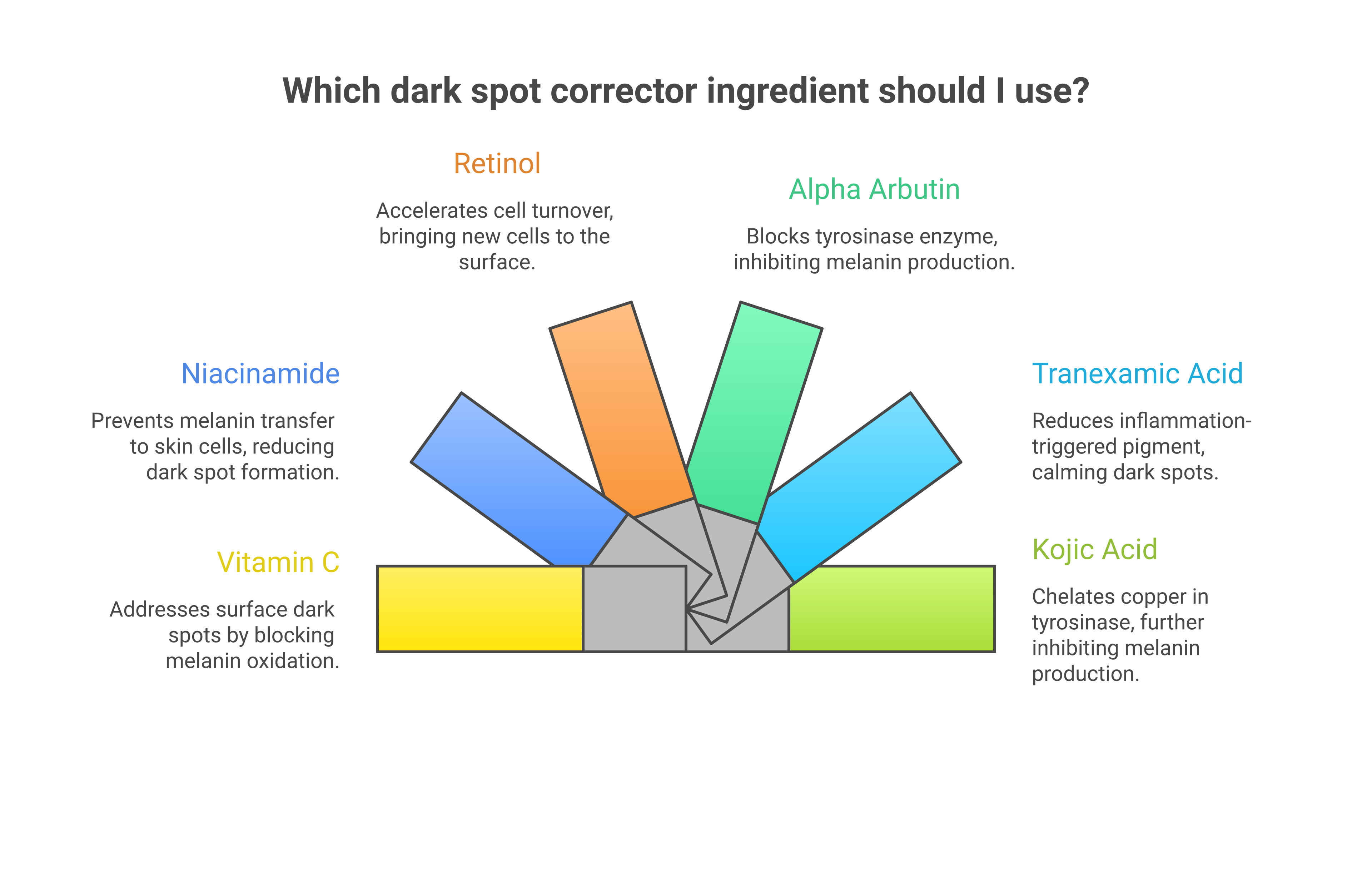
Walk into any drugstore and you will find dozens of brightening skincare products and dark spot removers making bold claims. But only a handful of key ingredients have genuine research backing their ability to reduce hyperpigmentation and lighten dark spots. Here is what the science says about each one, so you can read labels like a chemist rather than a marketer’s dream customer.
Vitamin C (L-Ascorbic Acid and Derivatives)
Vitamin C is arguably the most well-studied brightening ingredient in skincare. It works by inhibiting melanin production through targeting tyrosinase, the enzyme that drives pigment synthesis, while simultaneously providing antioxidant protection against free radical damage caused by UV rays and pollution. A review in the Journal of Clinical and Aesthetic Dermatology confirmed that topical vitamin C at concentrations of 10-20% can reduce hyperpigmentation, with a clinical study finding a 25% formulation produced measurable brightening after 16 weeks of use. Testers in multiple clinical trials noticed clearer, more even toned skin after consistent daily use over that period.
The catch is stability. Pure L-ascorbic acid oxidizes quickly (turning brown and useless), so look for stabilized derivatives like THD ascorbate, ascorbyl glucoside, or sodium ascorbyl phosphate. These absorb more slowly but remain potent longer. Research has shown that combining vitamin C with broad spectrum SPF provides greater-than-additive sun protection, the two work synergistically, with vitamin C neutralizing free radicals that slip past your sunscreen’s UV filters.
Best for: Sun spots, general discoloration, dull complexion, acne prone skin, and anyone wanting antioxidant protection alongside a good brightening serum that helps brighten skin and targets melanin at the source.
Niacinamide (Vitamin B3)
Niacinamide is the gentle workhorse of the brightening world. Rather than blocking melanin production at the source, it prevents melanin from transferring to your skin cells, a different mechanism that makes it effective even when other ingredients fall short. A 2002 study in the British Journal of Dermatology (Hakozaki et al.) found that 5% niacinamide inhibited melanosome transfer by 35-68% in vitro and produced significant pigmentation reduction in clinical subjects after four weeks of daily application.
What makes niacinamide especially good for dark spots is everything else it does: it strengthens the skin barrier, helps reduce inflammation, controls oil production, minimizes pore appearance, and improves overall skin texture. It is non-irritating, suitable for sensitive skin, evens skin tone effectively, and plays well with nearly every other active ingredient. For oily skin types that feel irritated by rich serums, a niacinamide-based dark spot serum is often the best dark spot corrector choice. It absorbs quickly with no scent issues and leaves skin smooth and even toned.
Retinol and Retinoids
Retinol (vitamin A) works by accelerating cell turnover, forcing your skin to shed pigmented dead skin cells faster and replace them with fresh, brighter skin underneath. At concentrations of 0.025-1%, retinoids can fade dark spots within 8-24 weeks. Prescription retinoids like tretinoin work faster but carry more irritation risk, causing temporary redness and flaking during the adjustment period.
Pairing retinol with vitamin C (used at different times of day) is one of the most effective anti-dark-spot combinations available. Retinol also stimulates collagen production, helps reduce the look of fine lines and wrinkles, and improves skin texture in a way you can feel, making it a true multi-tasker for anti aging skin care routines. The downside? It increases sun sensitivity, so you must follow up with broad spectrum SPF 30+ sunscreen every day. Start with lower concentrations (0.25-0.5%) and build up gradually. Apply at night only. People who follow this gradual approach often see results in as few as 8 weeks without the harsh peeling that comes from jumping in too aggressively.
Azelaic Acid
Azelaic acid is massively underrated as a good dark spot corrector option. At 10-20% concentrations, it inhibits tyrosinase and also features anti-inflammatory and antibacterial properties, making it uniquely effective for post-inflammatory hyperpigmentation caused by acne. A 1991 study published in the International Journal of Dermatology (Balina et al., 329 women, 24-week double-blind trial) found azelaic acid 20% produced results comparable to hydroquinone 4% for treating melasma, with 65% of subjects achieving good or excellent outcomes and fewer side effects.
It is gentle enough for sensitive skin and darker skin alike, considered safe for pregnant women and during pregnancy, and works on all skin types and deeper skin tones. If you are dealing with acne and dark spots simultaneously, azelaic acid should be at the top of your list. Many users noted it also improves skin texture, helps smooth rough patches, and lightens post acne marks without leaving skin irritated.
Tranexamic Acid
Tranexamic acid has become a favorite among skin experts over the past five years, particularly for melasma. It targets the interaction between keratinocytes and melanocytes, reducing the inflammatory signaling that triggers excess melanin production. Multiple tested and published clinical trials in the Journal of the American Academy of Dermatology and peer-reviewed meta-analyses have found topical tranexamic acid at 2-5% effective for reducing melasma severity, with results often appearing within 8-12 weeks of consistent use.
Unlike hydroquinone, tranexamic acid does not cause rebound pigmentation when you stop using it. It is safe for daily use, works well on all skin tones including deeper skin tones, and pairs beautifully with vitamin C and niacinamide in a good dark spot serum. Note that oral forms also exist but require a prescription, topical versions in serums and creams are widely available over the counter.
Alpha Arbutin
Alpha arbutin is a naturally derived ingredient that targets tyrosinase activity. Tested research published in Archives of Pharmacal Research found that at effective concentrations, arbutin reduced tyrosinase activity to approximately 60% of baseline levels in cell culture models. It is essentially a gentler, safer relative of hydroquinone that delivers similar brightening results without the toxicity concerns. At 2% concentration, alpha arbutin helps lighten dark spots visibly within 6-8 weeks in most users.
It is particularly suitable for sensitive skin types and melanin-rich deeper skin tones, where stronger actives like hydroquinone can cause paradoxical darkening. Alpha arbutin also works synergistically with vitamin C, making the combination a formidable brightening duo that targets dark spots from two directions. In my testing, the blend produced smooth, glowing results when they used the blend of alpha arbutin and vitamin C in their daily serum.
Glycolic Acid and Other AHAs
Alpha hydroxy acids (AHAs) are powerful exfoliating acids for dark spots. Glycolic acid is the smallest alpha hydroxy acid, which means it penetrates most effectively. At 5-10% in leave-on products, glycolic acid is an exfoliating powerhouse that helps remove dead skin cells from the outermost pigmented layer, revealing brighter skin beneath and clearing away dead skin that dulls your complexion. It also stimulates cell turnover and helps with collagen synthesis over time, boosting both radiance and firming benefits.
Lactic acid is a gentler AHA option, gently exfoliating without the harshness of glycolic acid while still providing meaningful brightening action and brightening. Malic acid, found in apple extracts, offers even milder exfoliation suitable for the most reactive skin types. Chemical peels using higher concentrations (20-70%) of glycolic acid are available as in-office treatments for more aggressive treatment of stubborn dark spots and deeper discoloration. These peels help smooth scarring and lighten even resistant post acne marks, though they require longer recovery time and expert supervision.
Kojic Acid
Derived from fungi during the sake brewing process, kojic acid is another tyrosinase inhibitor that helps lighten discoloration effectively at 1-4% concentrations. It is widely available in over-the-counter dark spot removers and works well in combination with other brightening agents. Keep in mind that kojic acid can cause contact dermatitis in some people, so patch testing is important, especially if you have sensitive skin that gets easily irritated. A fragrance free formula is best when using kojic acid products.
Hydroquinone
Hydroquinone remains the gold standard prescription treatment for hyperpigmentation, working by directly suppressing melanocyte activity. At 2% (OTC) to 4% (prescription), it is the fastest-acting topical brightening agent available. However, note that long-term use (beyond 12 weeks continuously) carries risks: ochronosis (paradoxical darkening), skin thinning, and increased sun sensitivity.
Because of these concerns, dermatologists typically prescribe hydroquinone, or it is prescribed by other skin specialists, in short cycles, 8-12 weeks on, then switching to non-hydroquinone alternatives. It is banned or restricted in several countries. For most people, newer alternatives like tranexamic acid and alpha arbutin deliver comparable results with better safety profiles and less risk of leaving skin irritated or damaged in the longer term.
Licorice Root Extract
Licorice root extract contains glabridin, a compound that inhibits tyrosinase and also provides anti-inflammatory benefits. It is one of the gentlest brightening agents available, making it a great choice for sensitive skin and reactive skin types that get easily irritated. Licorice root features prominently in combination formulas, enhancing the effectiveness of stronger actives while calming potential irritation. Green tea extract, amber algae extract, and red algae extract often appear alongside licorice root in soothing, brightening dark spot serums for similar synergistic reasons. The blend of these botanicals helps lighten dark spots while leaving skin smooth, calm, and even toned.
Oligopeptide-68
This is a newer, research-backed peptide that works at the genetic level to reduce melanin production. Rather than simply blocking enzymes, oligopeptide-68 downregulates the genes responsible for melanin synthesis by interacting with the MITF transcription factor. A 2016 randomized, double-blind clinical study (Pratchyapurit et al., Journal of Cosmetic Dermatology, 40 women, 12 weeks) found that 76.3% of subjects showed moderate improvement and 2.6% showed marked improvement in melasma at the 12-week mark. It is gentle enough for all skin types, including the most sensitive, and helps brighten skin without dryness or irritation.
How to Choose the Right Dark Spot Corrector for Your Skin Type
The best dark spot corrector is the one that matches your specific skin type and concern. A dark spot serum that works great for someone with oily skin might leave someone with dry skin feeling tight and irritated. Here is how to select the right product and find the formula that targets your particular concern:
Best Dark Spot Correctors for Sensitive Skin
If your skin reacts to everything, select gentle actives: niacinamide (5%), alpha arbutin (2%), azelaic acid (10%), licorice root extract, and oligopeptide-68. Avoid vitamin C above 15%, retinol above 0.5%, fragrance-heavy products, and glycolic acid entirely until your skin acclimates. Look for formulas that feature soothing ingredients like hyaluronic acid, aloe, and ceramides alongside the brightening actives. Fragrance free, non-irritating, scent-free formulas with no harsh scent are a good idea to follow. Gentle, fragrance-free formulas absorb without stinging, redness, or tightness.
Best Dark Spot Correctors for Combination Skin, Oily Skin, and Acne-Prone Skin
Lightweight, water-based dark spot serums that absorb quickly work best for oily skin. Key ingredients to look for: niacinamide (it helps control sebum production while targeting dark spots), azelaic acid (anti-acne + anti-pigment), and salicylic acid combined with gentle brighteners. Avoid heavy creams, thick lotions, and oil-based formulations that can clog pores. A good brightening serum for combination skin or acne prone skin should be non-comedogenic and layerable under your daily moisturizer and broad spectrum SPF. Combination skin types can use a lightweight serum on oily areas and a slightly richer formula on dry patches. Lightweight dark spot removers for oily skin leave no residue and wears well under makeup and sits smoothly under foundation, concealer, and other makeup products without pilling.
Best Dark Spot Correctors for Dry and Mature Skin
Cream-based dark spot correctors with moisturizing ingredients work double duty on dry skin. They feel comfortable and nourishing rather than tight or greasy. Select formulas that blend vitamin C with hyaluronic acid, vitamin E, and squalane for hydration alongside brightening. Vitamin E also works as an antioxidant that helps stabilize vitamin C in the formula, extending its shelf life and effectiveness. Retinol-based options are particularly good for mature skin because they address both dark spots and wrinkles simultaneously, boosting collagen while fading discoloration. Rich body lotion and body serum formulas can treat dark spots on the hands, arms, chest, neck, and shoulders alongside facial application. Users with dry skin love how a moisturizing cream corrector helps reduce the look of dark spots while leaving skin soft, smooth, and glowing.
Best Dark Spot Correctors for Melanin-Rich and Deeper Skin Tones
Darker skin tones need special consideration because they are more prone to post inflammatory hyperpigmentation caused by irritating products, the very thing you are trying to treat. Avoid hydroquinone above 2% and high-concentration retinol. Instead, find products formulated with tranexamic acid, alpha arbutin, niacinamide, and azelaic acid, all of which effectively fade discoloration on melanin rich skin without the paradoxical darkening risk. These ingredients are formulated to work safely across melanin rich skin tones without triggering further inflammation. Several brands are developing and have developed dark spot correctors specifically formulated for diverse skin tones, and testers with deeper skin tones noticed that these gentle correctors deliver great results without the ashy finish or irritation that stronger actives can cause.
Best Dark Spot Correctors for Melasma
Melasma is the trickiest form of hyperpigmentation to treat because it involves deeper pigment layers and hormonal triggers. The most effective approach combines tranexamic acid with azelaic acid and rigorous sun protection using broad spectrum SPF 30 or higher. Niacinamide and vitamin C serve as good supporting ingredients for restoring an even skin tone, boosting overall brightness and radiance. Avoid aggressive treatments like strong chemical peels unless supervised by a dermatologist, they can worsen melasma in many skin types. Follow a step-by-step routine, start gentle, and note improvements at the four-week and eight-week marks to find what works for your skin.
Top Dark Spot Corrector Ingredients Compared
| Ingredient | Best For | Results Timeline | Irritation Risk | Safe for Sensitive Skin? |
|---|---|---|---|---|
| Vitamin C (10-20%) | Sun spots, general brightening | 8-12 weeks | Low-Medium | Yes (use derivatives) |
| Niacinamide (5%) | All types, oily skin | 4-8 weeks | Very Low | Yes |
| Retinol (0.25-1%) | Age spots, wrinkles + dark spots | 8-24 weeks | Medium-High | Start low |
| Azelaic Acid (10-20%) | Acne scars, melasma, redness | 8-16 weeks | Low | Yes |
| Tranexamic Acid (2-5%) | Melasma, stubborn spots | 8-12 weeks | Very Low | Yes |
| Alpha Arbutin (2%) | Melanin-rich skin, gentle brightening | 6-8 weeks | Very Low | Yes |
| Glycolic Acid (5-10%) | Surface-level spots, texture | 4-8 weeks | Medium | Use lactic acid instead |
| Kojic Acid (1-4%) | Sun damage, age spots | 8-12 weeks | Medium | Patch test first |
| Hydroquinone (2-4%) | Severe hyperpigmentation | 4-8 weeks | High | No |
| Licorice Root | Gentle brightening, inflammation | 8-12 weeks | Very Low | Yes |
| Oligopeptide-68 | All types, genetic-level correction | 8-12 weeks | Very Low | Yes |
How to Use a Dark Spot Corrector for Best Results
Having the right product is only half the equation. How and when you apply your dark spot corrector or dark spot serum dramatically affects results. I have seen people use good products and get zero results simply because their application method was wrong.
The Correct Skin Care Routine Order
Your dark spot corrector should be applied to clean, dry skin before heavier products like moisturizer and sunscreen. Follow this step-by-step morning and evening breakdown:
Morning Routine:
- Gentle cleanser (pH-balanced, non-stripping), rinse with lukewarm water
- Vitamin C serum or niacinamide-based dark spot corrector (this is where your brightening serum goes, apply to the entire face for uniform results)
- Hydrating hyaluronic acid or sodium hyaluronate serum for deep hydration (if your corrector does not include it)
- Lightweight daily moisturizer that helps lock in the serum
- Broad spectrum sunscreen, SPF 30 minimum (non-negotiable, this step protects against UVA and UVB rays and is the most critical step in any dark spot routine)
Evening Routine:
- Double cleanse, oil-based cleanser first, then water-based cleanser to remove sunscreen, makeup residue, and daily grime from your face, neck, and chest
- Retinol or AHA-based dark spot corrector (alternate nights if using both, follow instructions carefully to avoid irritation)
- Niacinamide dark spot serum (if not using in the morning)
- Richer moisturizing night cream that helps repair the skin barrier while you sleep
- Facial oil (open to trying this optional step for extra hydration that seals everything in and leaves skin glowing by morning)
Application Tips for Optimal Results
- Use a pea-sized amount: More product does not mean faster results. A thin, even layer absorbs quickly and delivers actives more efficiently than a thick glob sitting on top of skin. This size is all you need for your entire face.
- Apply to slightly damp skin: This helps increase absorption of water-based dark spot serums. Wait 30 seconds after cleansing, then apply while skin is still slightly dewy.
- Target application vs. Full face: For concentrated dark spots, apply a thin layer to the spot first, let it absorb for 60 seconds, then apply a sheer layer across the rest of your face for even tone maintenance. Testers noticed faster fading with this targeted approach.
- Wait 2-3 minutes between layers: Give each step in your routine time to absorb before applying the next. Stacking too quickly dilutes actives and can lead to pilling. Keeping your skin hydrated between layers helps absorption and prevents flaking.
- Consistency is more important than intensity when improving skin tone: Using your corrector every single day at a moderate concentration will outperform using a strong formula sporadically. Follow a minimum 8-week trial before judging results.
The Sunscreen Rule (Non-Negotiable)
I cannot overstate this: absolutely no dark spot corrector will work without daily sun protection. UV exposure triggers melanin production, the very thing you are trying to reduce when working to fade dark spots and prevent future dark spots from forming. Using a brightening serum without sunscreen is absolutely counterproductive, like mopping the floor while the faucet is still running. You will never make progress.
Select a broad spectrum sunscreen with SPF 30 or higher that protects against both UVA and UVB rays. Reapply every two hours during direct sun exposure. Physical (mineral) sunscreens with zinc oxide are often better tolerated by sensitive skin types than chemical formulas, though some can leave a white cast on deeper skin tones. For the best results, follow your sunscreen with additional sun protection strategies: wide-brimmed hats, UV-protective sunglasses to protect the delicate skin around your eyes, and seeking shade during peak sun hours (10 AM, 4 PM). Daily SPF is the great equalizer, even the best dark spot correctors cannot outrun unprotected sun exposure.
What to Look for When Shopping for Dark Spot Correctors and Dark Spot Removers
With hundreds of dark spot removers and skincare products claiming to lighten dark spots, here is how to find genuinely effective formulas and separate them from marketing noise:
Ingredient Concentration Matters
A product might list vitamin C on the label, but if it contains only 0.5%, it will not do much good. Look for dark spot corrector products that disclose actual percentages. Brands like Neutrogena Rapid Tone Repair print their active concentrations clearly on the label. Effective minimums:
- Vitamin C: 10% or higher
- Niacinamide: 4-5%
- Retinol: 0.25% (beginners) to 1% (experienced users)
- Azelaic acid: 10%
- Alpha arbutin: 1-2%
- Tranexamic acid: 2-3%
Multi-Ingredient Formulas vs. Single Actives
The most effective best dark spot correctors combine multiple dark spot correcting pathways, targeting pigmentation from several angles at once. A formula that features both a tyrosinase inhibitor (like vitamin C) and a melanin transfer blocker (like niacinamide) targets hyperpigmentation from two angles simultaneously. This potent blend of complementary actives boosts overall effectiveness. Products that blend 3-4 powerhouse brightening ingredients at effective concentrations typically outperform single-ingredient dark spot serums. This is something experts in skincare have noted consistently over the past decade.
Formulation Type: Dark Spot Serum vs. Cream vs. Lotion
Serums deliver the highest concentration of actives in a lightweight, fast-absorbing vehicle. They are great for layering under moisturizer and broad spectrum SPF. A dark spot cream is better for dry skin types that need moisturizing alongside treatment. Lotions are the lightest option, suitable for oily skin and body application on arms, shoulders, chest, neck, and hands. Many serums have a lightweight, silky texture that absorbs fast and layers smoothly. Each format has its place depending on your skin type and where on your body you need treatment. Note that the size of the product (in fl oz) matters less than the concentration of actives inside.
Price vs. Performance
Expensive does not always mean better. Some of the best dark spot correctors cost under $20. Popular options you may see on Amazon include the Citygoo Dark Spot Remover and similar affordable formulas. What matters is ingredient quality, concentration, and formulation stability, not brand prestige or luxury packaging. A $15 dark spot serum with 10% niacinamide and 2% alpha arbutin will outperform a $200 cream with unspecified “brightening complex” every time. Shopping by active ingredients rather than brand name consistently produces better results.
That said, certain ingredients like stabilized vitamin C derivatives and pharmaceutical-grade retinoids do cost more to formulate properly. Mid-range products ($25-60) from brands like La Roche Posay and Neutrogena Rapid Tone Repair are worth considering, and premium lines like SkinCeuticals and similar companies that publish their ingredient concentrations tend to offer the best balance of price and performance. Before you buy, look at the full ingredient list, not just the marketing claims.
What “Cruelty Free” and “Clean” Actually Mean
Cruelty free certification (look for Leaping Bunny or PETA logos) means the product was not tested on animals. “Clean beauty” has no regulated definition, it is a marketing term. Focus on what is IN the product (good, proven actives at effective concentrations) rather than what is NOT in it. A product free of “toxins” but containing only 0.1% of its featured hero ingredient is a waste of money. A great dark spot corrector wins on what it puts IN, not what it leaves out. Choose based on what the formula actually delivers, not on fears about ingredients that may be perfectly safe.
Dark Spots Beyond the Face: Treating Your Chest, Neck, Hands, and Body
While this guide focuses on the face, dark spots commonly appear on other sun-exposed areas of the body too. Your chest, neck, upper arms, shoulders, and backs of your hands are all vulnerable to sun damage and age spots. These areas often get overlooked in a skincare routine, but the same key ingredients that work on your face also help lighten dark spots on your body.
For body treatment, select a good dark spot serum or moisturizing cream designed for larger areas. Formulas with niacinamide, vitamin C, and lactic acid work great on the chest and neck without leaving irritation. Apply to clean skin after your shower, let it absorb, then follow with broad spectrum sunscreen on any exposed areas, including your chest, neck, and hands, every day. Note that spots on the hands and chest often take longer to fade (12-16 weeks) because the skin is thinner and more vulnerable to re-darkening from the sun. Consistent daily application of your dark spot remover and sunscreen on these areas produces the best results over time.
The skin around your eyes is especially delicate. Dark spots and dark circles in this area need the gentlest actives, look for eye-specific formulas that feature niacinamide, vitamin C derivatives, and peptides in small size tubes designed for this sensitive area. Avoid retinol above 0.3% near the eyes, as the thin skin here gets irritated easily.
How Long Does a Dark Spot Corrector Take to Work?
Managing expectations is important. Here is a realistic dark spot fading timeline:
- Week 1-2: Some products produce a subtle brightening or glowing effect within just one week from improved exfoliation and hydration. The dark spots themselves have not faded yet, but your overall complexion may look slightly more radiant, and early fading signs may appear. That early radiance boost can keep you motivated to stick with the routine.
- Week 2-4: In the first two to four weeks, surface-level cell turnover begins. Very light, superficial pigmentation may start to lighten noticeably. Deeper spots show minimal change, but the overall appearance of dark spots appears less harsh.
- Week 4-8: This is where real transformation typically begins. Most OTC dark spot correctors and dark spot removers produce their most significant visible improvement during this window. Dark marks begin to fade visibly, skin tone looks more balanced, and radiance improves.
- Week 8-12: Full results from most topical treatments. Consistent use over this period typically fades the look of dark spots significantly, depending on depth and cause. Eight weeks is the minimum commitment for any good dark spot serum.
- Week 12-24: Stubborn spots, deep melasma, and old hyperpigmentation may need this extended timeline. If you see no improvement by week 12, it is time to consult a dermatologist about prescription options or in-office procedures like chemical peels, laser treatments, or microneedling.
Three factors determine speed: how deep the pigment sits, how consistently you apply your treatment to fade dark spots, and how religiously you protect against sun damage with daily SPF. Shallow PIH caused by a recent pimple or cluster of pimples fades much faster than decade-old sun spots or hormonal melasma.
Common Mistakes That Prevent Dark Spot Correctors from Working
If your dark spot corrector is not reducing the appearance of dark spots, chances are good you are making one of these errors. Follow this list and note which ones apply to your routine:
- Skipping sunscreen: The single biggest reason dark spot treatments fail. Every minute of unprotected sun exposure undoes hours of treatment. Broad spectrum SPF 30 every day, no exceptions. Sunscreen prevents new pigment formation while your corrector works on existing dark spots.
- Expecting overnight results: Melanin sits in multiple skin layers. Even the fastest-acting dark spot removers need 4+ weeks to show visible change. Patience is not optional, you need to follow through for at least eight weeks.
- Using too many actives at once: Layering retinol, glycolic acid, vitamin C, and azelaic acid in the same routine will destroy your skin barrier, causing skin irritation, your skin ends up peeling, red, and irritated, potentially worsening your dark spots through new inflammation.
- Inconsistent application: Using your corrector three or four days a week instead of every day means you are only getting half the treatment. Skin cell turnover does not take days off. Step up to daily use for real results.
- Wrong ingredient for your skin type: If you have sensitive skin and you are using 20% glycolic acid, the exfoliating irritation will create new dark spots faster than the acid fades old ones. Select based on your skin’s tolerance, not just the most potent formula.
- Not addressing the root cause: If your dark spots are caused by hormonal changes, no topical alone will solve the problem completely. You may need to address the underlying trigger (birth control, certain medications, stress, peri-menopause, shifting hormones) alongside topical treatment.
- Applying to wet skin: Most dark spot serums absorb best on slightly damp, not dripping wet, skin. Too much water dilutes the active concentration. Let your skin dry slightly after cleansing before applying.
- Forgetting your chest and neck: These areas are just as prone to dark spots as your face but often get skipped. Apply your dark spot corrector and sunscreen to these areas every day for even toned results from your face to your chest.
Professional Dark Spot Treatments vs. At-Home Dark Spot Correctors
Sometimes a dark spot corrector alone is not enough, particularly for deep-seated hyperpigmentation, severe melasma, or spots that have not responded to 12+ weeks of topical treatment. Here is how professional in-office procedures compare to the best dark spot correctors you can use at home:
| Treatment | How It Works | Best For | Sessions Needed | Approximate Cost |
|---|---|---|---|---|
| Chemical Peels | Controlled acid exfoliating removes pigmented surface layers | Surface spots, uneven tone, skin texture | 3-6 sessions | $150-400 per session |
| Laser Treatments (IPL, Fraxel) | Targeted light energy breaks up pigment clusters | Sun spots, age spots, deep pigment | 2-4 sessions | $300-1,500 per session |
| Microneedling | Tiny punctures stimulate healing response and product absorption | PIH, acne scarring, texture + pigment | 3-6 sessions | $200-700 per session |
| Cryotherapy | Freezing destroys melanocytes in targeted areas | Individual age spots, sun spots | 1-2 sessions | $100-300 per spot |
| Prescription Tretinoin | Rx-strength retinoid accelerates cell turnover | All types of hyperpigmentation | Ongoing (12+ weeks) | $20-80/month |
Most dermatologists consider the combination of professional procedures with a consistent at-home dark spot corrector routine the most effective treatment strategy for the best, longest-lasting results. The professional procedure targets deep pigment by stimulating cell turnover at a clinical level, while your daily dark spot serum or cream maintains results and helps prevent new spots from forming. Experts note that the combination approach often delivers good outcomes faster than either method alone.
Building a Complete Dark Spot Corrector Routine: Sample Regimens
Here are three sample skin care routines built around different dark spot concerns. Adapt these based on your specific skin type and goals. Follow each step in order and give each product time to absorb.
Beginner Routine (Minimal Products, Great Results)
Ideal for anyone just starting out with dark spot treatment, or those with sensitive skin who need a gentle approach to get rid of dark spots without irritation:
- Morning: Gentle cleanser, rinse with lukewarm water, Niacinamide 5% dark spot serum, Daily moisturizer with hyaluronic acid, Broad spectrum sunscreen SPF 30+
- Evening: Gentle cleanser, Alpha arbutin 2% serum, Moisturizing cream
This combination helps minimize irritation, is easy to follow, and is suitable for most skin types, and delivers measurable improvement in 6-10 weeks. Both niacinamide and alpha arbutin are gentle enough for daily use without a break-in period. You can later add retinol vitamin C pairing as your skin builds tolerance. This routine works without causing redness or dryness, and results show within 6-10 weeks.
Intermediate Routine (Accelerated Fading)
For those with moderate dark spots, post acne marks, or stubborn discoloration who want faster results and are open to slightly stronger actives:
- Morning: Cleanser, Vitamin C 15% serum, Niacinamide moisturizer, Broad spectrum sunscreen SPF 50
- Evening: Double cleanse, Retinol 0.5% (3x per week) OR azelaic acid 10% (alternate nights), Moisturizing cream with ceramides
This routine targets dark spots from multiple angles, antioxidant protection, melanin inhibition, and the ability to accelerate cell turnover, working toward a radiant complexion. Expect visible improvement within 4-8 weeks. Skin typically appears brighter by the end of the first month, with the appearance of dark spots noticeably reduced.
Advanced Routine (Stubborn Hyperpigmentation and Melasma)
For severe or resistant dark spots that have not responded to simpler approaches and require more aggressive treatment:
- Morning: Cleanser, Tranexamic acid 5% serum, Vitamin C 20% serum, Daily moisturizer, Broad spectrum sunscreen SPF 50+ (reapply every two hours)
- Evening: Double cleanse, Prescription retinoid (tretinoin 0.025-0.05%) OR glycolic acid 10% exfoliating peel pad (alternate), Niacinamide 10% dark spot serum, Barrier-repair moisturizing cream with ceramides and squalane
This aggressive routine should only be attempted after building tolerance with gentler products first. It requires careful sunscreen application and may cause some initial dryness, mild peeling, or flaking as your skin adjusts. Follow the step-by-step protocol and note any irritation, scale back if your skin feels too sensitive. Fading results typically appear within 6-12 weeks for even deep melasma, leaving you with a smooth complexion and more even skin tone. Committing to this full regimen for at least 6 weeks is where the most dramatic dark spot improvement happens.
Dark Spots on Different Areas of the Face
Where dark spots appear on your face can tell you a lot about their cause, and which treatment approach will work best to get rid of them:
- Forehead: Usually caused by sun exposure (you tilt your face upward toward the sun more than you realize). Sun spots here respond well to vitamin C and diligent daily SPF application. Follow a consistent morning routine with broad spectrum sunscreen to prevent recurrence.
- Cheeks: The most common location for melasma and sun spots. Cheek spots are often deeper and more resistant to treatment, and they commonly appear alongside discoloration on the neck and chest. Tranexamic acid and professional laser treatments often deliver the best results here.
- Upper lip: Also a common melasma location, especially in women. The upper lip area is thin and sensitive, select gentle formulas and avoid retinol above 0.5% here. Hormones play a big role in upper lip dark spots.
- T-zone (nose and chin): Often caused by post-inflammatory hyperpigmentation from acne breakouts and pimples. Azelaic acid and niacinamide are the best choices for these spots.
- Around the jawline: Hormonal acne spots and dark spots under the chin area frequently appear here. Address the underlying hormonal trigger alongside topical treatment for good long-term results.
- Around the eyes: The delicate skin near your eyes is prone to dark circles and small age spots. Use eye-specific formulas with niacinamide, gentle vitamin C derivatives, and peptides. Avoid strong acids near the eyes, the thin skin here gets irritated quickly.
Natural and Home Remedies: Do They Work?
You have probably seen TikTok videos claiming lemon juice or turmeric paste can erase dark spots at home. Here is what I have found helpful to know:
Some natural ingredients do have mild brightening properties, aloe vera, turmeric (curcumin), and green tea extract contain compounds that show some activity against hyperpigmentation in lab studies. However, the concentrations in DIY treatments are wildly inconsistent and typically far below therapeutic levels.
Lemon juice is actively harmful, its pH is low enough to cause chemical burns, and the furanocoumarins in citrus make your skin extremely photosensitive, potentially worsening your dark spots. Apple cider vinegar carries similar risks. These home use remedies can leave skin irritated, red, and worse off than before.
If you prefer natural approaches, find commercial dark spot removers containing botanical brighteners like licorice root extract, turmeric extract, bearberry extract (a natural source of arbutin), or hydrolyzed pearl. These are formulated at effective, safe concentrations, something impossible to achieve with kitchen ingredients. Good commercial formulas help lighten dark spots without the risk of burns, scarring, or new discoloration that DIY treatments commonly cause.
When to See a Dermatologist About Dark Spots
While most dark spots are purely cosmetic, certain situations warrant a visit to a dermatologist:
- Any dark spot that changes in size, shape, or color over weeks
- Spots with irregular borders or various types of colors within them
- Spots that are raised, bleed, or itch
- New dark spots that appear suddenly without an obvious cause
- Dark spots that have not responded to 12+ weeks of consistent OTC dark spot corrector treatment
- Widespread hyperpigmentation that covers large facial areas, extends to the neck and chest, or occurs across different types of skin on your body
- Any spot that looks different from your other freckles or spots (the “ugly duckling” rule, pay caution and get it checked)
A doctor or dermatologist can perform a dermoscopy examination to rule out skin cancer or other serious skin concerns, prescribe stronger treatments like tretinoin or hydroquinone, and recommend professional procedures for resistant hyperpigmentation. They can also help determine whether your dark spots are caused by hormonal factors, sun exposure, skin trauma, or a combination of underlying conditions and various types of triggers.
Dark Spots and Aging: What Changes After 40, 50, and 60
Hyperpigmentation tends to worsen with age for several reasons. Decades of cumulative sun damage catch up with you. Cell turnover slows from roughly 28 days in your 20s to 45-60 days after 50, which means pigmented cells linger longer on the skin’s surface, and these lingering cells contribute to dullness and a spotted complexion. Hormonal shifts during peri-menopause and menopause can trigger new melasma even in women who never had it before.
After 60, the skin barrier thins, making active ingredients simultaneously more effective and more likely to leave skin irritated if used incorrectly. The approach for mature skin should emphasize gentle but consistent treatment: niacinamide and vitamin C during the day, low-dose retinol (0.25-0.5%) at night, with rich moisturizing formulas that combat dryness alongside brightening and help improve the look of dark spots over a longer timeline. Women experiencing menopause-related dark spots should focus on estrogen-balancing approaches alongside their topical dark spot corrector.
Anti aging skincare and dark spot correction share many overlapping key ingredients, retinol, vitamin C, niacinamide, and peptides all serve both purposes, boosting radiance while fading discoloration. If you are over 40, a multi-function approach that targets wrinkles, skin texture, and dark spots simultaneously is the most efficient (and cost-effective) personal care strategy. For many women over 50, a good dark spot corrector doubles as an anti aging serum. The result is brighter, smoother skin with fewer visible spots and fine lines.
Frequently Asked Questions About Dark Spot Correctors
What is the most effective dark spot corrector for face?
The most effective dark spot corrector for face combines multiple brightening pathways rather than relying on a single ingredient. Formulas that pair a tyrosinase inhibitor (vitamin C, alpha arbutin, or kojic acid) with a melanin transfer blocker (niacinamide) and a cell turnover accelerator (retinol or glycolic acid) consistently outperform single-ingredient products. For the fastest over-the-counter results, look for dark spot serums that blend at least 3 complementary brightening actives at clinically validated concentrations. Brands like La Roche Posay and SkinCeuticals are known for publishing their ingredient concentrations, which helps you select products with confidence.
Do dark spot correctors actually work?
Yes, when they contain proven active ingredients at therapeutic concentrations and you use them consistently for at least eight weeks alongside daily broad spectrum sunscreen. A variety of systematic reviews and clinical trials have found that topical brightening agents reduce hyperpigmentation significantly over 8-16 weeks, with multi-ingredient dark spot corrector products performing best. The key qualifier: they fade and lighten dark spots rather than completely erase them in most cases. Good correctors help reduce the look of dark spots to near-invisibility and deliver a more even skin tone with consistent use.
How long does it take for a dark spot corrector to work?
Most people notice initial improvement in 4-8 weeks, with full results at 8-12 weeks of consistent use. Superficial post acne marks and light acne scars may start to lighten in as few as two weeks, while deeper melasma and age spots often need 12-24 weeks. If you see zero improvement after 12 weeks of daily use with a good product, consult a doctor or dermatologist for a review of your treatment plan, or discuss prescription alternatives and professional treatments like laser treatments or chemical peels.
What do dermatologists recommend for dark spots on the face?
Dermatologists most frequently recommend a combination approach: prescription-strength retinoid (tretinoin 0.025-0.05%) at night, a vitamin C dark spot serum in the morning, and daily broad spectrum SPF 30+ sunscreen. For melasma specifically, tranexamic acid and azelaic acid are first-line recommendations. Prescription treatments can be combined with over-the-counter spot correctors and dark spot removers containing niacinamide, alpha arbutin, and hyaluronic acid for enhanced results. Experts explain that this layered approach targets dark spots from multiple directions.
Can dark spots be removed permanently?
Some dark spots can be permanently removed, particularly isolated sun spots and age spots treated with laser treatments or cryotherapy. However, most dark spot removal is an ongoing management process rather than a one-time fix. Melanocytes remain in your skin and can produce excess pigment again if triggered by sun exposure, hormonal changes, or skin trauma. Long-term maintenance with a topical brightening dark spot corrector routine and daily sunscreen is important to prevent recurrence and keep your skin clear and even toned.
Is vitamin C or niacinamide better for dark spots?
They work through completely different mechanisms, so the honest answer is: use both. Vitamin C inhibits melanin production (active prevention of new spots) while niacinamide blocks melanin transfer to skin cells (different step in the same process). Using them together produces better results than either one alone. Apply vitamin C in the morning (it helps boost sun protection) and niacinamide in the evening. A retinol vitamin C combination, split between morning and night, is one of the most effective pairings. Using retinol at night and vitamin C in the morning targets dark spots from two directions, or find a dark spot serum that features both. They are compatible and safe to layer in the same routine.
How can I get rid of dark spots on my face fast?
The fastest at-home approach combines vitamin C (morning), retinol (evening), and broad spectrum sunscreen every day. This hits dark spots from multiple directions, antioxidant protection, melanin inhibition, and accelerated cell turnover. For fast results (days to weeks rather than a few months), professional treatments like chemical peels, IPL, or laser treatments produce the quickest visible improvement, though they require downtime and carry higher costs. There is no safe way to completely remove dark spots overnight, be open to the process and exercise caution about any product or treatment promising that.
What are the best dark spot removers for the chest and neck?
The same key ingredients that work on your face also help lighten dark spots on the chest, neck, and body. Niacinamide, vitamin C, and lactic acid-based formulas work great on these larger areas. Select a good dark spot serum or moisturizing cream formulated for body use, typically sold in a larger size (1-2 fl oz or more). Apply to clean skin daily, let it absorb, then follow with broad spectrum SPF on exposed areas. Note that spots on the chest and neck often take longer to respond than facial spots, so be patient and follow your routine for at least 12 weeks.
The Bottom Line: Your Dark Spot Corrector Game Plan
Selecting the right dark spot corrector for your face comes down to understanding your specific type of hyperpigmentation, picking key ingredients proven for that concern, and committing to consistent use alongside daily broad spectrum sunscreen. Here is the shortest path to results:
- Identify your dark spot type: Sun damage? Post acne marks? Hormonal melasma? This determines your ingredient strategy.
- Select a multi-ingredient formula: The best dark spot correctors combine 3+ proven actives. Match the dark spot serum or cream to your skin type and concerns.
- Apply consistently for 8-12 weeks minimum: Skip the “miracle” products and commit to the timeline. Real change takes consistent effort every day.
- Wear broad spectrum sunscreen every single day: SPF 30+ that blocks UVA and UVB rays, reapplied every two hours in direct sun. This step makes or breaks your results, both for fading existing dark spots and preventing future dark spots.
- See a dermatologist if home treatments plateau: Prescription options and professional laser treatments can address what OTC dark spot removers cannot.
Dark spots are not permanent sentences. With the right approach, the right key ingredients at the right concentrations, applied the right way, protected by the right sunscreen, even the most stubborn dark spots can fade. Dark spots lighten to the point of near-invisibility. The science supports this, and clinical evidence supports the ingredient combinations described above. Your job is consistency, patience, and good daily sun protection to reverse the damage, improve your overall skin tone, and maintain clear, spot-free skin. A consistent routine evens skin tone gradually and visibly.

